Fender Versus Gibson Guitars: What’s Different, What’s Not Without Overthinking It
Imagine holding a guitar and feeling an instant connection—like the instrument understands your soul. The secret lies beyond flashy branding or eye-catching designs.
Fender and Gibson each craft a world of sound, shape, and feel that influence the music you create in ways you might not realize. Their personalities are like two different stories, each with its own rhythm and voice.
Surprisingly, choosing one over the other can unlock new creative depths, turning your playing into a journey of discovery. It’s not just about looks—it’s about how these guitars breathe life into your music.
What’s the Core Sound Difference Between Fender and Gibson?
The main sound difference between Fender and Gibson guitars is their tone. Fender guitars have a bright, clear sound with sharp, twangy notes. They stand out in a mix and are great for surf, country, and blues music. Think of Fender as a clean, crisp voice that cuts through. Gibson guitars, by contrast, produce a warmer, thicker sound. Their tone is more mellow with a smooth sustain and a punchy feel. They are often used in rock and jazz.
Some players prefer Fender for its sharp attack, while others like Gibson for its rich, full sound. But remember, neither is better—just different. For example, if you want a guitar that sounds bright and lively, Fender might be your choice. If you prefer a deep, creamy tone, Gibson could be better.
Keep in mind, these differences are not just about brand names. They come down to the pickups, wood, and design. Fender uses single-coil pickups that give a bright, twangy sound. Gibson often uses humbucking pickups that produce a warmer tone.
Both brands have their fans and critics. Fender guitars are lighter and more straightforward, but some say they can be too bright or noisy. Gibson guitars are heavier and have a rich sound, but they can be more expensive and harder to handle for beginners.
How Do Fender and Gibson Body Shapes Affect Their Vibe?
Fender and Gibson body shapes play a big role in how these guitars feel and sound. The shape is more than just looks; it influences your playing experience.
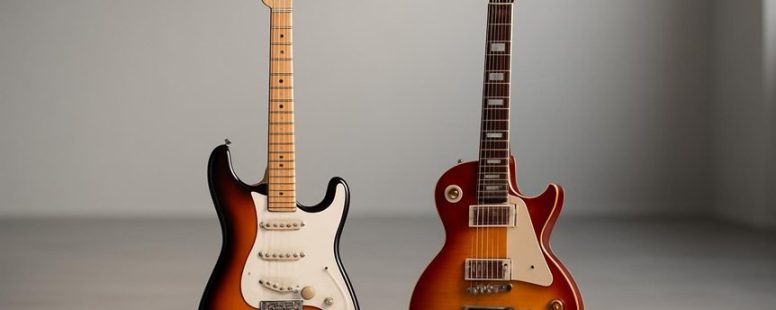
Fenders usually have slimmer, contoured bodies. This design makes them comfortable to hold and play for long periods. Because of this, Fender guitars are popular in styles like surf, country, and indie music. Their light weight and shape help players stay relaxed, making bright and airy sounds easier to produce. If you like playing for hours without discomfort, Fender’s shape is a good choice.
Gibsons often have thicker, carved bodies. These guitars feel heavier and have a solid, grounded vibe. They are often linked to rock and blues music because their shape supports more sustain and warmth. The thicker body makes the guitar feel more powerful and gives a classic look. If you want a guitar that feels substantial and makes your notes ring out longer, a Gibson’s shape might suit you better.
Some players prefer Fender shapes because they are easier on the shoulder and back, especially for lighter players. But, the heavier Gibson can be tiring if you play standing for hours. On the other hand, some musicians love the heft and deep sound of Gibson bodies, even if they are less comfortable.
In the end, body shape affects how you play and the vibe you get. It’s not just about looks but how the guitar makes you feel and sound. Whether you want the bright, easy feel of a Fender or the powerful, warm tone of a Gibson, the shape helps shape your musical style.
Why Do Fender Pickups Sound Bright and Gibson Pickups Warm?
Fender pickups sound bright and crisp because of how they are built, while Gibson pickups sound warmer due to their design. The main difference is in the materials used and how each pickup is made. Fender pickups use single-coil designs with thinner copper wire and fewer layers, which gives them a sharp, clear tone. Gibson pickups often use humbucker designs with thicker wire and more coils, making their sound fuller and warmer.
Some guitar players prefer Fender pickups for genres like country or funk, where a bright sound helps notes stand out. Others like Gibson pickups for blues or rock because the warm tone adds depth. But keep in mind, the way a pickup sounds can also depend on your guitar and amp settings.
If you want a bright sound, look for Fender-style pickups with single coils. If you want a warmer tone, Gibson-style humbuckers are a good choice. Both have their strengths and limitations, so choosing depends on what kind of sound you prefer and the music style you play.
Sources like Fender and Gibson website explain these differences clearly, but lots of factors influence sound beyond just pickup type. For example, how the guitar is played, the amplifier, and even the room’s acoustics matter too. So, while pickups matter, they are not the only thing shaping your tone.
Pickup Construction Differences
Pickups are the main part of an electric guitar that gives it its sound. To understand why Fender pickups sound bright and Gibson pickups sound warm, you need to know how they are built. The biggest difference is the type of pickup and how the wire coils are arranged.
Fender uses single-coil pickups. These pickups have one coil of wire wrapped around magnets. They pick up more high-pitched sounds, making the guitar sound crisp and bright. Gibson prefers humbuckers. These have two coils wired together, which helps cancel out noise and makes the sound thicker and warmer.
Here’s what makes them different:
- Single-coil pickups have one coil of wire.
- Humbuckers have two coils wired in a series.
- Fender’s coils are narrower and have fewer wire windings.
- Gibson’s coils are wider and have more windings, which boosts the output.
- The magnets also differ: Fenders use Alnico magnets, while Gibsons sometimes use ceramic magnets.
These choices in design shape their unique sounds. Some players love Fender pickups for their brightness, but they can pick up more background noise. Gibson pickups sound fuller but may lose some of the sharpness. Knowing these differences can help you pick the right pickup for your style.
Tonal Characteristics Explained
Tone is what makes a guitar sound unique. Fender and Gibson pickups give their guitars their special voices by having different tonal characteristics. Fender pickups are bright and clear because they use a single-coil design. This makes each note stand out, which is good for styles that need sparkle and definition, like country or pop. Gibson pickups, called humbuckers, are warm and thick. They use two coils that cancel noise and boost midrange sounds. This gives a smooth, rich tone, perfect for blues and rock music. Both brands can make a variety of sounds, but Fender sounds are usually brighter and clearer, while Gibson sounds are warmer and deeper. Knowing these differences helps you choose the right pickup for your style. If you want a sharp, lively tone, Fender might be best. If you want a full, mellow sound, Gibson could be better.
Which Genres Suit Fender Guitars and Which Fit Gibson Best?
Fender and Gibson guitars are both popular choices for many music styles, but each brand works best for certain genres. Here is a simple way to understand which guitar fits which style.
Fender guitars are known for their bright, clear sound. This makes them a great choice for blues, country, and pop music. For example, a Fender Stratocaster has a sharp attack that helps it stand out in a band. If you like playing melodies that are clean and twangy, Fender is a good pick. Some people say Fender guitars are easier to handle in live shows because of their crisp sound.
Gibson guitars have a thicker, warmer tone. They are better suited for rock, jazz, and metal. Their sound can be loud and full, which helps them cut through noise. For instance, a Gibson Les Paul has a powerful sustain that makes solos sound big and rich. If you want a guitar that can handle heavy riffs or smooth jazz, Gibson might be your best choice.
There are two sides to this. Some players prefer Fender because it’s versatile and easier for beginners. Others swear by Gibson because of its deep, soulful sound. But keep in mind, both brands can be used for many styles, and your choice depends on what kind of music you want to play.
If you are curious, try both brands. Play different songs and see which sound feels right for you. Remember, no guitar is perfect for all styles, so it’s good to pick one that matches your favorite music.
How Does Fender and Gibson Guitar Playability Compare?
Guitar playability is about how it feels when you play it. Factors like the shape of the neck, the height of the strings, and the guitar’s body all matter. Fender guitars, like the Stratocaster and Telecaster, usually have slimmer, more modern necks. That makes it easier to play fast and do tricky fingerwork. Gibson guitars, such as the Les Paul and SG, often have thicker, rounded necks. Some players find this more comfortable, especially for playing chords or holding the neck for a long time.
The scale length is another key point. Fender guitars have a longer scale—about 25.5 inches—which makes the strings tighter. This can give you a clearer, brighter tone, but it might be harder to press down on the strings. Gibson guitars have a shorter scale—around 24.75 inches—making the strings feel looser and easier on your fingers. This can make playing feel smoother and warmer.
So, if you want a guitar that feels quick and precise, Fender might be better. If you prefer a guitar that feels chunky and comfortable, Gibson could be the way to go. But remember, everyone’s hands and style are different. Some players might find Gibson necks too thick, while others love the warmth of Gibson tone. Trying both in person is the best way to see what suits you.
In the end, Fender favors speed and clarity, while Gibson leans toward comfort and a richer sound. Knowing these differences helps you pick a guitar that feels right for your style, without overthinking it too much.
What Materials and Craftsmanship Set Fender and Gibson Apart?
Materials and craftsmanship make Fender and Gibson guitars sound and feel very different. Fender uses lighter woods like alder and ash, which give their guitars a bright and punchy tone. Gibson prefers heavier woods like mahogany for warmth and sustain. These choices change how the guitar sounds and how it feels when you play.
Fender builds guitars with simple, solid construction. They often use bolt-on necks, which make repairs easier and change the tone slightly. Gibson tends to use glued-in necks, which add to the guitar’s sustain and richness. The way a guitar is built also affects how it responds when you play. For example, a Fender might feel more snappy and lively, while a Gibson could feel thicker and more resonant.
Some players love Fender’s clear, sharp sound, perfect for styles like country or surf music. Others prefer Gibson’s thicker, warmer tone for blues or rock. But keep in mind, the materials and craftsmanship are just part of the story. The pickups, strings, and player technique also shape the sound.
If you’re choosing between the two, ask yourself what tone and feel you want. Do you prefer a bright, snappy guitar or a warm, full-bodied one? Both brands make great instruments, but their materials and build styles set them apart. Be aware that heavier Gibson guitars might be harder to handle for long gigs, and Fender’s simpler build might mean less sustain. Knowing these differences can help you pick the right guitar for your style.
Wood Types Used
Wood types are key to how a guitar sounds and feels. Fender and Gibson choose different woods to create their unique tones. Fender prefers ash and alder because they produce bright and airy sounds. Gibson uses mahogany and maple, which give a warmer tone with more sustain. These choices are not random. They shape each guitar’s voice and how it plays.
Here is a simple breakdown:
- Fender’s alder: gives a balanced sound with clear high notes.
- Fender’s ash: creates a bright, sharp attack.
- Gibson’s mahogany: offers warm sound and long sustain.
- Gibson’s maple: adds brightness and quick response.
- Both brands often use rosewood or ebony for fingerboards, which also change how the guitar feels and sounds.
Knowing these woods helps you understand why each brand sounds different. For example, if you want a bright, lively guitar, Fender’s ash or alder might be best. If you want a warm, mellow sound, Gibson’s mahogany could be better. But remember, other factors like pickups and strings also matter.
Some players prefer one brand over the other because of these wood choices. However, it’s good to try different guitars and see which one feels right for you.
Construction Techniques
Construction techniques are key to what makes Fender and Gibson guitars sound and feel different. Both brands start with good wood, but they build their guitars in different ways. Fender usually uses bolt-on necks, which are attached with screws. This makes it easier to build the guitar and fix it if needed. Gibson prefers set necks, glued into the body, which takes more skill but gives a warmer, longer-lasting sound.
Guitar makers also differ in how much they focus on handcrafting. Gibson often makes guitars by hand, adding small details that some players say improve the tone. Fender, on the other hand, uses more machines to make their guitars faster and more consistent. This difference can make a Gibson sound richer and more unique, but Fender guitars are often more reliable and easier to repair.
Some players might like Gibson’s warm, full sound, but others might prefer Fender’s bright, clear tone. Also, Gibson’s handcrafted style can cost more and take longer to build. Both brands control quality carefully, but their different building styles lead to different feelings and sounds. Knowing this helps you pick the right guitar for your style and needs.
How Do Fender and Gibson Prices Compare Across Models?
Fender and Gibson guitars have different price ranges depending on the model. Generally, Fender’s beginner models are cheaper, making it easier for new players to start. For example, a Fender Stratocaster or Telecaster often costs less than Gibson’s entry-level guitars. Gibson’s first models tend to be more expensive because they use higher-quality materials and focus on craftsmanship. This means a beginner Gibson can cost more than a Fender.
When you look at mid-range models, Fender offers good value. They keep prices reasonable while still giving you classic features. Gibson’s mid-range and high-end guitars, like the Les Paul Standard or SG Standard, are often more costly but are also known for better tone and build quality. These premium models can be very expensive, sometimes costing thousands of dollars. Limited editions and custom shop guitars from both brands can push prices even higher.
If you are shopping for a guitar, it’s good to know these price differences. Fender might be better if you want a cheaper, reliable guitar to learn on. Gibson could be the right choice if you want a guitar with a rich history and a premium feel. But remember, higher prices don’t always mean better sound for everyone. Sometimes, cheaper models can sound just as good for beginners.
In the end, your choice depends on your budget and what kind of music you want to play. Both brands have options for beginners and pros. Just be aware that limited editions or custom models from either brand can cost a lot more. So, do your research and pick the guitar that fits your needs and wallet best.
How Have Artist Endorsements Made Fender and Gibson Legendary?
Artist endorsements are a key reason why Fender and Gibson guitars are famous. When famous musicians play these guitars, it makes the brands more special. For example, Jimi Hendrix played a Fender Stratocaster, and Slash is known for using a Gibson Les Paul. These famous names help the brands stand out and stay in music history.
Some people might think endorsements are just good for selling guitars. But they also create a story. The story shows how these guitars are connected to legendary music moments. It’s not just about buying a guitar. It’s about owning a piece of music history.
Fender and Gibson build their reputation by working with musicians who fit their style. This makes their guitars symbols of quality and originality. However, some critics say endorsements can be fake or exaggerated. Not every endorsed guitar turns into a hit, and some players buy guitars just because of the name.
In the end, endorsements help Fender and Gibson stay famous, but they are not the only reason. Some players prefer to find their own sound instead of copying stars. Still, for many, having a guitar played by a legend makes a big difference.
How Do Vintage and Modern Fender and Gibson Guitars Differ?
Vintage and modern Fender and Gibson guitars differ mainly in tone and features. Vintage models, like a 1959 Gibson Les Paul or a 1962 Fender Stratocaster, are known for their warm, rich sound. These guitars have aged wood and old pickups that give them a unique character. Many players say vintage guitars sound more lively and full because of their age and the way they were built.
Modern guitars, like a recent Fender American Professional Stratocaster or a Gibson Les Paul Standard, focus on better build quality and easier playability. They often have improvements like lighter woods, better tuning stability, and more versatile electronics. These features help players perform better and try new sounds.
Some people prefer vintage guitars for their classic tone and history. Others like modern models for their comfort and reliability. But keep in mind that vintage guitars can be more fragile and expensive. Modern guitars may lack some of that old-school charm but are easier to maintain.
In the end, it depends on what you want. Do you want a guitar that sounds like it’s from the past or one that’s ready for the stage today? Both have their own strengths and weaknesses. Knowing what matters most to you will help you pick the right guitar.
Vintage Tone Characteristics
Vintage guitars from Fender and Gibson are known for their warm, rich tone. While modern models are versatile and reliable, many players prefer vintage guitars because of their unique sound. Those older styles have tonal qualities shaped by years of aging wood, original pickups, and hand-wound electronics. You can’t really get that same organic warmth with new guitars.
Here’s what makes vintage tone stand out:
- The wood in vintage guitars has aged naturally, adding resonance and depth.
- Original pickups like single-coils on Fenders or humbuckers on Gibsons give a clear, punchy sound.
- Analog parts in vintage guitars produce a harmonic richness that digital parts can’t match.
- Small flaws in construction give each vintage guitar its own special voice.
- Vintage vibrato and bridge designs affect how long notes sustain and how the guitar feels to play.
Some musicians say vintage guitars sound more soulful and expressive. They believe these subtle differences are what give a vintage guitar its charm. Still, modern guitars try to copy this tone, but many players say they never quite match the real thing.
Counter-strategy notes: The claim that vintage guitars sound better is partly true but could be exaggerated. Modern guitar tech can come close, and some players might prefer the consistency of new guitars. The article should mention that vintage guitars can be fragile and pricier, which is a warning for players who want a durable, low-maintenance instrument.
Skeptic’s view: I’ve seen too many “vintage” claims turn out to be hype. How do I know these tonal differences are real and not just nostalgia? And what about players who don’t notice or care? I need real examples or sound clips to believe it’s worth hunting down a vintage guitar.
Distracted thumb: Looks like vintage guitars are more “special,” but I’ll forget all this in five minutes. Why does it matter if a guitar is vintage or new? Unless it’s easy to tell the difference while playing, I won’t remember this tomorrow.
Final note: Vintage guitars have a certain charm that many players seek. But they come with pros and cons. If you’re after pure tone and don’t mind the price or fragility, a vintage Fender or Gibson might be worth it. If you want something reliable and cheaper, modern guitars can still get you close enough.
Modern Build Innovations
Fender’s new designs focus on making guitars easier to play. They use lightweight materials like composites, which make the guitar less heavy but still strong. Their contoured bodies and smooth necks are designed to fit comfortably in your hands. This means you can play longer without getting tired. For example, Fender’s Stratocasters now use modern finishes that resist scratches and wear. These updates show Fender wants players to enjoy their guitars more, without losing the classic look and sound.
Gibson also makes changes to improve their guitars. They add small structural tweaks, like chambered bodies that reduce weight. These options help the guitar resonate better, making the sound richer and more lively. Gibson’s innovations aim to keep the traditional feel but make the guitar lighter and more comfortable to hold. Some players worry that these changes might take away the vintage vibe, so it’s good to try them first.
Both brands show they care about making guitars that work well today. But some musicians might worry that these innovations could change the classic sound they love. Also, new materials and designs can be more expensive. Still, if you want a guitar that feels modern but keeps the classic style, Fender and Gibson’s innovations are worth checking out. They prove that even iconic brands change to meet players’ needs.
Which Brand Fits Your Style and Budget?
Choosing between Fender and Gibson depends on what sound you want and how much you want to spend. Here’s a simple guide to help you decide.
Fender vs. Gibson: The Main Difference
Fender guitars are known for bright, twangy sounds. They are great for country, surf rock, and pop music. Gibson guitars have warm, thick tones, perfect for blues, hard rock, and metal. Think of Fender as a sharp, clear voice and Gibson as a deep, rich melody.
Price Range and Budget
Fenders usually cost less, making them good for beginners or players on a tight budget. Gibson guitars tend to be more expensive but are built with high-quality materials and craftsmanship. If you are just starting out, Fender might be the better choice. If you want a guitar that lasts a lifetime and sounds full, Gibson might be worth the extra money.
Body Shapes and Neck Styles
Fender offers a variety of body shapes like the Stratocaster and Telecaster, which are lightweight and easy to handle. Gibsons often have thicker bodies like the Les Paul, which can feel heavier but offer a fuller sound. Think about what feels comfortable in your hands.
Genres and Playing Style
Want to play country or surf music? Fender is your friend. Playing blues or heavy rock? Gibson could be your pick. Consider what kind of music you love to play most.
Resale Value and Investment
Gibson guitars usually hold their value better over time, especially vintage models. Fender guitars are also popular but may not appreciate as much in value.
What to Think About
- Do you prefer bright or warm sounds?
- How much can you spend?
- Do you like a lightweight or heavier guitar?
- What music do you want to play?
Matching your sound goals with what feels good in your hands and your budget is key. Both brands have their strengths and limits, so pick the one that fits your style best.

- Kia Seltos Competitors: Top Compact SUVs - October 14, 2026
- Free to Use Photoshop Alternatives - October 14, 2026
- Ajax Alternatives Mtg Reddit - October 13, 2026
by Ellie B, Site Owner / Publisher