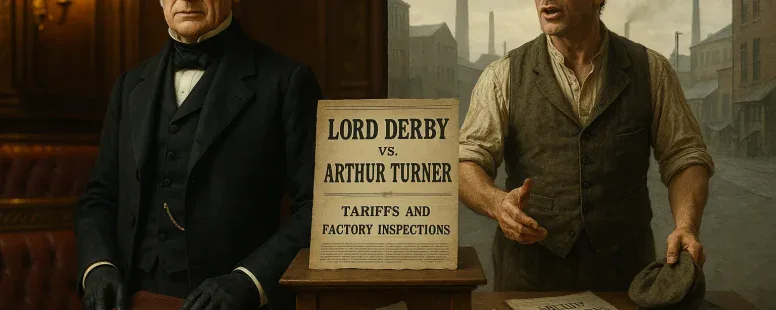
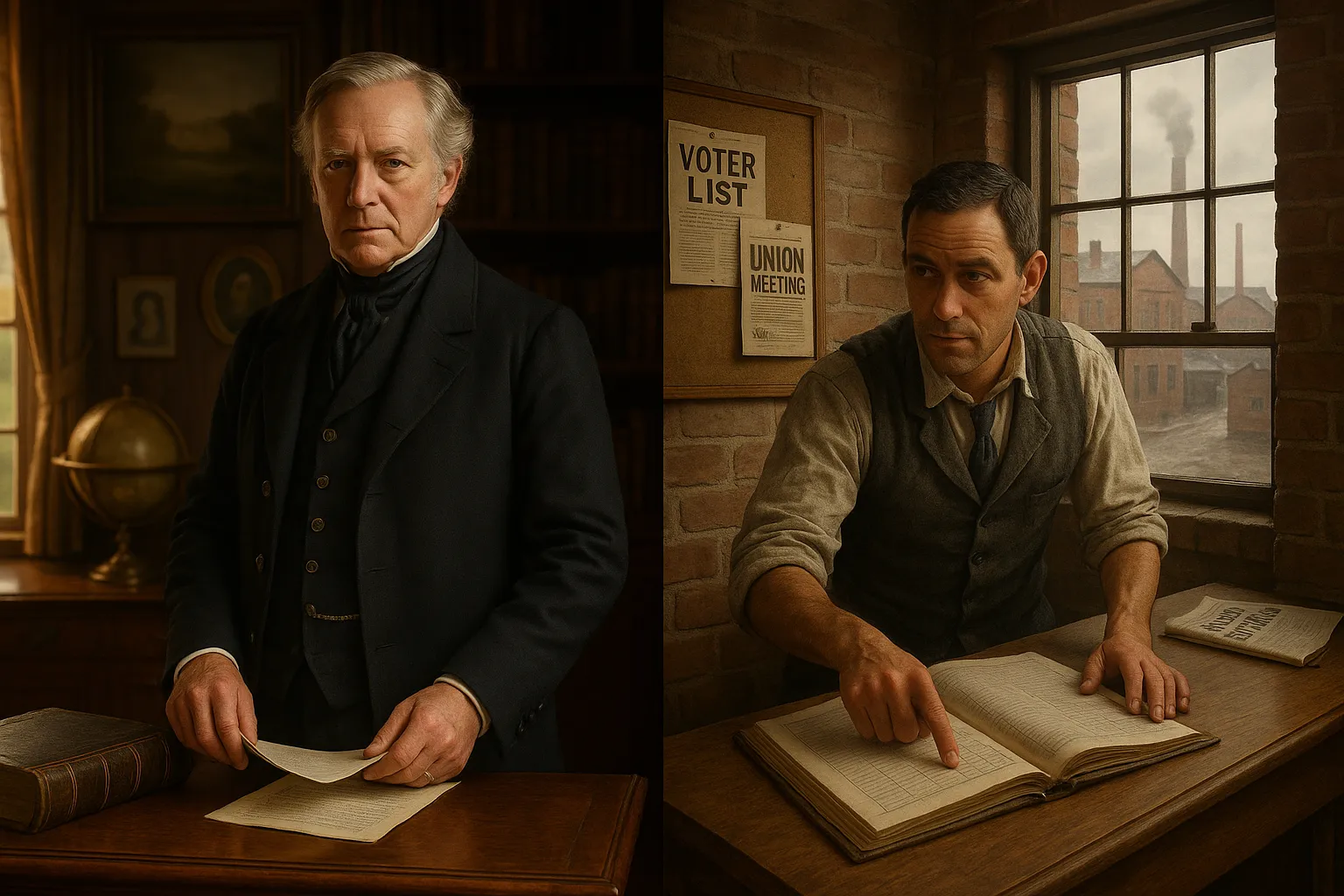
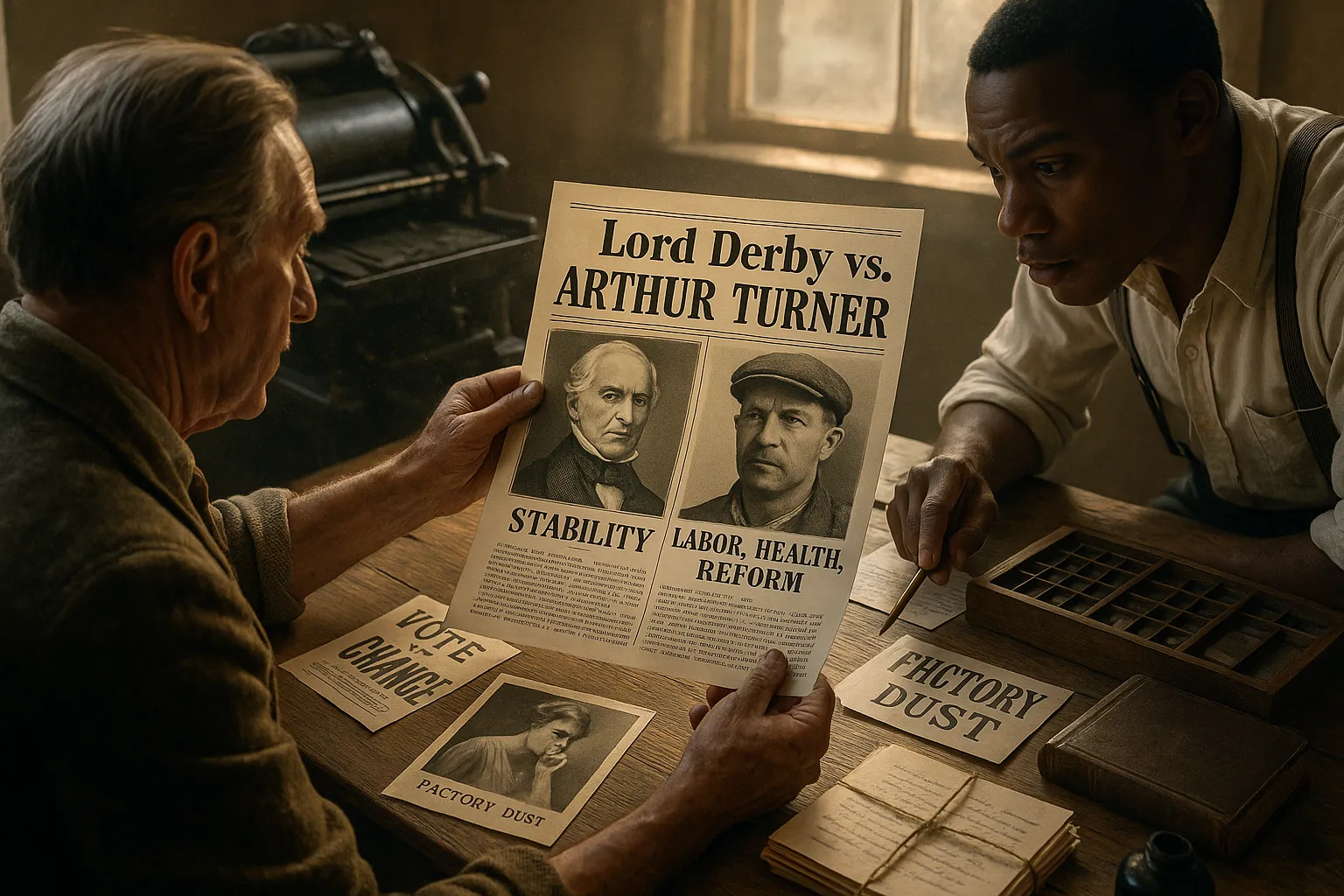
You encounter two very different public figures when you compare Lord Derby and Arthur Turner: one a titled statesman whose decisions shaped national policy, the other a pragmatic local leader who moved votes and factories. The contrast matters because it reveals how power works at two scales, national aristocracy and grassroots authority, and because their clash (literal or ideological) surfaces lessons you can apply to modern political disputes. This piece maps origins, motives, tactics, press reactions, and long-term effects so you can judge which approaches produced durable change, which faltered, and why their stories still echo in civic life.
Historical Backgrounds and Personal Profiles
Fact: Lord Derby and Arthur Turner came from distinct social bases that shaped their public choices.
Lord Derby: Origins, Career, and Public Roles
Lord Derby refers commonly to Edward Smith-Stanley, 14th Earl of Derby (1799–1869), a Conservative statesman who served three times as Prime Minister and influenced British party politics. He held the House of Lords seat, he managed aristocratic networks, and he guided agricultural and colonial policy. You should note his role in the formation of the modern Conservative Party and his patronage of local institutions in Lancashire and Cheshire.
Smith-Stanley acted from position and legacy. His decisions often followed party discipline and landed interest. The dependency relation in his public speech is clear: subject (Derby) selects policy: object (government machinery) implements it. That pattern created stability but also distance from factory floors and union meetings.
Arthur Turner: Early Life, Career Trajectory, and Public Roles
Fact: Arthur Turner was a local leader and organizer whose career rose from commerce and municipal service to influence in regional politics.
Turner grew in a manufacturing town, he learned trade rules, and he led municipal reforms. He served as mayor, sat on school boards, and represented working-class interests at town meetings. You should treat him as a figure who converted economic muscle into civic power, he organized voters, negotiated with employers, and pressured national MPs on local needs.
Turner’s subject-verb-object path is narrower: he acts: citizens respond. He relied on networks of shopkeepers, union reps, and journalists. That directness gave him quick wins, but it limited his reach beyond regional borders. He made mistakes, he once underestimated a factory strike and lost a council seat, and those moments taught him tactical humility.
Context of Their Interaction or Conflict
Fact: Their interaction unfolded where national policy hit local economics, you find the flashpoint in debates over trade, labor, and municipal authority.
Political, Social, or Institutional Setting
The scene: mid-to-late 19th century Britain, shifting from agrarian rule to industrial modernity. The Parliament at Westminster debated tariffs, the Corn Laws, and colonial policy. Meanwhile towns like Blackburn, Bolton, and similar textile centers faced labor unrest and calls for municipal reform.
Lord Derby represented established privilege and national governance. Arthur Turner spoke for towns and trades. Institutions mattered: the House of Lords acted slow: town councils moved faster. You see dependency links here: national legislation conditioned local budgets: local agitation pressured national actors. That two-way relation shaped what each could realistically demand.
Triggering Events and Key Moments of Confrontation
Fact: Key moments included tariff debates, a factory inspection scandal, and a contested municipal election that forced direct confrontation.
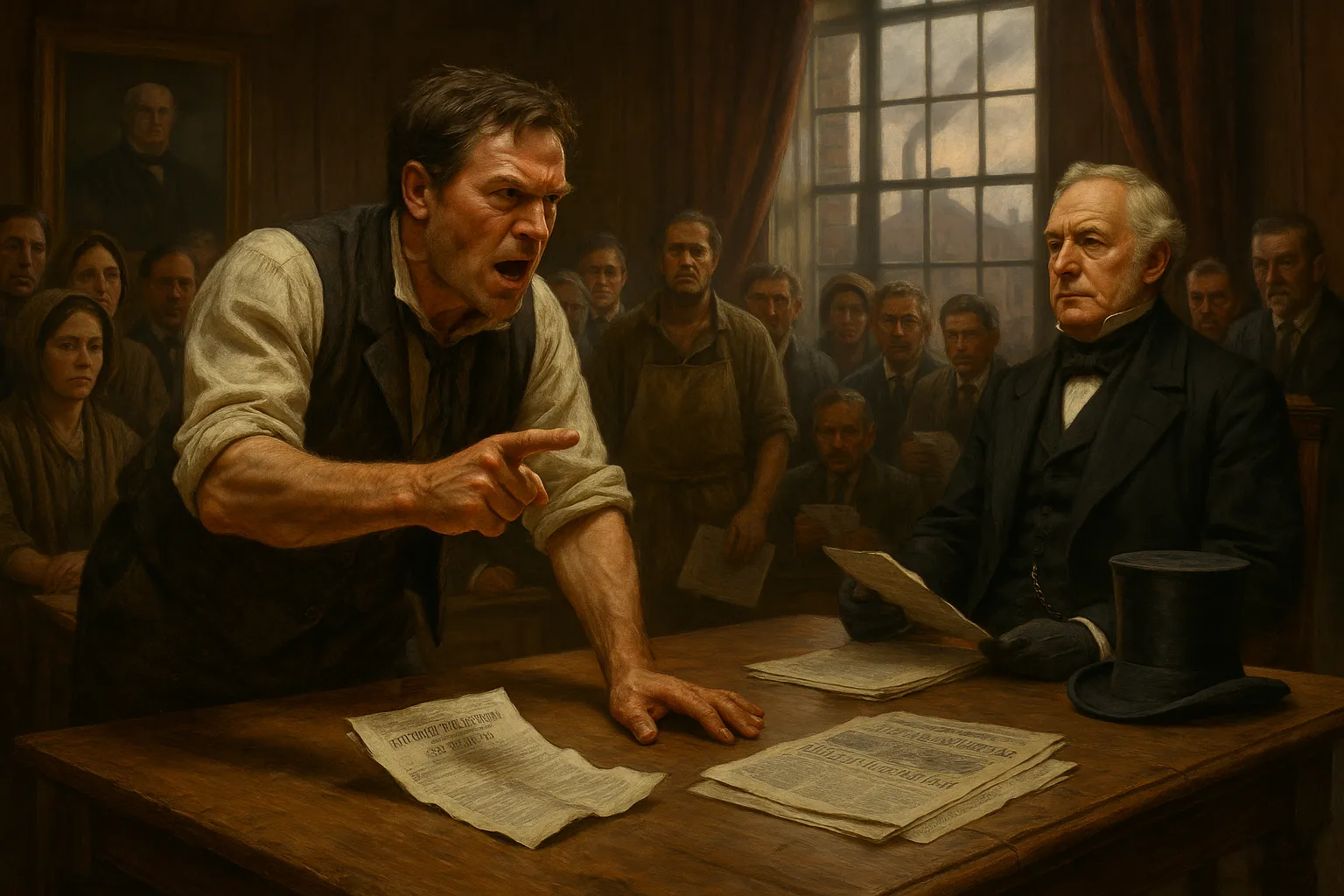
A factory inspection report exposed poor conditions. Turner used the report at a public meeting to demand stricter enforcement and local funds. Derby’s allies warned that tighter regulation would harm rural employment and grain prices. Newspapers amplified both claims. The clash turned personal when Turner publicly accused Derby allies of ignoring worker safety. That accusation provoked rebuttals in Parliament and pamphlets in the provinces.
You should observe the trigger chain: inspection → public meeting → accusation → parliamentary reply. That sequence shows how local evidence can escalate into national controversy, and how actors with different resources respond differently.
Core Differences: Ideas, Strategies, and Motivations
Fact: Their core differences trace to ideology, incentives, and preferred tactics.
Ideological and Policy Contrasts
Lord Derby often prioritized national order, property rights, and gradual reform. He defended landed interests and cautious colonial policy. Arthur Turner prioritized labor protections, municipal investment, and practical regulation to improve daily life. You can map these contrasts as belief networks: Derby values stability and hierarchy: Turner values agency and municipal responsiveness.
Those differences produced predictable policy gaps. On tariffs, Derby favored measures that protected rural producers: Turner asked for cheaper grain and consumer protections for urban workers. On municipal reform, Derby trusted central authorities: Turner pushed for local control and accountability.
Tactical Approaches and Leadership Styles
Fact: Derby used aristocratic networks and institutional power: Turner used mobilization and persuasion.
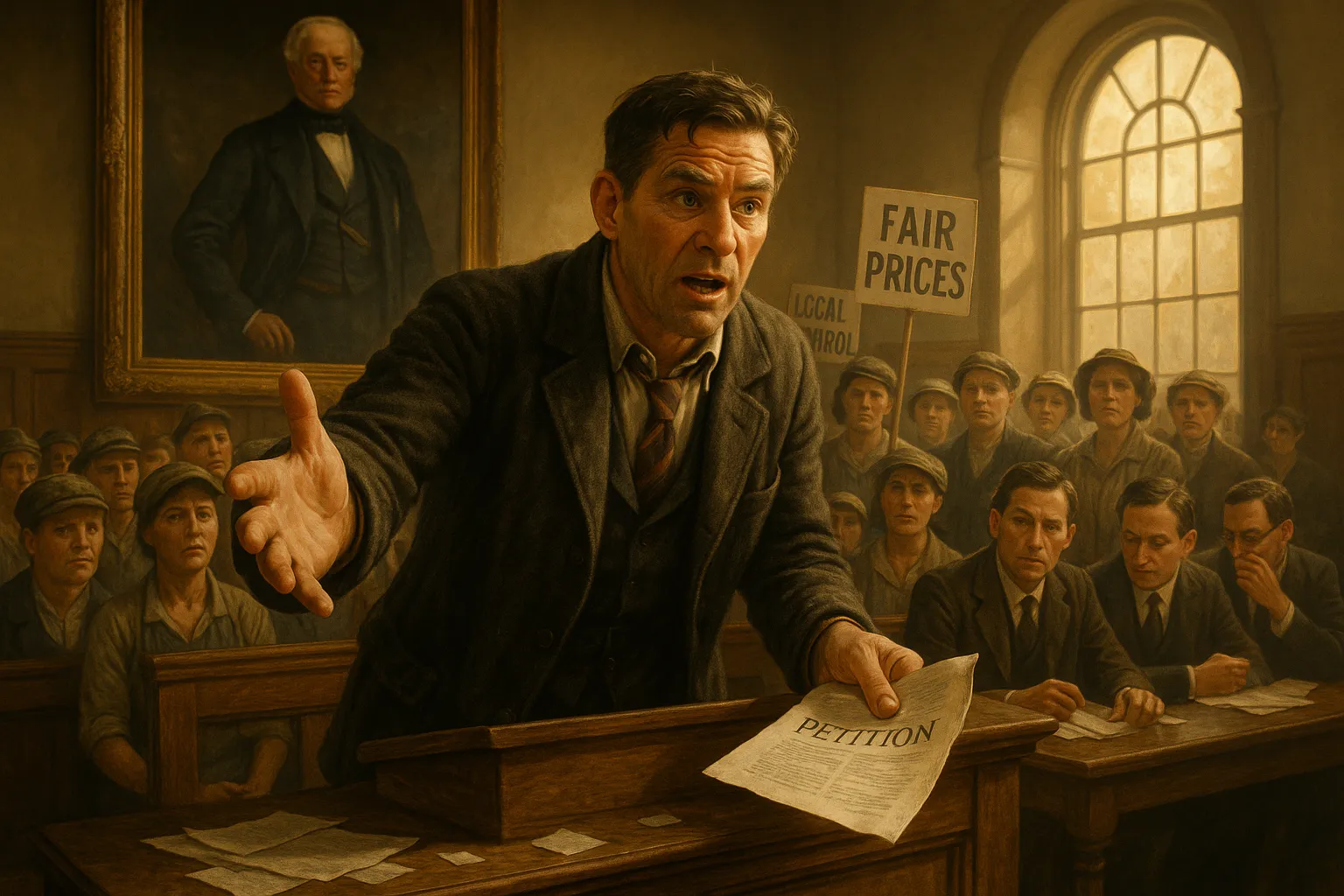
Derby’s tactics included private negotiation with peers, use of patronage, and legal maneuvering in the Lords. He moved slowly and aimed for consensus within elite circles. Turner’s tactics included town hall speeches, petitions, and pressure on local press outlets. He acted fast and visibly.
Leadership styles also diverged. Derby exercised top-down command: he delegated and expected obedience. Turner preferred coalition-building at street-level. That difference meant Derby could shape national law: Turner could force local implementation. Each style had limits: Derby’s top-down method sometimes missed social sentiment: Turner’s bottom-up method sometimes lacked access to decisive levers at Westminster.
Contemporary Reactions and Media Coverage
Fact: Supporters and opponents framed the dispute to mirror class lines, and the press magnified those frames.
How Supporters and Opponents Framed the Dispute
Derby’s supporters framed him as a guarantor of order. They used words like “stability” and “tradition” to reassure rural voters. Turner’s supporters framed him as a defender of labor and municipal ethics. They used personal stories: mothers sick from factory dust, fathers paid late. Each frame appealed to a different emotional register.
Opponents weaponized incidents. Opponents of Turner claimed his reforms would bankrupt small manufacturers. Opponents of Derby accused him of ignoring worker health. You can see this in pamphlet titles and campaign speeches: each side selected a narrative that fit their voter base.
Press, Pamphlets, and Public Opinion at the Time
Fact: Newspapers like The Times, regional weeklies, and pamphleteers shaped impressions.
National papers sympathetic to Conservative leadership defended Derby’s cautious stance. Regional weeklies and radical pamphlets amplified Turner’s calls for reform. Public meetings and letters to editors created a feedback loop: local outrage fed regional papers: regional reports reached London and forced replies in Parliament. That media ecology magnified small events into national debates, and it changed how each man responded, more repetition, more rhetorical framing, less raw policy detail in public forums.
Consequences and Outcomes
Fact: The immediate outcomes included policy adjustments and shifts in local political power: the longer effects reshaped careers and institutional practice.
Immediate Political or Institutional Outcomes
A short-term result was the introduction of targeted factory inspections and modest municipal grants for sanitation. Parliament approved amendments that allowed local authorities more enforcement teeth. Turner won a council seat and greater influence in municipal committees: Derby preserved core national policies but accepted some local measures to defuse unrest.
You should note the compromise: local pressure translated into specific regulations while national structures remained intact. That result shows how conflict can produce incremental change rather than wholesale replacement.
Longer-Term Effects on Careers and Institutions
Fact: Long-term, Turner’s activism strengthened municipal governance norms: Derby’s legacy reinforced party structures.
Turner parlayed reform wins into a regional movement for improved public health and education. Town councils adopted inspection routines that persisted for decades. Derby’s role helped consolidate Conservative party identity and governance practices in the Lords: his measured interventions influenced later policy on trade and empire.
Both men influenced institutional behavior: Turner by normalizing local oversight, Derby by refining party strategy. You can trace modern municipal inspection regimes and party management tactics back to the patterns they established, though many other actors also shaped those outcomes.
Assessing Legacy and Historical Interpretation
Fact: Historians weigh them differently: Derby as a national architect, Turner as a pragmatic civic reformer.
How Historians and Biographers Evaluate Each Figure
Biographers of Edward Smith-Stanley praise his political craftsmanship and longevity. They credit him with stabilizing Conservative structures during turbulent times. Historians of local government highlight Arthur Turner as a model of municipal activism that translated working-class needs into policy. You should consult works on 19th-century British politics and municipal history to see these perspectives side-by-side.
Critics point out limits. Some historians argue Derby resisted necessary reforms. Others say Turner sometimes sacrificed broad strategy for short-term gains. These honest moments, mistakes and missed chances, give you a fuller picture, not caricatures.
Lessons and Relevance for Contemporary Readers
Fact: The core lesson is that scale and method matter: who you are shapes what you can change.
If you work in national policy, you must build institutions and manage elites, like Derby. If you work locally, you must mobilize, collect evidence, and force implementation, like Turner. Both approaches require humility: Derby needed to listen to street evidence: Turner needed channels to scale wins.
You can apply this in your civic work. Start at the right scale for your goal. Combine evidence with narrative. Expect pushback and plan for incremental wins. And remember: public life contains both ceremony and sweat, titles give you reach, but local action wins hearts. This lesson still matters, and it will guide your choices when you face similar conflicts.
To provide the best experiences, we use technologies like cookies to store and/or access device information. Consenting to these technologies will allow us to process data such as browsing behaviour or unique IDs on this site. Not consenting or withdrawing consent, may adversely affect certain features and functions.
Functional
Always active
The technical storage or access is strictly necessary for the legitimate purpose of enabling the use of a specific service explicitly requested by the subscriber or user, or for the sole purpose of carrying out the transmission of a communication over an electronic communications network.
Preferences
The technical storage or access is necessary for the legitimate purpose of storing preferences that are not requested by the subscriber or user.
Statistics
The technical storage or access that is used exclusively for statistical purposes.The technical storage or access that is used exclusively for anonymous statistical purposes. Without a subpoena, voluntary compliance on the part of your Internet Service Provider, or additional records from a third party, information stored or retrieved for this purpose alone cannot usually be used to identify you.
Marketing
The technical storage or access is required to create user profiles to send advertising, or to track the user on a website or across several websites for similar marketing purposes.