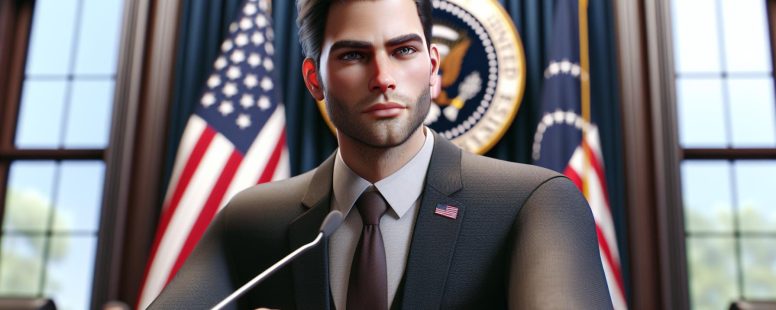
Imagine standing at the crossroads of power, where two of the most influential roles in governance—Prime Minister and President—shape the destiny of nations. You’ve likely heard these titles tossed around in political discussions, but have you ever stopped to wonder how their responsibilities truly differ? While both wield authority, their roles, powers, and the way they interact with their governments are worlds apart.
Understanding the distinction between a Prime Minister and a President isn’t just about grasping political jargon—it’s about uncovering how leadership styles and systems of government impact your daily life. From parliamentary democracies to presidential systems, these roles define how decisions are made, laws are enforced, and nations are led. Whether you’re a curious citizen or a budding political enthusiast, exploring these differences offers a fascinating glimpse into the inner workings of global leadership. Let’s jump into what sets these two powerful positions apart.
Understanding The Roles Of PM And President
Power and responsibility differ significantly between a Prime Minister (PM) and a President, shaping governance in unique ways. Their roles arise from contrasting government systems like parliamentary and presidential democracies.
Overview Of A Prime Minister’s Role
A PM acts as the head of government, primarily overseeing executive functions. These leaders depend on a parliamentary majority for their authority and continuity. For instance, in the United Kingdom, the PM leads policy formation, directs cabinet decisions, and ensures legislation aligns with their party’s agenda.
Legislation’s drafting and implementation fall under the PM’s guidance, with cabinet approvals shaping national action. Unlike presidents, PMs represent domestic leadership rather than acting as state figures internationally. Dependence on parliamentary support makes their position inherently accountable; a vote of no confidence could end their term.
Overview Of A President’s Role
A President fulfills dual roles as both the head of state and, in some systems, head of government. They symbolize unity and international representation. For example, in the United States, the President enforces federal law, commands armed forces, and shapes foreign policy through diplomacy.
Presidents operate independently of legislative pressures due to their direct public election in most systems. In contrast with PMs, Presidents carry veto powers over laws and often shape national vision through unilateral actions like executive orders. While ceremonial aspects underline the role in countries like Germany, their influence over governance varies globally.
Both the PM and President exemplify distinct leadership, their functions shaped by governmental frameworks and public trust.
Key Differences Between PM And President
A Prime Minister (PM) and a President hold distinct roles in governance, reflecting different government structures and leadership approaches. Their powers, responsibilities, and decision-making processes vary significantly, influencing how a nation is governed.
Differences In Powers And Responsibilities
A PM acts as the head of government, accountable to the legislature and reliant on its majority support. They oversee policymaking and execution, often working closely with cabinet members in a parliamentary system, such as the United Kingdom or India. For example, a PM must frequently defend policies during parliamentary debates, ensuring their actions align with party goals and legislative approval. Their power remains tied to the collective decision-making of the Parliament.
A President, particularly in a presidential system like the United States, combines the head of state and head of government roles. Their responsibilities include representing the nation internationally and executing laws domestically. They hold significant powers like vetoing legislation or issuing executive orders independently of the legislature’s approval. Presidents exemplify a more centralized authority, often setting a national agenda without requiring consensus from a legislative majority.
Term Length And Election Process
PMs generally depend on their party’s success in parliamentary elections to assume office. Their term lengths are flexible, constrained by the parliamentary system. For instance, if a vote of no confidence occurs or their party loses its majority, a PM’s term may end prematurely, instigating either resignation or new elections.
Presidential terms have fixed durations, subject to constitutional rules. For instance, a U.S. President serves a four-year term, with re-election limited to once. They are directly elected by citizens, enhancing their individual mandate compared to a PM, who’s indirectly chosen through parliamentary dynamics. This direct election process adds democratic legitimacy to a President’s role, reflecting nationwide representation.
Decision-Making Authority
PMs often operate through collaborative governance, relying on collective cabinet decisions. They consult key leaders and ministers while drafting and implementing policies. For example, in matters of national importance like economic reforms, a PM works within parliamentary parameters to ensure support.
Presidents can make unilateral decisions within their executive boundaries, offering decisive governance. In emergencies, such as a national security crisis, they can act swiftly by deploying executive powers without legislative delays. Their decision-making showcases independence but also imposes checks and balances by judicial or legislative systems within a presidential framework.
Examples From Around The World
Parliamentary Systems With Prime Ministers
In parliamentary systems, Prime Ministers often function as the head of government, relying on the legislative branch for their authority. For instance, in the United Kingdom, the PM oversees executive policies and represents the ruling party in the House of Commons. The PM is chosen from the majority party and retains their position through parliamentary confidence. Policies introduced by the PM, like healthcare reforms, must align with party ideologies and undergo parliamentary scrutiny.
In Canada, the PM also serves as the leader of the majority party in the House of Commons, directly shaping national agendas by introducing bills and negotiating with provincial premiers. This collaboration reflects a collective approach to decision-making, where legislative and executive functions are intertwined.
Presidential Systems With Presidents
Presidents, as seen in the United States, hold dual roles as head of state and head of government, symbolizing the nation while driving key policymaking. Presidents are directly elected by citizens, ensuring democratic legitimacy. In the U.S., a President can veto congressional bills, issue executive orders, and appoint key federal officials like Supreme Court justices, highlighting their independent executive powers.
In Brazil, the President operates within a federal system, balancing national interests with state-level concerns. They propose budgets, enact laws, and carry out foreign policies, showcasing the autonomy typical of presidential systems. Unlike in parliamentary systems, Presidents function without direct legislative dependency but must navigate political challenges like impeachment processes, as seen in recent history.
Implications Of These Differences
Understanding the differences between a Prime Minister (PM) and a President can significantly impact how you perceive governance and policy-making worldwide. These roles, though often compared, shape unique political landscapes and directly influence citizens’ lives.
Impact On Governance
The governance model changes dramatically depending on whether a PM or a President leads a nation. In parliamentary systems, governance leans towards collective decision-making. A PM collaborates with the cabinet and legislature to craft policies, ensuring alignment with the ruling party or coalition. For example, in the United Kingdom, the PM regularly answers questions during parliamentary sessions, reinforcing accountability.
Conversely, presidential systems emphasize centralized authority. A President, such as in the United States, can bypass legislative constraints through executive orders, solidifying swift and decisive action, especially during crises. This structure can lead to concentrated decision-making power, allowing Presidents to carry out personal visions without requiring consensus, risking potential overreach if checks and balances waver.
Effect On Public Policies
Public policies reflect the governing style dictated by these leadership roles. PMs often develop policies influenced by party agendas and parliamentary debates. This collaborative process considers diverse viewpoints, which can lead to more inclusive outcomes but slower implementation. For instance, Canada’s Prime Minister engages with ministers and opposition parties to shape policies on healthcare and climate change.
Presidents often exert significant influence over public policies, leveraging their independent mandates. Direct elections grant Presidents a broader public appeal, enabling bold policy initiatives. In Brazil, the President’s decisive stance on deforestation policies highlights how unilateral power can effectuate swift action. But, this independence can also result in policies that polarize or exclude certain groups, depending on the leader’s vision.
Conclusion
Understanding the differences between a Prime Minister and a President gives you valuable insight into how leadership shapes governance and policy-making. These roles reflect the unique structures of parliamentary and presidential systems, each with its strengths and challenges.
By recognizing how these leaders operate, you can better appreciate the complexities of global leadership and how it impacts your daily life. Whether through collaborative governance or centralized authority, the dynamics of these positions influence not only national policies but also the trust and expectations placed on those in power.
To provide the best experiences, we use technologies like cookies to store and/or access device information. Consenting to these technologies will allow us to process data such as browsing behaviour or unique IDs on this site. Not consenting or withdrawing consent, may adversely affect certain features and functions.
Functional
Always active
The technical storage or access is strictly necessary for the legitimate purpose of enabling the use of a specific service explicitly requested by the subscriber or user, or for the sole purpose of carrying out the transmission of a communication over an electronic communications network.
Preferences
The technical storage or access is necessary for the legitimate purpose of storing preferences that are not requested by the subscriber or user.
Statistics
The technical storage or access that is used exclusively for statistical purposes.The technical storage or access that is used exclusively for anonymous statistical purposes. Without a subpoena, voluntary compliance on the part of your Internet Service Provider, or additional records from a third party, information stored or retrieved for this purpose alone cannot usually be used to identify you.
Marketing
The technical storage or access is required to create user profiles to send advertising, or to track the user on a website or across several websites for similar marketing purposes.