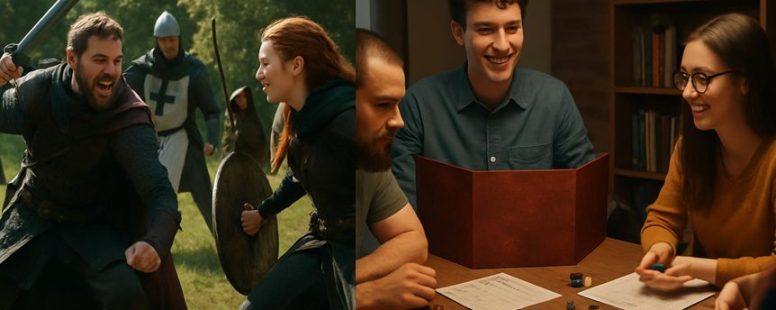
Imagine stepping into a world where your imagination becomes reality, whether through the thrill of dressing up and acting out your character in a LARP or the cozy click of dice on a tabletop.
Both worlds breathe life into stories and characters, but the journey you take can feel as different as night and day.
Understanding these differences can unlock hidden treasures in your gaming experience—like discovering that one style might actually sharpen your social skills or boost creativity in ways you never expected.
Let me guide you through what sets LARP and tabletop RPGs apart, so you can choose the adventure that truly calls to you.
Gameplay Differences Between LARP and Tabletop RPGs
LARP and tabletop RPGs are different ways to tell stories through games. LARP, which stands for Live Action Role Playing, is a game where you act out your character in real life. You wear costumes, move around, and physically do actions. For example, if your character is a knight, you might sword fight with friends or hide behind a shield. This makes the story feel real and exciting because you are physically part of it. The environment around you, like a forest or castle, adds to the fun and makes you feel like you are really there.
Tabletop RPGs, on the other hand, are played sitting down with a group of friends. You use dice and imagination to tell your story. Instead of acting out actions, you describe what your character does, like “I swing my sword at the goblin.” The game master or the players take turns, and the dice decide if actions succeed or fail. This way of playing is faster and more flexible because you only need a few things like dice and paper.
Both types of games are fun and make you feel involved, but they do it differently. LARP’s physical actions create a strong, real feeling that can be very emotional. You might feel more connected to your character because you’re moving and reacting in real life. Tabletop games are easier to set up and can be played anywhere, but they rely on imagination more than physical activity.
If you like being active and want a vivid, sensory experience, LARP might be best for you. If you prefer quick thinking and storytelling through words, tabletop RPGs could be a better fit. Knowing the differences helps you pick the game that matches your style and what you enjoy most.
How Rules and Mechanics Shape Each Experience
Rules and mechanics are the foundation of how you experience live action role-playing (LARP) and tabletop role-playing games (RPGs). They are not just background details; they directly shape what you feel and do in the game.
Tabletop RPGs often have rules that are flexible. This means players can change or adapt mechanics to suit their story or style. For example, in Dungeons & Dragons, players might agree on how magic works to make the game more fun. This flexibility gives players more control over their characters and makes the game feel more personal.
LARPs rely more on physical immersion and real-time actions. For example, players might act out fights or use props to make scenes feel real. Because of this, LARPs need clear rules to keep everyone fair and engaged. If rules are confusing or unfair, players might get frustrated or lose interest.
Mechanics also decide how the game setting feels and how players interact with the world. For instance, if a game has rules for crafting, players can make items and feel more involved in the story. Rules influence the pace of the game and the strategies players use.
Understanding these differences helps you see why each game type feels unique. The rules guide your choices and how conflicts get resolved. This affects how deep you get into the story and how much fun you have. Mechanics are like the engine that makes the game work smoothly and keeps everyone involved.
Some players may prefer the flexibility of tabletop RPGs, while others like the physical and real-time aspects of LARPs. Both have their strengths and limits. For example, flexible rules can sometimes lead to confusion, and strict rules might make the game less free. Knowing how rules work helps you choose what’s best for you.
In short, rules and mechanics are the key to shaping your experience. They influence everything from how you feel in the game to how much control you have. Without good rules, the game can fall apart or feel boring. With the right mechanics, your game can be exciting and memorable.
How Storytelling Unfolds in LARP and Tabletop RPGs
Storytelling in both LARP and tabletop RPGs is about creating stories through players’ ideas and the game rules. But how they do it can be quite different. Here is what you should know:
First, in tabletop RPGs like Dungeons & Dragons, the story mainly depends on the game master. The game master sets the scene, describes the world, and guides how the story unfolds. Players tell their characters’ actions, but the game master controls the bigger picture. Think of the game master as a storyteller who paints a picture with words and lets players add their parts.
In contrast, LARP, which stands for Live Action Role Playing, focuses more on players acting out their characters in real life. They physically dress up and interact face-to-face. This makes the story feel more real and emotional. For example, a LARP player might run across a field to escape a monster or shout out a heroic line. It’s more immediate and can feel like live theater.
Scene pacing is another big difference. In tabletop games, players can pause to think, talk, or plan. They can take their time to explore strategies. But in LARP, the story moves quickly because players respond in real time. This means decisions happen fast, and the story can change suddenly.
Knowing these differences can help you choose which style fits you best. Do you prefer detailed stories guided by a narrator or energetic role-playing with physical acting? Both make storytelling fun but in different ways.
How Players Interact in LARP and Tabletop RPGs
Knowing how players interact in LARP and tabletop RPGs helps you understand what each experience is like.
In LARP, players physically act out their characters. They wear costumes, use props, and move around in real space. This makes the game very immersive because players are truly “living” their roles. For example, if your character is a knight, you might carry a sword and walk like a brave warrior. This hands-on approach makes players feel more connected to their characters and to each other. It also builds a close community because everyone is face-to-face, sharing real-time moments. One warning is that LARP can be tiring and needs a lot of space and preparation.
Tabletop RPGs focus more on talking and storytelling. Players sit around a table, describe what their characters do, and listen to others. They use imagination to picture the scenes, often with dice to decide actions. For example, a player might say, “I try to pick the lock,” and the game master decides if it works. This type of game relies mostly on creativity and quick thinking. It can be easier to set up and play anywhere, but some people might miss the physical activity and face-to-face connection of LARP.
Both types of games require teamwork and cooperation. But LARP feels more like acting in a play, with physical movement and costumes. Tabletop RPGs are more like telling a story together with words and ideas. Some players prefer LARP because they love being active and in the moment. Others like tabletop because it’s simpler and focuses on storytelling.
In the end, both ways help players build friendships and have fun, but they do it differently. If you like to move and act things out, LARP might be best. If you enjoy creating stories with words, tabletop RPGs are a good choice.
Character Creation Differences in LARP and Tabletop RPGs
Character creation in LARP and tabletop RPGs is quite different, even though both let you make your own characters. In LARP, the focus is on costumes and acting out your role. Your outfit and physical actions help you feel like your character. In tabletop RPGs, the emphasis is on storytelling and game rules. Your character’s background and skills guide how you play.
Here’s what makes them different:
In tabletop RPGs, your character’s story and goals help make the game interesting. In LARP, quick role-playing and acting out scenes are more important.
Tabletop games let you customize your skills very specifically. LARP abilities are broader and based on your experience level.
Player choices in tabletop games come from rules and strategies. In LARP, you act out decisions with your costume and movements.
Knowing these differences helps you see how each style creates fun character experiences. For example, a tabletop game might let you choose to be a wizard with special spells. In LARP, you might wear a wizard costume and act out casting spells in real life. Both are fun but feel very different.
Some critics say LARP can be limited by costume and physical space, making it less flexible. Others argue tabletop RPGs can be too slow or complicated, especially with complex rules. Both have good and bad points, so think about what kind of fun you want.
How Physical Space Shapes LARP and Tabletop RPGs
Physical space plays a big role in how you experience LARP and tabletop RPGs. In LARP, the setting — like a forest, castle, or hall — directly influences how you move and interact. For example, if you’re in a wooded area, climbing trees or hiding behind bushes becomes part of the game. Props like swords, shields, or natural features make the story feel real and help you feel immersed. The environment shapes your actions and makes the game more exciting and lifelike.
Tabletop RPGs, on the other hand, depend mostly on imagination. Players sit around a table with maps, miniatures, and rulebooks. The physical space is simple, and players picture the scene in their minds. While some games have detailed maps or models, most rely on storytelling and player creativity. Here, the environment influences the game less directly, and the focus is more on narrative and character interactions.
Some people prefer LARP because it gives a physical, sensory experience. You can touch props and move through real spaces, which makes the story feel more real. However, LARP also needs more setup and space. Not everyone has access to suitable locations or costumes. Tabletop RPGs are easier to play anywhere, even in small rooms, but might feel less immersive.
Both styles have their strengths and limits. LARP offers a vivid, physical experience but can be harder to organize. Tabletop games are flexible and simple but less sensory-rich. Knowing how space shapes your game can help you choose what type fits you best. Do you want to act out scenes in a real setting, or do you prefer creating stories with just your imagination?
Community and Social Dynamics in LARP vs. Tabletop RPGs
Community and social dynamics are different in LARP and tabletop RPGs, and understanding these differences can help you choose what fits you best.
In LARP, or live-action role-playing, players act out their characters in real life. This creates a very physical and face-to-face social experience. You see, hear, and touch other players, which makes the bonds feel more real and immediate. For example, if someone pulls a sword in a LARP game, you actually see it and react in real time. But, LARP can also take a lot of time and effort, like dressing up in costumes and traveling to game sites. So, it might be more social but also more demanding.
Tabletop RPGs, like Dungeons & Dragons, are played sitting around a table with books, dice, and character sheets. The social connection comes from talking, planning, and storytelling. It’s less about physical actions and more about imagination and conversation. For example, you might spend hours chatting about your hero’s plans without leaving your house. This style is easier to fit into a busy schedule but may feel less immediate or intense than LARP.
Some people love the close, real-life interactions of LARP but warn it can be intimidating or expensive. Others prefer tabletop RPGs for their convenience and flexibility but say they miss the physical feel of LARP.
If you’re new, ask yourself: Do I want to be active and physically involved or do I prefer sitting and talking? Both styles build community, but they do it differently. Think about what kind of social experience you’re looking for and what you’re willing to put into it.
Player Interaction Styles
First, role-playing styles are different. Live Action Role-Playing (LARP) needs players to act out their characters physically. This makes the game more real and exciting. For example, you might wear costumes and act out battles. Tabletop RPGs, like Dungeons & Dragons, rely on imagination and talking. You describe what your character does, but don’t need to move around much. If you enjoy acting and physical movement, LARP might be better. If you prefer talking and planning, tabletop could suit you more.
Second, social engagement varies. LARP is face-to-face and happens in real time. This creates strong bonds and spontaneous fun. Imagine playing with friends at a park, reacting immediately to what others do. Tabletop games are usually played over a long time with turns. You have more time to think and discuss strategies. Some players like the quick, energetic feel of LARP. Others prefer the slower, thoughtful style of tabletop gaming.
Third, communication methods shape how you experience the game. LARP involves in-character conversations happening instantly. This creates emotional depth because you react in real time. On the other hand, tabletop games let players talk out of character too. This is called meta-discussion. It helps plan tactics or clarify rules. Some players like to step out of character sometimes, which can be confusing for others.
Both styles have their strengths and limits. LARP can be more immersive but needs more planning and space. Tabletop is easier to start and flexible but might lack the physical energy of LARP. Choosing depends on what kind of social and creative experience you want. Do you want to act it out live, or explore stories through words and ideas? Both can be fun, but knowing the differences helps you pick the right one for you.
Group Dynamics Impact
Group dynamics are the ways people interact and work together in different games like LARP and tabletop RPGs. Here is what you need to know about how these group interactions differ.
In live-action role-playing games (LARP), group bonds depend on trust built in real time. Players physically act out roles, often within social ranks or hierarchies. For example, a player might pretend to be a king or a knight, and others react based on that. Because players are physically present, leadership and conflicts happen quickly right during the game. If a disagreement comes up, players need to solve it right then, which can be intense. A story might change suddenly because of how players react face-to-face. This makes emotions feel more real and immediate. But this also means trust must be built faster, or conflicts may escalate.
On the other hand, tabletop role-playing games (RPGs) rely mostly on talking and imagination. Players describe what their characters do and work together through conversation. For example, they might plan a strategy or solve a puzzle by discussing options. Teamwork here depends on clear communication and shared ideas, not physical actions. Conflict resolution takes longer because players think and talk through problems. The social hierarchy is less visible, and leadership may be more flexible. Still, players need to cooperate well to succeed.
Both types of games involve working within social roles and hierarchies. But LARP’s real-time, face-to-face nature makes emotional bonds stronger and conflicts more immediate. Tabletop RPGs allow more time to think and negotiate, which can lead to different teamwork challenges.
Knowing these differences can help you choose which game fits your style better. Do you prefer intense, emotional interactions with quick decisions? Or do you like to sit back and plan with friends over a long time? Both have their strengths and limitations. For example, LARP can be more exciting but also more stressful when conflicts happen fast. Tabletop RPGs can be more relaxed but may lack the same emotional connection.
In the end, understanding group dynamics in each game type helps you see why leadership and trust develop differently. This can make your gaming experience more fun and meaningful.
Social Commitment Levels
Social commitment is how much effort and time you put into a gaming community. It helps decide if you want a casual or serious experience. LARP (Live Action Role Playing) and tabletop RPGs (Role Playing Games) differ a lot in this area.
First, time investment. LARP usually needs more time because events are longer and happen more often. For example, a LARP weekend can last all day or even overnight. Tabletop games are more flexible; you can play for a couple of hours once a week or whenever you have free time.
Second, community engagement. LARP groups focus on in-person bonding and working together over time. Imagine dressing up and acting out your character in a park with friends. This creates strong social bonds. Tabletop RPGs are often played online or in casual meetups, which can be more relaxed and less connected.
Third, character immersion. LARP encourages players to fully act as their characters, dressing up and staying in character during events. This can make the game feel more real and social. In tabletop RPGs, players tell stories and make decisions more freely, which can be less intense but still fun.
Knowing these differences helps you pick the right game for your schedule and how much you want to be involved. Some players love the deep connection of LARP, but it takes more time. Others prefer the flexibility of tabletop games, which are easier to fit into busy lives.
Some folks might think LARP is too demanding, or that tabletop RPGs don’t create real bonds. Both types have their ups and downs, so consider what suits your personality and time best.
Finding the Right Fit: LARP or Tabletop RPG for You
Choosing between LARP and tabletop RPG depends on what kind of experience you want. Here are the main points to help you decide.
LARP, or live-action role-playing, is best if you like costumes and moving around. When you play LARP, you dress up as your character and act out scenes in real life. For example, if you enjoy wearing medieval armor and fighting with foam swords, LARP can be very fun. It’s a hands-on way to feel like you are truly part of the story. But, it also takes more time to prepare and involves being in social settings with others.
Tabletop RPGs, like Dungeons & Dragons or Pathfinder, are perfect if you prefer storytelling through talking and thinking. You sit around a table with friends, use dice to decide what happens, and describe what your character does with your words. This style is less about moving and more about imagination and strategy. If you like planning your actions and solving puzzles through conversation, tabletop RPGs might be better for you. They usually don’t need costumes, but they do take some time to learn the rules and keep track of your character.
Now, how do you choose? Think about what excites you more. Do you want to wear costumes and act out scenes, or do you prefer telling stories with words? Also, consider your comfort with social settings and how much time you have. LARP can feel more active but needs more prep. Tabletop games are easier to start but still need some dedication to learn the rules.
Some people love both styles. But if you’re new, try a small game of each to see what you enjoy more. Remember, the best game is the one that makes you feel excited and have fun. Whether it’s dressing up and moving around or sitting and imagining stories, pick what suits your style.
To provide the best experiences, we use technologies like cookies to store and/or access device information. Consenting to these technologies will allow us to process data such as browsing behaviour or unique IDs on this site. Not consenting or withdrawing consent, may adversely affect certain features and functions.
Functional
Always active
The technical storage or access is strictly necessary for the legitimate purpose of enabling the use of a specific service explicitly requested by the subscriber or user, or for the sole purpose of carrying out the transmission of a communication over an electronic communications network.
Preferences
The technical storage or access is necessary for the legitimate purpose of storing preferences that are not requested by the subscriber or user.
Statistics
The technical storage or access that is used exclusively for statistical purposes.The technical storage or access that is used exclusively for anonymous statistical purposes. Without a subpoena, voluntary compliance on the part of your Internet Service Provider, or additional records from a third party, information stored or retrieved for this purpose alone cannot usually be used to identify you.
Marketing
The technical storage or access is required to create user profiles to send advertising, or to track the user on a website or across several websites for similar marketing purposes.