How To Tell Pyrite From Gold
Imagine walking through a sunlit field and spotting a glint of something shiny. Your heart races as you wonder, could it be gold? The excitement is palpable, but before you get carried away, let’s pause for a moment. That dazzling sparkle could just as easily belong to pyrite, commonly known as fool’s gold. Distinguishing between these two is crucial, not just for treasure hunters, but also for those involved in mining and jewelry-making. But why does it matter? Knowing how to tell pyrite from gold can save us time, money, and a good deal of heartache. Let’s embark on this journey together, exploring the fascinating attributes, tests, and implications of identifying these minerals accurately.
Understanding Pyrite and Gold
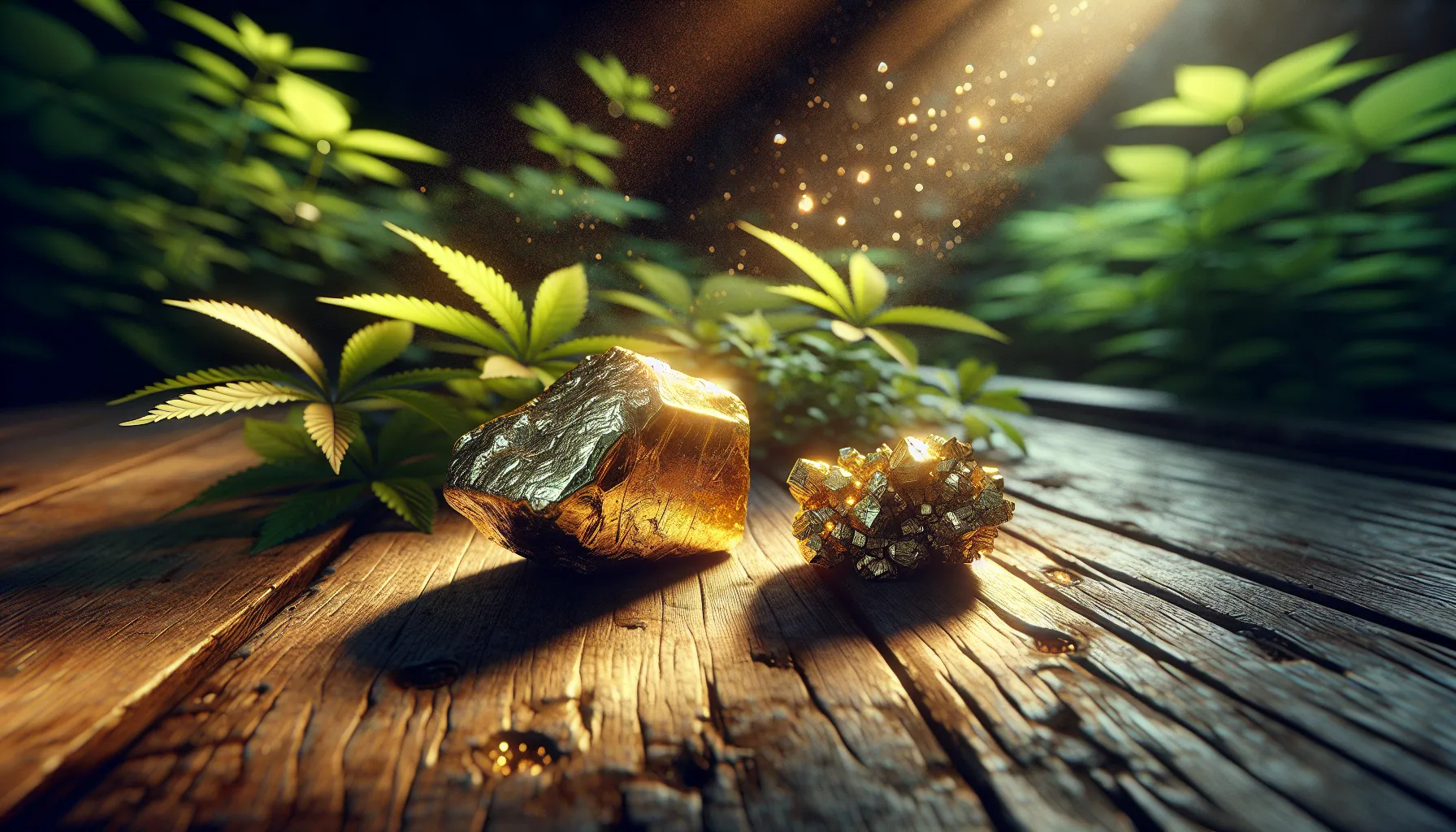
Pyrite and gold are both minerals that have dazzled human beings for centuries, each with its own unique properties and allure. Pyrite, with the chemical formula FeS₂, is primarily composed of iron and sulfur, while gold (Au) is a soft, malleable metal revered for its rarity and aesthetic qualities. Their appearances may share similarities, but their characteristics and values are worlds apart. Understanding these two substances sets the foundation for identifying them accurately. The same careful eye used to spot fool’s gold is equally valuable when identifying other deceptive materials — our guide on how to tell diamond from cubic zirconia walks through similar visual and physical tests for gemstones.
Physical Characteristics of Pyrite

Pyrite boasts a distinctive metallic luster that shines brightly in sunlight. Its color ranges from a brassy-yellow to a more golden hue, often leading to confusion among casual observers. But, upon closer examination, several distinguishing features emerge: its crystal structure typically forms cubic crystals with sharply defined edges, its hardness on the Mohs scale rates about 6 to 6.5 (enough to scratch glass easily), and when rubbed against a porcelain tile it leaves a greenish-black streak — a key identifying characteristic. This same principle of light and clarity testing also applies when you want to tell crystal from glass, where refraction and weight are the key discriminators.
Physical Characteristics of Gold
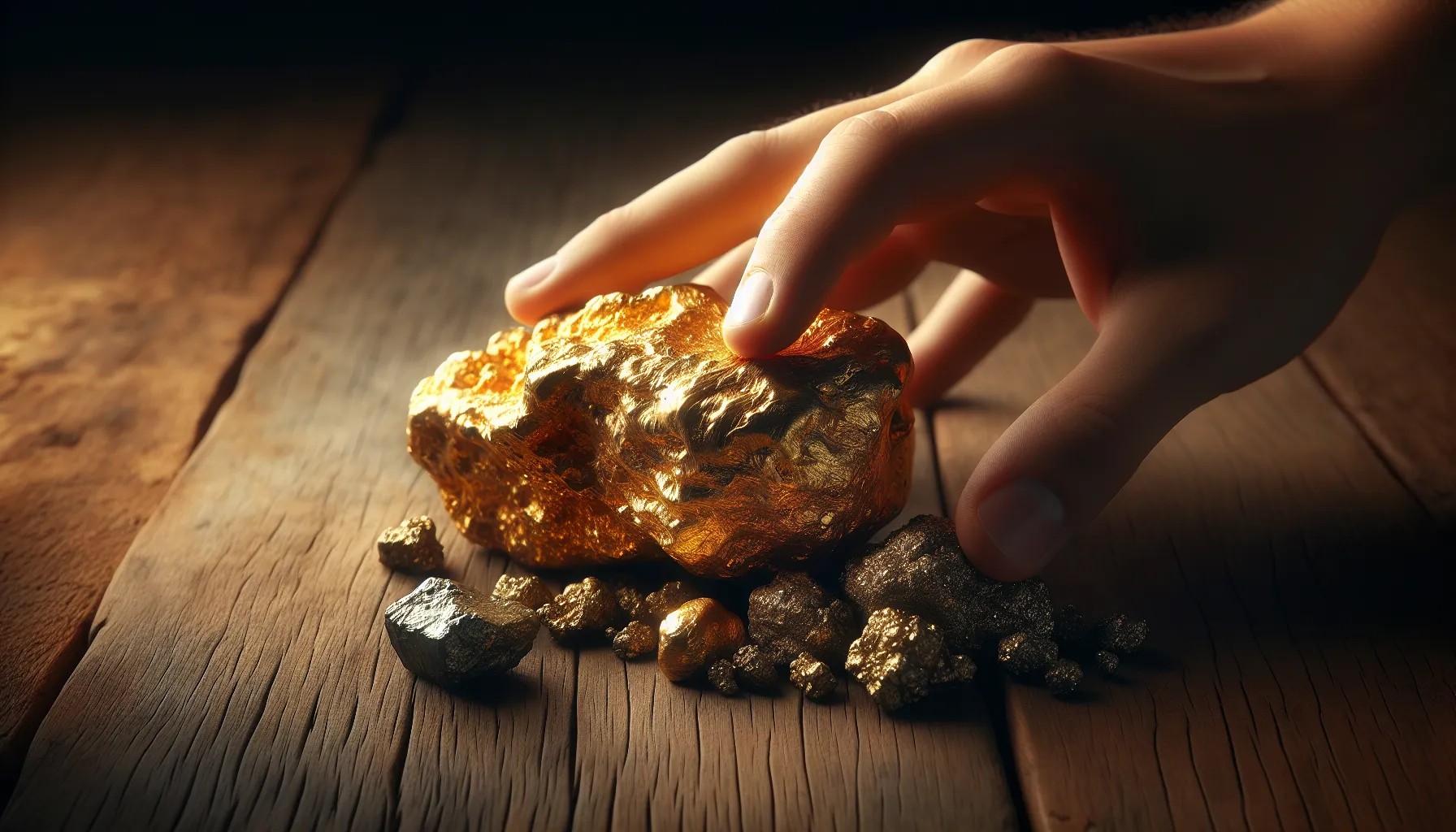
Gold, unlike pyrite, is a dense, malleable metal that shines with a warmth unparalleled by other materials. Its rich yellow hue is consistent throughout — not just shiny, but carrying a deep warm glow pyrite simply lacks. Gold is also remarkably malleable: one ounce can be stretched to nearly 50 miles long, a quality that sets it apart from rigid pyrite. Weight is another giveaway — gold is significantly heavier, and holding both in your hands makes the difference immediately apparent.
Key Differences Between Pyrite and Gold
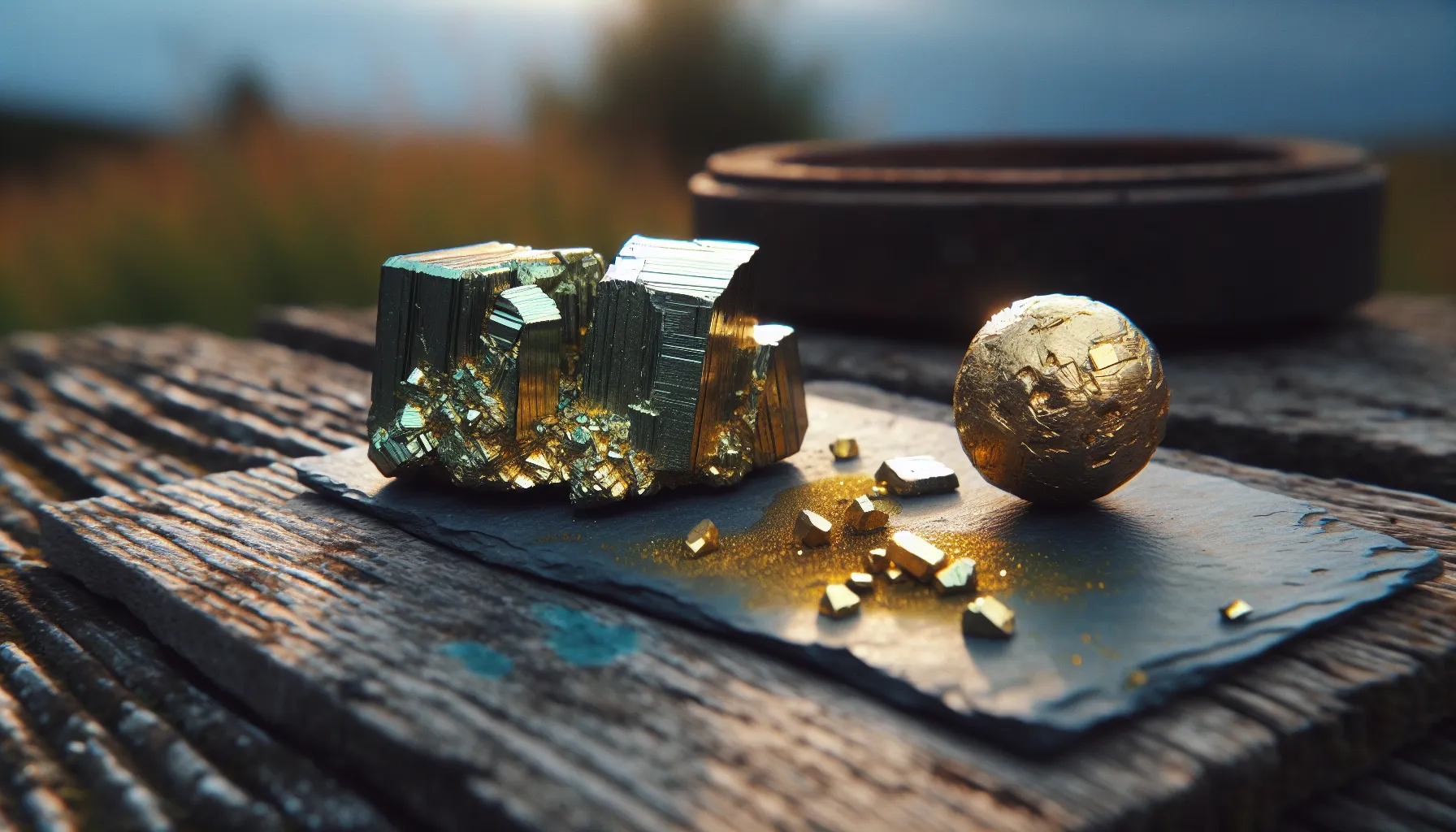
Recognizing pyrite and gold may initially seem challenging, but several critical differences become clear. Gold has a density of around 19.3 g/cm³ while pyrite measures only about 5.0 g/cm³ — a significant discrepancy detectable by weight alone. The streak test also differs sharply: pyrite leaves greenish-black while gold leaves yellow. And while gold typically occurs as nuggets or grains, pyrite commonly forms in its distinctive cubic crystal structure.
Testing Methods for Identification

Testing pyrite and gold requires a mix of visual inspection and hands-on methods. Start with visual inspection — look closely at the mineral’s surface, shape, and color. Pyrite’s luster is more of a metallic sheen while gold tends to glow. Cube-shaped crystals are a strong indicator of pyrite. A magnifying glass can reveal surface texture differences, and a small balance scale confirms weight discrepancies quickly. These same principles of physical testing apply across many metals — if you work with industrial alloys, our article on how to tell aluminium from stainless steel covers comparable hands-on identification techniques.
Chemical Tests for Accurate Results
While visual and physical tests can suffice, chemical tests confirm findings conclusively. Gold is resistant to most acids while pyrite reacts with nitric acid, releasing sulfur dioxide gas. Pyrite also emits a sulfur-like odor when struck or ground — a characteristic gold entirely lacks. For precious metals used in decorative objects, distinguishing alloys is equally important — our guide on how to tell brass from bronze explores similar chemical and visual identification methods for common copper alloys.
Common Myths and Misconceptions
Even with clear differences, many myths surround these minerals. “Fool’s Gold” suggests anyone can mistake pyrite for gold, but seasoned treasure hunters and miners often spot the difference quickly. And while some believe pyrite has no value whatsoever, it serves as a useful source of sulfur and iron in certain industries, making it worthy of further exploration. The same is true for other look-alike materials — knowing how to tell brass from copper is just as valuable for metalworkers and antique collectors who encounter both regularly.
Practical Applications and Importance of Identification
Correct identification of pyrite and gold isn’t just a fun activity: it holds significant economic and scientific implications. From mining companies to jewelers, understanding the difference protects financial investments. Collectors and hobbyists also gain value from learning the art of identification, enhancing their appreciation of natural treasures.
Conclusion
In sum, understanding how to tell pyrite from gold empowers us to make informed decisions, whether we’re treasure hunting, working in mining, or simply admiring nature’s wonders. By employing the visual, physical, and chemical tests discussed, we can accurately distinguish between these two fascinating minerals and appreciate the unique roles they play in our world. So next time you spot a glint in the sunlight, take a moment to inspect — your next discovery could be just a closer look away.

- Top Free Alternatives to VTube Studio for Streamers - October 24, 2026
- Software Development Models Comparison: SDLC Frameworks - October 23, 2026
- WxWidgets Alternatives for Cross-Platform GUI Development - October 22, 2026
by Ellie B, Site Owner / Publisher