Carex Vs. Festuca: How To Choose Between Sedges And Fescues
You can choose plants that look similar yet behave very differently. Carex vs. Festuca sets up that exact comparison: sedges (Carex) and fescues (Festuca) both offer narrow leaves and grassy textures, but they answer different site problems and design aims. Picture a rain-prone slope that needs firm roots, or a hot, dry bed that must stay blue and low, each genus offers options that fit one and fail the other. This guide gives direct, practical answers so you can match plant traits to real conditions, save time, and avoid costly replacements. You’ll learn clear differences, maintenance trade-offs, and precise cultivar picks for common landscape uses.
Quick Overview: What Are Carex And Festuca?
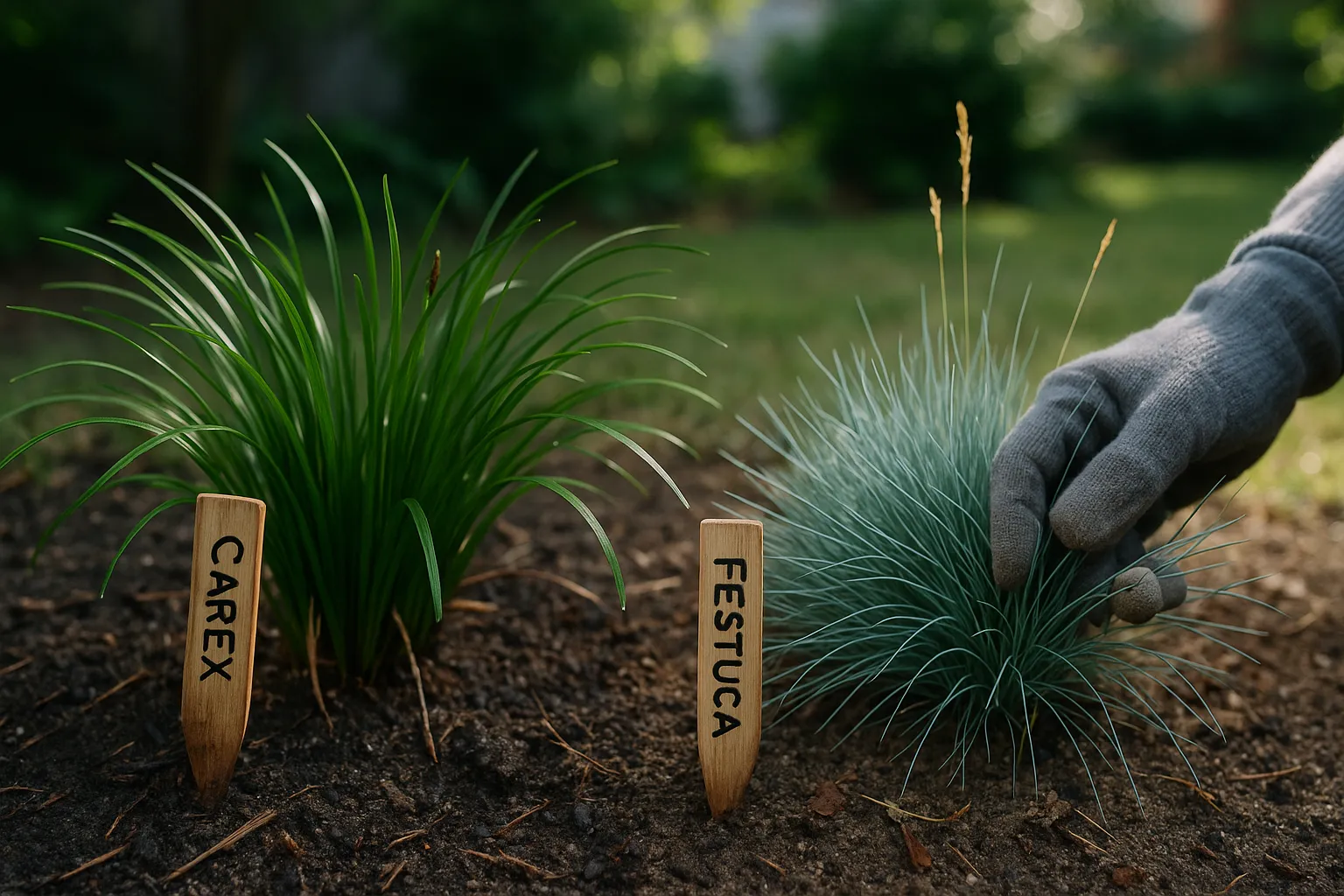
Fact: Carex are sedges and Festuca are true grasses. Carex (sedges) belongs to the Cyperaceae family: Festuca (fescues) belongs to the Poaceae family. The two groups evolved different floral structures, leaf bases, and ecological niches.
Carex includes about 2,000 species worldwide. Notable species: Carex oshimensis (Japanese sedge), Carex flacca, Carex elata. Many Carex species prefer moisture or seasonally wet soils: others tolerate shade and woodland floors. Carex often spreads by short rhizomes or clumping crowns and gives a dense, tufted groundcover.
Festuca includes cool-season grasses used in turf and ornamentals. Notable species: Festuca arundinacea (tall fescue), Festuca rubra (red fescue), Festuca glauca (blue fescue). Fescues range from fine-textured blue clumps to coarse, tall cultivars suited for lawns and erosion control. Many fescues tolerate drought and low fertility better than common turf grasses.
Practical takeaway: choose Carex when you need texture, moisture tolerance, or shade performance: choose Festuca when you want classic grass form, drought tolerance, or a low-maintenance lawn alternative. This answer frames the deeper comparisons below.
Key Botanical And Visual Differences
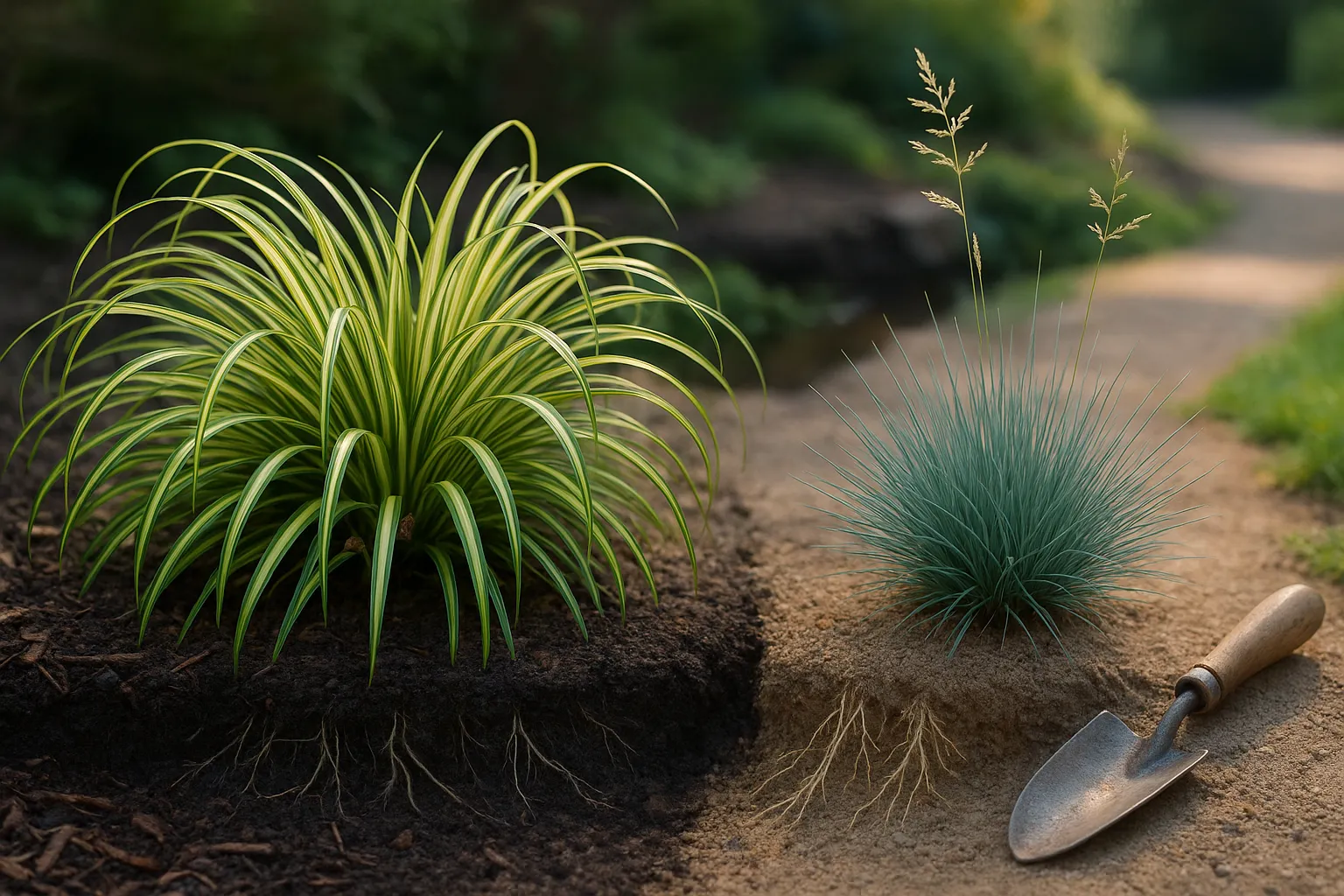
Fact: leaf shape, reproductive structures, and root systems give the clearest ID clues. Below are the key contrasts with examples and what they mean for your site.
Leaf, Crown, And Growth Habit
Fact: Carex leaves arise from a triangular stem and form tight clumps or mats: Festuca leaves come from round stems and often form tidy tufts. Carex leaves can be arching, shiny, or leathery, for example, Carex oshimensis ‘Evergold’ shows bold variegation and a fountain-like form. Festuca glauca forms compact blue mounds with stiff, needle-like blades.
If you need a low, spreading groundcover, many Carex species will fill gaps faster. If you want discrete clumps or formal lawn texture, Festuca gives that. Also, sedge leaves often feel softer underfoot than coarse tall fescue.
Flowers, Seedheads, And Reproduction
Fact: Carex produces spikelets with unisexual flowers: Festuca produces true grass panicles or spikes with bisexual florets. You’ll notice Carex seedheads are subtle and often brownish, while Festuca seedheads may be taller and more visible in summer. Festuca reproduction favors seed and tillering: some Carex spread by rhizomes or stolons, aiding erosion control.
Root Systems, Soil Preferences, And Drought Tolerance
Fact: Many Carex species develop dense fibrous roots that stabilize wet soils: many Festuca species produce deeper roots that access dry soil. Carex elata and Carex riparia tolerate saturated soils and can anchor streambanks. Festuca arundinacea (tall fescue) has deep-penetrating roots that help it survive summer droughts.
So if your site floods occasionally, favor Carex. If your site has thin, dry soil, choose Festuca or specific drought-adapted Carex, though they are fewer.
Light, Moisture, And Climate Adaptations
Fact: Carex tends to prefer shade to part shade and moist conditions: Festuca tolerates full sun and drier conditions. Exceptions exist: some Carex like Carex praegracilis handle sun and drought once established. Festuca rubra thrives in cool, maritime climates: Festuca glauca does well in hot, dry summers with cold winters.
In short: map microclimates in your yard (sun hours, runoff, soil depth) and then match species to those conditions. This reduces trial-and-error and plant loss.
Landscape Uses And Design Considerations
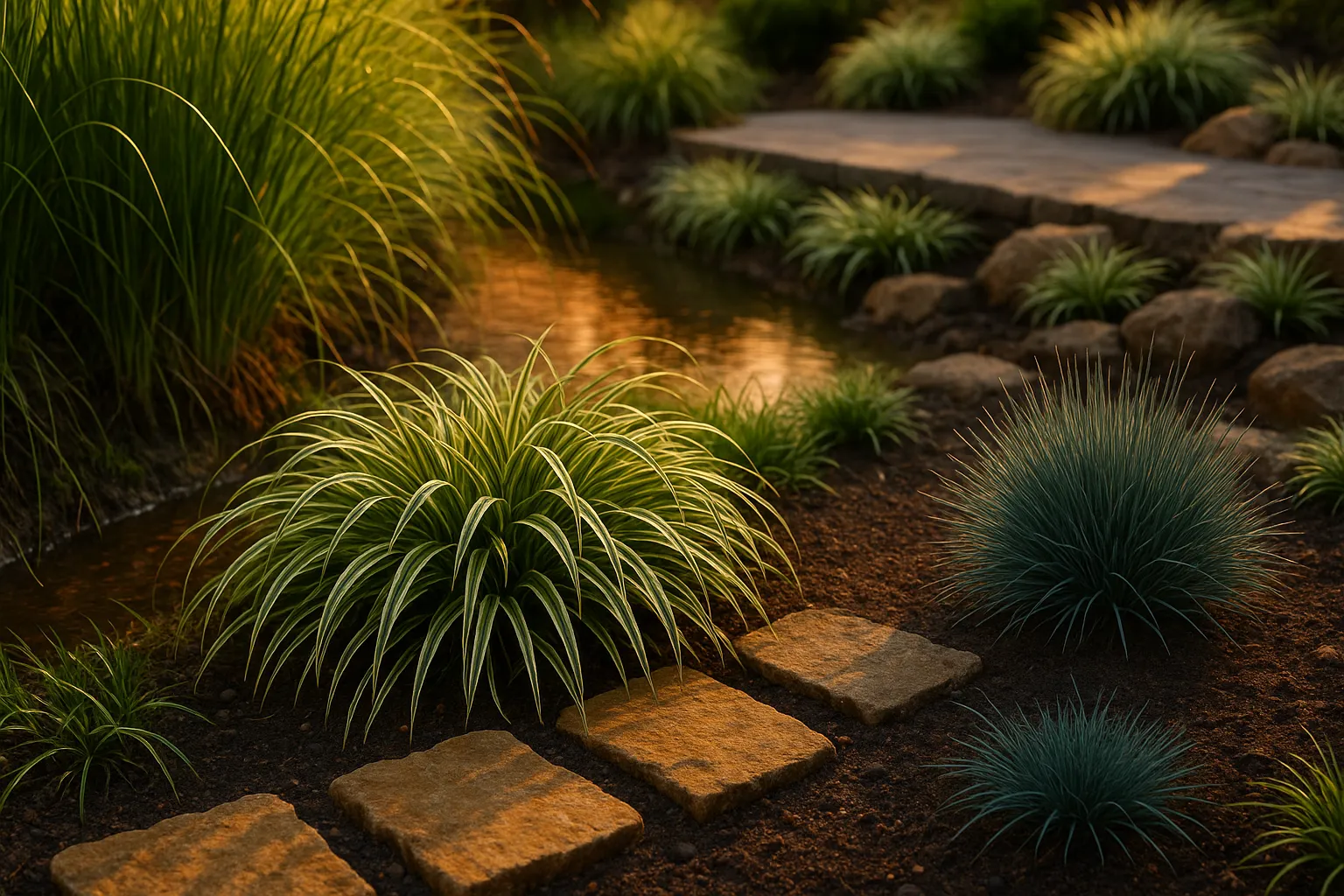
Fact: both genera serve functional and aesthetic roles but excel in different design contexts. Below is how you might use each in real projects.
Functional Roles: Erosion Control, Lawns, And Groundcover
Fact: Carex is better for wet-site erosion control: Festuca suits drought-prone lawns and slopes. For a creek bank, plant Carex elata or Carex acutiformis to tie soil with fibrous roots. For a low-maintenance meadow or roadside embankment, seed Festuca arundinacea mixes to establish quick cover and reduce erosion.
If you want a low-water lawn alternative, fine fescues (Festuca rubra, Festuca ovina) blend well with clover and need less irrigation than Kentucky bluegrass. Carex can serve as lawn substitute in shady lawns where grass fails, think a soft, irregular sedge lawn that tolerates foot traffic poorly but looks natural.
Aesthetic Roles: Texture, Movement, And Seasonal Interest
Fact: Carex offers layered texture and shade softness: Festuca provides crisp color (blue tones) and upright form. Use Carex ‘Ice Dance’ at patio edges to soften pavers. Use Festuca glauca ‘Elijah Blue’ as a punctuation in rock gardens: its steel-blue clumps contrast with warm stone.
Design tip: combine both. Plant Festuca clusters for vertical punctuation and weave low-growing Carex between stepping stones for gentle infiltration and soft edges. The contrast between sedge blades and fescue tufts adds motion and seasonal interest, seedheads in summer, winter structure in cold climates.
Maintenance Requirements And Care
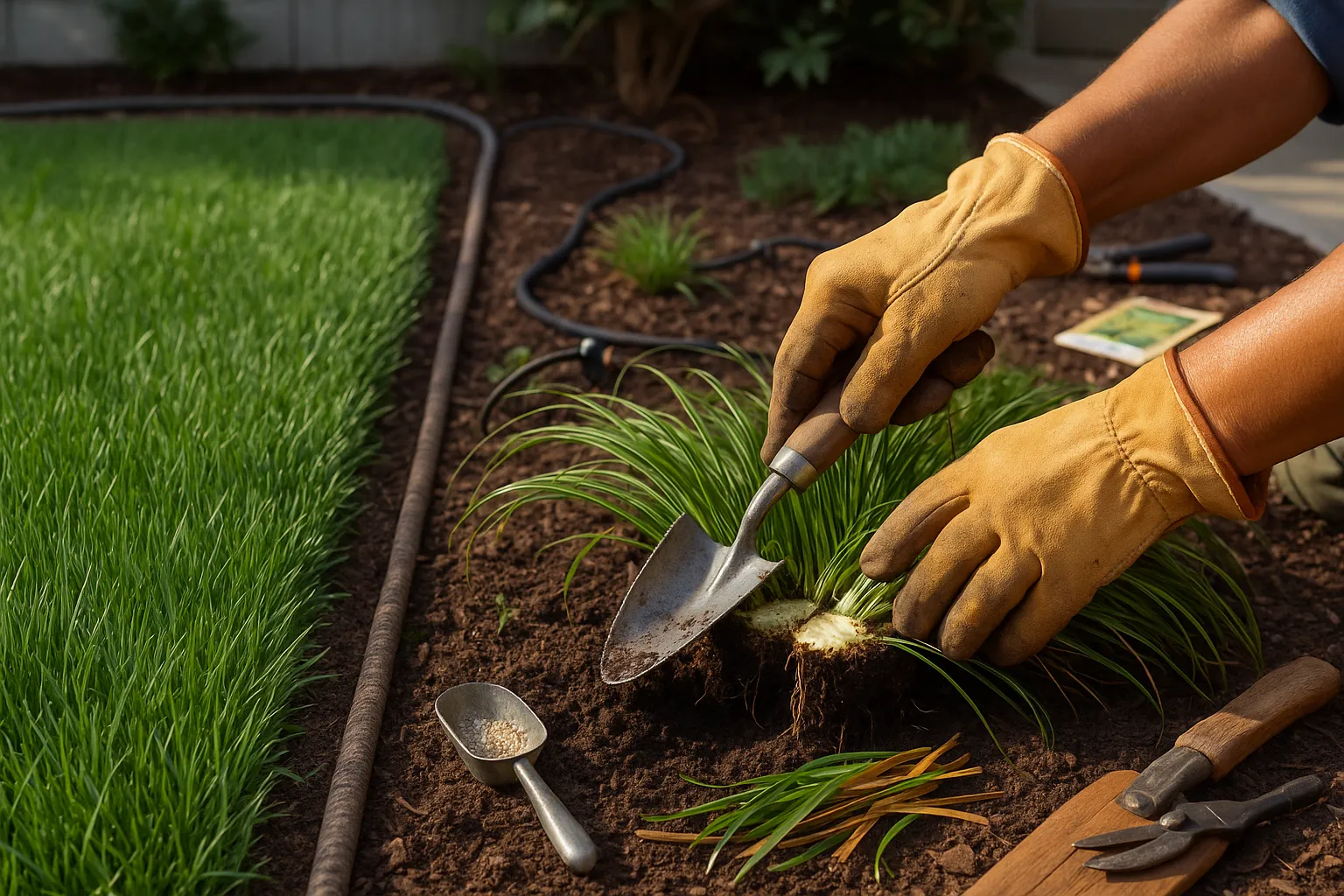
Fact: maintenance diverges mainly in mowing, watering, and division frequency. Know the simple care rules and you’ll keep plants healthy without wasted effort.
Watering, Fertilizing, And Mowing/Shearing Practices
Fact: Festuca generally needs less frequent watering once established: Carex often needs consistent moisture depending on species. Water new plantings regularly for the first season. Festuca lawns appreciate deep, infrequent irrigation to promote deep roots: Carex beds do better with steady moisture that keeps soil cool.
Fertilize sparingly. Festuca benefits from a single spring feeding if you want denser turf. Most ornamental Carex do fine on low fertility: too much nitrogen makes them flop. Mow Festuca lawns to recommended heights (usually 2–3 inches for tall fescue). Don’t mow most Carex, instead shear or trim once a year to remove dead foliage.
Lifespan, Division, And Propagation Tips
Fact: both groups respond to division. Divide clumping Carex every 3–5 years to refresh vigor. Divide Festuca clumps every 2–4 years to prevent center die-out. Propagate Carex by splitting crowns in spring: propagate Festuca by seed or crown division.
Practical note: some Festuca seed mixes include endophyte-enhanced cultivars (sold by brands like Pennington or Scotts) that resist insects. Check labels for cultivar traits.
Pests, Diseases, And Common Problems
Fact: Festuca can suffer fungal diseases (brown patch) in humid, overwatered sites: Carex can suffer crown rot if left in standing water beyond its tolerance. Watch for rust, leaf spot, and fungal crown decline in both when conditions favor pathogens.
Honest moment: I once planted Festuca bluish mounds in a shaded courtyard where fungal pressure was high, half of them collapsed that first summer. I learned to match cultivar to microclimate before buying. Expect to replace some plants the first year and plan accordingly.
How To Decide: Selecting Carex Or Festuca For Your Site
Fact: a simple site assessment leads directly to a correct genus choice. Use the checklist below, then match species recommendations that follow.
Site Assessment Checklist (Soil, Light, Use Case)
Fact: test these three things first: soil moisture pattern, light exposure, and intended use.
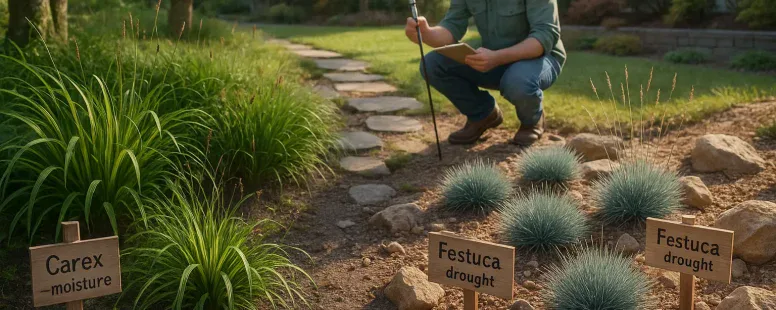
- Soil moisture: does water sit for hours, overnight, or days after rain? If yes, strongly lean to Carex species that tolerate saturation. If soil dries quickly, lean to Festuca.
- Light: full sun (6+ hours) favors Festuca: part sun to shade favors many Carex, though some sedges take sun.
- Use case: high-traffic lawn? Choose turf fescues or mixes. Erosion control or wet-edge planting? Choose sedges.
Carry a soil probe or a simple trowel to test depth and compaction. Also note wind exposure and salt spray (coastal sites favor Festuca rubra and some Carex species tolerant of salt).
Plant Selection Guide: Species And Cultivar Recommendations
Fact: choose species suited to your climate and micro-site. Below are pragmatic picks organized by common needs.
- Wet soils, shade: Carex elata, Carex pendula, Carex oshimensis ‘Evergold’. These sedges anchor wet banks and brighten dark corners.
- Moist to mesic, part shade: Carex morrowii ‘Ice Dance’, Carex testacea (orange sedge). They add color and hold soil.
- Dry, sunny slopes: Festuca arundinacea (tall fescue), Festuca glauca ‘Elijah Blue’. Use for drought-tolerant mounds and texture.
- Low-input lawns: Fine fescue mixes (Festuca rubra, Festuca ovina) work with less fertilizer and less mowing.
- Coastal or saline sites: Festuca rubra and Carex disticha can handle some salt exposure.
If you’re unsure, do a small trial plot. Plant 5–10 plugs of each candidate in the exact micro-site and observe performance through a season. That saves money and teaches you your yard’s subtle preferences.
Practical warning: some Carex species can be aggressive in ideal moist conditions and will spread into adjacent beds. If you dislike that, plant them with physical barriers or choose clumping cultivars. Also, many fine-textured fescues do not stand up to heavy, repeated foot traffic.
Call to action: sketch your planting area, note sun hours and drainage, then use the checklist and recommendations above to pick 2–3 trial species. You’ll know within a season what fits best.

- When Is the Best Time to Take a Pregnancy Test? - September 29, 2026
- Best Jyotish in Varanasi - September 29, 2026
- Free Alternatives to Koala Sampler - September 28, 2026
by Ellie B, Site Owner / Publisher