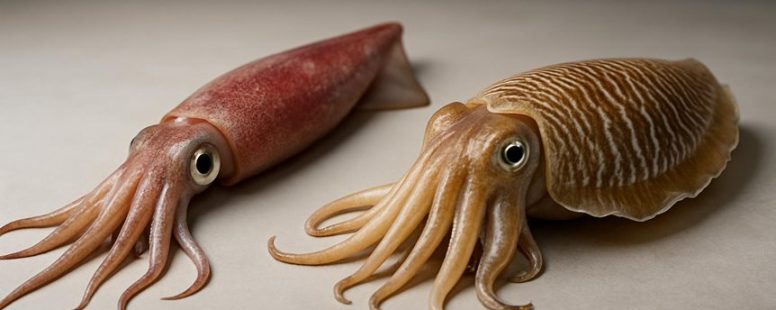
Imagine diving into the vibrant depths of the ocean where squids dart like lightning and cuttlefish glide with mesmerizing grace. Despite their close kinship, these creatures have evolved wildly different strategies for survival and hunting, shaping their roles in the underwater world.
Their contrasting behaviors are like two sides of the same coin—one explosive and rapid, the other subtle and cunning. Surprisingly, the cuttlefish’s ability to blend seamlessly into its surroundings offers a secret advantage, making it a master of disguise.
Exploring what truly sets these two apart reveals fascinating insights into their unique adaptations and the intricate dance of life beneath the waves.
What Are the Main Differences Between Squids and Cuttlefish?
Squids and cuttlefish are both interesting animals that belong to the cephalopod family. They look similar but have clear differences in their bodies and behaviors.
The biggest difference is in their shape and how they move. Squids are long and slim, which helps them swim fast. They are built for speed and are good at catching quick prey. Cuttlefish are shorter and have a rounded body with a thick fin around their sides. They move more slowly and use their fins to glide through the water. Think of squids as sprinters and cuttlefish as long-distance swimmers.
Another difference is how they change color. Cuttlefish are famous for their ability to change color and texture fast. They use this skill to hide from predators or attract mates. For example, a cuttlefish might turn bright colors to impress a mate or mimic the look of a rock to hide. Squids can also change color but usually not as well or as often as cuttlefish. They use color changes mainly to communicate or hide.
Their reproductive behaviors are also different. Cuttlefish often perform complex courtship displays with bright colors and movements. They might dance or show off to attract a mate. Squids tend to reproduce quickly with less display. Many squid species lay eggs in large groups and leave them to develop on their own.
Both animals are smart, but their intelligence shows in different ways. Cuttlefish are known for problem-solving and learning tricks, while squids are quick thinkers during hunting. These differences help each species survive in their specific homes in the ocean.
In short, squids are built for speed and quick movement, while cuttlefish are masters of disguise and communication. Both are fascinating examples of how animals adapt to their environment. If you ever see one in the ocean, notice their shape, color, and how they move. It can tell you a lot about what they are good at.
How Do Their Physical Features Help Them Survive?
Their ability to change color and blend into their surroundings helps squids and cuttlefish escape predators and catch food. These animals can quickly shift their skin color to match rocks, coral, or sand, making them hard to see. This camouflage is like wearing a suit that changes color to hide from enemies.
Their body structure and movement also help them survive. They move with quick jet propulsion, shooting water out of their bodies to zoom through the water fast. This quick movement helps them escape from predators and chase after small fish or crabs.
Some people think these features make squids and cuttlefish very good at avoiding danger. Others say that even with these skills, they can still fall prey to bigger animals like sharks. So, while their ability to hide and move fast is a big advantage, it is not a perfect defense.
Camouflage and Color Change
Camouflage and color change are important tools that help squids and cuttlefish survive. These animals can quickly change how they look to hide from predators or catch prey. They do this using special cells in their skin called chromatophores. When they want to blend in, they make their skin match the colors and patterns of their surroundings. Sometimes, they change color to warn other animals or to show they are ready to fight.
Bioluminescent signaling is another interesting trick, especially for deep-sea species. These animals can produce light to talk to each other or find mates in dark waters. Their ability to change colors also helps them hide from predators. For example, a squid may turn dark when a predator comes close, making it harder to see. At the same time, quick color changes help them surprise prey by blending in and then attacking suddenly.
Some people think this ability is amazing because it helps squids and cuttlefish survive in tricky places. Others warn that this skill has limits. Changing colors takes energy and isn’t perfect all the time. Sometimes, their camouflage doesn’t work well if the background is complicated or moving fast.
Body Structure and Movement
Squids and cuttlefish have different body structures that help them survive in the ocean. Their body shape and muscles make it possible for them to move quickly or slowly depending on what they need. Squids have a slim, streamlined body with strong muscles. These muscles help them shoot out water fast and move quickly through the water, which is good for escaping predators or catching fish. Cuttlefish, on the other hand, have a wider, more flexible body. They move more slowly and carefully, which helps them hide or sneak up on prey.
Their fins also help them move. Squids have fins along the sides of their bodies. These fins help them swim fast and steer well. Cuttlefish have fins all around their bodies. These help them stay steady and move gently without making a lot of noise. Both animals change their body movement based on what they need—either to hunt or hide.
Some people might think squids are better at escaping danger because of their quick movement. Others might say cuttlefish are better at hiding because of their slow and quiet way of moving. Both are right, but each has limits. Squids can be too fast for some predators but might not stay hidden easily. Cuttlefish can hide well but might not escape as fast if threatened.
In short, the way squids and cuttlefish are built helps them survive in many different parts of the ocean. Their body shapes and movement skills are key for catching food or staying safe.
How Do Camouflage and Communication Differ in Squids and Cuttlefish?
Camouflage and communication in squids and cuttlefish work very differently. Camouflage is how animals hide by blending into their surroundings, while communication is how they send signals to others. Both animals use color changes, but they do it in different ways.
Cuttlefish are experts at quick, complicated camouflage. They can change their color and texture to hide from predators or to sneak up on prey. They use their ability to blend in with rocks, sand, or coral. Cuttlefish also use subtle color shifts and body postures to talk to each other. For example, they might display certain colors to show they are angry or to attract a mate. Their camouflage helps them stay safe and communicate at the same time.
Squids, on the other hand, rely more on fast movements and bright flashes of color. They use this to startle enemies or send signals to other squids. Some squids even glow in the dark using bioluminescence, which is like nature’s flashlight. When a squid flashes a bright color or makes quick movements, it might scare away a predator or tell others that danger is nearby. Squids don’t hide as much with camouflage but rather use their colors and movements to defend themselves or find mates.
Both animals change their colors and textures, but cuttlefish focus more on hiding and blending in. Squids prefer quick, dramatic signals to communicate or defend. These differences show how each animal has adapted to survive in the ocean. If you ever see a squid flashing colors suddenly, it’s probably trying to warn or scare something. If you see a cuttlefish quietly changing its appearance, it’s probably hiding or trying to communicate with a friend.
Where Do Squids and Cuttlefish Live, and Why?
Squids and cuttlefish live in different parts of the ocean, and each chooses a habitat that helps them survive. Their ability to adapt is partly due to their intelligence as cephalopods, which helps them find the right places to hide, hunt, and escape predators.
Squids mostly live in open waters. They swim in the middle of the ocean where they can catch fish and avoid bigger predators like sharks. Squids are fast swimmers, which helps them escape danger quickly.
Cuttlefish like to stay near the coast. They are often found in seagrass beds or near rocky reefs. These areas give them good cover to hide from predators and a place to hunt smaller fish or creatures.
Both squids and cuttlefish use their camouflaging skills to blend into their surroundings. This helps them sneak up on prey and stay hidden from enemies.
Their choice of habitat shows how smart they are and helps them survive. Depending on where they live, they behave differently and have a better chance to stay alive. Some scientists believe that their habitat choices are a big reason why squids and cuttlefish are so successful in the ocean. However, changes in the environment, like pollution or overfishing, can threaten these habitats and make it harder for them to live.
How Do Their Hunting and Behavior Strategies Vary?
Squids and cuttlefish have different ways of hunting and behaving. Squids mainly rely on speed. They use quick, jet-propelled attacks to catch prey. When they spot food, they shoot water through their bodies to move fast and grab it. Cuttlefish, on the other hand, use stealth. They hide and hide with special color changes to surprise their prey. Their ability to change colors helps them blend into their surroundings.
Their behavior strategies also vary. Cuttlefish are very good at changing their color patterns. They can become almost invisible or look like rocks or plants. This helps them hide from predators and sneak up on prey. Squids depend more on their speed and agility to escape danger or catch food. They are fast swimmers and can make quick turns.
Some people think cuttlefish are smarter because they can adapt their colors quickly. Others say squids are better because they are faster and more aggressive. Both species have found ways that work best for their lives. But, if you try to catch a squid or a cuttlefish, remember they are quick and tricky. It’s hard to predict what they will do next.
Hunting Techniques Differences
Squids and cuttlefish are both good hunters, but they catch prey in different ways. Their hunting styles depend on their body parts and how they behave.
Squids are fast swimmers. They use jet propulsion to move quickly through the water. This helps them chase after fast-moving prey like small fish. Squids usually rely on speed and quick tentacle strikes to catch their food. Imagine a race car zooming past—squids are that quick when hunting.
Cuttlefish, on the other hand, use stealth to hunt. They blend into their surroundings with their special coloring and patterns. This camouflage helps them hide and wait for the right moment to attack. They often stay still and surprise their prey with a quick strike. Their W-shaped pupils help them see better in low light and spot prey easily.
Some people say squids are better at catching quick prey because of their speed. Others think cuttlefish are smarter because they use disguise and patience. Both ways can be successful, but each has limits. Squids might miss slow or hidden prey, while cuttlefish need time to hide and wait for prey to come close.
In short, squids chase fast prey with speed and agility, while cuttlefish use camouflage and surprise attacks. Both are clever hunters, but they do it very differently.
Behavioral Adaptation Strategies
Cephalopods, like squids and cuttlefish, have different ways of hunting that match their needs and surroundings. Their behavior shows how smart they are and how they adapt to survive.
Squids are fast and aggressive hunters. They move quickly through the water and attack prey with coordinated strikes. This quick action helps them catch fast-moving fish and avoid predators. For example, squids can jet away quickly if threatened. Their active hunting style also relates to how they find mates. Male squids often put on bold courtship displays, competing with others for females. This shows their hunting and mating behaviors are linked.
Cuttlefish, on the other hand, prefer to hide and ambush prey. They use their ability to change color and blend into the environment. This camouflage helps them stay safe and surprise their prey. For example, they can mimic the appearance of rocks or coral to get close without being seen. When it comes to reproduction, cuttlefish use subtle signals and visual displays instead of rushing displays. They also use their color-changing skills to attract mates quietly.
Both animals show how their intelligence influences their behavior. Squids rely on speed and boldness, while cuttlefish use stealth and visual signals. These strategies help each species survive and reproduce in their homes.
However, each approach has its limits. Fast hunting works well in open water but might be less effective in cluttered environments. Camouflage helps avoid predators but can take time to master. Understanding these differences helps us see how animals adapt in different ways to stay alive.
Why Do These Differences Matter in Marine Ecosystems?
Understanding the differences between squid and cuttlefish is important because these differences affect how they live and play roles in marine ecosystems. Squid are fast swimmers and often serve as prey for larger animals, while they also hunt smaller fish. Cuttlefish, on the other hand, are better at hiding because of their ability to change color and blend into surroundings.
Their intelligence is also different. Squid tend to be more aggressive and quick-thinking, which helps them escape predators and catch prey. Cuttlefish are more careful and use their camouflage to stay safe. These behaviors affect how they interact with other animals and help keep the balance in the ocean. For example, squid being fast prey can influence the population of fish that eat them. Cuttlefish’s ability to hide helps keep predator numbers in check and supports a healthy ecosystem.
Both animals also help recycle nutrients. When they eat and excrete waste, they contribute to the health of marine habitats. Their different ways of hunting and hiding show how each species fits into the food chain and supports ocean life.
Knowing these differences helps us understand why squid and cuttlefish are important for keeping marine ecosystems healthy. Their unique traits and behaviors shape the environment and protect biodiversity. If we ignore these differences, we might miss how vital they are for the ocean’s balance.
What Are the Best Ways to Identify or Study These Cephalopods?
The best way to identify and study cephalopods like squid and cuttlefish is by using a mix of simple methods. First, scientists often do visual surveys in their natural habitats. They look for these animals and note their size, color, and behavior. Underwater cameras and remotely operated vehicles are helpful tools that let researchers watch these animals without bothering them or damaging the environment. For example, a researcher might use an underwater drone with a camera to see how a squid reacts to different lights.
Another way is to catch some specimens carefully. Examining these in labs helps scientists learn about their body parts, how they move, and how they hunt. This detailed look at their anatomy helps us understand their role in the ocean. However, catching animals can sometimes stress them out or damage their populations if not done carefully. So, it’s good to use this method sparingly and responsibly.
Genetic analysis is also a useful tool. By studying their DNA, scientists can find out how many different groups of these animals exist and how they are related. This method helps track their population health and diversity, especially in changing environments.
Some people think the most effective way to study cephalopods combines all these methods. Others warn that relying only on capturing animals might harm their populations. So, it’s best to use non-invasive techniques like underwater cameras when possible, and only catch animals when necessary for research.
To provide the best experiences, we use technologies like cookies to store and/or access device information. Consenting to these technologies will allow us to process data such as browsing behaviour or unique IDs on this site. Not consenting or withdrawing consent, may adversely affect certain features and functions.
Functional
Always active
The technical storage or access is strictly necessary for the legitimate purpose of enabling the use of a specific service explicitly requested by the subscriber or user, or for the sole purpose of carrying out the transmission of a communication over an electronic communications network.
Preferences
The technical storage or access is necessary for the legitimate purpose of storing preferences that are not requested by the subscriber or user.
Statistics
The technical storage or access that is used exclusively for statistical purposes.The technical storage or access that is used exclusively for anonymous statistical purposes. Without a subpoena, voluntary compliance on the part of your Internet Service Provider, or additional records from a third party, information stored or retrieved for this purpose alone cannot usually be used to identify you.
Marketing
The technical storage or access is required to create user profiles to send advertising, or to track the user on a website or across several websites for similar marketing purposes.