Echeveria Vs. Sempervivum: How To Tell, Grow, And Use Each Succulent
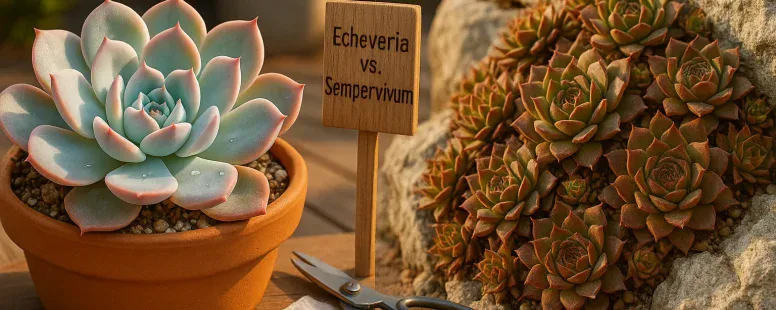
Echeveria and Sempervivum look like cousins at a family reunion: both form tight rosettes, both store water in fleshy leaves, and both can make a dull corner sing. But they are different plants with different needs, strengths, and uses. If you choose the wrong one for your patio or alpine trough, you’ll quickly learn the price: leaves drop, rosettes stretch, or winter kills them. This guide shows you how to tell them apart at a glance, how to grow each well, and where each shines in the garden. Along the way you’ll get practical steps, real-world examples, and a few honest mistakes you can avoid. Read on to pick the right succulent for your life and climate.
Quick Comparison: When To Choose Echeveria Or Sempervivum
Start with the bottom line: Echeveria is best for warm, protected spots and bright indoor displays: Sempervivum suits cold, exposed gardens and hardy groundcover.
Key decision points:
- Cold hardiness: Sempervivum survives harsh winters (many down to USDA zone 3). Echeveria usually needs protection below zone 8.
- Growth habit: Echeveria often forms single rosettes that can be larger and tender: Sempervivum multiplies via many offsets and forms dense mats.
- Placement: Use Echeveria in containers, rockery pockets, and bright indoors. Use Sempervivum for rock gardens, alpine troughs, and full-sun borders.
Quick scenario: You live in Minneapolis (USDA zone 4). Plant Sempervivum outside. You live in Phoenix and want a sculptural plant by the front door, Echeveria will look better and last longer there.
Key Differences At A Glance
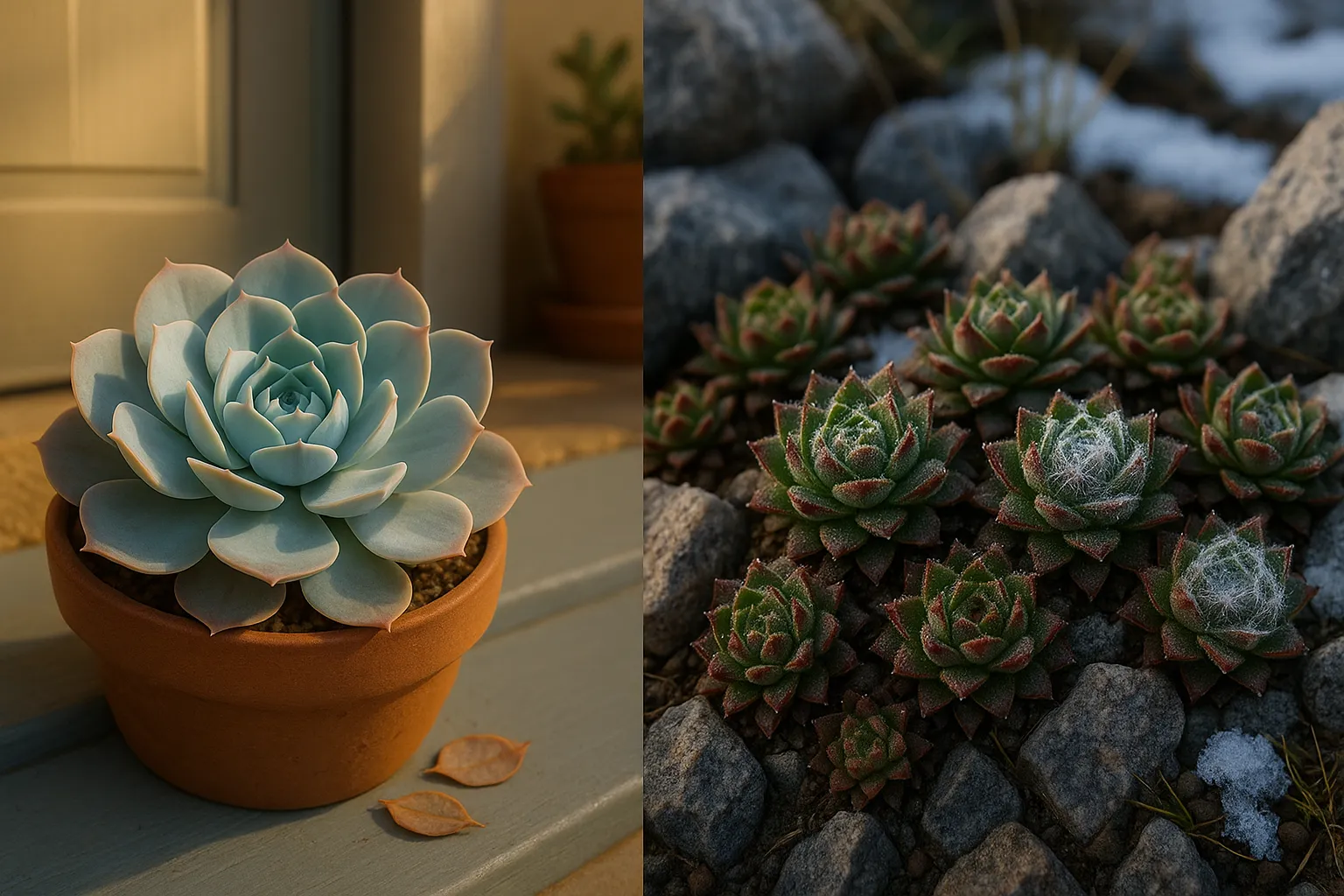
Start with clear visual cues: Echeveria species (Echeveria elegans, E. ‘Lola’) usually have smoother, softer leaves with powdery epicuticular wax (farina). Sempervivum (Sempervivum tectorum, S. arachnoideum) tend to have tougher, often hairy or spiny leaf margins and a more rugged texture. Size ranges vary, but Sempervivum typically stays smaller per rosette while producing many offsets.
Practical tip: If a rosette dies back after flowering and leaves a crown of pups, that’s Sempervivum behavior: if the mother rosette often dies and pups come from leaf cuttings or stem offsets, you likely have Echeveria.
Appearance And Identification
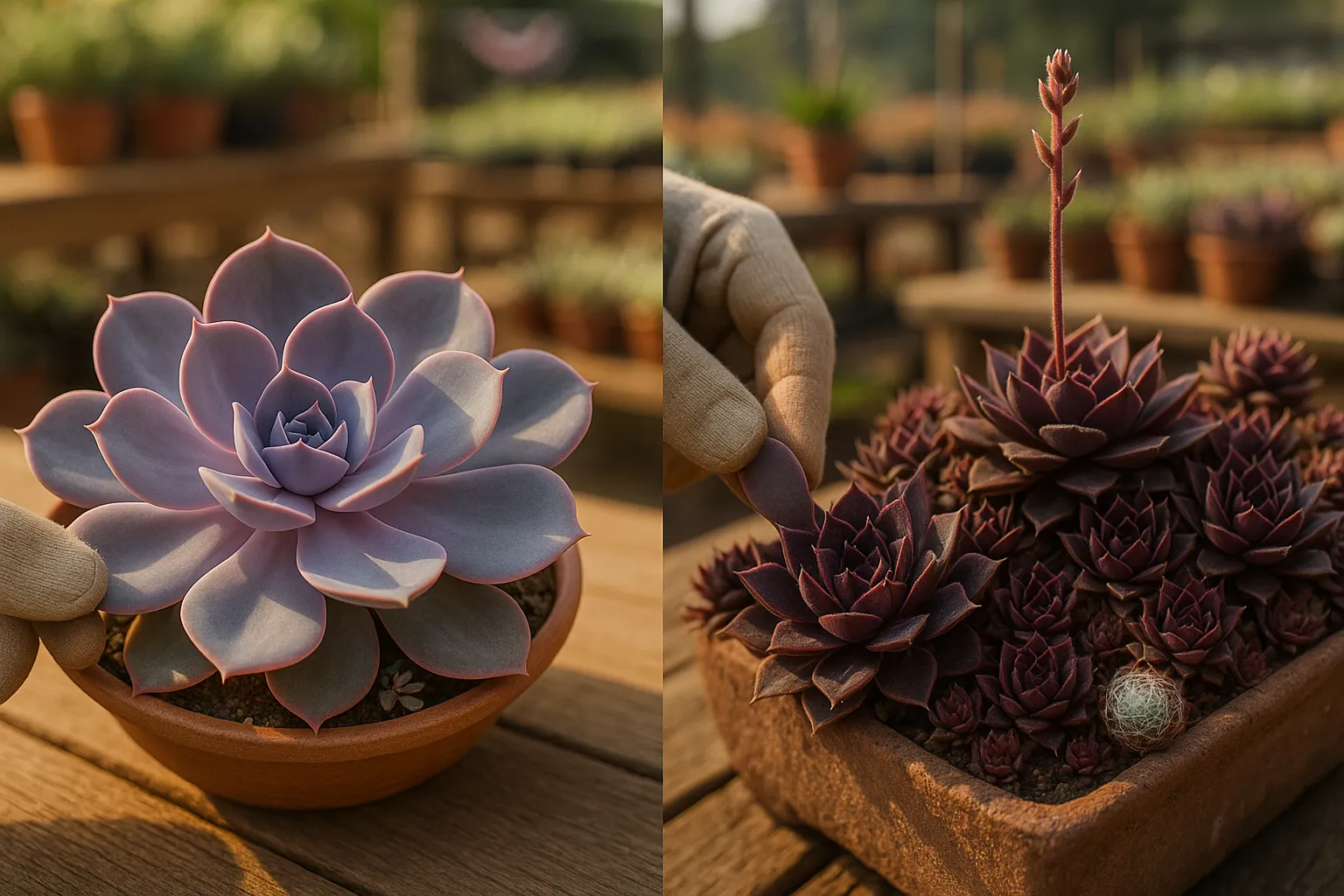
Start with leaves: they show the most reliable ID signs.
Leaves, Rosette Shape, And Color Variations
Fact: Echeveria leaves are usually softer and frequently coated with a powdery farina: Sempervivum leaves are firmer and more drought-tough.
Echeveria
- Leaves: spoon-shaped or paddle-like, smooth edges, sometimes with red tips. The farina layers give a frosted or silvery look.
- Rosette: often solitary or with few offsets, rosettes can reach 6–12 inches in many species.
- Color: pastel blues, pinks, and silvery greens: stress can deepen reds.
Sempervivum
- Leaves: convex, often with hairs (e.g., S. arachnoideum with web-like hairs) or rough margins.
- Rosette: smaller per head (1–4 inches typical), but they form large clumps via offsets.
- Color: greens, burgundy, bronze: hardy varieties change color with seasons.
Example: Echeveria ‘Perle von Nurnberg’ shows dusty purple tones and wide leaves. Sempervivum ‘Purple Emperor’ keeps tight, spiky leaves and dark color in fall.
Flowers, Blooming Habits, And Offsets
Fact: Sempervivum dies after flowering (monocarpic): Echeveria often survives or is replaced by offsets.
Flowers
- Echeveria: bell-shaped flowers on long stalks, colors range from yellow to red. Many Echeveria bloom yet leave the mother rosette alive or produce offsets before dying.
- Sempervivum: star-shaped flowers atop a tall spike: the flowering rosette will die after bloom, but the colony lives on through offsets.
Offsets
- Echeveria produces offsets less aggressively: you’ll often propagate by leaf or stem cuttings.
- Sempervivum produces many offsets rapidly: you can divide clumps to expand groundcover.
Practical note: Watch for the flowering spike, if your rosette sends one up, plan to remove it if you want more pups or collect offsets first.
Hardiness, Climate, And Light Requirements
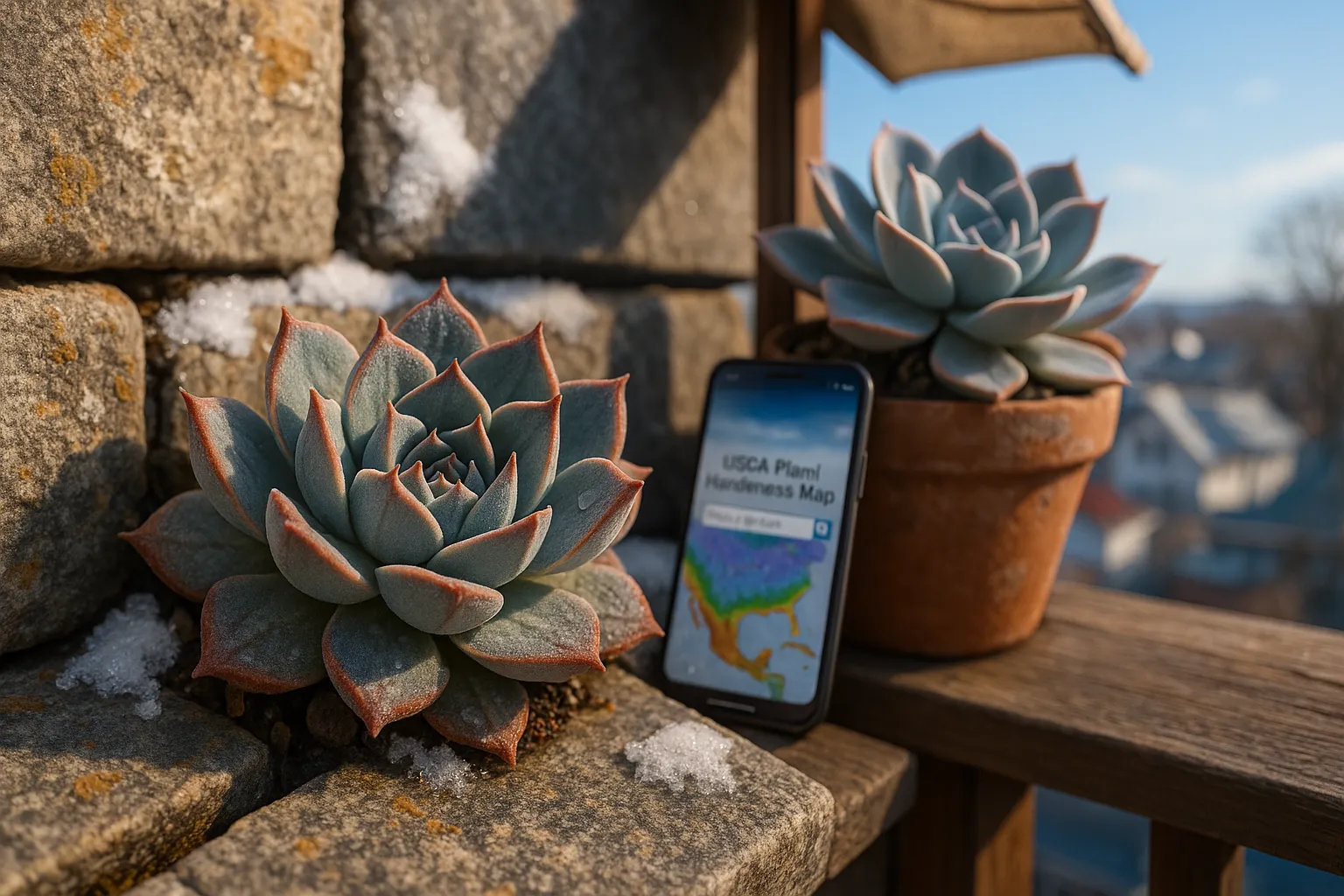
Start with hardiness: Sempervivum tolerates much colder temperatures than Echeveria.
Cold Tolerance And USDA Zones
Fact: Sempervivum species survive in USDA zones 3–8: most Echeveria prefer zones 8–11.
- Sempervivum: Native to alpine regions of Europe and adapted to freeze-thaw cycles. They handle snow, freezes, and heat swings. If you garden in New England or the Rocky Mountains, Sempervivum is a safe outdoor choice.
- Echeveria: Many originate from Mexico and Central America. They resist mild frost but can suffer tissue damage below about 25°F (-4°C). In zone 6 or colder, keep Echeveria in pots you can move indoors or under a frost cloth.
Practical tool: Check the USDA Plant Hardiness Map for your zip code before leaving Echeveria outdoors in winter.
Sunlight Needs And Shade Tolerance
Fact: Both genera prefer bright light, but Sempervivum tolerates stronger full sun and more fluctuation.
- Sempervivum: Thrives in full sun: this intensifies color and keeps rosettes compact. It tolerates reflective heat off stone.
- Echeveria: Prefers bright light or morning sun: intense afternoon sun in hot climates can scorch leaves. Indoors, place Echeveria near a south- or west-facing window with a few hours of shade during the hottest part of the day.
Example: A rooftop rock garden will favor Sempervivum for long-term color and survival. A balcony with a bright but sheltered spot suits Echeveria for sculptural displays.
Soil, Watering, And General Care
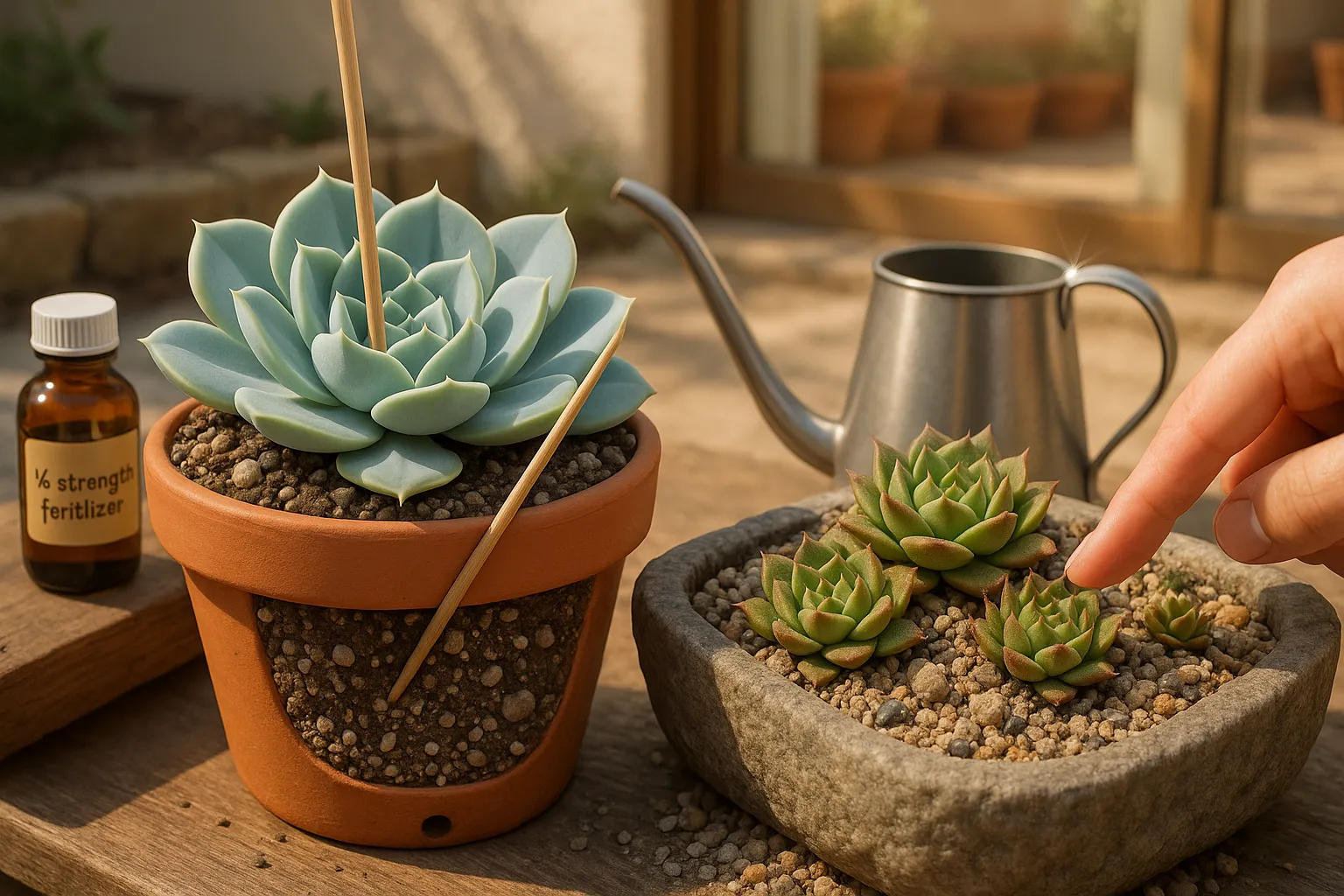
Start with soil: both need fast drainage: water management is the most common care issue.
Ideal Potting Mix And Drainage
Fact: Both succulents require well-draining media: add grit or perlite.
- Mix: Use a cactus/succulent potting mix or make your own with 50% potting soil, 30% coarse sand, and 20% perlite/pumice.
- Containers: Ensure pots have drainage holes. For outdoor rock gardens, plant in raised beds or crevices filled with gritty mix.
Real-world note: I once planted Sempervivum in heavy clay and watched the cluster rot after a wet spring, you can’t fix standing water with patience alone.
Watering Frequency, Signs Of Overwatering, And Dormancy
Fact: Water only when soil fully dries: overwatering causes rot in both genera.
- Frequency: In active growth (spring/fall), water roughly every 7–14 days depending on heat and drainage. In summer drought or winter dormancy, reduce watering sharply.
- Signs of overwatering: soft, translucent leaves: mushy stem base: black spots.
- Dormancy: Echeveria often slow growth in winter or summer heat depending on species. Sempervivum remain fairly active in cool seasons and reduce growth in deep winter.
Practical cue: Stick your finger or a wooden skewer into the soil before watering. If moist 1–2 inches down, wait.
Fertilizing And Seasonal Care Tips
Fact: Both need little fertilizer: a light feed during active growth boosts blooms and offsets.
- Use a balanced, low-strength (1/4–1/2 strength) liquid fertilizer during spring growth.
- Avoid high-nitrogen feeds that promote weak, floppy growth.
- Remove dead leaves and division debris to prevent pests and rot.
Seasonal checklist: protect Echeveria from hard freezes: divide Sempervivum colonies every 2–4 years to refresh vigor.
Propagation And Growth Habits
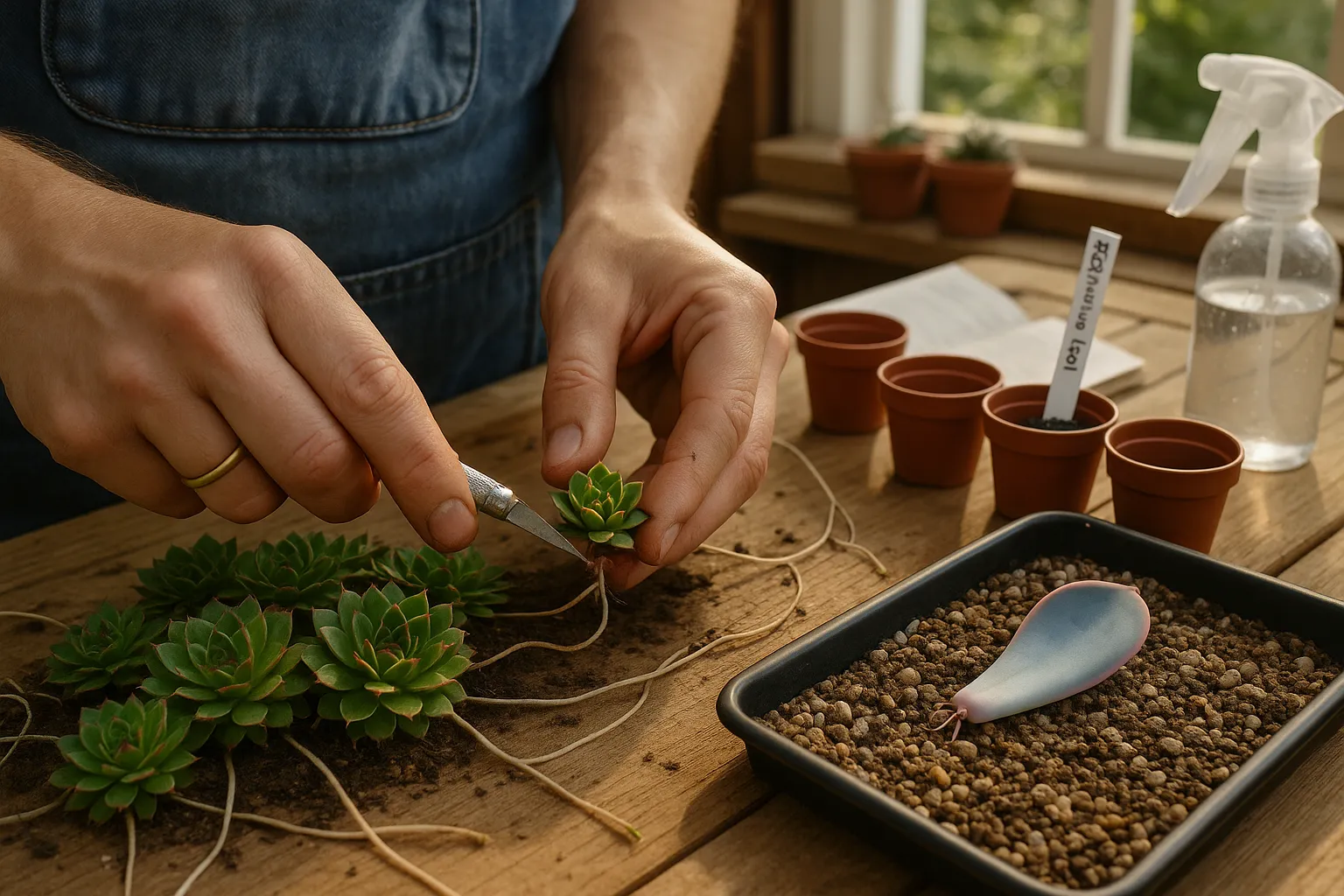
Start with propagation fact: Sempervivum multiplies faster by offsets: Echeveria offers versatile leaf and stem propagation.
Offsets, Division, And Multiplication Rates
Fact: Sempervivum produces many offsets quickly: you can form a large mat in one season.
- Sempervivum: Pups appear on stolons or at the rosette base. You can separate healthy offsets in spring with minimal stress and replant immediately. Growth is vigorous under full sun and good drainage.
- Echeveria: Produces fewer offsets but can be coaxed into more via good light and occasional stress (light drought or cooler nights). You’ll often remove offsets to keep a tidy arrangement.
Practical tip: Use a clean knife to cut offsets with a small root mass: let cut surfaces callus for 24 hours before planting to reduce rot risk.
Leaf And Seed Propagation: Methods And Success Rates
Fact: Leaf propagation works well for many Echeveria but poorly for most Sempervivum.
- Echeveria leaf propagation: Remove a healthy leaf, allow it to callus, place on gritty mix, mist lightly. Expect roots and a tiny rosette in 3–6 weeks: success rates vary but often 50–80% with clean technique.
- Sempervivum seed and division: Sempervivum seed germinates, but produces variable offspring: division is faster and reliable. Seeds take longer and will require stratification for some species.
Example: A grower in Oregon reported 90% success when leaf-cutting Echeveria under indirect light, but only 10% germination success from Sempervivum seeds without cold treatment.
Common Problems, Pests, And Troubleshooting
Start with the most common issue: rot from poor drainage and overwatering.
Rot, Etiolation, And Environmental Stressors
Fact: Rot and etiolation are the top problems and they have opposite causes (too wet vs too little light).
- Rot: Mushy base, brown or black soft tissue. Remedy: remove rotted parts, let cuts callus, repot in dry, gritty mix. Severe cases need tossing infected rosettes to protect the rest.
- Etiolation: Long, stretched stems and widely spaced leaves from insufficient light. Remedy: move plants to brighter spot gradually: trim and re-root elongated rosettes as cuttings.
- Stressors: Sudden cold snaps, sunscald, or poor air circulation. Sempervivum handle fluctuating conditions better.
Honest moment: You will overwater at least once. Learn from it: rescue healthy offsets and change the potting media.
Pests And Diseases To Watch For
Fact: Mealybugs, aphids, and fungal rots are the most common pests/diseases for these succulents.
- Mealybugs: White cottony masses in leaf axils. Control: isolate plant, dab with isopropyl alcohol, and repeat.
- Aphids: Often appear on flower stalks: blast with water or use insecticidal soap.
- Fungal disease: Root rot from poor drainage: preventative care beats cure.
Practical note: Inspect new plants and nursery buys closely, mealybugs love hiding in crevices. A weak plant can become an infestation source.
Best Uses, Landscaping, And Styling Ideas
Start with application: use Sempervivum outdoors for tough groundcover and Echeveria as focal container pieces.
Outdoor Rock Gardens, Groundcover, And Winter Display
Fact: Sempervivum excels as an outdoor rock garden plant and winter display.
- Rock gardens: Plant Sempervivum in shallow pockets and crevices where drainage is excellent: they create tight mats that survive winters.
- Groundcover: Use Sempervivum on slopes and dry borders to prevent erosion and add seasonal color.
- Winter interest: Many Sempervivum change color in cold months, giving year-round texture.
Example: A cottage garden I visited used Sempervivum along stone steps: the mats tolerated foot traffic and looked better each year.
Containers, Mixed Succulent Arrangements, And Care Considerations
Fact: Echeveria makes dramatic centerpieces in containers and mixed arrangements.
- Containers: Use Echeveria as a focal rosette with smaller Sedum and Crassula as companions. Choose shallow pots with excellent drainage.
- Mixed arrangements: Mind hardiness, don’t mix hardy Sempervivum with tender Echeveria in the same outdoor bed unless you accept seasonal losses.
- Care: Rotate containers for even light, avoid soggy saucers, and protect tender Echeveria from winter moisture.
Call to action: Try one plant of each genus in different spots, observe differences through a season. That hands-on test will teach you faster than any chart, and you’ll quickly know which one fits your rhythm and climate.

- Vitamix Product Comparison: Which Blender Should You Buy? - September 15, 2026
- MGS6 Competitors: Top Stealth & Action Games - September 15, 2026
- HBM Competitors in High-Bandwidth Memory Tech - September 15, 2026
by Ellie B, Site Owner / Publisher