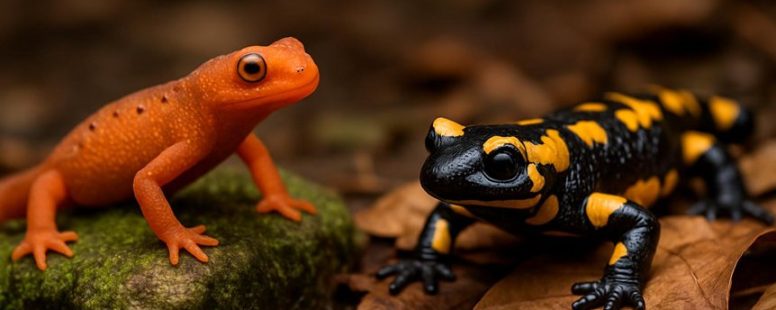
Step into a world where amphibians blur the line between land and water, and you’ll discover two fascinating creatures—newts and salamanders—that often wear their similarities like a disguise.
Imagine vibrant newts shimmering like tiny jewels in clear pond waters, while duller salamanders hide beneath leaf litter on forest floors. These subtle differences are more than skin deep; they reveal their unique roles in nature’s delicate balance.
Did you know that recognizing these traits can help you spot elusive species and even protect their habitats? Let’s dive into what makes each one a remarkable thread in the fabric of ecosystems.
Physical Traits That Help Differentiate Newts and Salamanders
Newts and salamanders can look similar, but there are clear ways to tell them apart. The first difference is their color. Newts usually have brighter, more eye-catching colors like orange or yellow, especially when they are on land. Salamanders tend to have duller colors such as brown, gray, or black. If you see a creature with bright colors, it is likely a newt.
Another way to tell them apart is by their tails. Newts have shorter, rounder tails that are good for swimming. Salamanders have longer, slimmer tails that help them move easily on land. Imagine a swimmer with a short tail versus a runner with a long tail—that can help you see the difference.
Some people might wonder if these traits always work. Sometimes, newts and salamanders can look similar in certain habitats or at certain ages. For example, young newts might look more like salamanders. So, it is a good idea to look at multiple features at once.
Knowing these physical traits makes it easier to correctly identify each creature. Whether you see them in nature or in a pet terrarium, paying attention to color and tail shape can help you tell a newt from a salamander quickly.
How Their Habitats and Behaviors Differ in the Wild
Newts and salamanders live in different places and act differently in the wild. Newts mostly stay near water, like ponds and streams. They spend a lot of time swimming and hiding in water plants. Salamanders, on the other hand, prefer land. They often live under logs, rocks, or in damp soil. They come out of hiding mainly to find food or during certain seasons when the weather is right.
Their choices of where to breed and hide are also different. Newts usually lay their eggs in water, attaching them to plants or submerged objects. Salamanders lay eggs on land or in moist places that keep their eggs from drying out.
Some people think newts are more aquatic because they are seen swimming often, but salamanders are better at living on land. Both animals need moist environments to stay healthy, but their habits show just how different their lives are in the wild.
Habitat Preferences Differ Significantly
Newts and salamanders have different habitat preferences because of their unique ways of living and surviving. A simple way to understand this is that newts mainly stay in water as adults, while salamanders spend more time on land.
Newts are mostly aquatic when they are grown. They like ponds, streams, and lakes because they need water to stay moist and to find their food, like insects and small fish. Their bodies are built for life in water, with webbed feet and smooth skin that helps them swim easily. They stay in water most of the time, especially during the adult stage, but some newts can also be found on land during certain times of the year.
Salamanders, however, are more terrestrial. They spend most of their time on land, especially outside the breeding season. They move easily on damp ground and prefer habitats like moist forests, leaf litter, or underground burrows. Their smooth, moist skin helps them absorb moisture from the environment, which is very important for their survival. Salamanders hunt for worms, insects, and other small creatures on land.
Both animals need their specific habitats to find food and stay moist. If they live outside their preferred environment, they might struggle to find enough food or stay healthy. For example, a salamander in a dry desert would have a hard time because it needs damp places to survive. Similarly, a newt that spends too much time on land might dry out if it cannot find enough water.
Water Versus Land Activities
Water and land activities for newts and salamanders show how these animals are built for different places. Newts spend a lot of time in the water. They swim actively to find food like small invertebrates, such as tiny insects or worms. They use different hunting styles, like ambushing prey or chasing after it. Salamanders, on the other hand, are more active on land. They hide and wait for insects or worms to come near before catching them. Their hunting relies on patience and staying hidden.
In water, newts swim, hunt, and stay alert to avoid aquatic predators like fish. On land, salamanders dig burrows, search for food, and hide from animals that might eat them, like birds or mammals. Their diets change too. Newts eat aquatic invertebrates, while salamanders mainly eat insects and worms found on land.
Their ways of catching food change based on where they are. Newts chase or ambush prey while swimming, but salamanders wait patiently for insects to come close. How active they are also depends on moisture and temperature. For example, if it’s too dry or cold, salamanders might stay hidden more often.
Some people think newts are better swimmers, while salamanders are better on land. Both animals have ways to survive in their favorite spots, but they can’t do everything well. If a newt is taken out of water for too long, it might struggle to breathe or find food. Similarly, a salamander left in too dry a place might dry out or have trouble finding water.
Unique Shelter and Breeding Sites
Newts and salamanders are both amphibians that need shelter and places to breed. But they choose different spots because of where they live and how they behave.
Newts prefer to use underwater shelters like logs, stones, or thick plants in ponds and streams. These spots give them protection from predators and a safe place to lay eggs. They usually choose shallow and calm water for breeding. They attach their eggs to aquatic plants so they stay safe and get enough oxygen. Imagine a newt hiding under a submerged log, waiting for the perfect time to lay eggs.
Salamanders, on the other hand, like moist land areas for their shelter. They often hide under leaf litter, rocks, or fallen logs on land. When it’s time to breed, they go to damp underground burrows or hidden spots near water. There, they lay eggs in moist soil or in crevices that stay damp. Think about a salamander living under a damp pile of leaves, waiting for rain to come so they can find a good spot to breed.
Both animals have adapted to their habitats. Newts need water for breeding and spend more time in ponds or streams. Salamanders stay mostly on land but still need water for their eggs. Some people warn that if ponds or forests are disturbed, these amphibians might lose their favorite shelter places. Others say that changing land too much can make it hard for salamanders and newts to survive.
Understanding Their Life Cycles: Key Differences
Understanding their life cycles is key to seeing how newts and salamanders are different. First, their development of tadpoles varies. Some species take a long time to grow into adults, while others do it faster. For example, the tiger salamander can spend up to two years as a tadpole before becoming an adult, but some newts change quicker.
Second, the stages of metamorphosis are different. This means how quickly they move from water to land or stay in water varies. Some salamanders, like the axolotl, stay in their aquatic form their whole lives, while others fully transform and live on land. These differences affect how they survive and where they live.
Third, their lifespans can be quite different too. Some newts live only a few years, while others can live over a decade. This affects their chances to reproduce and how they grow over time.
Understanding these differences helps us see why some newts and salamanders are better suited for certain environments. For example, a species with a short tadpole stage may thrive in temporary ponds, while longer-lived species might do better in stable lakes. Recognizing these traits helps us appreciate their adaptations and how they survive in their habitats.
Tadpole Development Stages
Tadpoles are young frogs and toads that go through different stages of growing up. They start as tiny, fish-like creatures living in water. Their main job in the beginning is to grow and eat. They mainly eat algae and plants found in the water. As they grow, their bodies change a lot. First, they grow back legs, then front legs. Their tails also get smaller and eventually disappear. This process is called metamorphosis.
As tadpoles get older, they may start making sounds. In some species, males call to find mates. This is a sign they are maturing. Their diet also changes a little as they grow. Once they have legs and their tails shrink, they are close to becoming frogs or toads.
There are different views about how fast tadpoles grow. Some scientists say it depends on the water temperature and food supply. If the water is warm and full of food, they grow faster. Others think genetics also play a big role. But, it is clear that tadpole development takes several weeks to months.
Understanding these stages helps us see how frogs and toads live and change. It is like watching a tiny creature grow up step by step. This process is fascinating because it shows how animals adapt to their environment and prepare for life on land.
Metamorphosis Differences
Metamorphosis is a process where animals change from one form to another. For newts and salamanders, this process is quite different, even though they are related.
Newts usually change slowly. They often keep some of their aquatic features into adulthood. For example, some newts stay in the water and eat aquatic insects their whole lives. As they grow, they might develop better limbs or lungs, but they don’t change completely. Their diet also shifts; they move from eating creatures in the water to eating land insects or small animals. This gradual change allows newts to adapt to both water and land environments.
Salamanders usually go through a more obvious change. They often have a clear land stage after they are born. When they become adults, they move from water to land more quickly. Their bodies change to suit life on land, with stronger legs and different skin. Their vocal sounds also change. Newts might develop louder or more noticeable sounds to talk to other newts, while salamanders might not use sounds much after they change.
Some experts say these differences help each animal survive better in their homes. Newts can stay in water longer if they want, while salamanders focus on land life. But, there are limits. Some newts do change more quickly, and some salamanders stay in water longer than others.
Knowing how newts and salamanders change helps us understand how they live and survive. Each one adapts differently, making them interesting animals to study.
Life Span Variations
Newts and salamanders are both amphibians, but their lifespans are quite different. A lifespan is how long an animal lives, and these differences show how they grow and reproduce.
Newts usually live longer, sometimes up to 15 years. Their longer lives are partly due to their varied diets and good hunting skills. They can eat many different foods, which helps them stay healthy longer. Newts also develop clever ways to hide from predators, like changing colors or blending into their surroundings. These tricks help them avoid danger and live longer.
Salamanders generally live around 6 to 8 years. They often rely on quick burrowing to stay safe. When they sense danger, they dig into the ground fast to hide. Their shorter lives are influenced by their habitats, like forests or wetlands, which can be less stable or more dangerous.
These lifespan differences show how each animal has different strategies for staying alive. For example, newts use camouflage and eat many foods to stay healthy longer. Salamanders depend on speed and quick hiding to survive. Both species are affected by their environments, with stable areas helping them live longer.
Understanding these differences helps us see how their special behaviors help them survive. For instance, a newt in a quiet pond might live longer because it can hide well and find plenty of food. Meanwhile, a salamander in a busy forest needs to be fast and quick to escape danger.
How to Identify a Newt Versus a Salamander in Your Area
Newts and salamanders are both types of amphibians, but they have some clear differences you can spot. The best way to tell them apart is by looking at their colors, habitats, and behaviors.
First, color is a good clue. Newts often have bright colors like orange, red, or yellow, especially when they are in their water stage. Salamanders tend to have duller shades like browns and grays. For example, a bright orange newt in your pond is probably a common eastern newt, while a plain brown salamander might be a spotted salamander.
Next, think about where they live. Newts spend more time in water or damp places, especially when they are breeding. They might crawl on rocks near ponds or swim in streams. Salamanders usually stay on land, hiding under logs or leaves. During rainy days, you might see salamanders moving across your yard, but newts will be swimming or resting in the water.
You can also tell them apart by what they eat. Newts prefer small aquatic creatures like insects or tiny fish. Salamanders mostly eat bugs they find on land, such as worms or beetles. If you see a small amphibian catching bugs in your garden, it might be a salamander.
Sometimes, their behavior can help you identify them. Newts are more active in water and often wiggle when they move. Salamanders tend to move slowly and hide more often.
Keep in mind, these are general tips. Some salamanders can look a little like newts, and some newts may not be as bright. If you’re unsure, look for the habitat clues and colors together. Knowing these differences makes it easier to tell which amphibian is which in your area.
Defense Mechanisms of Newts and Salamanders
Newts and salamanders protect themselves from predators using different defense tricks. Their most common method is their toxic skin. This skin makes them taste bad or even dangerous if a predator tries to eat them. Many species also have bright colors to warn animals that they are toxic. This is called aposematism. Bright colors like red, yellow, or orange tell predators to stay away.
Some newts and salamanders use camouflage. Their colors and patterns help them blend into their environment, like leaves or rocks. This makes it hard for predators to see them. For example, a salamander that looks like a leaf can hide easily in the forest floor.
Other times, these animals release noxious chemicals when threatened. The chemicals make predators feel sick or uncomfortable. This makes predators less likely to attack again. Some salamanders can even shed their tails or limbs to escape. This is like a distraction, giving them a chance to run away.
These defenses work together to help newts and salamanders survive. They use physical tricks like shedding parts or hiding, and visual signals like bright colors. Understanding how these animals protect themselves helps us see how they live and stay safe in the wild. But, it is worth noting that not all defense methods work all the time. Some predators learn to ignore warning colors or tolerate toxins. So, while these tricks help, they are not foolproof.
Common Myths About These Amphibians Debunked
Many people think all newts and salamanders are very dangerous because they have toxic skin. But this is not true for every species. These amphibians are often misunderstood because stories and myths make them seem more threatening than they really are. In some cultures, newts and salamanders are seen as symbols of change, renewal, or good luck. These positive meanings help us see them in a better light.
However, some myths say they are deadly or evil creatures. This is not accurate. Most newts and salamanders are harmless to humans. Their toxic skin is just a defense to keep predators away, not a sign they are dangerous to people. For example, the California newt has poison that can hurt predators, but humans usually don’t get sick unless they swallow it.
Learning about these myths helps us understand the real nature of these animals. It also helps us appreciate how they are important in many cultures. While it’s good to be careful, it’s also important to know that most of these amphibians are not harmful. Spreading the truth about them encourages respect and curiosity. We can then enjoy learning more about their roles in nature and their cultural meanings instead of fearing them.
Why Knowing the Differences Matters for Conservation
Knowing the differences between newts and salamanders is important for conservation. These animals may look similar, but they have different needs. Understanding what makes each unique helps us create better plans to protect them.
First, their habitats are different. Some newts prefer ponds and slow-moving water, while salamanders often live underground or in moist forests. Knowing where they live helps us find and protect their homes. For example, if we only focus on ponds, we might miss salamanders that need forest cover.
Second, their behaviors and diets vary. Newts tend to eat small insects and worms, and they might stay in water for parts of their life. Salamanders might hunt on land, eating insects, slugs, or tiny creatures. This means they respond differently when their environment changes. If we understand their diets, we can better protect their food sources.
Third, their roles in the ecosystem are different. Newts and salamanders help control insect populations. Recognizing their struggles with habitat loss or pollution can help us act before populations drop too low. For instance, pollution can harm their skin, which is vital for breathing and survival.
Some people might think all amphibians are the same, but knowing these differences helps prevent mistakes. For example, protecting only ponds might miss salamanders living in forests. On the other hand, focusing only on land areas can overlook newts that depend on water.
In conservation, knowing these differences guides us to better protect each species. It also helps us restore habitats properly. If we plant more trees or clean ponds, we support their survival. Protecting these animals keeps ecosystems healthy and balanced.
To provide the best experiences, we use technologies like cookies to store and/or access device information. Consenting to these technologies will allow us to process data such as browsing behaviour or unique IDs on this site. Not consenting or withdrawing consent, may adversely affect certain features and functions.
Functional
Always active
The technical storage or access is strictly necessary for the legitimate purpose of enabling the use of a specific service explicitly requested by the subscriber or user, or for the sole purpose of carrying out the transmission of a communication over an electronic communications network.
Preferences
The technical storage or access is necessary for the legitimate purpose of storing preferences that are not requested by the subscriber or user.
Statistics
The technical storage or access that is used exclusively for statistical purposes.The technical storage or access that is used exclusively for anonymous statistical purposes. Without a subpoena, voluntary compliance on the part of your Internet Service Provider, or additional records from a third party, information stored or retrieved for this purpose alone cannot usually be used to identify you.
Marketing
The technical storage or access is required to create user profiles to send advertising, or to track the user on a website or across several websites for similar marketing purposes.