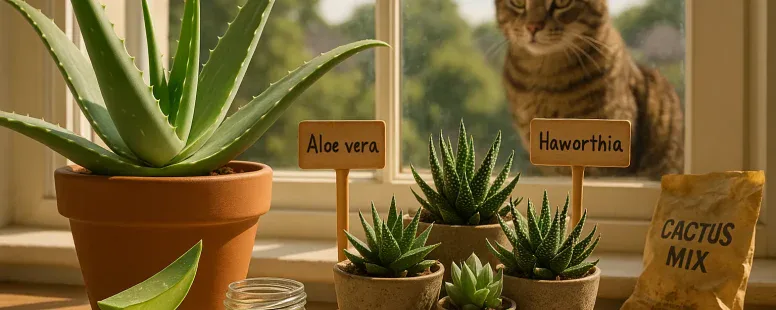
Aloe Vera and Haworthia look similar at a glance, but they serve different roles on your windowsill. One offers a thick, gel-filled leaf prized for topical soothing and home remedies: the other brings textured, architectural charm in tiny rosettes you can cluster on a shelf. Which one fits your life depends on how you use plants, how much time you give them, and where you keep them. This comparison lays out clear differences in origin, appearance, care, propagation, uses, and common problems, plus practical buying tips, so you can pick the right succulent for your needs and space.
What Each Plant Is: Origins, Species, And Typical Uses
Fact: Aloe vera (Aloe barbadensis Miller) is a large, medicinal succulent native to the Arabian Peninsula and widely cultivated in Africa and the Mediterranean: Haworthia species originate mostly from South Africa and are primarily ornamental.
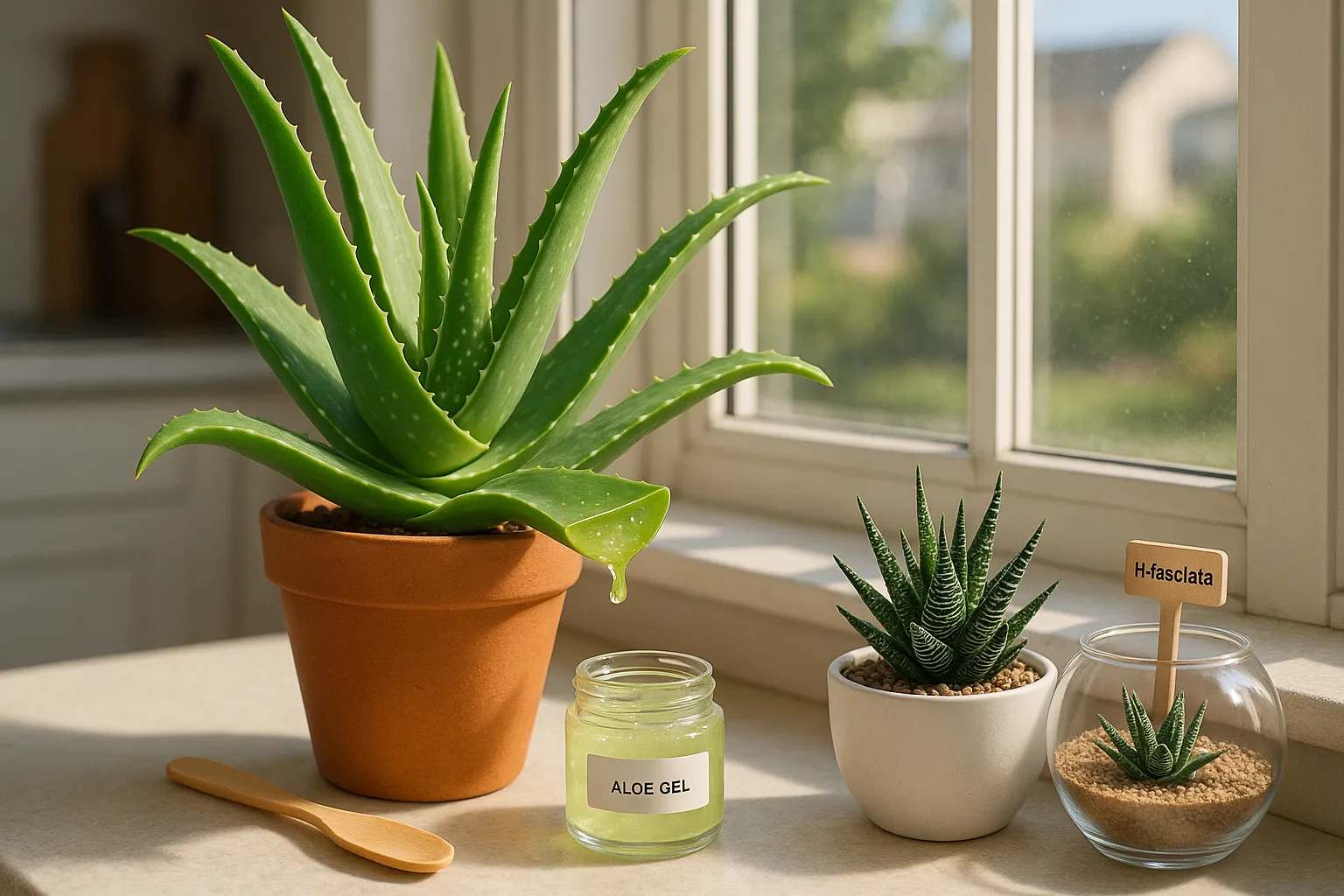
Aloe vera has thick, fleshy leaves that store water and a translucent gel used in cosmetics and first‑aid, which is why you’ll find it in pharmacies and skincare brands like Burt’s Bees and The Ordinary. Haworthia covers a group of small, slow-growing succulents, common species include Haworthia attenuata and Haworthia fasciata, prized by collectors for their patterned leaves and compact size. Nurseries sell both plants, but you’ll see Aloe marketed for practical use and Haworthia for decoration or terrariums.
Origins shape habits. Aloe evolved to survive drought and sun: it grows taller and spreads with larger offsets. Haworthia evolved in shaded crevices: it stays small, tolerates lower light, and forms tight clumps. Knowing that helps you choose a plant for either practical remedy or indoor style.
Appearance And Growth Habit: How To Tell Them Apart
Fact: Aloe vera is generally larger with broad, triangular leaves and serrated margins: Haworthia is smaller with slender, patterned leaves and smoother edges.
Aloe vera grows rosettes that can reach 1–2 feet across indoors. Leaves are thick, glossy, and often tipped with small teeth. Many cultivars show pale green to grey-green coloring. Haworthia species form compact rosettes 2–6 inches wide. Leaves often have raised tubercles, white stripes, or translucent “windows” (notably in Haworthia cooperi). The texture difference is obvious when you touch them: Aloe feels gelatinous inside: Haworthia feels firm and fibrous.
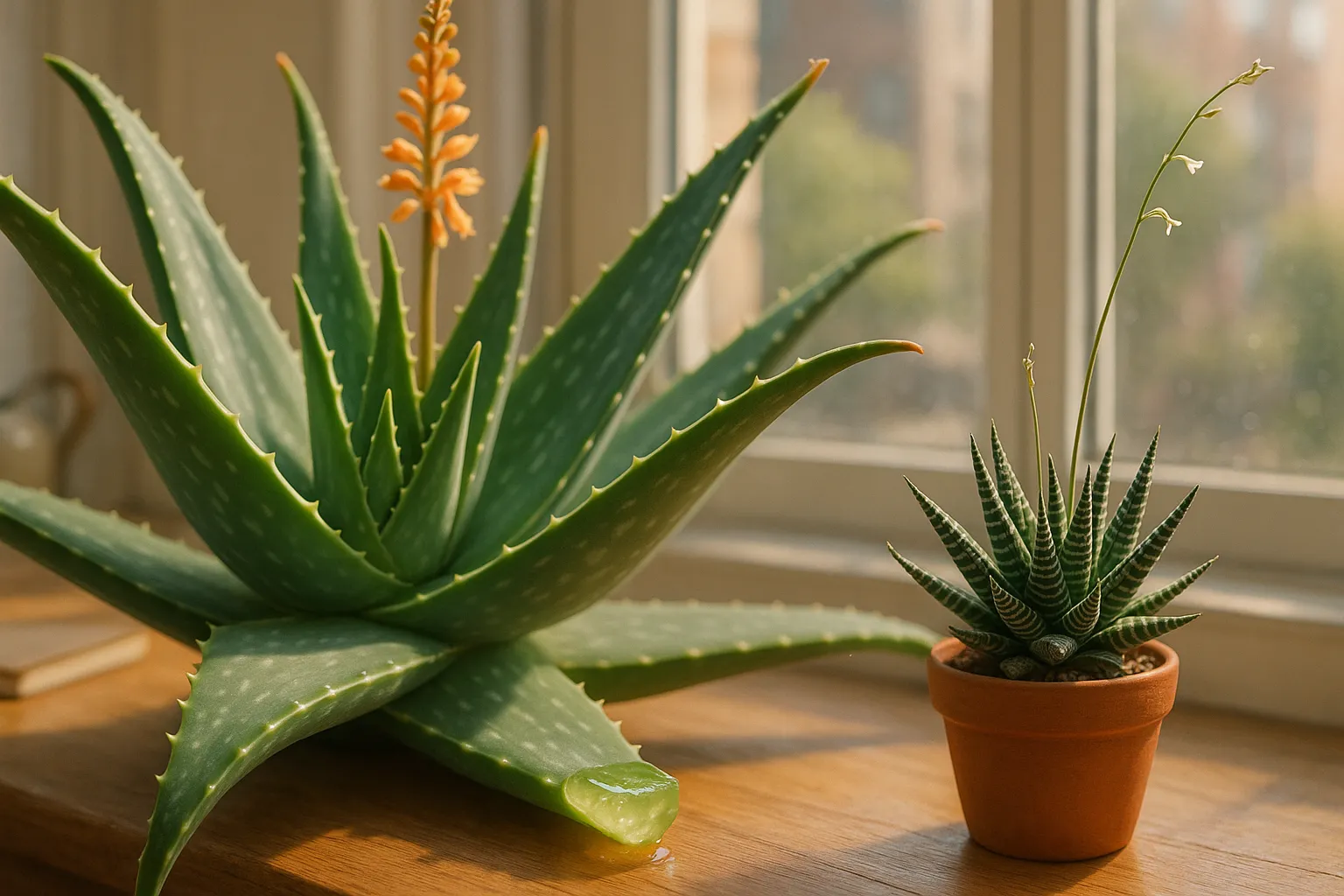
Growth habit also differs. Aloe sends up tall flower spikes and produces larger pups: Haworthia flowers are thin, wiry stalks with small tubular blooms and its pups stay close to the mother plant. If space is limited, Haworthia stays manageable: if you want a living first-aid plant, Aloe gives you larger, harvestable leaves.
Care Requirements: Light, Water, Soil, Temperature, And Feeding
Fact: Both plants prefer well-draining soil and bright light, but Aloe tolerates more sun and heat while Haworthia tolerates lower light and cooler indoor conditions.
Light Preferences
Aloe prefers bright, direct light for several hours each day and thrives in south- or west-facing windows. Too little sun makes Aloe leggy. Haworthia prefers bright, indirect light and will lose its color in harsh afternoon sun. If you see leaf bleaching, move the plant a little back from direct rays.
Watering And Drought Tolerance
Aloe tolerates longer dry spells: water deeply then let the soil dry for 1–2 inches before watering again. Haworthia needs more frequent, light watering but still resists overwatering. Both suffer when left in soggy soil: root rot is the main risk.
Soil, Drainage, And Pot Selection
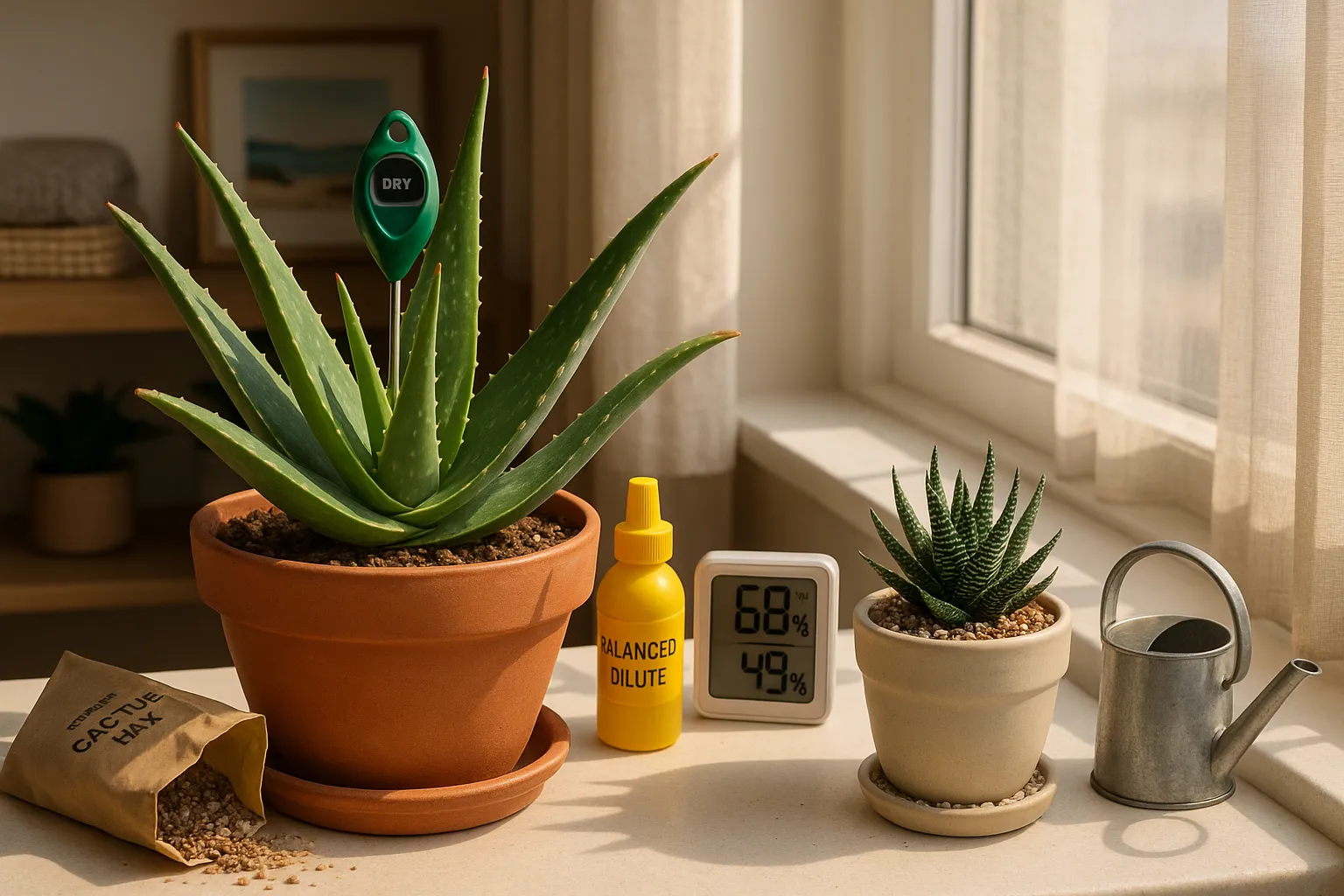
Use a gritty cactus mix or make your own with potting soil, coarse sand, and perlite. Aloe benefits from slightly larger pots for root expansion: Haworthia is happiest in small pots that dry faster. Ensure pots have drainage holes: no-drain containers increase rot risk.
Temperature, Humidity, And Seasonal Changes
Aloe survives in USDA zones 8–11 outdoors: it tolerates 55–80°F indoors and dislikes frost. Haworthia tolerates 50–75°F and can handle cooler nights. Both prefer low to moderate humidity: high humidity plus poor ventilation invites fungal problems.
Fertilizing And Growth Rate Expectations
Aloe grows faster and responds to a balanced, dilute fertilizer in spring and summer. Haworthia grows slowly and needs little feeding, a light dose once in growing season is fine. Expect Aloe to show visible growth within months: Haworthia may take several seasons to noticeably expand.
Propagation And Repotting: Methods And Timing
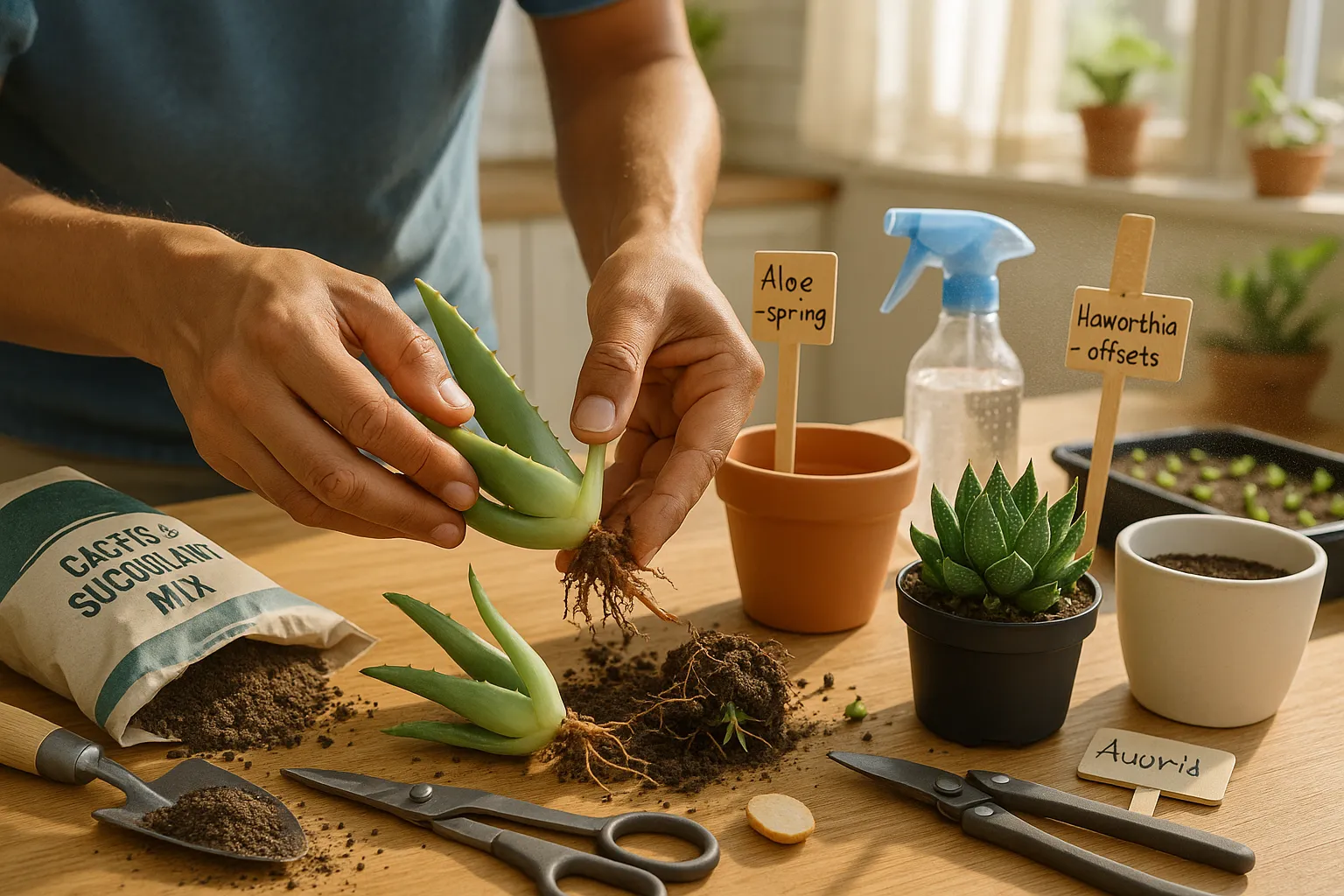
Fact: Both species propagate from offsets: Aloe also regrows from leaf cuttings sometimes, while Haworthia responds well to division and offsets. Timing affects success, propagate in active growth months (spring–early summer).
Propagating From Offsets And Division
Offsets (pups) are the simplest method for both plants. For Aloe, remove large pups with a few roots and plant in a separate pot. For Haworthia, gently separate clusters and pot individually. Let cut surfaces callus for a day before planting to reduce rot risk.
Leaf Cuttings, Seed, And Rooting Tips
Aloe leaf cuttings can sometimes root, but success is inconsistent because Aloe leaves contain lots of gel that can rot. Haworthia leaf cuttings rarely work: division is more reliable. Seeds exist for both, but they require patience and sterile media. Use a light misting to keep seedlings from drying and provide bright, indirect light.
When And How To Repot Without Stressing The Plant
Repot when roots crowd the pot or soil degrades, usually every 2–3 years for Aloe and 3–4 years for Haworthia. Repot in spring. Gently tease roots, replace old soil with fresh cactus mix, and avoid heavy watering for a week to let roots settle. Don’t repot during dormancy or extreme heat.
Uses, Benefits, And Safety Considerations
Fact: Aloe vera has documented topical uses: Haworthia is primarily ornamental and not widely used for medicinal purposes.
Medicinal And Practical Uses
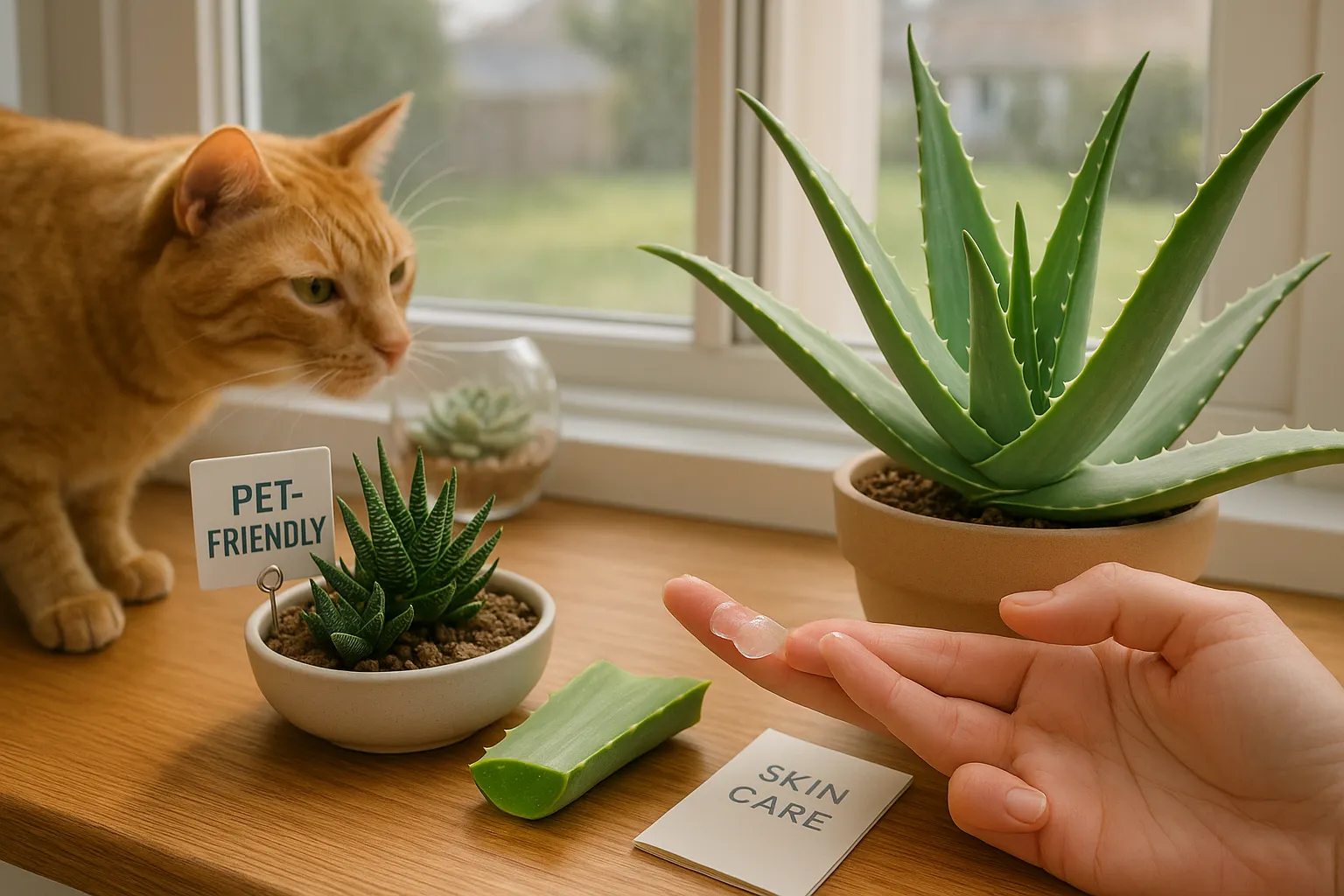
Aloe gel has evidence for soothing minor burns and skin irritation: dermatologists sometimes recommend it for sunburn relief. You can harvest leaves and store gel in the fridge for short-term use. Haworthia lacks the same gel volume and is not used for first-aid. For reliable medical guidance, consult sources like the American Academy of Dermatology.
Ornamental Uses And Design Ideas
Haworthia excels in small-scale designs: terrariums, dish gardens, and clustered arrangements with Echeveria or Sedum. Aloe makes a bold single-specimen plant, or a kitchen rescue station for burns. Use Haworthia to fill narrow ledges: use Aloe as a focal plant in a sunny spot.
Toxicity, Allergies, And Pet Safety
Aloe vera is mildly toxic to cats and dogs if ingested, it can cause vomiting and lethargy. Haworthia is considered non-toxic to pets by the ASPCA, making it safer for households with curious animals. Always check plant labels and consult the ASPCA for up-to-date pet-safety data.
Pests, Diseases, And Common Problems With Solutions
Fact: Both plants face similar pests like mealybugs and scale: root rot and sunburn are common non‑pest problems with straightforward fixes.
Typical Pests And How To Control Them
Mealybugs and scale hide in leaf crevices. Use isopropyl alcohol on a cotton swab to remove small infestations. For larger problems, apply insecticidal soap or neem oil and isolate the plant. Check new purchases from nurseries for hidden pests before bringing them home.
Root Rot, Leaf Scorch, And Environmental Stressors
Root rot comes from overwatering and poor drainage: remedy by removing damaged roots, repotting in fresh mix, and cutting back watering. Leaf scorch results from sudden exposure to intense sun, move the plant to a more forgiving light level. Stress shows as soft, translucent leaves (overwater) or shriveled leaves (underwater).
Quick Diagnostic Checklist For Troubled Plants
Leaves soft and mushy: check roots for rot: reduce water.
Pale or brown patches: too much direct sun. Move plant slightly away.
White cottony spots: treat for mealybugs with alcohol or neem oil.
Slow growth: check light, soil quality, and feeding schedule.
Follow these checks and you’ll usually find the cause quickly. Sometimes problems combine: treat the most severe issue first (usually watering or pests).
Choosing Between Aloe Vera And Haworthia: Which Is Right For You
Fact: Choose Aloe vera if you want a useful, harvestable plant and have bright sun: choose Haworthia if you want a small, low-light decorative succulent.
Best Choices For Beginners, Busy Owners, And Small Spaces
Beginners: Haworthia. It tolerates light mistakes and slow growth. Busy owners: Haworthia again, because it needs less frequent deep watering and fuss. Small spaces: Haworthia wins for its compact size: try Haworthia attenuata in a 2–3 inch pot.
When To Choose Aloe Vera Versus Haworthia Based On Climate And Use
If you live in a warm climate (USDA zone 8+), Aloe can live outdoors and provide quick access to soothing gel. If you have a cooler home, less sun, or pets, choose Haworthia. If you want a plant for skincare or first aid, choose Aloe: for visual texture and multi-plant displays, choose Haworthia.
Buying Guide: What To Look For At Nurseries And Online
Look for firm, turgid leaves with no soft spots. Avoid plants with obvious pests or yellowing. Buy from reputable sellers: local independent nurseries, big-box stores with a dedicated plant section, or specialist online sellers like Mountain Crest Gardens for succulents. Inspect root-bound pots: prefer slightly pot-bound Haworthia but choose Aloe with room to grow. Ask the seller about soil mix and watering history, that info helps you make a smoother transition home.
If you still can’t decide, buy one of each. They complement each other on a sunny shelf and they teach you different care habits.
To provide the best experiences, we use technologies like cookies to store and/or access device information. Consenting to these technologies will allow us to process data such as browsing behaviour or unique IDs on this site. Not consenting or withdrawing consent, may adversely affect certain features and functions.
Functional
Always active
The technical storage or access is strictly necessary for the legitimate purpose of enabling the use of a specific service explicitly requested by the subscriber or user, or for the sole purpose of carrying out the transmission of a communication over an electronic communications network.
Preferences
The technical storage or access is necessary for the legitimate purpose of storing preferences that are not requested by the subscriber or user.
Statistics
The technical storage or access that is used exclusively for statistical purposes.The technical storage or access that is used exclusively for anonymous statistical purposes. Without a subpoena, voluntary compliance on the part of your Internet Service Provider, or additional records from a third party, information stored or retrieved for this purpose alone cannot usually be used to identify you.
Marketing
The technical storage or access is required to create user profiles to send advertising, or to track the user on a website or across several websites for similar marketing purposes.