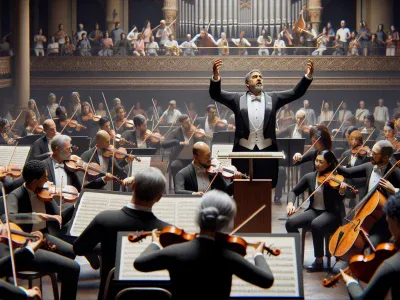
Picture yourself in a dimly lit concert hall—the air hums with anticipation. Suddenly, a bow glides across strings and the sound blooms: bright and soaring or deep and velvety. You might think you’re hearing a violin, but what if it’s something richer, something with a hidden layer most never notice? The violin and viola often share the spotlight, yet their voices and personalities couldn’t be more distinct.
If you’ve ever wondered why some melodies shimmer while others resonate with warmth, you’re about to discover the secrets behind these two stringed siblings. Knowing their differences not only sharpens your ear but also opens up a world of musical possibilities you never knew existed. Ready to tune in and explore what sets them apart?
Overview of String Instruments
You see string instruments everywhere—from the orchestral pit in New York’s Lincoln Center to street musicians in Paris echoing melodies into evening air. Your eyes catch four major semantic entities in the string family: violin, viola, cello, and double bass. Inside each entity, unique roles and linguistic dependencies weave a rich musical tapestry.
Picture the violinist’s nimble bow, flickering like candlelight atop the smallest member in this string kinship. Violin pitches soar, often leading the melody. It’s the protagonist in tales written by Mendelssohn or Vivaldi, its notes slicing through silence much as sunrise slices darkness. You might remember the opening bars of “Spring” from Vivaldi’s Four Seasons—there’s a reason your memory clings to that silvery timbre.
The viola enters with a lower range and deeper grain, frequently said to be the “melancholy storyteller” of the family. Violas support and enrich harmony, much like how bass notes ground a jazz combo. Composers such as Mozart and Brahms cherish the viola’s ability to whisper secrets beneath the surface, letting darkness bloom within brighter ensembles. You will notice, in chamber works like Mozart’s String Quintets, how the viola converses with the violin, sometimes stepping out from the shadows to claim the spotlight.
Strings demand more varied techniques than most realize. Some musicians pluck (“pizzicato”), others press their bows for a harsh “col legno” timbre, exploring every sonic crevice. Can you picture an orchestra without these voices? With just woodwinds and brass, whole color palettes vanish from the auditory canvas.
Have you wondered why the names—violin, viola—sound so close? Their etymology hints at shared roots (“viola” emerges from medieval Latin, just as “violin” builds on “viola” with Italian diminutive). And yet, their divergence creates an endless source of linguistic suspense. What would happen if a violinist grabbed a viola’s bow by accident during a live performance? Would the melody wilt, or would the unexpected timbre spark new emotion in listeners?
String Instrument
Range (Hz)
Typical Role
Example in Orchestra
Violin
196–3136
Melody, Lead Voice
Concertmaster, Solo Violin in Symphonies
Viola
130–1046
Middle Harmony, Warmth
Inner Voice, Featured in Chamber Music
Cello
65.4–987
Bass Melody, Support
Solo Cello in Elgar’s Concerto
Double Bass
41–349
Bass Foundation
Anchoring Rhythm in Beethoven’s Symphonies
But do all string instruments play with the same bowing technique? No, the dependency structure in their playing styles often differs since each instrument’s design affects resonance, agility, and physical approach.
If you step into a rehearsal room, the blend of these string voices create layers—a soundscape with density, color, and rhythm. Without the violin and viola, your orchestra might lose its narrative arc, like a story without its central characters. What would your favorite movie score feel without that quivering suspense or deep resonant sigh?
Strings don’t just support—they propel, they question, and sometimes, they answer. Next time you tune in, try listening for the way each string instrument suspends its own voice within the whole, each one whispering tales only you can untangle.
Key Physical Differences Between Violin and Viola
Distinct physical traits of the violin and viola shape every note you hear. Instrument makers, with skills built over centuries, preserve these differences in every crafted piece.
Size and Shape Comparison
Size matters when you hold a violin or viola in your hands. Violas measure 15 to 18 inches long—often feeling bulky against your collarbone—while violins sit lighter at just 14 inches maximum. The viola’s broader body demands a wider finger stretch, inviting a different tactile challenge for your hand. Some players, like violist Kim Kashkashian, describe the viola’s resonance as “hugging the air,” contrasting the violin’s sharper projection (The Strad, 2019).
When orchestras set up, you’ll notice violists’ bows move with slower arcs—visual evidence of both weight and size at work. Luthiers also taper the viola’s neck and widen the upper bout to deepen its tonal chamber. This difference in proportions, subtle as it seems, shapes the instrument’s sonority and playability for everyone—from soloists to teachers.
String and Tuning Variations
Strings shape the unique identities of each instrument. Violins carry four strings—G, D, A, and E—tuned in ascending perfect fifths, permitting bright, treble-heavy melodies. Violas trade the high E string for a low C, tuning C, G, D, and A. That shift pulls the sound’s center downward, creating richer harmonics.
Violinists reach dazzling highs in scores like Vivaldi’s “Four Seasons.” Meanwhile, violists find power in the mellow depth of Mozart’s string quintets. Bow pressure transforms too; the thicker gauge of viola strings takes more arm weight to speak. Musicians swapping between these instruments describe how a simple scale sounds bolder, heavier, more grounded on a viola. String makers like Thomastik-Infeld design sets specifically for each instrument’s scale length, helping artists fine-tune their voice (Strings Magazine, 2022). why that string quartet’s inner voice feels so velvety? It’s not only technique; it’s pure physics, encoded in the type and tension of each string.
Sound and Tonal Characteristics
Jump into an orchestra pit, and you’re likely to notice the subtle yet striking contrasts between violin and viola. These two string voices, although siblings, carve out distinct emotional territories with their unique sound signatures.
Range and Pitch Differences
Violin and viola inhabit different sonic worlds because of their pitch ranges. Violin stretches from G3 to E7, often piercing through with crystalline clarity—think of how Sarah Chang’s rapid-fire runs soar at the front of a symphony (Chicago Symphony Orchestra, 2018). Viola, tuned a fifth below, covers C3 to A6, weaving harmonies that resonate deep, almost like a velvet undertone that hugs the melodies above it.
Ask yourself: when a film score needs intensity, do you remember the shrill cry of the violin in Hitchcock’s “Psycho”? That’s pitch working at its emotional extremes. Place the viola alongside, and you’ll sense its darker hues—violas haunt the lower middle register where longing breathes. In string quartets by Debussy, for example, violas fill spaces that violins leave naked, offering balance and tension.
Timbre and Volume Distinctions
Timbre—a word as complex as its meaning—marks the “color” of sound. Violin produces a brighter, more penetrating tone due to thinner strings and a smaller resonating body. Picture Vivaldi’s “Four Seasons” where violins dance nimbly across changing landscapes, their voices cutting through air like sunlight. Volume differences emerge in dense orchestras; violins pierce, while violas blend—some conductors even request more violists (New York Philharmonic) just to achieve audibility.
Violas, in contrast, sound mellow, reedy, and round, carrying echoes that linger. Experience Brahms’s symphonies, and you’ll notice how his viola lines set stormy moods before the violins ever strike. Some players compare the viola’s timbre to a dusky twilight—the kind that leaves stories untold.
Pause for a moment—can you feel the narrative hidden in these tone stories? The violin’s timbre commands attention, while the viola’s texture invites introspection. Composers from Shostakovich to Schumann exploit these differences, assigning each instrument a role in musical storytelling that no other can quite duplicate.
Role in Orchestras and Ensembles
Explore the heart of any symphony, and you’ll see two cousins—the violin and viola—acting like indispensable threads in a tapestry, weaving different colors through every movement. Your ears might not catch every harmony, but these instruments have crafted the emotional landscape in countless orchestras and chamber groups, from Berlin Philharmonic to high school ensembles in Kansas.
Violin in Musical Arrangements
Spot the violin section in an orchestra, and you notice it’s always more populous and up front. This placement signifies its “lead narrator” role, delivering sparkling melodies that soar above woodwinds and brass. Ask any concertmaster, and they’ll tell you the first violins shape the narrative—think of Tchaikovsky’s “1812 Overture,” where violins slice through cannon fire with piercing clarity.
Orchestras give the first and second violins divided duties: firsts drive melody, seconds enrich with harmony or counterpoint. In string quartets, the violin often lead, introducing motifs or echoing themes, like the opening shout in Beethoven’s “String Quartet No. 14.”
Many composers—Mozart, Sibelius, Shostakovich—trust the violin for solos that demand athletic leaps, fast arpeggios, and poignant story. Picture those shivering trills at the beginning of “Winter” from Vivaldi’s “Four Seasons.” They conjure goosebumps, don’t they? If the stage is the canvas, the violin usually paints with the brightest color.
Viola in Musical Arrangements
Where does the viola fit in this sonic architecture? It sits mid-orchestra, bridging fiery violins and warm cellos. Its deep timbre owns the “secret voice” role—subtle, but crucial for harmony’s spine. In Mahler’s symphonies, violas darken textures, adding suspense before climactic moments.
Sometimes, viola lines hide gently under the surface, but when you listen closely—like in Berlioz’s “Harold in Italy”—the viola is protagonist, painting landscapes of yearning and adventure. Smaller ensembles call the viola to blend, support, and occasionally startle: in Mozart’s “Sinfonia Concertante,” the viola’s solo lines create wistful dialogue with violin, showing its poetic agility.
Chamber groups and composers play with viola voices, tossing melodies between instruments for emotional variety. Your brain might crave melody, but the heart of an ensemble often beats strongest in the viola’s mellow middle.
You ever wondered if orchestras could live without violas? In string-heavy genres, from movie soundtracks to modern jazz, composers like John Williams rely on viola to stitch together grand, lush textures. Its understated power keeps the musical architecture standing, even if the audience doesn’t always name it.
Berlioz “Harold in Italy”; Mozart “Sinfonia Concertante”
When you’re next at a concert, focus your ears on those layers. Which voice—violin’s brilliance or viola’s shadow—moves you most?
Playing Techniques and Challenges
Playing violin and viola draws you into a world shaped by tradition, technique and adaptation. Each instrument asks your hands to learn new tricks, whether coaxing a whispering C-string from the viola’s broader frame or darting across the violin’s fingerboard for a folk tune.
Bowing and Fingering Contrasts
Bowing on the violin feels electric—light weight, nimble motions, quick wrist flicks, like painting fast brushstrokes on glass. You’ll hear this in works by Itzhak Perlman, who uses agile bowing to create sparkling runs in Vivaldi concertos. Viola, larger and heavier, needs your arm to do more work; it’s like drawing slow, deliberate lines with a thicker marker. The viola bow’s mass, roughly 70 grams, demands slower bow speed and increased pressure, according to the Royal Academy of Music. Compare Bach’s violin Partitas to Rebecca Clarke’s viola sonata and notice how viola phrasing feels earthbound and resilient.
Violinists shape notes with narrow finger stretches while violists contend with wider spacings—try holding a G-major scale on a viola and your hand’ll quickly learn the difference. Some musicians, like Kim Kashkashian, struggled with finger cramps when first switching from violin to viola. Fingering patterns on the viola might force you to stretch for low C or balance subtleties—for example, in Bartók’s string quartets—where shifting position on the violin may come .
Ever wonder, could a violinist switch to viola for a Mahler symphony without missing a beat? Many can, but persistent adjustment proves necessary; muscle memory and technique don’t migrate seamlessly between instruments, as noted by the Curtis Institute of Music.
Reading Music: Clefs and Notation
Violinists live in treble clef, that swirling signature at the start of each stave. Every note sits where your fingers know to land—simple, familiar, direct. Violas speak in alto clef, the elusive “C clef,” which puts middle C at the center line. For new violists, reading alto clef feels like decoding a secret map, where the same fingers form new landscapes. Mistaking notes is common; even experienced violinists switching to viola accidentally play wrong pitches in rehearsal.
Orchestral players juggle both—picture racing through a Shostakovich score, spotting treble and alto clefs in a single page. That’s real: Dvořák’s chamber pieces often flip between clefs, challenging players to pivot reading strategies mid-phrase. As music educator Mimi Zweig explains, learning alto clef on viola broadens overall musicianship, offering insight into inner harmonies missed on violin alone.
How do you adapt? Seasoned violists recommend practice etudes in both clefs, tracing melodies up and down the stave until the code becomes second nature. It’s a puzzle, sure, but mastering it unlocks whole new sonic stories—what if you could read bassoon or cello lines next? This versatility distinguishes expert chamber musicians in ensembles like the Emerson String Quartet.
Instrument
Bow Weight (g)
Typical Clef
Stretch Example
Notable Performer
Violin
58-62
Treble
Narrow, e.g. G-D-A-E
Itzhak Perlman
Viola
68-72
Alto (mostly)
Wide, e.g. C-G-D-A
Kim Kashkashian
Remember, technique evolves when you cross from violin to viola—the language changes, but the story grows richer. Which clef does your next adventure begin on?
Choosing Between Violin and Viola
Picture you stand at the crossroads of sound, fingers poised, eyes darting between violin and viola. You wonder which story you’ll write with these strings—do you crave the shimmering, agile voice of the violin, or the velvet, grounding tone of the viola? Both instruments offers you their own distinct journey through music.
Many virtuosos, like Itzhak Perlman (violin) and Kim Kashkashian (viola), let their chosen instruments shape their identities. Violinists bask in the spotlight, weaving melodies that ripple across a concert stage. Violists, often the “unsung heroes” of the orchestra, build rich harmonic landscapes. Picture yourself standing in the middle of an ensemble—do you want to lead the charge, or do you prefer supporting the structure, resonating quietly but powerfully beneath the surface?
Physicality plays a big part. Violin’s lightweight build and narrow body fit smaller hands and energetic movements—consider how a young Sarah Chang, face alight, danced through Paganini’s Caprice No. 24, each note leaping light as air. In contrast, the viola’s extra inches and deeper set curve invite arms to embrace it closely, fingers to stretch wider; this can make your left wrist ache, if your hands aren’t used to the challenge.
Your ears can act as your guide. Frequently, violin’s piercing E string slices through an orchestra, demanding attention like a lead actor entering stage left. By comparison, viola’s C string hums with subtlety—a sonic foundation felt more than heard, much like a whispered promise at dusk. Listen to Bartók’s Viola Concerto, and you’ll hear that promise, restless and yearning.
Beyond sound and form, your musical ambitions matter. Are you drawn to the solo spotlights that concertos offer (as with Mendelssohn’s E minor Violin Concerto), or would you rather lose yourself in chamber works where the viola weaves connections between voices, binding cello, violin, and piano together? The viola’s broader use of alto clef (unlike violin’s treble), presents a notational challenge—one best tackled by players who thrive on translating visual code into musical reality.
Consider other perspectives as well. Some composers, like Mozart and Hindemith, played both instruments. Their switching reveals flexibility is valuable—violinists who cross over often finds new expression within viola’s resonance; violists sometimes miss the flight of the higher register but gains appreciation for harmony’s beauty.
Reflect critically on your choice: Are you selecting for prestige, practicality, or passion? Let curiosity guide your experiments. Try both at a local music shop, or ask a teacher about borrowing each instrument for a week. Your hands, ears, and heart tells the truest story. If your journey begins with a stumble reading clefs or an awkward wrist angle, remember even the best make mistakes. Adapting take time and effort, but that’s true for all arts.
Eventually, each instrument transforms you; the violin and viola are more than wood and string—they’re companions in the quest for voice and meaning. Embrace the unknown, listen deeply, and let curiosity conduct your hand.
Conclusion
Choosing between the violin and viola is more than picking an instrument—it’s about discovering where your passion and creativity thrive. Each offers a distinct musical voice and opens new possibilities for expression and growth.
Let your curiosity lead you as you explore their sounds and roles. Whether you’re drawn to the violin’s brilliance or the viola’s warmth, your choice will shape your musical story in unique and rewarding ways.
To provide the best experiences, we use technologies like cookies to store and/or access device information. Consenting to these technologies will allow us to process data such as browsing behaviour or unique IDs on this site. Not consenting or withdrawing consent, may adversely affect certain features and functions.
Functional
Always active
The technical storage or access is strictly necessary for the legitimate purpose of enabling the use of a specific service explicitly requested by the subscriber or user, or for the sole purpose of carrying out the transmission of a communication over an electronic communications network.
Preferences
The technical storage or access is necessary for the legitimate purpose of storing preferences that are not requested by the subscriber or user.
Statistics
The technical storage or access that is used exclusively for statistical purposes.The technical storage or access that is used exclusively for anonymous statistical purposes. Without a subpoena, voluntary compliance on the part of your Internet Service Provider, or additional records from a third party, information stored or retrieved for this purpose alone cannot usually be used to identify you.
Marketing
The technical storage or access is required to create user profiles to send advertising, or to track the user on a website or across several websites for similar marketing purposes.