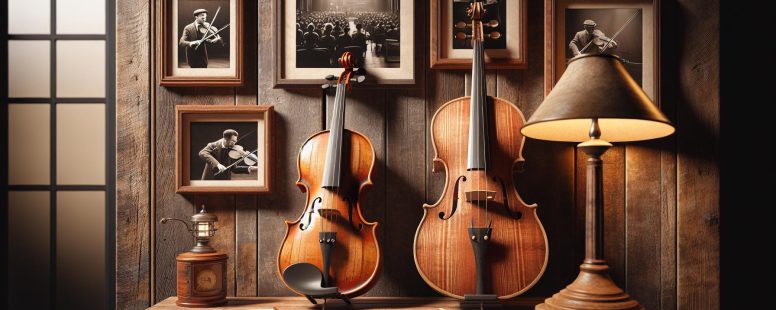
Picture this: a musician’s bow dances across four strings, filling the air with melodies that can tug at your heart or set your feet tapping. But is it a violin or a fiddle? You’ve probably heard both terms tossed around, yet they seem to describe the same instrument. So what’s the difference? Is it the music, the technique, or something else entirely?
Whether you’re a curious listener or an aspiring musician, unraveling the mystery between these two terms can be as fascinating as the music itself. From classical concert halls to lively folk gatherings, the violin and fiddle take on distinct identities that reflect culture, style, and tradition. Understanding these nuances not only deepens your appreciation for the instrument but also reveals the rich stories behind its music. Ready to explore what sets the violin and fiddle apart? Let’s jump into the world where strings meet soul.
Overview Of Violin And Fiddle
The violin and fiddle refer to the same string instrument, but their distinction lies in usage and cultural context. A violin typically appears in classical orchestras, chamber music, and formal settings. The fiddle, in contrast, is associated with folk music traditions, bluegrass, and country performances.
Both instruments share the same build, including the four strings (G, D, A, E), the wooden body, and the bow strung with horsehair. But, the term “fiddle” often evokes a sense of informality and adaptability. For example, a fiddler might alter the bridge—a small curved wooden piece supporting the strings—for faster playing or to emphasize droning techniques. Such modifications are less common among violinists, who adhere closely to existing classical standards.
Your choice to call the instrument a violin or a fiddle often reflects the style of music you perform rather than substantial differences in design. For instance, in jazz violin, improvisation aligns more with fiddling traditions, yet jazz musicians often refer to the instrument as a violin. This duality shows how social context impacts terminology.
Musical traditions also influence playing techniques. Violinists lean towards precision, requiring intricate bow control in compositions by Beethoven or Tchaikovsky. Fiddlers focus more on rhythmic drive and energy, playing reels, jigs, or hoedowns like those in Irish or Appalachian music. Can one instrument really encompass these dramatic stylistic shifts? It depends on intent and context. The flexibility of the instrument plays a key role in shaping its identity.
Key Similarities
Even though their cultural and stylistic differences, the violin and fiddle share fundamental traits that unify them as the same instrument.
Shared Structure
Both the violin and fiddle have identical physical components. Each instrument includes a wooden body, four strings tuned in perfect fifths (G-D-A-E), a fingerboard, and a bow strung with horsehair. The design prioritizes acoustical performance, enhancing resonance and tonal clarity. For example, whether you’re performing a classical concerto or an energetic folk tune, the sound derives from the same structural framework.
The bridge, where strings rest, is noteworthy across contexts. Classical violinists often maintain a higher-arched bridge to enable intricate note separation. In contrast, fiddlers might prefer a flatter bridge for quicker chordal transitions. But, this modification doesn’t alter the essence of the instrument, only its playability.
Identical Origins
Both terms trace back to 16th-century string instruments used in Europe. The violin evolved from earlier bowed instruments, such as the medieval fiddle and rebec, emphasizing its historical unity. The fiddle retains its name from these predecessors, connecting folk music to its cultural heritage.
Usage defines the divergence, yet the origins create a shared foundation. When exploring music history, you’ll find that the earliest violins and fiddles were indistinguishable in design and primarily crafted for versatility in various musical traditions.
Major Differences
Understanding the major differences between the violin and fiddle lies in examining their styles, genres, and tuning. While essentially the same instrument, their role and nuances set them apart in surprising ways.
Playing Styles
The violin is associated with precision and technique. Classical violinists focus on perfect intonation, smooth bowing, and structured dynamics. Playing in orchestras or solo recitals, violinists often follow complex sheet music. For example, a violinist might perform Beethoven’s “Violin Concerto,” requiring mastery over multiple techniques and expressive phrasing.
Fiddle playing, in contrast, emphasizes rhythm, improvisation, and energetic delivery. Fiddlers often adapt their performances to the mood of an event or audience. Bluegrass musicians, for instance, incorporate rapid bowing and “double stops” to add chords and harmony. Fiddlers may even shuffle their bows for rhythmic patterns, creating a lively and danceable sound.
Music Genres
Classical music dominates violin performances. Operas, symphonies, and chamber music integrate violins to create sophisticated compositions. Examples include Vivaldi’s “The Four Seasons” or Bach’s sonatas and partitas, where violins take center stage in intricate arrangements.
Fiddles thrive in folk traditions, blending into genres like Irish reels, Appalachian tunes, Cajun dances, and country music. Fiddlers contribute emotional layers and vibrant tones to ensemble performances. In folk festivals or barn dances, their storytelling through music reflects cultural diversity and celebration.
Tuning Variations
Both violin and fiddle primarily use standard tuning—G, D, A, E—but fiddlers occasionally deviate to suit the genre. For instance, cross-tuning appears in old-time or bluegrass music, where strings are tuned to different intervals for resonance and simplicity. A common example is “AEAE” tuning, used in folk compositions to help drone effects during fast tracks.
Violinists, but, stick to standard tuning, especially in classical contexts. Changing tuning alters string tension, which could undermine the delicate precision needed for orchestral pieces. This distinction highlights how each style values either adaptability or technical consistency.
Cultural Perspectives
Cultural perspectives shape how you perceive the violin and fiddle, extending beyond technical distinctions. These perspectives highlight societal values, traditions, and regional histories connected to the instrument.
Classical Vs. Folk Music
Different musical styles embody the violin and fiddle’s cultural identities. Violin evokes classical elegance, characterized by symphony orchestras, concertos, and formal venues. Performances prioritize accuracy, blending harmoniously with ensembles or orchestral arrangements. Notable composers like Bach, Vivaldi, and Mendelssohn utilized violins as central elements in their works.
The fiddle, contrastingly, thrives in folk music’s communal and expressive settings. It accompanies danceable rhythms in genres like Irish jigs, Appalachian bluegrass, and Cajun two-steps. Fiddle players often prioritize improvisation and emotional expression over formal technique. Within folk traditions, the fiddle becomes a storytelling medium, carrying ancestral narratives and cultural identity through its melodies.
Regional Contexts
Regional contexts influence whether an instrument is called a violin or a fiddle. Europe associates violins with baroque and romantic traditions, reflecting its historic roots in courts and cathedrals. Meanwhile, in North America, the fiddle became symbolic of grassroots music during the 19th century, played at barn dances and community gatherings.
In Scandinavian folk music, fiddles like the Norwegian Hardanger feature additional sympathetic strings for resonant tones. Indian classical music incorporates variants like the Carnatic violin, adapted to specific postures and microtonal scales. These variations illuminate how regional factors shape interpretations and terminology surrounding the instrument.
Choosing Between Violin And Fiddle
Deciding whether to embrace the violin’s classical elegance or the fiddle’s vibrant folk energy often depends on your goals and musical aspirations. Your choice reflects not only your preferred style but also the cultural traditions that resonate with you.
Factors To Consider
Understanding the differences in playing styles, genres, and contexts is essential when choosing between a violin or a fiddle. Violins focus on precision and technique, making them ideal for classical music, orchestral arrangements, and formal performances. If your interest lies in intricate compositions and structured learning, the violin aligns with these goals.
On the other hand, fiddles emphasize rhythm, improvisation, and adaptability, catering to folk traditions, bluegrass, and country settings. Their versatility can suit communal music sessions, like jam sessions or lively dances. If you’re drawn to expressive, free-form melodies that connect with grassroots traditions, you’d likely find the fiddle more rewarding.
Instrument setup can also influence your decision. While violins typically feature a curved bridge to help clean note separation, fiddlers might opt for a flatter bridge, enabling quicker double stops and chords. This subtle yet impactful design distinction supports the unique demands of each playing style.
Personal Preference
Your individual interests and connection to music should guide your choice between the violin and fiddle. If the allure of structured compositions or performing within an orchestra excites you, leaning toward the violin makes sense. Many classical players cherish the challenge of mastering demanding techniques and performing works by composers like Bach or Mozart.
Alternatively, if storytelling through sound and dynamic participation in cultural traditions appeals to you, the fiddle offers an enriching path. Fiddlers often thrive in informal, audience-driven spaces where improvisation brings energy to the experience. Picture an Irish pub session or a Cajun dance hall; these moments highlight what makes the fiddle so distinctive.
Embracing either the violin or fiddle reveals an opportunity for personal growth and artistic expression. While a technical or cultural distinction might guide your initial decision, remember, adapting the instrument to various styles blurs the lines between the two, showcasing its incredible versatility.
Conclusion
Whether you call it a violin or a fiddle, this remarkable instrument bridges diverse musical worlds with its adaptability and charm. Its ability to resonate across classical concert halls and lively folk gatherings speaks to its universal appeal. Your choice of terminology reflects not just a style of music but also a connection to cultural traditions and personal expression.
By understanding the nuances between the violin and fiddle, you gain a deeper appreciation for the artistry and history they represent. No matter which path you choose, this instrument offers endless opportunities to explore, create, and connect through music.
To provide the best experiences, we use technologies like cookies to store and/or access device information. Consenting to these technologies will allow us to process data such as browsing behaviour or unique IDs on this site. Not consenting or withdrawing consent, may adversely affect certain features and functions.
Functional
Always active
The technical storage or access is strictly necessary for the legitimate purpose of enabling the use of a specific service explicitly requested by the subscriber or user, or for the sole purpose of carrying out the transmission of a communication over an electronic communications network.
Preferences
The technical storage or access is necessary for the legitimate purpose of storing preferences that are not requested by the subscriber or user.
Statistics
The technical storage or access that is used exclusively for statistical purposes.The technical storage or access that is used exclusively for anonymous statistical purposes. Without a subpoena, voluntary compliance on the part of your Internet Service Provider, or additional records from a third party, information stored or retrieved for this purpose alone cannot usually be used to identify you.
Marketing
The technical storage or access is required to create user profiles to send advertising, or to track the user on a website or across several websites for similar marketing purposes.