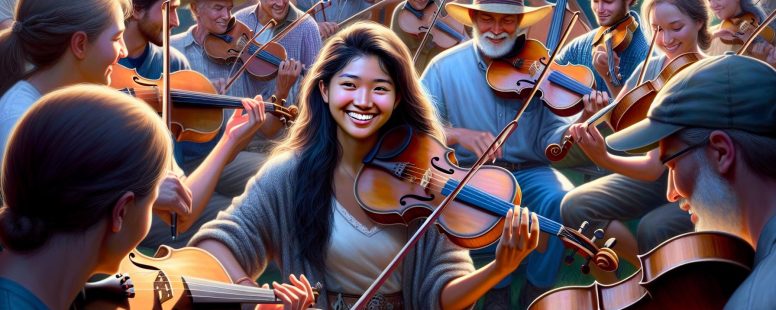
Picture this: a lively bluegrass jam session where a musician’s fingers dance across the strings, filling the air with infectious energy. Now, imagine a grand concert hall where a symphony’s delicate melody stirs your soul. Both scenes feature the same instrument—or do they? The fiddle and the violin may look identical, but their worlds couldn’t be more different.
You’ve probably heard the terms used interchangeably, leaving you wondering if there’s truly a difference. Is it the music, the technique, or something more? Whether you’re a curious music lover or an aspiring player, understanding what sets these two apart opens up a fascinating journey into their history, styles, and cultural significance. Let’s unravel the mystery and discover what makes the fiddle and violin unique in their own right.
What Is A Fiddle?
A fiddle is the same physical instrument as a violin but used within different musical traditions. Its identity stems primarily from context and playing style, not construction or materials. Fiddle music often emphasizes rhythmic drive and improvisation, which suits genres like bluegrass, folk, and country.
Players typically adapt the instrument to suit their preference. For example, some fiddlers flatten the bridge for faster string crossings, favoring techniques used in lively dance tunes or reels. These adjustments create a distinctive sound and help rapid, expressive playing.
Unlike classical violinists, fiddlers value tradition and improvisational freedom. Regional styles like Irish jigs, Appalachian tunes, or Cajun music guide how a fiddler approaches performance. The fiddle preserves and perpetuates cultural stories through its melodies.
What Is A Violin?
A violin is a four-stringed bowed instrument principally used in classical music. It produces sound by drawing a bow strung with horsehair across its strings, which are tuned in perfect fifths (G3, D4, A4, E5). The instrument’s hollow wooden body amplifies the vibrations, creating its distinct tonal quality.
You can hear violins in orchestras, chamber music, and solo performances. These instruments often serve as the melody carriers in classical compositions, from Baroque sonatas to Romantic concertos. Their dynamic range and expressiveness have made them indispensable across various musical narratives.
Each violin’s design blends artistry and acoustical precision. Its components include a maple back, spruce top, and ebony fingerboard. Fine tuners and a chin rest are also added for precision and comfort. High-quality instruments, carefully handcrafted by luthiers, can cost thousands of dollars.
Violins demand a meticulous playing technique. Proper bowing, precise finger placement, and controlled vibrato shape the sound, allowing performers to master complex pieces. Renowned virtuosos like Itzhak Perlman and Hilary Hahn showcase the instrument’s capabilities, inspiring awe in audiences worldwide.
Key Differences Between Fiddle And Violin
Even though their identical structure, the fiddle and violin diverge significantly in how they’re played, tuned, and the musical genres they embrace.
Playing Style
Fiddle playing prioritizes rhythm and improvisation, often featuring fast string crossings and ornamentation. Fiddlers flatten the bridge for smoother transitions across strings. This lets them execute rapid, dance-worthy melodies. For example, Irish fiddle tunes rely on lively bowing patterns and rhythmic variation.
Violin playing, on the other hand, emphasizes tonal precision and control. Classical violinists follow meticulously written sheet music, focusing on dynamics, phrasing, and intonation. Techniques like vibrato and spiccato add emotional depth to pieces. Renowned violin compositions, such as Bach’s Partitas, showcase the instrument’s expressive range and technical demands.
Tuning And Setup
The tuning standard for both instruments involves G, D, A, and E strings, but fiddlers occasionally alter it to suit specific styles. Alternate tunings, like “cross-tuning,” create unique resonances ideal for old-time or folk music. For instance, an Appalachian fiddler might use AEAE tuning to enhance a rustic sound.
Violins maintain traditional tuning to align with orchestral requirements. Their setup remains consistent, including a curved bridge that supports precise fingering. High-quality violins, with components like ebony pegs and gut-core strings, cater to sophisticated performances, especially in ensemble settings.
Music Genres
Fiddle music thrives in genres such as bluegrass, country, folk, and Cajun. It’s designed for communal settings like barn dances or festivals. Regional styles, like Quebecois reels or Scandinavian polskas, underline the fiddle’s role in storytelling and cultural preservation.
Violins dominate classical and contemporary orchestral music. They’re central to genres like symphony, opera, and chamber music. Jazz, film scores, and even experimental rock have also incorporated violins, expanding their versatility. For example, jazz violinist Stéphane Grappelli blended swing rhythms with classical technique.
Similarities Between Fiddle And Violin
Fiddle and violin share a single physical design, making them essentially the same instrument. Their overlapping characteristics create confusion for many, but they also highlight shared musical versatility.
Structure And Appearance
Both fiddle and violin feature the same foundational components: a hollow wooden body, four strings, a fingerboard, a bridge, and a bow. These elements contribute to their shared ability to produce a rich, dynamic range of tones. Crafted traditionally from materials like spruce for the top and maple for the back, sides, and neck, their construction demonstrates precision and craftsmanship.
Visually, the instruments are indistinguishable. Both possess a standard hourglass shape and f-holes for sound projection. But, subtle modifications such as a flattened bridge on a fiddle differentiate its playability, none altering the instrument’s core structure. For example, while the violin maintains standard specifications for classical performances, a fiddler might adjust string height for quicker transitions during rapid music.
Sound Production
Both instruments produce sound by drawing a bow, strung with horsehair, across their strings. This action creates vibrations that amplify within the hollow body. They share standard tuning—G, D, A, and E strings—in many settings, ensuring tonal consistency.
Although playing techniques vary across genres, their sound production remains alike in its core mechanics. Light, controlled bow pressure allows for soft tones suited to classical music, while aggressive bowing emphasizes rhythmic vibrancy in folk styles. For instance, while a violinist’s tone might prioritize precise resonance, a fiddler’s might celebrate rhythmic bounce and improvisational flair.
Common Misconceptions
Many people believe the fiddle and violin are completely different instruments, possibly imagining separate manufacturing processes or designs. In reality, they are the same physical instrument, differing only in setup and playing style. Confusion often comes from their contrasting associations—classical music for violins and folk traditions like Irish jigs or old-time square dances for fiddles.
Another common misconception is that fiddlers and violinists require entirely unique skill sets. While the techniques, such as bowing styles and finger placements, focus on different outcomes, the foundational skills like tone production and intonation remain similar. Both rely on dexterity and an ear for nuanced sound, whether you’re preparing for a recital or a lively jam session.
Some also assume fiddlers use cheaper or lower-quality instruments than violinists. While beginner fiddlers may start with affordable options, many professional fiddlers invest in high-quality instruments. Similarly, violinists don’t always own pricey Stradivarius models; many use moderately priced violins tuned to their specific needs. Prejudices about price often confuse the actual value musicians place on their tools.
It’s also incorrect to think that all fiddle music is exclusively upbeat. Although lively tunes dominate genres like bluegrass and Cajun, fiddlers also perform slow ballads and waltzes. The repertoire isn’t restricted by tempo but shaped by the cultural and emotional context. On the other hand, violins are sometimes unfairly labeled as instruments for “serious” music, yet they feature prominently in jazz, pop, and even experimental electronic genres.
Another mistaken idea is that these instruments differ in tuning mechanics. Even though their varied musical styles, both are typically tuned to G, D, A, and E. But, fiddlers may adopt alternate tunings or scordatura for specific effects, such as creating a drone for traditional Appalachian music. This flexibility demonstrates shared adaptability rather than exclusivity in tuning approaches.
Misunderstandings like these highlight the overlap between the fiddle and the violin, while emphasizing the importance of context in how they’re perceived.
Conclusion
Whether you lean toward the vibrant energy of fiddle tunes or the refined elegance of classical violin pieces, understanding their differences enriches your appreciation for both. These instruments, though identical in structure, embody distinct musical traditions and cultural expressions.
Exploring their unique characteristics not only deepens your knowledge but also connects you to the diverse worlds they represent. No matter which path you choose, both the fiddle and violin offer endless possibilities for creativity and storytelling in music.
To provide the best experiences, we use technologies like cookies to store and/or access device information. Consenting to these technologies will allow us to process data such as browsing behaviour or unique IDs on this site. Not consenting or withdrawing consent, may adversely affect certain features and functions.
Functional
Always active
The technical storage or access is strictly necessary for the legitimate purpose of enabling the use of a specific service explicitly requested by the subscriber or user, or for the sole purpose of carrying out the transmission of a communication over an electronic communications network.
Preferences
The technical storage or access is necessary for the legitimate purpose of storing preferences that are not requested by the subscriber or user.
Statistics
The technical storage or access that is used exclusively for statistical purposes.The technical storage or access that is used exclusively for anonymous statistical purposes. Without a subpoena, voluntary compliance on the part of your Internet Service Provider, or additional records from a third party, information stored or retrieved for this purpose alone cannot usually be used to identify you.
Marketing
The technical storage or access is required to create user profiles to send advertising, or to track the user on a website or across several websites for similar marketing purposes.