Imagine stepping outside on a crisp winter morning. The ground sparkles like a sea of diamonds, but is it snow beneath your boots or a sheet of ice waiting to catch you off guard? While both transform the world into a frosty wonderland, their differences go far beyond appearances.
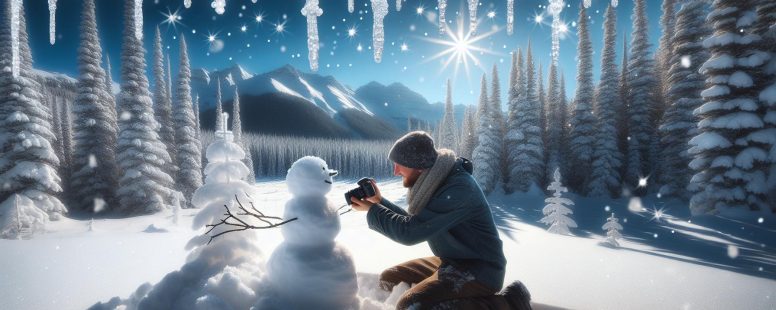
Snow, with its soft, powdery texture, invites you to build snowmen and craft snow angels. Ice, on the other hand, forms as a solid, slippery surface, often hidden in plain sight. These two wintry elements may seem similar, but their origins, structures, and behaviors couldn’t be more distinct.
Understanding what sets snow and ice apart isn’t just fascinating—it’s practical. Whether you’re exploring icy sidewalks or marveling at fresh snowfall, knowing these differences can enhance your appreciation for winter’s beauty and keep you safe during its challenges. So, what truly separates these frozen marvels? Let’s explore.
Understanding Snow And Ice
Snow and ice, both fascinating forms of water, differ in their composition, formation, and roles within nature. Snow forms when water vapor in the atmosphere freezes into ice crystals. These crystals bond together to create snowflakes, which are light and porous. By contrast, ice emerges when liquid water solidifies due to freezing temperatures, resulting in a dense, compact structure.
Snowflakes, with their delicate and symmetric patterns, blanket landscapes, while ice layers solidify over lakes or roads. Snow’s texture varies, ranging from fluffy powder to wet and heavy, depending on temperature and humidity conditions. Ice, but, can form sheets, shards, or blocks but is uniformly dense and robust.
You might notice snow on mountain peaks because of their higher altitude and lower temperatures, whereas ice dominates frozen lakes and compacted roads during winter. Snow scatters light, creating its bright white hue, and ice, being translucent to transparent, can appear blue or gray based on its thickness.
Safety differs significantly between the two. Walking on snow offers better traction due to its granulated nature, whereas ice often poses a slipping hazard. Recognizing these differences aids in exploring winter terrains effectively.
Key Characteristics Of Snow
Snow exhibits distinct features, influencing its role in nature and human activities. Its formation, texture, and common locations reveal its unique properties.
Formation Process
Snow forms when water vapor in the atmosphere freezes into ice crystals under freezing temperatures. These crystals cluster together, creating the intricate snowflakes you see. Unlike ice, which results from liquid water solidifying, snow appears through deposition—a process where water vapor skips the liquid phase. Atmospheric conditions like humidity and air temperature directly impact the size and shape of snowflakes, with colder environments leading to more complex crystal patterns.
Texture And Structure
Snow is inherently porous and lightweight, with a fluffy or grainy texture depending on its moisture content. Freshly fallen snow feels soft and powdery, while wet snow can compact into denser layers. Its structural integrity varies, as snow can form loose drifts or compressed layers over time, especially in areas with repeated freezing and thawing cycles. In contrast to ice’s uniform density, snowflakes scatter light, giving snow its bright white appearance.
Common Locations
Snow primarily occurs in cold climates or high-altitude regions like mountain ranges. Locations such as the Rockies or the Alps experience frequent snowfall due to their elevation and temperature. Snow-covered terrains range from open fields to densely forested areas, transforming landscapes into reflective shields that regulate Earth’s surface temperature. In urban areas during winter storms, streets and rooftops temporarily emulate these natural snowfields, altering the environment and its usability.
Key Characteristics Of Ice
Ice is a solid state of water, formed under specific conditions and exhibiting unique physical properties that distinguish it from snow. Its characteristics influence ecosystems, weather patterns, and daily human activities.
Formation Process
Ice results from the freezing of liquid water at temperatures below 32°F (0°C). Under these conditions, water molecules slow down, lose kinetic energy, and arrange into a crystalline lattice. This structured arrangement creates a dense, stable formation. Rapid freezing, which often occurs in artificial processes like making ice cubes, produces clear ice, while slower freezing traps air bubbles, resulting in opaque ice. Natural ice often forms on lakes and rivers during winter, driven by prolonged exposure to cold climates.
Physical Properties
Ice is rigid, slippery, and heavier than snow due to its compact molecular structure. Its transparent nature can vary, with clear ice providing visibility and opaque ice appearing white or gray from trapped air or impurities. The surface of ice exhibits low friction, a property exploited in activities like ice skating yet posing hazards for pedestrians and drivers. Ice’s density measures 0.917 g/cm³, slightly less than water, which allows it to float. Its melting point near 32°F (0°C) is crucial for maintaining natural water cycles.
Types Of Ice
Several types of ice exist in both natural and human-made environments:
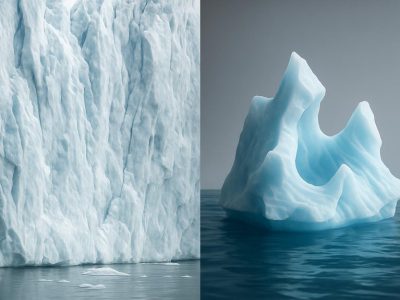
Glacial Ice: Found in glaciers, forming over years of compressing snow. It can appear blue due to absorbed red wavelengths.
Sea Ice: Forms from ocean water freezing in polar regions, influencing global climate and ecosystems.
Black Ice: A thin, nearly invisible layer on roads, dangerous due to lack of traction.
Artificial Ice: Created in controlled conditions, commonly used in refrigeration, skating rinks, and preserved goods.
These diverse forms demonstrate ice’s multifaceted roles across environments and industries.
The Differences Between Snow And Ice
Snow and ice, though composed of water, differ significantly in structure, appearance, and behavior. These distinctions influence their interactions with environments and their impact on daily lives.
Composition
Snow forms from water vapor freezing directly in the atmosphere into intricate ice crystals. The crystals bond loosely, creating light, airy snowflakes. In contrast, ice results from liquid water solidifying at temperatures below 32°F (0°C) into a dense, crystalline lattice. Ice lacks snow’s porous structure, giving it a smoother texture.
For example, snow contains more trapped air particles due to its open structure, making it a better insulator. Ice, but, being compact, exhibits lower thermal resistance, leading to faster heat conduction. Understanding this aids in applications like winter insulation or ice skating.
Appearance
Snow appears bright white due to its ability to scatter light in all directions. Each ice crystal acts as a miniature prism, diffusing light across its surface. Ice, on the other hand, ranges from translucent to transparent, with colors like blue or gray emerging when impurities or air bubbles are present.
Imagine soft mounds of freshly fallen snow reflecting a dazzling white under sunlight, contrasting with a frozen lake’s smooth surface shimmering faintly under the same light. These visual differences often guide safety decisions, such as recognizing black ice on roads.
Behavior In Different Temperatures
Snow behaves differently depending on temperature changes. Above freezing, snow melts into water, while near or below freezing, it compacts, creating slush or firmer layers. Ice, being denser, withstands temperature shifts longer before melting, though thinner surfaces crack faster under heat or pressure.
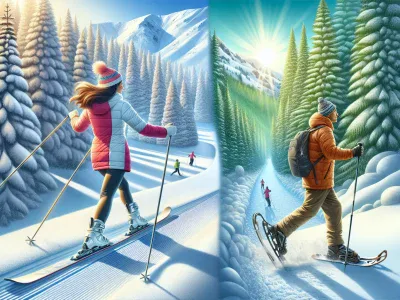
Think of skiing on soft powder snow in sub-zero conditions but slipping on icy pathways just above freezing. Snow’s softer texture offers traction, whereas ice’s slick surface increases sliding hazards. These behaviors impact winter activities and hazard planning, emphasizing the importance of knowing their thresholds.
Importance Of Snow And Ice In Nature
Snow and ice play vital roles in natural processes, impacting ecosystems, climate patterns, and global biodiversity. Their interactions with the environment shape life across different regions of the world.
Role In The Ecosystem
Snow and ice provide essential habitats for various species. Polar bears, for example, rely on sea ice for hunting seals, while penguins depend on ice sheets for breeding. In mountainous regions, the seasonal snowpack acts as a reservoir, slowly releasing water to sustain rivers and nourish both plant and animal life.
Frozen surfaces influence soil and vegetation. Snow cover insulates the ground, protecting plants and microorganisms from harsh winter temperatures. In forested areas, layers of snow also supply moisture in spring, fostering new growth.
Glaciers serve as Earth’s freshwater reserves. They account for roughly 69% of global freshwater, ensuring that communities and ecosystems in arid regions, like the Andes or Himalayas, remain supported during dry months. Without these resources, ecosystems depending on meltwater would face shortages.
Impact On Climate
Snow and ice regulate global temperatures by reflecting solar radiation. This phenomenon, known as the albedo effect, stabilizes Earth’s climate. When snow or ice melts, darker surfaces beneath absorb more heat, accelerating warming—a process observed in regions like the Arctic.
These frozen elements influence weather patterns. Melting polar ice disrupts ocean currents, such as the thermohaline circulation, altering rainfall and storm intensity worldwide. Scientists link abnormal ice loss in Greenland to shifts in jet streams, which can bring unusual cold snaps or prolonged droughts.
Snowfall variabilities reveal climate trends. Increased heavy snowfall in some areas might indicate warming oceans, as warm water contributes to higher atmospheric moisture levels. In contrast, regions losing historical snow cover experience ecosystem stress and reduced water availability.
Conclusion
Understanding the differences between snow and ice enhances your ability to navigate and appreciate winter’s unique landscapes. These two elements, though similar in appearance, play distinct roles in nature and influence your safety and activities during colder months.
By recognizing their characteristics, from formation to behavior, you can better prepare for winter adventures and contribute to preserving the ecosystems they support. Embrace the beauty and complexity of snow and ice while respecting their power and purpose in shaping our world.
To provide the best experiences, we use technologies like cookies to store and/or access device information. Consenting to these technologies will allow us to process data such as browsing behaviour or unique IDs on this site. Not consenting or withdrawing consent, may adversely affect certain features and functions.
Functional
Always active
The technical storage or access is strictly necessary for the legitimate purpose of enabling the use of a specific service explicitly requested by the subscriber or user, or for the sole purpose of carrying out the transmission of a communication over an electronic communications network.
Preferences
The technical storage or access is necessary for the legitimate purpose of storing preferences that are not requested by the subscriber or user.
Statistics
The technical storage or access that is used exclusively for statistical purposes.The technical storage or access that is used exclusively for anonymous statistical purposes. Without a subpoena, voluntary compliance on the part of your Internet Service Provider, or additional records from a third party, information stored or retrieved for this purpose alone cannot usually be used to identify you.
Marketing
The technical storage or access is required to create user profiles to send advertising, or to track the user on a website or across several websites for similar marketing purposes.