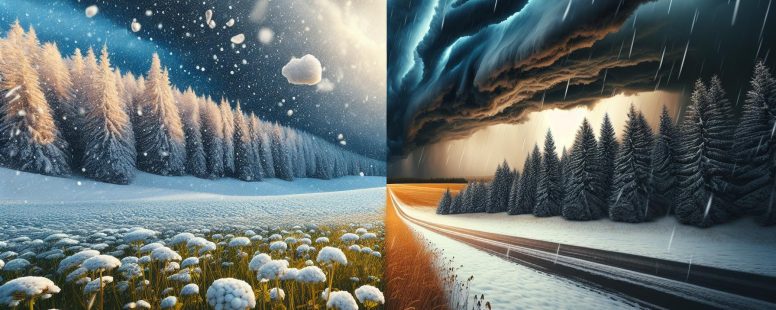
Picture a crisp winter morning, the world blanketed in soft, powdery snow, each flake unique and delicate. Now, imagine a sudden storm, the sky hurling down icy pellets that rattle against windows and bounce off the ground. Both are forms of precipitation, yet they couldn’t be more different in how they form, feel, and impact the world around you.
You’ve likely experienced both snow and hail, but have you ever wondered what truly sets them apart? Is it just their size or the way they fall? The answer lies in their fascinating journey through the atmosphere, shaped by temperature, moisture, and even the season. Understanding these differences not only satisfies your curiosity but also helps you better prepare for the weather’s whims. Let’s unravel the mystery behind these two icy wonders.
Understanding Snow And Hail
Snow and hail are two types of frozen precipitation, yet they differ significantly in their formation and appearance. Understanding these differences enhances your knowledge of weather patterns and helps in interpreting seasonal phenomena.
What Is Snow?
Snow forms directly from water vapor in the atmosphere through a process called deposition. When atmospheric temperatures are consistently below 32°F, moisture crystallizes into intricate ice structures, creating snowflakes. These flakes combine with others as they descend, shaping the soft, white layers of snow you see on the ground.
Snow typically occurs in cold weather conditions, often during winter storms. For example, a blizzard can blanket landscapes with inches or feet of snow, impacting daily life and transportation. Unlike hail, snowflakes are delicate and melt quickly in warmer weather.
What Is Hail?
Hail develops within strong thunderstorm clouds when updrafts carry raindrops into freezing layers higher in the atmosphere. Rain freezes into solid ice balls or chunks, called hailstones, which grow as more layers of water attach and freeze. When the hailstones become too heavy for the updrafts to support, they fall to the ground.
Hailstones vary in size, from pea-sized to larger than a grapefruit. Hailstorms are often brief but intense, causing damage to crops, vehicles, and buildings. Unlike snow, hail can occur in warm weather during severe storms, making it a year-round phenomenon.
Formation Process
Snow and hail form through distinct atmospheric processes influenced by temperature, moisture, and air movement. Understanding these differences helps clarify why they occur under varying weather conditions.
How Snow Forms
Snow forms when water vapor in the atmosphere undergoes deposition, changing directly into ice crystals without becoming liquid first. This process requires temperatures below 32°F (0°C) and sufficient atmospheric moisture. These ice crystals combine to create hexagonal snowflakes with intricate patterns, shaped by temperature and humidity levels.
Snow typically forms in nimbostratus clouds during cold weather. For example, in regions with freezing temperatures like Alaska or high-altitude areas of the Rockies, snowstorms can blanket entire landscapes. Fluffy snow results from low temperatures combined with minimal wind, while wetter snow occurs closer to freezing, making it heavier and ideal for activities like snowball fights or building snowmen.
How Hail Forms
Hail forms within cumulonimbus thunderstorm clouds when strong updrafts lift raindrops high into freezing layers of the atmosphere. These droplets freeze into small pellets, which grow as additional layers of ice accumulate during repeated journeys through the cloud. This cyclic process occurs until the hailstones become too heavy for the updrafts to support, causing them to fall to the ground.
Hail commonly occurs during spring or summer storms, even in warm regions like Texas or Florida. The largest recorded hailstones, such as the 8-inch-diameter stone in South Dakota (2010), illustrate the destructive potential of hailstorms. Damage to crops, vehicles, and buildings highlights the intensity of these weather events. Unlike snow, hail can happen at any temperature on the ground, as the freezing process occurs in the cloud.
Physical Characteristics
Snow and hail differ significantly in their physical characteristics, which affect their appearance, size, texture, and density. These distinctions influence how you perceive and interact with them in everyday life.
Appearance And Size
Snow appears as small, intricate ice crystals that join together to form snowflakes, typically less than 0.1 inch (2–5 millimeters) in diameter. Each snowflake features a unique hexagonal pattern due to atmospheric conditions during formation. When snow blankets the ground, its appearance is soft and white, creating a uniform, fluffy world.
Hail, on the other hand, consists of solid ice balls or hailstones. Hailstones vary greatly in size, ranging from pea-sized (0.2 inches or 5 millimeters) to larger than a grapefruit (6 inches or 15 centimeters) in extreme cases. Unlike snow, hail has a layered or irregular structure resulting from multiple trips through freezing and non-freezing layers of storm clouds. Large hailstones often exhibit a cloudy or translucent appearance due to trapped air bubbles.
Texture And Density
Snow possesses a light, soft texture with low density, making it easy to compress. Dry snow feels powdery, while wetter snow closer to the freezing point feels compact and sticky. This characteristic density influences whether snow is ideal for skiing or building snowmen.
Hail is hard and dense because it’s comprised of solid layers of ice. The outer surface can be smooth or slightly rough depending on its formation process. Even though its density, hail often cracks or shatters upon impact due to its brittle nature. For example, crops and car windshields frequently suffer from damage during severe hailstorms because of hailstones’ solid and unforgiving texture.
Weather Conditions For Snow And Hail
Snow and hail occur under distinct weather conditions driven by temperature, atmospheric moisture, and cloud dynamics. Each phenomenon thrives in specific environments shaped by seasonal and geographic factors.
Typical Weather For Snow
Snow forms in cold climates when the temperature falls below 32°F (0°C) and moist air rises to condense into nimbostratus clouds. You’ll witness snow during winter months in regions like Scandinavia, Siberia, or the northern United States. For example, cities like Anchorage, Alaska, often experience consistent snowfall due to freezing temperatures and high atmospheric moisture.
Calm snowfall results in fluffy, light snowflakes when wind activity is minimal. Wet snow, contrastingly, appears closer to freezing conditions, such as late-winter snowstorms, presenting heavy, compact flakes ideal for snow-related activities. Snowfall frequently blankets landscapes in high altitudes like the Rockies or Himalayas, turning mountainous terrains into wintry wonders.
Typical Weather For Hail
Hail forms in cumulonimbus clouds during thunderstorms, fueled by strong updrafts. Its formation isn’t bound by ground temperature, making it common during spring and summer storms even in warm regions like the Great Plains. Texas, for instance, experiences frequent hailstorms even though its typically hot conditions.
Hailstones develop through a cyclical freeze-thaw process. Updrafts carry water droplets into freezing zones multiple times, adding layers of ice until they’re too heavy to sustain. Hailstorms often accompany severe weather systems, including tornadoes, increasing their potential for destruction. Crops, vehicles, and buildings regularly suffer damage from hail, particularly golf-ball-sized or larger hailstones, which are not uncommon in regions prone to severe storms.
Impacts On Environment And Daily Life
Effects Of Snow
Snow contributes to hydrological cycles, insulating soil and replenishing water supplies through snowmelt during spring. In mountainous regions like the Himalayas, snowmelt sustains rivers such as the Ganges, essential for agriculture and drinking water. Prolonged snowfall disrupts transportation, freezing roads, and canceling flights, as seen in areas like Chicago during heavy winter storms. Energy demand increases in snowfall-prone winters due to the need for heating.
Snow-covered landscapes support winter sports, including skiing or sledding, attracting tourism and boosting local economies. Urban areas, but, face challenges managing snow removal, which strains municipal budgets. For example, New York City annually spends millions clearing snow to prevent congestion. Snow also affects ecosystems, influencing habitats where species like snow leopards rely on snowy environments for survival.
Effects Of Hail
Hail damages crops, reducing agricultural productivity and resulting in global economic losses. For instance, a 2022 hailstorm in France devastated vineyards, causing multimillion-dollar impacts. Cars, rooftops, and windows also sustain serious damage during hailstorms, forcing home and vehicle owners into costly repairs. In severe cases, large hailstones create direct risks to human safety, as documented in injury-related incidents during storms in Texas.
Hail’s sudden occurrence disrupts outdoor activities, making events like sports games or festivals unsafe. Farmers face significant unpredictability in regions like India, where hail can unexpectedly wipe out an entire season’s harvest overnight. Wildlife is similarly vulnerable, with smaller animals struggling to shelter from rapid, heavy pelting. Even though these negatives, hail contributes to replenishing aquifers in arid areas when melted.
Hail frequency increases with amplified climatic changes, prompting research into correlations between hailstorm patterns and global warming trends. Preparing for hail through weather alerts and protective coverings minimizes associated risks.
Key Differences Between Snow And Hail
Snow and hail differ significantly in their origins, composition, and environmental contexts. Snow forms through deposition in cold conditions below 32°F (0°C), where water vapor directly converts into ice crystals without becoming liquid first. This creates intricate snowflakes that are soft and lightweight. Hail, but, forms in thunderstorms when updrafts lift raindrops into freezing altitudes, causing layers of solid ice to accumulate until the hailstones are too heavy to remain airborne.
Formation Process
Snow forms gradually in cold, stable atmospheric conditions, primarily in nimbostratus clouds. You’ll notice it blanketing the ground in quiet, wintry landscapes. Hail, by contrast, results from aggressive thunderstorm dynamics within cumulonimbus clouds, where strong updrafts repeatedly freeze, release, and refreeze water droplets, building hard ice layers.
Physical Characteristics
Snowflakes are small, uniquely patterned ice structures, typically under 0.1 inch in diameter, forming a soft, fluffy texture upon settling. Hailstones appear as solid, round ice balls or elliptical shapes, varying from pea-sized (around 0.25 inches) to larger than 4 inches, like the largest U.S hailstone found in South Dakota in 2010.
Seasonal Occurrence
Snow dominates winter months in cold climates, such as Canada or Siberia, when moisture condenses at below-freezing temperatures. Hail occurs in warmer seasons, like spring and summer, during thunderstorms, even at ground temperatures exceeding 75°F (24°C). For example, hailstorms frequently impact states like Kansas and Texas during peak storm seasons.
Impact and Density
Snow, given its low density, helps retain soil moisture and replenishes groundwater through melting. It’s also relatively benign unless accumulating in dangerous amounts. Hail, on the other hand, is highly dense and can cause substantial damage, destroying roofs, crops, and vehicles, sometimes even resulting in injuries. Hailstones’ hardness leads to significant challenges for farmers and property owners alike.
Conclusion
Understanding the differences between snow and hail helps you appreciate the fascinating processes behind these distinct forms of precipitation. Their unique characteristics, from delicate snowflakes to dense hailstones, reflect the diverse ways weather shapes our world. By recognizing the conditions that lead to their formation and their varying impacts, you’re better equipped to navigate and prepare for the challenges they bring. Whether it’s the serene beauty of a snowy morning or the intensity of a hailstorm, these natural phenomena remind you of the dynamic forces at play in our atmosphere.
To provide the best experiences, we use technologies like cookies to store and/or access device information. Consenting to these technologies will allow us to process data such as browsing behaviour or unique IDs on this site. Not consenting or withdrawing consent, may adversely affect certain features and functions.
Functional
Always active
The technical storage or access is strictly necessary for the legitimate purpose of enabling the use of a specific service explicitly requested by the subscriber or user, or for the sole purpose of carrying out the transmission of a communication over an electronic communications network.
Preferences
The technical storage or access is necessary for the legitimate purpose of storing preferences that are not requested by the subscriber or user.
Statistics
The technical storage or access that is used exclusively for statistical purposes.The technical storage or access that is used exclusively for anonymous statistical purposes. Without a subpoena, voluntary compliance on the part of your Internet Service Provider, or additional records from a third party, information stored or retrieved for this purpose alone cannot usually be used to identify you.
Marketing
The technical storage or access is required to create user profiles to send advertising, or to track the user on a website or across several websites for similar marketing purposes.