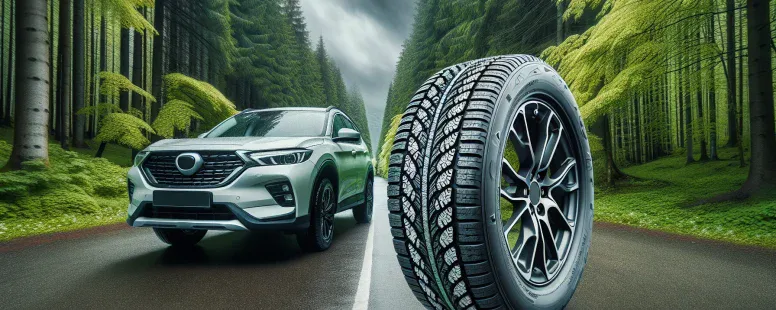
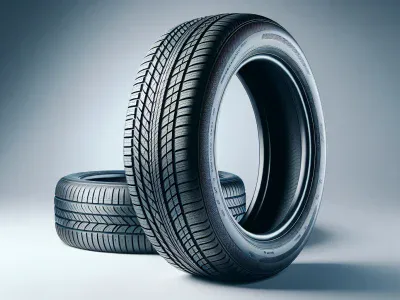
When selecting tires for your vehicle, understanding the distinction between all-weather and all-season options is crucial. This fundamental decision affects your driving experience, safety, and the longevity of your tires. By exploring the unique attributes of these two tire types, you can ensure your car is equipped to handle the roads and weather conditions you encounter most frequently.
Overview of Tire Categories
Tires are a critical component of vehicle safety and performance. All-season and all-weather tires represent two of the most versatile categories available for year-round operation. But, while their names suggest similarities, they are engineered for distinct purposes, offering different capabilities tailored to specific demands. Understanding these categories enables you to make an well-informed choice to meet your driving needs efficiently.
Understanding All-Season Tires
Design Features of All-Season Tires
All-season tires are specifically designed to provide dependable performance in moderate climates. Their tread patterns are optimized for smooth handling and even wear, making them suitable for a wide range of temperatures while excelling in mild weather conditions.
Performance in Different Weather Conditions
These tires are highly versatile within their limitations, providing stability and grip on dry and wet road surfaces. But, they may falter in severe winter conditions characterized by ice and heavy snow accumulation.
Understanding All-Weather Tires
Design Features of All-Weather Tires
All-weather tires bridge the gap between summer and winter tires, offering adaptive performance throughout varying climatic conditions. Their specialized tread designs incorporate features to enhance snow traction and maintain rubber elasticity in low temperatures.
Performance Under Varied Conditions
Distinctively, all-weather tires achieve certifications for winter performance, making them more reliable in harsher weather conditions compared to all-season options. They provide consistent traction in snow and rain without sacrificing dry road handling.
Key Differences Between All-Weather and All-Season Tires
Material and Tread Design
The material composition and tread designs differ between these two tire types, with all-weather tires utilizing compounds suited for colder temperatures and advanced sipes for enhanced traction.
Temperature and Weather Suitability
All-season tires favor temperate and limited winter conditions, while all-weather models are better suited for extreme seasonal variations.
Durability and Longevity
Longevity can differ as all-weather tires may wear faster under regular use in warmer climates compared to all-season alternatives.
Choosing the Right Tire for Your Needs
Environmental and Regional Considerations
Evaluate your local weather patterns to determine which tire type is better suited to your conditions. All-weather tires excel in regions with unpredictable weather, while all-season options suffice where winters are moderate.
Driving Style and Performance Expectations
Consider your driving habits. If long highway drives and consistent conditions define your travel, all-season tires are sufficient. Meanwhile, unpredictable commute scenarios may benefit more from all-weather capabilities.
To provide the best experiences, we use technologies like cookies to store and/or access device information. Consenting to these technologies will allow us to process data such as browsing behaviour or unique IDs on this site. Not consenting or withdrawing consent, may adversely affect certain features and functions.
Functional
Always active
The technical storage or access is strictly necessary for the legitimate purpose of enabling the use of a specific service explicitly requested by the subscriber or user, or for the sole purpose of carrying out the transmission of a communication over an electronic communications network.
Preferences
The technical storage or access is necessary for the legitimate purpose of storing preferences that are not requested by the subscriber or user.
Statistics
The technical storage or access that is used exclusively for statistical purposes.The technical storage or access that is used exclusively for anonymous statistical purposes. Without a subpoena, voluntary compliance on the part of your Internet Service Provider, or additional records from a third party, information stored or retrieved for this purpose alone cannot usually be used to identify you.
Marketing
The technical storage or access is required to create user profiles to send advertising, or to track the user on a website or across several websites for similar marketing purposes.