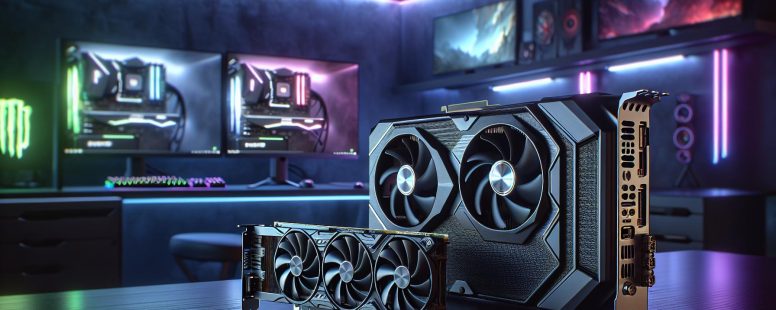
Choosing the right graphics card can feel like navigating a maze, especially when faced with options like the RTX 4060 and RTX 4070. Both promise cutting-edge performance and stunning visuals, but how do you decide which one aligns with your gaming or creative needs? It’s not just about price tags or flashy specs—it’s about finding the perfect balance between power, efficiency, and value.
Picture diving into your favorite game with buttery-smooth frame rates or rendering complex projects without breaking a sweat. The differences between these two GPUs go beyond raw numbers; they shape how you experience technology. Whether you’re upgrading for immersive gameplay or professional workflows, understanding what sets these cards apart could save you time—and money.
So, what makes the RTX 4060 and 4070 stand out from each other? Let’s break it down to help you make an well-informed choice tailored to your unique needs.
Overview Of RTX 4060 And RTX 4070
The RTX 4060 and RTX 4070 are part of NVIDIA’s GeForce 40 series, designed for gamers and creators seeking high performance. These GPUs differ in specifications, capabilities, and target audiences.
Key Features Of RTX 4060
RTX 4060 focuses on providing value-oriented gaming performance with efficient power consumption. Built on the Ada Lovelace architecture, it offers advanced features like DLSS 3 and ray tracing support.
CUDA Cores: Equipped with approximately 3072 CUDA cores, enabling smooth gameplay at mid-to-high settings.
Memory Configuration: Includes 8 GB GDDR6 memory with a bandwidth of up to 17 Gbps.
Power Efficiency: Operates at a lower TDP (115W), making it suitable for compact builds or systems with limited PSU capacity.
Target Audience: Ideal for casual gamers running games at resolutions like Full HD (1920×1080) without compromising graphical fidelity.
An example would be playing titles like Fortnite or Apex Legends at high settings while maintaining stable frame rates.
Key Features Of RTX 4070
RTX 4070 is geared toward enthusiasts who demand higher performance levels. It delivers enhanced graphical capabilities suited for both gaming and productivity tasks.
CUDA Cores: Packs around 5888 CUDA cores for faster rendering and complex computations.
Memory Configuration: Comes with a larger VRAM capacity of 12 GB GDDR6X and an increased bandwidth of roughly up to 21 Gbps.
Performance Boosts: Supports higher clock speeds, ensuring smoother experiences in demanding games or creative applications like video editing.
Ray Tracing Potential: Handles real-time ray tracing more effectively due to superior hardware resources.
For instance, you can enjoy AAA games such as Cyberpunk 2077 in QHD (2560×1440) resolution with ultra settings enabled.
Performance Comparison
The RTX 4060 and RTX 4070 differ significantly in performance, making their capabilities suited for distinct user needs. Understanding how these GPUs perform under various scenarios helps you choose the right card.
Gaming Performance
Gaming performance is where the RTX 4070 outshines the RTX 4060 most notably. With its 5888 CUDA cores compared to the 4060’s 3072, it handles QHD gaming at higher frame rates effortlessly. For example, in titles like Cyberpunk 2077 or Red Dead Redemption 2, the RTX 4070 achieves smoother gameplay with enhanced textures and effects enabled.
The RTX 4060 targets Full HD gamers prioritizing efficiency over raw power. It still delivers solid results in games like Fortnite or Apex Legends but struggles with ultra-settings on newer AAA games when compared to its counterpart. If you’re upgrading from an older GPU looking for value without exceeding a budget constraint, this option fits well.
AI And Ray Tracing Capabilities
AI-driven features and ray tracing are integral aspects of NVIDIA’s latest GPUs. The RTX 4070 includes superior Tensor cores and DLSS advancements that enhance both performance and visual quality during gameplay or creative tasks such as video editing or AI modeling.
While the RTX 4060 offers foundational support for ray tracing and DLSS, it’s less equipped to handle intensive rendering workloads efficiently. Games utilizing heavy ray-traced environments—like Control Ultimate Edition—showcase noticeable differences in lighting accuracy between these two cards.
If your work involves real-time ray tracing applications or advanced AI computations, investing in an RTX 4070 ensures long-term usability while delivering optimal results across demanding software platforms.
Specifications Breakdown
Understanding the specifications of the RTX 4060 and 4070 is essential for making an well-informed choice. These cards differ significantly in terms of cores, memory, and efficiency.
Core And Memory Differences
The RTX 4060 features 3072 CUDA cores paired with 8 GB GDDR6 memory running on a 128-bit bus. This setup delivers sufficient power for Full HD gaming at medium to high settings. For example, games like Fortnite or Apex Legends run smoothly with these specifications but may struggle with ray tracing enabled in newer titles.
The RTX 4070 offers a substantial upgrade with 5888 CUDA cores and 12 GB GDDR6X memory supported by a faster 192-bit bus. It excels at QHD gaming and intensive workloads like video editing or rendering. Titles such as Cyberpunk 2077 perform better on ultra-settings due to its higher bandwidth and core count, ensuring enhanced textures, shadows, and real-time effects.
Power Consumption And Efficiency
The RTX 4060 consumes around 115 watts under load, making it energy-efficient compared to other GPUs within its range. Its lower TDP suits compact builds or systems using smaller power supplies while remaining cool during extended sessions of gameplay.
In contrast, the RTX 4070 uses approximately 200 watts under full load due to its advanced architecture and performance capabilities. Though requiring more power than the RTX 4060, it balances consumption well considering its output level. Gamers seeking peak performance without excessive energy wastage benefit from this card’s optimized design.
Pricing And Value
The RTX 4060 and RTX 4070 differ significantly in terms of price, influencing their perceived value for various users. Understanding these differences helps you determine which card aligns with your budget and performance expectations.
Cost Differences
The RTX 4060 is priced around $299, making it an affordable option for casual gamers or those upgrading older systems. It delivers a balance between cost and functionality but lacks the advanced features required for high-end performance. The RTX 4070 typically costs $599, providing premium capabilities at a higher investment. This price positions it as a choice for enthusiasts seeking superior gaming quality or productivity applications.
Budget-conscious buyers might appreciate the lower upfront cost of the RTX 4060, especially if Full HD gaming is your primary goal. On the other hand, investing in the RTX 4070 ensures better longevity and future-proofing due to its enhanced specs like increased CUDA cores and memory bandwidth.
Performance-To-Price Ratio
When evaluating performance relative to cost, the RTX 4060 offers excellent value for mainstream gaming at medium-to-high settings in Full HD resolution. Titles like Fortnite run smoothly without straining resources, ensuring accessibility without compromising too much on experience. But, its limitations become apparent when tackling demanding games like Cyberpunk 2077 with ray tracing enabled.
The RTX 4070 achieves greater efficiency in terms of frames per dollar spent on QHD resolution tasks or content creation workflows requiring higher VRAM capacity. If you’re working with video editing software or play intensive AAA games regularly, this GPU justifies its price through consistent high-performance outputs.
Choosing depends largely on priorities—whether you want economical Full HD gameplay or advanced features supporting long-term graphical demands at higher resolutions.
Use Cases And Suitability
The RTX 4060 and RTX 4070 cater to different user needs, making each suitable for specific scenarios. Understanding their use cases helps match the right GPU to your requirements.
Best For Gamers
For casual gamers, the RTX 4060 offers solid performance at Full HD resolution. Titles like Apex Legends and Fortnite run smoothly at medium-to-high settings, with frame rates often exceeding 60 FPS. This makes it ideal for those prioritizing energy efficiency and budget-friendly options without sacrificing quality in mainstream games.
Competitive gamers or enthusiasts benefit more from the RTX 4070 due to its capability to handle demanding titles like Cyberpunk 2077 at QHD resolution with ray tracing enabled. Its DLSS 3 functionality enhances gameplay by ensuring high frame rates and improved visual fidelity in graphically intensive scenarios. If you’re into VR gaming or ultra-wide monitors, the additional power of the RTX 4070 ensures smoother experiences across these setups.
Best For Professionals
Creative professionals working on tasks such as video editing or 3D rendering gain an advantage using the RTX 4070’s enhanced CUDA cores (5888 vs. the RTX 4060’s 3072). Software like Blender and Adobe Premiere Pro sees faster processing times on this card, particularly when handling complex effects or high-resolution exports.
If your workload involves simpler productivity tasks or light content creation—for instance, photo editing in Adobe Lightroom—the RTX 4060 provides enough power while consuming less energy (115 watts load). It’s also a cost-effective choice for students or entry-level creators entering resource-intensive fields without needing peak performance capabilities.
Conclusion
Choosing between the RTX 4060 and RTX 4070 comes down to your specific needs and how you plan to use your GPU. Whether you’re a casual gamer looking for energy-efficient performance or an enthusiast demanding cutting-edge capabilities, understanding what each card offers ensures you’re making the right choice for your setup.
By carefully weighing factors like gaming resolution, productivity requirements, and budget, you can confidently invest in the graphics card that aligns with your expectations. Both GPUs bring unique strengths to the table—it’s all about finding what fits your goals best.
To provide the best experiences, we use technologies like cookies to store and/or access device information. Consenting to these technologies will allow us to process data such as browsing behaviour or unique IDs on this site. Not consenting or withdrawing consent, may adversely affect certain features and functions.
Functional
Always active
The technical storage or access is strictly necessary for the legitimate purpose of enabling the use of a specific service explicitly requested by the subscriber or user, or for the sole purpose of carrying out the transmission of a communication over an electronic communications network.
Preferences
The technical storage or access is necessary for the legitimate purpose of storing preferences that are not requested by the subscriber or user.
Statistics
The technical storage or access that is used exclusively for statistical purposes.The technical storage or access that is used exclusively for anonymous statistical purposes. Without a subpoena, voluntary compliance on the part of your Internet Service Provider, or additional records from a third party, information stored or retrieved for this purpose alone cannot usually be used to identify you.
Marketing
The technical storage or access is required to create user profiles to send advertising, or to track the user on a website or across several websites for similar marketing purposes.