In the wild, every step is a dance with mystery, a chance to decode nature’s hidden language. As I weave through the dense underbrush, I tune into subtle signs—scratched bark, faint footprints—that reveal whether I’m eyeing a raccoon or a badger.
These creatures may hide in shadows, but knowing their differences is like unlocking a secret code—one that keeps you safe and deepens your connection to the wild.
Surprisingly, recognizing their unique traits can turn a fleeting glance into a lasting understanding of their clever survival tricks.
How Can You Spot a Raccoon vs. a Badger in the Wild?
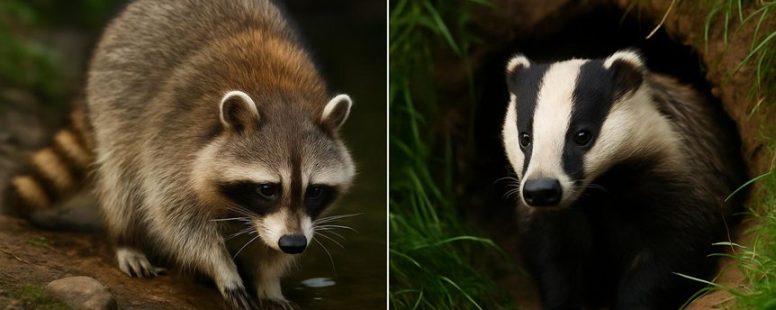
Raccoons and badgers are both animals you might see in the wild, but they look very different. Raccoons are easy to spot because they have a black mask around their eyes and a ringed tail. They are small to medium-sized animals that often live in cities and suburbs, especially at night. They love to rummage through trash cans looking for food. Badgers, on the other hand, are stockier and have broad bodies with short legs. They don’t have masks, but their faces are pointed and their bodies are more muscular. Badgers prefer open fields or edges of woods, but they are also active after dark.
If you want to tell these animals apart, start with their appearance. Look for the mask and ringed tail in raccoons. If the animal has a broad body, short legs, and a pointed face, it is probably a badger. Their habitats are also different. Raccoons are more common in cities and towns, while badgers stay in open fields and woodland edges. Both animals are mostly active at night, so spotting them can be tricky.
Sometimes it’s hard to tell them apart, especially if you only see part of the animal. Remember, raccoons are smaller and more agile, and they love bright urban areas. Badgers are bigger and more muscular, and they prefer quiet, open spaces. Knowing these clues can help you identify them correctly. But always be careful and keep a safe distance when observing wild animals.
Where Do Raccoons and Badgers Live?
Raccoons and badgers live in different types of places, and knowing where they are likely to be can help you see them better. Raccoons are very adaptable animals. They can live in cities and towns, often in places like tree cavities, abandoned buildings, and sewer systems. They take advantage of urban areas because food is easy to find and shelter is nearby. For example, raccoons might rummage through trash cans in neighborhoods at night.
Badgers like quieter, rural areas like forests and farmland. They dig their homes called setts in well-drained soil. These underground burrows keep them safe and comfortable. Badgers usually stay in the countryside away from busy cities.
Both raccoons and badgers are active at night. This helps them avoid predators and humans during their busy times. Raccoons’ ability to live in cities shows they are very flexible, while badgers prefer more natural, quiet habitats. Knowing where these animals live makes it easier to find and observe them. But remember, even though they are mostly active at night, they may sometimes be seen during the day, especially if they are searching for food or disturbed.
What Are the Main Physical Differences Between Raccoons and Badgers?
Raccoons and badgers look different because of their physical features. Raccoons are smaller with slim bodies. They have a rounded face and a black mask around their eyes. Their paws are small and nimble, perfect for climbing trees and grabbing food. Their fur is usually gray or brown with a ringed tail.
Badgers are bigger and stockier. They have a broad, flat face with a short nose. Their bodies are much wider and more muscular than raccoons. Badgers have long claws on their front paws, which they use for digging burrows. Their fur is usually gray or black with white markings on their face that form a stripe pattern.
One easy way to tell them apart is by looking at their size and body shape. Raccoons are more slender and quick-moving, while badgers look more solid and strong. Their facial markings also help. Raccoons have a mask around their eyes, and badgers have bold white stripes on their face.
Some people might find it tricky to tell them apart if they see them from far away or in low light. But noticing their size, body shape, and facial markings can help you know which is which quickly. Remember, raccoons are good climbers, and badgers are better diggers. Both are interesting animals, but they have very different looks.
Body Shape and Size
Raccoons and badgers look different in their body shape and size, which makes it easy to tell them apart. Raccoons are more slender and have a rounded body, making them look quick and agile. Badgers are stockier and broader, so they seem stronger and more solid. Their fur color also helps tell them apart. Raccoons usually have a grayish coat with a black “mask” around their eyes. Badgers, on the other hand, have a more uniform fur color that is often yellowish or gray, with black and white stripes on their faces.
Another way to tell them apart is by looking at their tails. Raccoons have bushy, longer tails that often have rings around them. Badgers have shorter, less noticeable tails. Overall, raccoons look more nimble and quick, while badgers seem more powerful and sturdy.
Both animals have different ways of living. Raccoons are more playful and curious, while badgers are more aggressive and digging animals. Knowing these small differences can help you identify them easily when you see them in the wild or in your backyard.
Facial Markings and Masks
Facial markings and masks are important features that help tell raccoons from badgers apart. Raccoons have a black “mask” around their eyes. This mask makes them look like bandits and helps them see better at night. Because raccoons are mostly active after dark, their mask reduces glare and helps them spot food and threats.
Badgers do not have a true facial mask. Instead, they often have bold white stripes or patches on their faces. These markings might help them hide or scare off enemies. Raccoons are usually cautious and use their facial masks to watch their surroundings. They rely on their eyes and quick movements to find food.
Badgers, however, depend more on their strong claws and body strength. They dig underground to find food and do not use facial markings as much. Some people might think the markings are just for looks, but they actually help animals survive.
Both animals use their markings differently. Raccoons use their masks to stay alert and hunt at night. Badgers use their claws and body power to dig and hunt underground. Knowing what to look for makes it easier to tell these animals apart.
Limb Structure and Claws
Raccoons and badgers can be told apart by looking at their limbs and claws. Raccoons have more flexible limbs that help them climb trees and grab objects easily. Their claws are sharp but not very strong, so they are good for gripping and pulling. Badgers have stronger, less flexible limbs made for digging. Their claws are thick and powerful, perfect for tearing through soil or prey.
This difference shows how each animal is adapted to its way of life. Raccoons are tree climbers and foragers, searching for food in branches and on the ground. Badgers are ground dwellers that dig tunnels and hunt underground. These physical features help each animal survive in its environment.
Some people might wonder which animal is better at digging or climbing. Raccoons are great climbers but not strong diggers. Badgers are excellent at digging but can’t climb very well. Both animals are good at what they do, but their limbs and claws show how they are built for different jobs.
How Do Raccoons and Badgers Behave and Move?
Raccoons and badgers move and behave in very different ways because they live in different environments and have different habits.
Raccoons are quick and curious animals. They often move carefully through forests, cities, or near water. They are very good climbers and use their strong, dexterous paws to search for food. Raccoons like places with lots of cover and easy access to food, such as trash cans or streams. They eat fruits, small animals, and leftovers from humans. They often explore their surroundings cautiously, especially at night when they are most active. Imagine a raccoon sneaking into a trash can—its movements are sneaky and precise.
Badgers, on the other hand, move in a more straightforward way. They mostly dig tunnels underground and prefer open areas like grasslands or woodlands. Badgers are strong diggers and spend a lot of time digging and hunting for insects, small animals, and roots. They are more solitary animals and tend to stay in one place. Think of a badger as a ground-dwelling animal that prefers to stay in a burrow rather than climb trees or scavenge in trash.
Some people see raccoons as clever climbers and scavengers, while badgers are known for their digging skills and ground-based life. Both animals are interesting to watch, but they behave very differently because of where they live and what they eat. Knowing these differences can help you understand how they move and behave in the wild.
How Can You Recognize Raccoon and Badger Tracks?
To tell raccoon and badger tracks apart, start by looking at the shape and size of the footprints. Raccoon tracks are usually smaller and have rounder toes, while badger tracks are bigger and wider. If you see claw marks, they can help you tell the difference. Raccoons leave more clear claw impressions because their claws are sharper and more pointed. Badgers, on the other hand, have shorter claws that don’t leave as much of a mark.
For example, if you find small tracks with rounded toes and clear claw marks, it’s likely a raccoon. If the footprints are larger, wider, and the claws are faint or missing, a badger probably made them.
Some people warn that these clues are helpful but not perfect. Weather, terrain, and how the animal walks can change what tracks look like. Sometimes raccoons can leave bigger tracks if they are heavy, and badgers can leave smaller ones if they are young. So, it’s good to look at all the signs together before guessing which animal made the tracks.
Track Shape and Size
Raccoon and badger tracks have different shapes and sizes. Recognizing these differences helps you know which animal made them. Raccoon tracks are small to medium and round. They have five toes that spread out, and sometimes you can see a little webbing pattern between them. Badger tracks are wider and more rectangular. Their toes are shorter and stubbier, which shows their strong limbs.
Since both animals are active mainly at night, their tracks are often found in low light. Camouflage patterns on the ground can hide the tracks, making them harder to see. Raccoon tracks tend to be light and scattered, as they walk softly and move quickly. Badger tracks are heavier and more deliberate, with deeper impressions because of their strength.
If you want to tell the difference, look at the shape and size. Raccoon tracks are more rounded and smaller, while badger tracks are broader and squarer. Sometimes, you might find just a few faint paw prints for raccoons, but badgers leave more noticeable, heavy tracks. Paying close attention to these small details can help you identify which animal was there, even if the tracks are faint or partially covered.
Claw and Toe Marks
Claw and toe marks help tell raccoon tracks from badger tracks. Raccoons leave toe impressions with five toes that are all about the same size. Their claws are short and don’t make deep marks. Sometimes in soft ground, you might not see any claw marks at all. Badgers also have five toes, but their toe impressions are wider and stronger. Their claws are long, sharp, and often leave clear, deep scratches in the dirt. If a badger is digging or climbing, the claw marks are easy to spot. Raccoon tracks tend to have rounded toe shapes, while badger tracks are more angular or squared-off. Badger claw marks are usually more visible and sharper. Recognizing these differences can help you figure out who’s been walking by. For example, if you see shallow, round toe marks, it’s probably a raccoon. If the marks are deep and pointed, it’s likely a badger. Keep in mind, soft ground can hide some of these clues, so sometimes it’s hard to tell exactly who made the tracks.
What Are the Key Head and Face Features of Raccoons and Badgers?
Raccoons and badgers have very different head and face features, which makes it easy to tell them apart. Raccoons have a rounded face with a narrow, pointed snout. Their most recognizable feature is the black “mask” around their eyes, which helps them see better at night. Their ears are small and rounded. Raccoons are known for their cleverness and adaptability, often rummaging through garbage cans at night.
Badgers, on the other hand, have broader, flatter faces with a longer, more prominent snout. Their faces usually have bold stripes or patches, especially on the forehead and cheeks. These markings can look like a mask but are more stripe-like than the raccoon’s. Badgers have strong jaws and sharp teeth, which help them hunt burrowing animals and insects. Their facial features show they are more specialized hunters and tend to be less active at night than raccoons.
In simple terms, if you see a small animal with a black mask around its eyes and a rounded face, it is most likely a raccoon. If it has a wider face with stripes and a longer nose, it is probably a badger. Both animals look quite different, which helps people and animals tell them apart easily.
How Do Raccoons and Badgers Use Their Paws and Claws Differently?
Raccoons and badgers use their paws and claws in very different ways because of their different lifestyles. Raccoons have paws that are very good for small, delicate tasks. They use their paws to climb trees, open jars, turn over rocks, and explore things around them. Their paws are flexible and nimble, helping them be very curious and handy. For example, raccoons can open trash cans or pick up tiny objects with their paws, just like humans use their hands.
Badgers, on the other hand, mainly use their claws for digging. They have strong, heavy claws that are perfect for digging deep into the ground. Badgers use their claws to create dens, find food like worms and insects, and tear through soil. Their claws are much thicker and sturdier than raccoons’ paws. Think of badgers like little excavators, digging tunnels for safety and food.
Some people might wonder which animal’s paws are better. It depends on what they need to do. Raccoons are more versatile because their paws can do many things. Badgers are more specialized because their claws work best for digging. But both animals are very good at what they do because their paws and claws are made to fit their way of life.
In short, raccoons use their paws for grabbing, exploring, and manipulating objects. Badgers use their claws mainly for digging. These differences show how each animal’s paws help them survive and find food in their own special ways.
What Safety Tips Should You Follow When Encountering Raccoons or Badgers?
When you see raccoons or badgers, it is important to stay safe. The best way to do this is to keep your distance and not try to get close. Watching quietly helps you see what they are doing without scaring them. It’s a good idea to stay calm and avoid making loud noises or sudden movements.
You should never feed raccoons or badgers because they can become used to humans and may act aggressively. Trying to touch or provoke them can make them feel threatened and cause them to attack. For example, if a raccoon approaches your trash, step back and give it space.
Some people think it might be okay to get closer if the animal looks calm, but it is safer to stay far away. Remember, raccoons and badgers can bite if they feel scared or cornered. They are wild animals and do not want to be friends with humans.
If you encounter one, stay calm, keep your distance, and leave it alone. It is always better to be safe than sorry. If you see a raccoon or badger acting strangely or aggressively, contact local animal control for help. Staying respectful and cautious keeps everyone safe.
Keep Distance and Observe
Raccoons and badgers are wild animals you might see in nature, but it’s best to keep your distance from them. The most important thing is to watch quietly and stay far enough away so they don’t feel threatened. Raccoons usually live near water or in cities, while badgers like open fields and edges of forests. Both animals are mostly active at night, so if you see one in the daytime, it might be looking for food or feeling cautious.
To stay safe, keep at least several meters away from these animals. Never try to approach or block their path. If you want a closer look, use binoculars instead of getting too close. Avoid staring into their eyes because they might see it as a threat. Remember, animals need space too, and respecting that helps keep them calm and healthy.
Some people think getting near animals is okay if they seem calm or curious, but it can stress them out or lead to bites or scratches. Others believe it’s better to observe from a distance because it keeps everyone safe. Both views are right, but the safest choice is to keep your distance and enjoy watching quietly.
In the wild, animals like raccoons and badgers are best appreciated from afar. This way, you help protect them and yourself. Think of it like watching a movie—you see the story without disturbing the actors. So next time you spot a raccoon or badger, remember to stay back, stay quiet, and enjoy the moment safely.
Avoid Feeding or Provoking
Raccoons and badgers are wild animals, and it’s best to stay safe around them. The main rule is not to feed or provoke these animals. Feeding them can make them think humans are a easy food source. This can lead to aggressive behavior and dangerous situations. If they start to expect food from people, they might become more bold and difficult to scare away.
Provoking animals by trying to scare or corner them is also risky. If you scare a raccoon or badger, it might attack to protect itself. Instead of getting close or making loud noises, it’s better to keep your distance. Move slowly and quietly away from them. These animals look harmless but can cause injuries if they feel threatened.
Some people might think it’s interesting to get close to wildlife, but remember they are unpredictable. Respect their space and observe them from afar. By not feeding or provoking them, you help keep everyone safe, including the animals. You also help prevent conflicts that could lead to injuries.
Always think about safety first when you see raccoons or badgers in the wild. Keep a safe distance and enjoy watching them from afar. That way, everyone stays safe and the animals stay wild.
How Can You Avoid Common Mistakes When Identifying These Animals?
To avoid mistakes when identifying raccoons and badgers, it helps to know their main differences. First, look at their faces and body shapes. Raccoons have a black mask around their eyes and a slim body. Badgers are stockier with wide bodies and have bold stripes on their faces. Raccoons are more curious and cautious, while badgers are more aggressive and often dig burrows during the day.
Next, pay attention to when they are active. Raccoons are mostly active at night and like to forage for fruits, small animals, or leftovers in trash cans. Badgers also come out at night but tend to hunt for rodents and insects. If you see an animal digging in the ground during the day, it’s probably a badger.
Finally, think about where you see these animals. Raccoons often visit urban areas, parks, and forests. Badgers prefer open fields or woodland areas. Understanding their habits and habitat helps you tell them apart.
Why Is It Important to Know the Difference Between Raccoons and Badgers?
Knowing the difference between raccoons and badgers is very important because they look similar but behave differently. Raccoons are small, with a mask-like face and ringed tails. They are smart and adapt well to cities. Badgers are stocky, with a broad body and distinctive facial markings. They prefer forests and open countryside. If you mistake one for the other, it can cause safety problems or harm the animals.
For example, raccoons might rummage through trash cans in your yard, while badgers might dig holes in your garden. Recognizing these differences can help you manage your safety and protect wildlife. Raccoons often come close to people because they are used to city life, but badgers are shy and prefer to stay away from humans.
Some people might think all small, furry animals are alike, but in reality, their habits and habitats are quite different. Raccoons are more likely to climb trees and explore urban areas, while badgers dig underground dens and stay in rural places. Knowing these facts helps you avoid dangerous encounters and supports wildlife conservation.
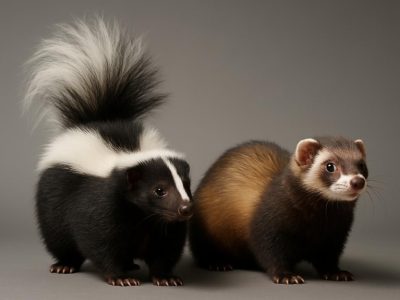
However, it is not always easy to tell them apart. Sometimes raccoons look bigger and more aggressive, and badgers can be mistaken for other animals like skunks. So, it’s good to learn their key features and observe how they behave.
To provide the best experiences, we use technologies like cookies to store and/or access device information. Consenting to these technologies will allow us to process data such as browsing behaviour or unique IDs on this site. Not consenting or withdrawing consent, may adversely affect certain features and functions.
Functional
Always active
The technical storage or access is strictly necessary for the legitimate purpose of enabling the use of a specific service explicitly requested by the subscriber or user, or for the sole purpose of carrying out the transmission of a communication over an electronic communications network.
Preferences
The technical storage or access is necessary for the legitimate purpose of storing preferences that are not requested by the subscriber or user.
Statistics
The technical storage or access that is used exclusively for statistical purposes.The technical storage or access that is used exclusively for anonymous statistical purposes. Without a subpoena, voluntary compliance on the part of your Internet Service Provider, or additional records from a third party, information stored or retrieved for this purpose alone cannot usually be used to identify you.
Marketing
The technical storage or access is required to create user profiles to send advertising, or to track the user on a website or across several websites for similar marketing purposes.