Ever been baffled by the terms ‘MVA’ and ‘MW’? You’re not alone. These technical jargon often leave many scratching their heads, especially when it comes to distinguishing between them. But don’t worry! We’re here to simplify things for you.
In electrical engineering world, MVA (Megavolt Ampere) and MW (Megawatt) are two fundamental units of measurement that play a crucial role in power systems. They might seem similar at first glance but hold your horses – they’ve got distinct differences that set them apart!
So let’s buckle up as we jump into an enlightening journey unraveling these complex concepts. By the end of this read, you’ll have a clear understanding about what sets MVA apart from MW and why it matters in our day-to-day life.
Understanding MVA and MW
In the electrical engineering area, knowing the difference between Megavolt Amperes (MVA) and Megawatts (MW) becomes vital. These two units might seem alike at first glance but they carry distinct significance in power systems.
Defining Mega Volt Amperes (MVA)
First off, let’s decipher what exactly is a ‘Megavolt Ampere’. An MVA represents apparent power – it’s an aggregate measure of real power alongside reactive power. For instance, when you look into your electric bill details or examine any large-scale electricity production data sets, these measurements would be commonly seen as ‘kilo volt-ampere’ or kVAs for small scale operations to MVAs for industrial level outputs.
This unit takes its name from Ohm’s Law where Voltage times Current equals Power; hence one megavolt ampere refers to 1 million volts multiplied by amperes giving us total electrical output. So essentially MVA calculates how much raw work can be done with all available energy – both consumed actively & stored passively.
Defining Mega Watts (MW)
On the flip side we have ‘Megawatt’, another common term that may cause confusion due to its similar sounding nature yet differs drastically in application.
A single Megawatt signifies real active working capacity—energy actually being used up within circuits not including idle potential reserves which sit waiting on standby mode until needed.
Unlike MVA values which encapsulate whole lot including those dormant elements lying beneath surface awaiting their turn-to-play role; MW narrows down focus only towards what’s being utilised currently without bothering about hidden aspects tucked away below observable spectrum.
For example: if you were driving car along highway while maintaining steady speed limit then engine burns fuel necessary just enough keep wheels moving forward against wind resistance plus road friction etcetera whereas rest reserve tank remains untouched inside storage chamber till time demands so similarly MW does same job here.
Key Differences Between MVA and MW
How Power Factor Influences MVA and MW
The power factor, in electrical engineering parlance, serves as a significant influencer of both Megavolt Ampere (MVA) and Megawatt (MW). Essentially, it’s the ratio of real power to apparent power. With an ideal scenario being 1 or unity; but, due to reactive components present in systems such as motors or transformers leading to phase shifts between current and voltage waveforms often lower this value.
A perfect example can be found in residential HVAC units where capacitive loads induce lagging currents resulting into less than unity factors. This discrepancy emphasizes that although these devices are rated with certain watts — say 5kW — they might actually consume more VA from your utility company if not operating at full capacity because their actual working load is represented by Watts while idle consumption is denoted by Volt-Amps-Reactive(VARs).
To draw clarity here: consider two similar houses using same amount of active energy but one having LED lighting fixtures running on direct current(DC), hence no reactivity hence unity PF whereas another has traditional incandescent bulbs creating reactive lags causing non-unity PF. The former will have lesser bill since only active component gets charged!
Application in Electrical Engineering
In practical application within the area of electrical engineering, distinction between MVA(Megavolt ampere) which denotes Apparent Power(S), encompassing both Active(P – measured in megawatts/MW )and Reactive(Q -measured usually KiloVAR/kVAr) powers plays crucial role during system design & operation stages alike.
For instance,a generator producing net output around 50MW ,reactive supply maybe close to about additional10 MVAr making total deliverable S=√(P^2+Q^2)=51MVA.It so becomes imperative for engineers dealing primarily with power generation & transmission to clearly understand this distinction as it impacts their decisions on generator sizing, system capacity calculation and so forth.
It’s also worth noting that reactive power doesn’t contribute towards work done but ensures smooth flow of real or active energy; hence is often termed “idle” or “phantom”. Its excess can lead to overheating in conductors while deficiency may cause voltage instability- both undesirable scenarios.
To summarise: MVA defines total apparent supply available whereas MW quantifies actual working component out of it. The remaining part being ‘reactive’ represented by MVAr –– a key factor influencing overall efficiency of the network.
Importance of Knowing the Difference
Understanding the distinction between MVA and MW isn’t just an academic exercise. It has real-world implications for those in electrical design, engineering, and power management.
Impact on Electrical Design and Engineering
Firstly, let’s consider how these differences impact electrical design and engineering. In this field, you’re often dealing with systems that handle both reactive (measured in kVAR) and active (kW) components of power. The total combined effect is quantified as apparent power or MVA.
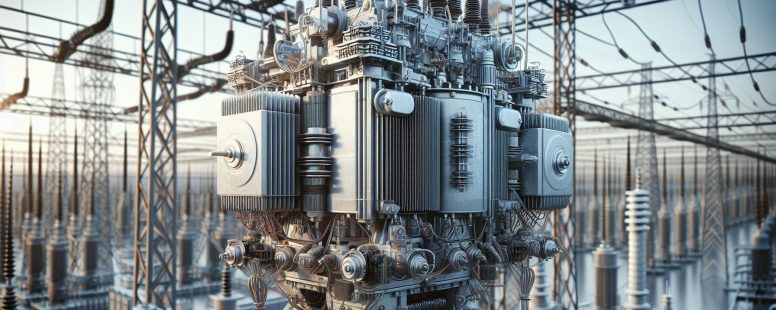
For instance, when designing a transformer—a key component that steps up or down voltage levels—you’d need to factor in its rating using MVAs instead of MWs. Why? Because transformers deal not only with actual work-performing energy but also magnetic fields—the reactive portion—created during operation.
Also, comprehending these concepts can guide your decisions about system capacity enhancements while ensuring efficient utilization of existing resources—an aspect crucial for cost-effective planning.
Practical Implications in Power Management
On to practical applications; understanding MVA vs MW helps manage loads better at utility companies by providing insights into network efficiency optimization methods like ‘power factor correction’.
Imagine running a large industrial facility powered by multiple heavy-duty machines contributing significant reactive load alongside their useful output—their working component measured as kW which converts directly to revenue-generating activities.
If there’s more non-working than working components—it means lower overall efficiency! You’ll end up paying higher electricity bills due not only because you’re drawing more from supply grid—as it reads increased demand via larger ‘apparent’ quantity—but primarily because of inefficiencies within own setup too!
By knowing what each unit represents—MVA &MW—and utilizing techniques such as capacitor banks installations designed specifically for correcting PF issues—it’s possible improving bottom-line profits through enhanced operational effectiveness!
Eventually then—not merely theoretical knowledge but strategic application thereof translates into tangible advantages.
Conclusion
You’ve now got a firm grasp on the difference between MVA and MW in electrical engineering. It’s clear that understanding these concepts is vital for effective power management, from designing transformers to optimizing network efficiency. Remember: MVA represents both real and reactive power while MW speaks solely of active working capacity. Utilizing this knowledge strategically can enhance operational effectiveness across multiple industries leading to cost savings. So don’t overlook the importance of these seemingly simple distinctions – they’re at the heart of efficient energy use! And with today’s ever-growing focus on sustainable practices, getting familiar with terms like ‘MVA’ and ‘MW’ is more crucial than ever before.
To provide the best experiences, we use technologies like cookies to store and/or access device information. Consenting to these technologies will allow us to process data such as browsing behaviour or unique IDs on this site. Not consenting or withdrawing consent, may adversely affect certain features and functions.
Functional
Always active
The technical storage or access is strictly necessary for the legitimate purpose of enabling the use of a specific service explicitly requested by the subscriber or user, or for the sole purpose of carrying out the transmission of a communication over an electronic communications network.
Preferences
The technical storage or access is necessary for the legitimate purpose of storing preferences that are not requested by the subscriber or user.
Statistics
The technical storage or access that is used exclusively for statistical purposes.The technical storage or access that is used exclusively for anonymous statistical purposes. Without a subpoena, voluntary compliance on the part of your Internet Service Provider, or additional records from a third party, information stored or retrieved for this purpose alone cannot usually be used to identify you.
Marketing
The technical storage or access is required to create user profiles to send advertising, or to track the user on a website or across several websites for similar marketing purposes.