Ever wondered about the difference between MW and MVA? You’re not alone. These two terms are frequently used in power systems, yet they often cause confusion due to their similar nature. But, understanding this distinction is crucial for anyone involved in electrical engineering or related fields.
Understanding MW and MVA in Power Systems
Let’s investigate into these crucial units of power systems – Megawatts (MW) and Megavolt-Amperes (MVA). In this section, we’ll clarify what each term signifies. By understanding their meanings, you’re on your way to demystifying the intricate world of electrical engineering.
What is MW (Megawatt)?
A megawatt denotes a unit for measuring power. One might say it represents an instantaneous measurement as it refers to the amount of work done at any given moment or time interval. For instance, imagine lighting 10 million standard light bulbs all at once—that’s approximately one megawatt!
Often used within energy sectors such as electricity generation or consumption statistics, its abbreviation ‘MW’ stands for millions of watts where ‘watts’ constitute base SI units representing joules per second.
What is MVA (Megavolt-Amperes)?
On the flip side lies another key measure – The MVA also known as MegaVolt-Ampere. A complex quantity comprising real power(MW) plus reactive power(Mvar), MVAs reflect total apparent power in an AC circuit—both consumed by resistive components & stored then returned by reactive ones.
So why should engineers bother about MVARs? Because not only does it impact system performance but could lead to equipment damage if ignored! So grasping how many volts are multiplied with amperes gives insight into overall efficiency affecting our everyday life from residential appliances right up till industrial machinery.
Key Differences Between MW and MVA
In the power industry, differentiating between Megawatts (MW) and Megavolt-amperes (MVA) can be quite challenging. Even though their similarities, they serve unique roles in electrical engineering.
Power Factor Influence
The distinction becomes clear when you consider how each unit interacts with a concept known as the power factor. This is essentially an indicator of how efficiently electrical power gets converted into useful work output. The higher this value is on a scale from 0 to 1, the more efficient your system operates.
For instance, if there’s a motor running at full capacity but not doing any actual work—like spinning freely without load—it may have close to zero efficiency even though it’s consuming energy.
This scenario creates reactive or “wasted” power that inflates MVA while leaving MW—the measure of real or active useable energy—relatively unaffected.
Applicability in Electrical Engineering
When dealing with alternating current systems common in most households and industries today—you’ll find both these units come into play:
Megawatt – It represents usable electric horsepower for devices like motors and heaters.
Megavolt-Ampere – It encapsulates total apparent power including waste from inefficiencies inherent to AC circuits such as phase shifting—an occurrence where voltage waveforms don’t exactly align with corresponding currents—and minor resistive losses through components like wires which contribute insignificantly towards performing actual mechanical tasks yet still consume some amount of electricity leading them appearing larger than what you would see only looking at megawatts alone so creating potential overloading issues if overlooked during design stages making understanding difference crucial aspect ensuring safe operation reliable performance overall grid infrastructure whether it involves residential applications heavy industrial machinery alike reinforcing importance deep technical knowledge within field engineers operators professionals who must navigate complexity intertwined principles every day responsibilities safeguarding society uninterrupted access life-sustaining services we all take granted.
Practical Applications
Building on the knowledge of MW and MVA in power systems, let’s examine their practical applications. The importance extends to both generation and distribution stages of electrical power.
Usage in Power Generation
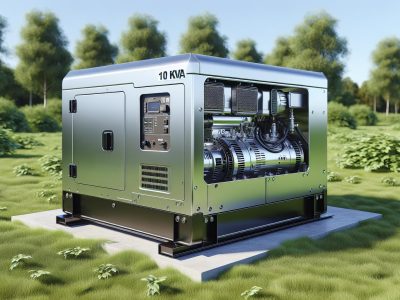
MW, representing usable electric horsepower, plays a pivotal role when it comes to power generation. Generators are rated by their maximum output capacity which is usually given in Megawatts (MW). For instance, consider a 500-MW generator; this unit signifies that under ideal conditions — with no phase shifting or resistive losses— it can provide up to 500 megawatts of instantaneous active energy.
On the other hand, using MVA as a rating tool provides additional insight into potential reactive loads that generators might have to manage. It takes into account total apparent power which includes real and reactive elements due to inefficiencies like phase shifting or resistance-induced losses often prevalent within AC circuits.
When you’re dealing with generators designed for large-scale operations such as those used at major utility companies or industrial facilities where handling varying levels of demand is critical – understanding these ratings isn’t just beneficial but vital for optimal operation.
Implications for Power Distribution
Similarly significant roles MW and MVA play extend beyond mere production: they also shape how electricity gets distributed throughout networks from substations right down towards consumers’ end devices.
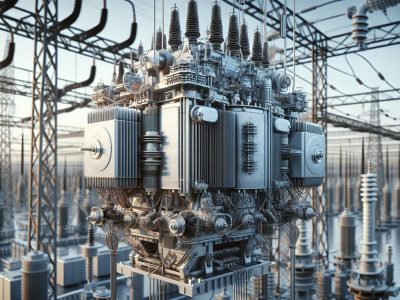
A substation transformer typically has its capability expressed in terms of Mega Volt-Amperes (MVA), encompassing both real (MW) & reactive components(MVARs).
Power factor corrections come handy here because they aim at reducing unnecessary burden caused by reactance related currents so allowing transformers carry more useful load i.e., Real Power denoted by Megawatt(MW).
So utilities strive keeping close eye over PF aiming maintain around unity value ensuring efficient conversion while avoiding costly penalties associated low factors .
Hence grasping distinctions between these units does not only help design effective protection strategies against damaging effects voltage fluctuations, but also enables engineers and operators maximize operational efficiency while ensuring a reliable power supply.
Case Studies
After having grasped the technicalities of Megawatts (MW) and Megavolt-amperes (MVA), it’s time to illustrate these concepts in real-world contexts.
Real-World Scenarios Demonstrating MW vs. MVA
Consider a power plant, producing 500 MW of electricity at any given moment. This figure represents its output capacity—how much energy it can deliver instantaneously.
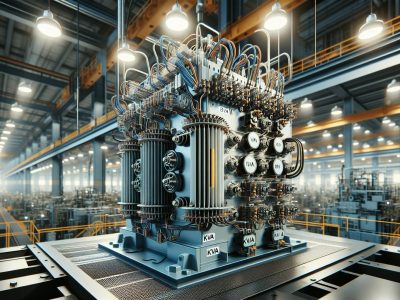
Next, picture an electrical transformer with a rating of 750 MVA located within this same power system network.
This value signifies both active and reactive powers that the device handles during operation—an essential parameter for load management.
For instance, when managing loads on your grid: if you’ve got a higher amount of reactive load due to machinery like motors or transformers—the total apparent power (measured in MVA) tends to increase compared with actual usable real power(MW). So while maintaining efficient operations by ensuring enough supply is available for instantaneous demand—you also need an eye on managing your equipment’s ability handle this combined stress as indicated by their respective MVA ratings.
Also, consider large industrial complexes requiring massive amounts of electricity regularly – they would have extensive transmission networks capable handling high values measured both in MW & MVAs—they’d essentially represent entire mini grids themselves!
Conclusion
You’ve navigated the complex world of power systems, exploring key differences between MW and MVA. You now know that while MW measures output capacity, it’s just part of the story in AC circuits where both real and reactive powers play crucial roles. In fact, your newfound knowledge about managing these elements can be vital for optimizing operations within a power system.
Whether you’re dealing with generation or distribution aspects like transformers’ load management or handling high values at large industrial complexes – understanding how to balance usable (MW) against total apparent power (MVA), is essential.
Remember this isn’t only about theoretical comprehension; it carries practical implications affecting operational efficiency, conversion rates and reliability too! Armed with this insight you are ready to tackle challenges in electrical engineering ensuring optimal performance across complex power networks.
To provide the best experiences, we use technologies like cookies to store and/or access device information. Consenting to these technologies will allow us to process data such as browsing behaviour or unique IDs on this site. Not consenting or withdrawing consent, may adversely affect certain features and functions.
Functional
Always active
The technical storage or access is strictly necessary for the legitimate purpose of enabling the use of a specific service explicitly requested by the subscriber or user, or for the sole purpose of carrying out the transmission of a communication over an electronic communications network.
Preferences
The technical storage or access is necessary for the legitimate purpose of storing preferences that are not requested by the subscriber or user.
Statistics
The technical storage or access that is used exclusively for statistical purposes.The technical storage or access that is used exclusively for anonymous statistical purposes. Without a subpoena, voluntary compliance on the part of your Internet Service Provider, or additional records from a third party, information stored or retrieved for this purpose alone cannot usually be used to identify you.
Marketing
The technical storage or access is required to create user profiles to send advertising, or to track the user on a website or across several websites for similar marketing purposes.