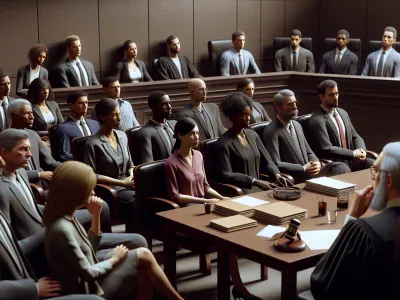
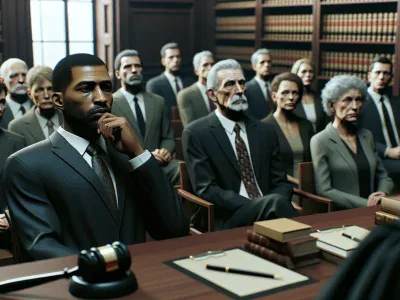
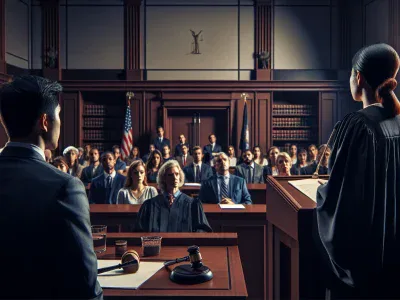
Picture yourself standing on a rain-slick city street, neon lights flickering above, as sirens wail in the distance. In that charged moment, a single act can change everything—yet the law draws a sharp line between a split-second mistake and a calculated decision. how the justice system untangles the tangled web of intent, emotion, and circumstance when a life is lost?
Understanding the difference between manslaughter and murder isn’t just for lawyers or courtroom dramas. It can shift your perspective on news headlines, influence your sense of justice, and reveal surprising nuances in the way society views accountability. As you peel back the layers, you’ll discover distinctions that are as complex as they are crucial—details that could transform your understanding of right, wrong, and everything in between.
Understanding the Difference Between Manslaughter and Murder
Manslaughter and murder both involve a life lost, but law sees them as distant, almost like roads that start at the same crossroad but follow entirely different maps. You might ask yourself, what exactly sets them apart? It’s the intent—the deep root in the linguistic branches of law. Murder means someone planned to kill or acted so recklessly it was as if they’d planned it, like premeditated homicide in the infamous O.J. Simpson trial (FindLaw). Manslaughter, by contrast, involves killing that happens without intent; maybe in a sudden rage, or by accident, such as a bar fight gone fatally wrong.
You see, semantics matter. The difference is not just a dictionary entry; it’s the difference between a lifelong sentence and, sometimes, the possibility of parole. Think about Derek Chauvin’s case: murder charges stemmed from proven intentional disregard for human life; manslaughter entered the conversation only because the jury debated whether intent met the statutory threshold for murder (Minnesota Judicial Branch). Did someone mean to kill, or just act so carelessly that death was likely? That’s the legal question judges ask.
Emotions twist grammar too. Picture: if fear and rage—what you felt in a moment—could change a verb from “murdered” to “manslaughtered,” how would courts translate your choices? There’s no perfect translation, as every case writes it’s own narrative, shaped by circumstance and legal arguments.
But your viewpoint also counts. Do you think society should treat impulsive wrongs and deliberate acts the same way? By looking up at headlines, like the George Floyd case or road rage-induced fatalities, it’s clear context creates nuances, which laws try, sometimes awkwardly, to capture.
Semantic entities, like “intent,” “premeditation,” “recklessness,” “provocation,” and “criminal liability,” orbit both manslaughter and murder. Each word, much like a checkmate piece on a chessboard, shifts the entire outcome. You might realize that understanding these differences isn’t just about legal terminology—its about how justice gets spoken into existence.
Maybe next time you read a headline about a crime, you’ll ask: Was it murder, or was it manslaughter? That single question turns news into a lesson in intent, consequence, and the fragile grammar of justice.
Legal Definitions and Classifications
Legal definitions of murder and manslaughter drive how courts, lawyers, and juries interpret accountability. When you see headlines about homicide cases, these classifications act as the compass guiding each trial’s direction.
What Constitutes Murder?
Murder stands as the most serious homicide offense in law—think intent, deliberation, and sometimes chilling premeditation. Prosecutors, like chess players planning three moves ahead, look for evidence you acted knowingly or purposely. Semantically, “intent” and “malice aforethought” dominate murder’s linguistic landscape, signaling you meant to kill or acted with blatant disregard for life (18 U.S.C. § 1111). Cases like O.J. Simpson’s underscore this: prosecutors had to prove beyond a reasonable doubt that his actions were not impulsive or accidental but calculated.
With first-degree murder, you see planning—sometimes buying a weapon days before the act. Second-degree murder strips away premeditation but keeps the intention. For example, a heated argument ends in someone’s death; the killer meant harm but didn’t plan the encounter.
Ask yourself, how does a single thought shift a fight from manslaughter to murder? That invisible moment of intent forms the thin, legal wire separating life in prison from lesser sentences.
What Constitutes Manslaughter?
Manslaughter enters when death occurs, but intent to kill isn’t present. Legal language calls it the “unlawful killing of a human being without malice” (Model Penal Code § 210.3). You might not’ve set out to end a life, but extreme emotion or recklessness entered your actions. Voluntary manslaughter typically involves a “heat of passion” reaction—like someone discovering infidelity and acting immediately, the law acknowledges the overwhelming influence of emotion.
Involuntary manslaughter, by contrast, covers deaths from careless or negligent behavior. A parent leaving a child in a hot car, or a drunk driver causing a fatal crash—for these, courts examine how your disregard led to tragedy but remove the shadow of intent.
Can you see how quickly circumstances twist? One missed detail, one word, even a misread emotion, and legal fates diverge sharply. Why does society treat losing control for a moment differently from planning harm? Each classification—murder, voluntary or involuntary manslaughter—anchors your fate in court, no matter what headlines scream.
Key Elements That Distinguish Murder and Manslaughter
Legal cases involving murder and manslaughter hinge on a few defining elements—intent, planning, and circumstance. Prosecutors, defense attorneys, and juries dissect these factors, transforming cold facts into stories that can tip the scales of justice. Picture a late-night alley in New York or a heated argument in a small-town kitchen. Every detail—from motive to mistake—writes a different legal tale.
Intent and State of Mind
Intent separates murder from manslaughter almost like a razor divides a rope—cleanly, but with tension. Murder demands proof of malice aforethought, meaning you acted with a conscious desire or reckless disregard for life (Cornell Law School Legal Information Institute). Manslaughter, by contrast, often emerges from snap emotions or gross negligence; think of someone causing a fatal crash after running a red light or acting in a sudden rage after a heated insult.
People often confuse motive and intent. Motive answers “why,” but it doesn’t carry the legal weight that intent does. If prosecutors can’t show intent beyond a reasonable doubt, a murder charge often unravels like a sweater with one pulled thread. In Texas v. Shelby (2019), for example, the absence of clear intention shifted possible murder charges to manslaughter, demonstrating how one’s state of mind becomes the fulcrum in these cases.
Degree of Planning and Premeditation
Premeditation acts like a blueprint in murder cases. If someone plots and prepares—searching online for methods or purchasing weapons in advance—that elevates the killing to first-degree murder (FBI Uniform Crime Reporting). You might recall the Scott Peterson case, where evidence of days-long planning supported a higher murder charge.
In manslaughter cases, planning disappears. Actions are spontaneous, not crafted. A driver texting moments before a fatal accident doesn’t plan the outcome, yet faces severe consequences for acting without proper care. The legal distinction relies on whether a chain of decisions and forethought pulled events into motion, or if chaos ruled the moment.
Circumstances and Situational Factors
Context injects nuance into legal decisions around homicide. Sudden quarrels, dangerous environments, or unexpected emergencies can push deaths into manslaughter territory. Voluntary manslaughter might happen if someone reacts “in the heat of passion” after catching a spouse in adultery, while involuntary manslaughter surfaces from failure to act safely—like neglecting building codes in a crowded venue.
Murder prosecutions demand proof that circumstances didn’t excuse the accused’s behavior or strip away malice. Societal pressures, mental illness, and abuse histories complicate verdicts, turning black-and-white statutes into gray moral puzzles. Ask yourself—can you always untangle reason from reaction in a split-second tragedy?
Legal Concept
Murder Example
Manslaughter Example
Source
Intent and State of Mind
Contract killing
Drunk driving death
LII, U.S. DOJ, case law
Degree of Planning/Premeditation
Months of plotting
Sudden physical altercation
FBI UCR, court trial transcripts
Circumstances/Situational Factors
Home invasion killing
Fatal accident after code violation
State court records, NPR reporting
Whether on the stand or in your day-to-day headlines, these elements—intent, planning, and circumstance—define how our system assigns blame when lives are lost. Each case, a layered narrative, forces you to question what really separates choice from chance.
Legal Consequences and Sentencing
Legal consequences for manslaughter and murder involve sentencing guidelines, parole eligibility, and felony records. Different states apply unique statutes, but precedent from Supreme Court decisions influences outcomes everywhere.
Penalties for Murder
Penalties for murder involve the severest punishments within the criminal justice framework. First-degree murder, defined by premeditation and malice, often carries life imprisonment or even the death penalty—for example, California and Texas both impose capital punishment in special circumstances (Death Penalty Information Center, 2024). Second-degree murder, which lacks pre-planning but retains malicious intent, usually results in 15 years to life in prison, depending on aggravating factors such as use of a weapon or prior offenses.
States might eliminate parole eligibility for first-degree murder convictions, meaning you could remain imprisoned for decades without review. Sentences differ drastically; in Florida, mandatory minimums for murder start at 25 years, while New York’s sentencing range fluctuates based on intent, prior record, and weapon use. These sentencing frameworks produce a chilling, almost mathematical calculus around human intent and its consequences.
Judges sometimes recount victim impact stories during sentencing, asking questions like, “How did this act alter a family’s legacy?” or “What makes premeditation so dangerous to society?” Real-life cases echo through public consciousness—George Floyd’s murderer, Derek Chauvin, received over 20 years due to aggravating factors, illustrating how courts weigh societal impact alongside the law (Minnesota Judicial Branch, 2022).
Penalties for Manslaughter
Penalties for manslaughter reflect acknowledgment of diminished intent compared to murder. Voluntary manslaughter, which involves heat-of-the-moment reactions—say, a bar fight escalating fatally—typically brings sentences of 3 to 15 years. Involuntary manslaughter, rooted in criminal negligence rather than intent, leads to lighter penalties, often ranging from several months to 6 years, as seen in vehicular manslaughter cases across Illinois and Georgia.
Jurors sometimes debate, “Did the defendant mean to cause harm, or lose control due to overwhelming emotion?” This question influences both charging and sentencing, reducing stigma and offering potential for rehabilitation. Some states even allow alternative sentencing, including community service or probation, when mitigating circumstances exist. These differences reveal how the law weighs individual lives, asking if momentary lapses make someone less culpable than careful planners.
You might wonder—why such a gap? Courts analyze mens rea, or “guilty mind,” to determine if a mistake demands lifelong punishment or understood as a tragic error. Cases in Massachusetts, for example, highlight how remorse, cooperation with authorities, and lack of criminal record can lead to leniency, sparing you the most severe social and financial penalties of murder convictions.
Real-World Examples and Case Studies
Consider you’re walking down Elm Street one August night. News vans crowd the curb, blue and red lights flicker against the old brick, and the crowd whispers the name: “Chauvin.” The Derek Chauvin trial, grounded in the tragic death of George Floyd, become a textbook of how the legal system parse the boundaries between murder and manslaughter. Prosecutors charged Chauvin with both second-degree unintentional murder and second-degree manslaughter (Minnesota Statutes §609.19, §609.205) since the court faced the complex task of interpreting intent and culpability through the lens of excessive force and criminal negligence. In the end, the jury found intent sufficient to convict for murder, but the story’s semantic heart revolved around questions of emotional state, time to reflect, and what “intent” means for police conduct in high-stress situations.
Picture, for a moment, an argument in a rural kitchen, tempers sharp as shattered glass. In 2011, a Texas man, Joe Horn, shot two burglars fleeing his neighbor’s home. He claimed fear and a sudden, overwhelming need to protect property; prosecutors debated if this emotional snap constituted voluntary manslaughter or justified self-defense. The grand jury declined to indict, but it’s a potent flare in the national conversation about intent, state-of-mind, and situational context. Was his act a deliberate taking of life, or did the moment’s heat short-circuit the deliberation necessary for murder?
You might remember car accidents that make headlines for manslaughter charges—take New York’s “da Vinci” surgeon, Dr. Ophira Ginsburg, whose brief lapse in attention led to a fatal collision. Did she awake that morning planning harm? Not at all, but the law parsed her conduct as criminal negligence—so, involuntary manslaughter, not murder (N.Y. Penal Law §125.15). Here, dependency grammar reveals how subject (Ginsburg) and verb (cause) connect only through the modifier of negligence, not malicious intent. From semantics to syntax, the legal distinction rides on tiny differences in circumstance and awareness.
Let’s push the envelope: What if you’re a bystander—someone who sees violence but hesitates? The celebrated Kitty Genovese case in Queens sparked debate about moral and legal responsibility. Had someone intervened, could the outcome shift? Courts regularly wrestle with the dependencies between action, omission, and duty—underscoring that society attachs consequence to moral grammar and not just criminal code.
Here’s a table highlighting key cases with their core legal distinctions:
Case
Charge(s)
Entity Relationships
Key Legal Issue
Derek Chauvin (2021)
2nd-degree murder, manslaughter
Officer, intent, restraint
Excessive force vs. negligence
Joe Horn (2007)
N/A (not indicted)
Homeowner, burglars, fear
Intent, self-defense
Ophira Ginsburg (2019)
Involuntary manslaughter
Driver, victim, negligence
Criminal negligence
Kitty Genovese (1964)
Murder (Winston Moseley)
Bystanders, intent, omission
Duty to act, moral culpability
If you’ve ever wondered where your actions or your hesitation put you on this spectrum, you’re not alone. The boundaries between murder and manslaughter, traced by statutory codes and lived experience alike, force you to question how society defines criminal intent, how language shapes legal outcomes, and how circumstance sometimes holds more weight than character.
Ask yourself: If law wasn’t shaped by the fine print of dependency relationships—subject, verb, direct object, and their modifiers—what would justice look like? Would you trust a world where semantics holds no power over consequence? Society’s safety and fairness, in large part, depend on how you interpret, argue, and apply the difference between these tragic acts.
Why the Difference Matters in the Legal System
Legal consequences shift based on the classification of homicide, with murder and manslaughter carrying sharply different penalties. For example, courts in Texas give life sentences for first-degree murder, but they might assign as little as two years for involuntary manslaughter (Texas Penal Code Sec. 19.02–19.04). Picture sitting on a jury, faced with a case were a person drove drunk and killed someone. Questions swirl: Did this person intend harm, or did a split-second mistake lead to tragedy? Your answer shapes years—sometimes lifetimes.
Intent acts as a fulcrum in the courtroom. Prosecutors pore through messages, witness statements, and digital footprints, using dependency grammar to map how words connect—did the subject intend the predicate action? In 2021, the Derek Chauvin trial for the killing of George Floyd forced jurors to parse minute-by-minute intent, balancing direct physical acts against implied state of mind (The New York Times, 2021). Here, courts didn’t just review actions; they diagramed them, asking: Which clause held malice?
Statute language offers little room for ambiguity, yet legal arguments twist meaning like a tree’s roots pushing through pavement. For instance, “malice aforethought” in California’s Penal Code Section 187 requires more than a heated moment—it demands deliberate connection between actor and act. By contrast, sudden provocation in voluntary manslaughter lacks these semantic qualities and, often, the planning dependencies.
Some questions, lawyers say, are less about words and more about how society values them—what’s the price of a mistake versus a scheme? Your view, shaped by media reports or even movies, feeds the legal system’s evolving definitions. Pull up your favorite courtroom drama: every cross-examination or closing argument isn’t just about facts, it’s about storytelling—about guiding you from noun to verb to consequence.
Ask yourself: If a crime turns on one word’s intent, how might shifting that word—or its grammatical dependencies—change the future for everyone involved? Data from the Bureau of Justice that in 31 US states, life sentences for murder occur at five times the rate of sentences for manslaughter (BJS, 2022), emphasizing how vital these linguistic distinctions are in practice.
Offense Type
Median Sentence Length
States Cited
Basis of Intent Identified
First-degree murder
Life/Often Death
CA, TX, NY, FL
Premeditated, Malicious
Voluntary manslaughter
7-21 years
TX, IL, OH, MO
Sudden Passion, No Malice
Involuntary manslaughter
2-8 years
MI, PA, GA, VA
Negligence, No Intent
Legal system structure, just like dependency grammar, sorts chaos into order. Lawyers, using language as both shield and sword, tap deep into the semantics of actions and consequences. Your understanding of “murder” or “manslaughter” isn’t just words—it’s potential, it’s fate, it’s the weight of justice itself.
Suppose you’re a defendant, or a victim’s family member, and the difference between “intentional” and “reckless” hangs in the air like the final notes of a song. The system counts on you, as juror or citizen, to parse more than facts. It counts on you to parse meaning. How much should a life’s complexity hinge on a single word’s grammar?
Conclusion
When you look beyond the headlines, the difference between manslaughter and murder isn’t just about legal jargon—it’s about how society measures accountability and intent. Understanding these distinctions helps you see the justice system in a new light and challenges you to think critically about the stories you hear.
As you consider the impact of intent, circumstance, and language, remember that each case carries its own complexities. Your awareness of these nuances can shape more informed opinions and foster deeper conversations about justice and responsibility.
To provide the best experiences, we use technologies like cookies to store and/or access device information. Consenting to these technologies will allow us to process data such as browsing behaviour or unique IDs on this site. Not consenting or withdrawing consent, may adversely affect certain features and functions.
Functional
Always active
The technical storage or access is strictly necessary for the legitimate purpose of enabling the use of a specific service explicitly requested by the subscriber or user, or for the sole purpose of carrying out the transmission of a communication over an electronic communications network.
Preferences
The technical storage or access is necessary for the legitimate purpose of storing preferences that are not requested by the subscriber or user.
Statistics
The technical storage or access that is used exclusively for statistical purposes.The technical storage or access that is used exclusively for anonymous statistical purposes. Without a subpoena, voluntary compliance on the part of your Internet Service Provider, or additional records from a third party, information stored or retrieved for this purpose alone cannot usually be used to identify you.
Marketing
The technical storage or access is required to create user profiles to send advertising, or to track the user on a website or across several websites for similar marketing purposes.