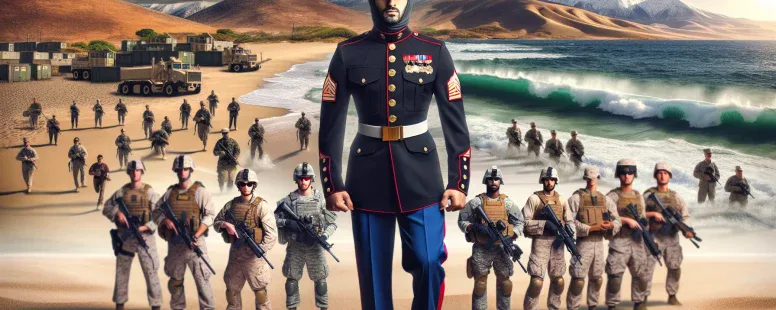
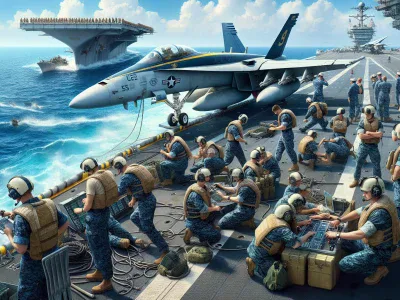
Picture yourself standing at dawn on a windswept shoreline, the salty air sharp in your lungs as distant silhouettes move with precision and purpose. Now picture a sprawling field where boots thunder in unison and the scent of earth mixes with determination. Both scenes pulse with discipline and courage—yet each belongs to a world shaped by unique traditions and missions. why the Marines storm beaches while the Army commands vast land operations? The differences run deeper than uniforms or training grounds. Understanding what truly sets these forces apart could reshape how you view leadership, teamwork, and the hidden strengths behind every mission. Get ready to discover the surprising contrasts and advantages that define the Marine Corps and the Army, and why those differences matter more than you might think.
Overview of the Marine Corps and Army
You see two forces—Marine Corps and Army—standing like pillars in America’s defense. Marines, known for their rapid response and amphibious operations, often charge ashore first, like the spearhead of a larger campaign. Did you knew the U.S. Marine Corps traces its roots to November 10, 1775, making it older than the Army’s official date by several months? Army, established June 14, 1775, organizes immense land campaigns, sometimes stretching across continents, like the campaigns of World War II from Normandy to Berlin (Source: U.S. Department of Defense).
Command structures in both branches highlights different priorities: The Marine Corps, part of the Department of the Navy, operates as a highly integrated air-ground task force. Marines usually deploy in Marine Expeditionary Units (MEUs) with everything from infantry to air support on hand. Conversely, Army divisions embody broad operational autonomy, controlling artillery, armor, and aviation, with missions ranging from humanitarian aid to full-scale combat. Think, for a moment: in Afghanistan, Army forces built infrastructure and delivered security to local populations, while Marines executed swift raids and held key outposts (Source: RAND Corporation).
Which service fits your outlook? If you value adaptability under fire, Marines often train in close-quarter combat and urban warfare, excelling in crisis zones like Fallujah, Iraq, 2004. Prefer leading large-scale operations, orchestrating logistics, and mastering ground strategy? The Army offers broad career paths, covering engineering, communications, and medical roles. Picture a Marine captain guiding beach landings while an Army colonel plans a multinational convoy through Eastern Europe—distinct visions, one mission.
You might ask, do uniforms or mottos set them apart? Marines wear dress blues with “Semper Fidelis” stitched into tradition—always faithful to corps and country. Army troops don the Operational Camouflage Pattern and carry “This We’ll Defend” as their rallying cry, grounded in enduring protection.
Stories multiply. One Marine famously scaled the walls at Tripoli with only a sword and grit, a symbol embedded in the Marine Hymn. Army medics, meanwhile, have evacuated wounded under fire, receiving the Medal of Honor for life-saving valor (Source: Congressional Medal of Honor Society).
Every difference—training, size, deployability—informs the world’s understanding of military power and resilience. So, your next question might echo throughout history: which story would you add to?
Recruitment and Training Differences
Recruitment and training mark some of the most visible contrasts between Marines and Army soldiers. Your experience at sign-up and boot camp shapes not just your skills but your sense of belonging in these iconic branches.
Enlistment Process
Enlistment processes between the Marine Corps and Army use distinct standards, requirements, and expectations. Marines prefer candidates with higher fitness scores and mental resilience—think applicants running timed miles, scoring high on the ASVAB (Armed Services Vocational Aptitude Battery), or passing background checks with stricter tolerance. Army recruiters, on the other hand, commonly offer broader occupational specialties and admit a wider range of physical and academic profiles, for example, supporting linguists, infantry, and medical technicians in the same cycle.
Selection metaphors emerge quickly: Army recruiters cast a wider net, ensuring the force can fill over 150 MOS (Military Occupational Specialties), while Marines focus recruitment like a spear tip, ensuring every new member meets the high esprit de corps. Was your high school track coach stricter than your math teacher? The difference often feels just as pronounced.
Training Programs and Duration
Training programs in the Marines and Army demand different levels of endurance, discipline, and adaptability. Marine Corps boot camp, taking 13 weeks at locations like Parris Island, immerses you in unified group challenges—grueling obstacle courses, martial arts, and amphibious assault drills. Army basic training, shorter at 10 weeks, emphasizes land-based tactics, rifle marksmanship, and field survival, finishing with MOS-specific AIT (Advanced Individual Training).
Anecdotes from recruits reveal just how that training feels. Marines, like Private Lopez at Parris Island, recount drill instructors enforcing unity by making every recruit speak and move in sync, asking, “Are you here to be average—or a Marine?” Army trainees, like Specialist Greene at Fort Benning, tells of completing land navigation in teams, building bonds over shared exhaustion and victory.
For those considering a challenge, ask yourself: Do you see yourself storming a beach or holding ground through a winter night? The answer links directly to the branch’s mission, culture, and the training you’ll survive.
Branch
Enlistment Focus
Training Duration
Training Themes
Marine Corps
High fitness, select few
13 weeks
Amphibious assault, close combat
Army
Wide occupational net
10 weeks + AIT
Land warfare, marksmanship, logistics
Core Missions and Roles
Marines and Army both bring distinct mission priorities to the modern battlefield. Understanding these differences sharpens your perspective on the tactical language of military doctrine.
Marine Corps Responsibilities
Marines operates primarily as an expeditionary assault force, specialize in rapid deployment across sea, air, and land vectors. Their core mission includes seizing and securing beachheads, conducting amphibious assault operations, and providing forward presence in strategic hotspots. Picture standing on the pitching deck of an amphibious assault ship, knowing you’re first wave—this experience defines Marine ethos.
The Marine Corps deploys as a Marine Air-Ground Task Force (MAGTF), a combined structure integrating infantry, armor, artillery, and aviation. This means you might coordinate air strikes with ground maneuvers in minutes, not hours. Marines often deploy aboard U.S. Navy ships, which lets them respond globally within 48 hours, as demonstrated in the 2003 Iraq invasion and post-2010 disaster relief in Haiti. Their “every Marine a rifleman” mentality—meaning all trained to fight even if primary duty isn’t infantry—reflects the versatility expected from each member (source: USMC Concepts & Programs).
By focusing on crisis response, embassy security, and small-unit raids, Marines thrive where sudden action can alter a region’s course, not so much where protracted campaigns grind forward.
Army Responsibilities
Army personnel manage sustained, large-scale land operations, sometimes with tens of thousands of troops deploying simultaneously. You might picture columns of M1 Abrams tanks rolling across Europe or infantry entrenching for the winter, echoing campaigns from WWII to modern exercises in Poland. Their operational language centers on dominance, occupation, and the management of vast territory—Ukraine’s recent land war draws direct lessons from the Army’s experience set.
The Army is divided into specialized commands: Infantry, Armor, Artillery, Aviation, Engineers, and more than 150 other occupational specialties. These enable it to conduct prolonged campaigns, urban security missions, and peacekeeping operations as in Kosovo or South Korea. Army logistical forces can establish a forward operating base the size of a small town in days, sustaining operations for months or years (source: U.S. Army Field Manual).
The Army orchestrates allied coalitions and integrates with NATO partners in multi-national task forces, managing lines of communication, supply routes, and civil affairs alongside combat operations. Prolonged occupation and rebuilding is an Army hallmark; if the Marines seize an airfield, the Army holds and develops it.
Where Marines ignite the flashpoint, the Army builds the firebreak—your understanding of military power isn’t complete without both narratives working together.
Structure and Organization
Let’s step past the bold uniforms and dig right into how the Marine Corps and Army organize their people, power, and leadership. Structure—like the skeleton of each force—shapes the muscle and movement of every mission.
Unit Composition
You’ll spot teams in both the Marine Corps and Army, but they build their squads using different blueprints. A Marine rifle squad, for example, centers on 13 members divided into three fire teams—tight-knit, it’s almost like a professional soccer lineup, each player knowing the next move before it happens. Compare that to an Army squad: you’re usually looking at 9 members led by a squad leader, drawing from an even larger platoon framework. Army squadrons often might incorporate attachments—like medics, mortarmen, or anti-tank specialists—swelling to 60-plus personnel in a single combined-arms company. Marines focus on modular, scalable teams, ready to pivot from amphibious assault to urban room clearing; Army units, by design, assume larger operations by bolstering with armor and logistics assets.
If you wander a Marine base, you’ll hear stories of squads who’ve “moved like a single shadow” during raids in Helmand (source: PBS NewsHour, “Inside a Marine Squad’s War,” 2012). Over at Army outposts, there’s talk of Stryker units rolling across vast terrain, integrating engineers and artillery on the fly. Why the difference? Marines prioritize agility, cohesion, and a “one team, one fight” ethos—while the Army’s broader unit structures lets them sustain combat power over months or years.
Command Hierarchies
Chain of command in these branches feels like comparing two rivers—each with its own bends and currents. Marines follow a strict vertical hierarchy, running from squad leaders up to the Marine Expeditionary Force commander, all under the umbrella of the Department of the Navy. Army command moves through battalions, brigades, divisions, corps—sometimes branching into parallel paths for special operations, sustainment, or allied attachments, all reporting to the Secretary of the Army.
If you find yourself at a joint operations center, you could see a Marine lieutenant colonel leading a battalion assault during a humanitarian crisis, relaying orders in real time—meanwhile, Army colonels might coordinate dozens of battalion tasks across national boundaries, synchronizing with international partners and logistics chains. The Marine Corps answers swiftly to naval priorities, reflecting its expeditionary DNA; the Army, in contrast, exerts autonomy across sprawling theaters, using layered command to organize everything from mechanized task forces to cyber operations.
What happens when decisions ripple down these chains? Marines rely on clarity and speed—a battlefield rumor says that “orders at dawn mean action by breakfast.” Army leaders often empower junior officers to adapt plans, extracting initiative from every layer. No single model fits all battles; structure gives you the playbook, but each branch customizes its calls when history is on the line.
So, will you march with the precision of an Army phalanx or surge with the Marine’s shock team—either way, the blueprint behind every unit is just as pivotal as the gear in your hands.
Deployment and Operational Environments
Deployment and operational environments shape the daily realities of Marines and Army soldiers. Your experience changes dramatically based on whether you serve in forward-leaning amphibious teams or long-established ground forces.
Typical Deployments for Marines
Deployments for Marines emphasize rapid action and unpredictable terrain. You might board an amphibious assault ship in the Pacific, then launch onto beaches from an MV-22 Osprey as part of a Marine Expeditionary Unit (MEU). Marines deploy in smaller, self-contained task forces—like the 2,200-strong MEU—for four- to six-month rotations, often supporting U.S. embassies, disaster relief, and crisis response worldwide [USNI News, 2023]. Crisis can erupt without warning, so the Marine Corps maintains units “forward deployed”—a concept that means you rarely set roots.
Entities such as the USS America (LHA-6) and USS Tripoli (LHA-7) serve as floating fortresses, bringing you anywhere blue water turns red with urgency. A Lance Corporal aboard one wrote home, “We never know when or where, we go with the tide—we’re always the first.” Did many remember the 2020 Beirut explosion? Marines arrived within days, distributing aid before larger forces landed.
Typical Deployments for Army Soldiers
Deployments for Army soldiers immerse you in extended, large-scale land operations. Army units deploying to regions like Eastern Europe or the Middle East bring not just infantry, but armored brigades, aviation battalions, and civil affairs teams—supporting as many as 150,000 personnel at peak in Iraq (see Defense Manpower Data Center, 2011). Deployments can last from nine months to a year, with units often embedding in forward operating bases (FOBs) such as Bagram Airfield or Camp Victory, building infrastructure, and training allied forces.
A captain from the 82nd Airborne Division described deployment to Afghanistan, saying, “We built partnerships, guarded convoys, cleared IEDs, and returned only once the mission changed—roots grow deep, even in dust.” Unlike Marines, your Army deployment routine cycles by location, not inevitability. Want to picture the difference? Picture the Army as an anchor, stabilizing and holding ground, while Marines strike as the spearhead. Do you thrive in unpredictability or endurance—what compels your sense of service?
Service Branch
Typical Deployment Length
Task Force Example
Distinct Operational Environment
Marines
4–6 months
Marine Expeditionary Unit (MEU)
Amphibious assault ships, rapid crisis response
Army
9–12 months
Armored Brigade Combat Team
Large land bases, prolonged ground missions
Uniforms and Culture
Uniforms and culture define the heartbeat of both Marines and Army. You see the branches not just through fabrics and threads but through the symbols and stories stitched into every fiber. Distinctive medals, battle-streamers, and the cut of a collar will whisper legacies in every formation.
Dress Codes and Insignia
Uniforms set visual identities apart instantly. You notice Marine Corps Dress Blues, deep navy with scarlet trim and gleaming brass buttons. This historical uniform marks Marines at ceremonies and funerals—the blue stands for naval heritage, the red for blood shed at Chapultepec. Women and men both wear the tailored coat and pressed white belt, so they move in parade formation you see glints of medals and white covers echoing naval tradition. In combat, Marines switch to MARPAT camouflage—a pixelated, earth-toned pattern designed for multiple terrains—bearing the Eagle, Globe, and Anchor insignia on every pocket.
Army soldiers blend into their environment with the Operational Camouflage Pattern (OCP). This digital camouflage features muted greens and browns—so Army troops disappear into forests, deserts, or rolling hills with efficiency. You’d catch their black-and-gold “U.S. Army” tape and their distinctive unit patches worn on each sleeve. Badges and tabs offer clues to specialized training: Airborne, Ranger, Special Forces. Look at an Army dress uniform, and you’ll see subdued blues with gold piping—each service stripe marks three years of duty; each badge, a story earned.
Both branches have insignia rich with meaning. Marines carry the Eagle, Globe, and Anchor since 1868, combining American power, global reach, and naval service. The Army features crossed rifles for infantry, a castle for engineers, and medical caduceus for Army medics—symbols identify skill, purpose, and esprit de corps.
Traditions and Values
Symbols without stories lack weight. Culture in these forces thrives on shared rituals, maxims, and unwritten creeds you sense in every conversation. Marines recite “Semper Fidelis”—Latin for “Always Faithful”—with the force of a promise. Veterans speak of the Marine Birthday Ball each November 10th, where old and new Marines stand side by side, passing cake from oldest to youngest. There, tradition links 1775 to today in a single slice.
Army traditions reflect sheer scale and history. Soldiers gather for “Hooah” calls or cadence runs, boots thudding through dawn with songs binding squad to platoon. Army pinnings, from Purple Hearts to Bronze Stars, mark not just achievement but sacrifice. “This We’ll Defend,” the Army motto, appears above a shield on every service flag. It recalls every stand from Bunker Hill to Baghdad, steady as a drumbeat.
Humor and hardship circulate through both cultures, but outlook differs. Stories from Marines tell of shared hardship—recruits crawling through mud on Parris Island, carrying logs as a team, the concept of “Every Marine a Rifleman” shaping a warrior first, specialist second. Army veterans, meanwhile, recount division-level camaraderie—lifelong bonds forged in overseas deployments, specialized units, and sprawling bases where diverse backgrounds meet for a common cause.
You sometimes wonder—what culture fits your spirit? The precision and pageantry of Marines, or the broad, enduring roots of Army tradition? Ribbons and ribbons, creeds and mottos, every visible sign carries a lifetime of lessons. Every difference, subtle or stark, shapes the soul of the services far beyond appearance.
Branch
Dress Uniform Features
Combat Uniform Pattern
Major Insignia
Key Traditions
Marine Corps
Blue coat, scarlet trim
MARPAT
Eagle, Globe, Anchor
Birthday Ball, “Semper Fidelis”
Army
Blue coat, gold piping
OCP
Branch-specific (e.g. crossed rifles)
“This We’ll Defend”, cadence runs
Conclusion
Exploring the Marine Corps and Army side by side gives you a deeper appreciation for the values and strengths that define each branch. When you look past the surface, you’ll see how every detail—from training methods to the way units are organized—shapes the character and effectiveness of these forces.
Whether you’re drawn to the Marines’ rapid response or the Army’s large-scale operations, understanding these differences helps you recognize the diverse ways service members protect and serve. The next time you see a uniform or hear a motto, you’ll know there’s a rich story and a proud tradition behind it.
To provide the best experiences, we use technologies like cookies to store and/or access device information. Consenting to these technologies will allow us to process data such as browsing behaviour or unique IDs on this site. Not consenting or withdrawing consent, may adversely affect certain features and functions.
Functional
Always active
The technical storage or access is strictly necessary for the legitimate purpose of enabling the use of a specific service explicitly requested by the subscriber or user, or for the sole purpose of carrying out the transmission of a communication over an electronic communications network.
Preferences
The technical storage or access is necessary for the legitimate purpose of storing preferences that are not requested by the subscriber or user.
Statistics
The technical storage or access that is used exclusively for statistical purposes.The technical storage or access that is used exclusively for anonymous statistical purposes. Without a subpoena, voluntary compliance on the part of your Internet Service Provider, or additional records from a third party, information stored or retrieved for this purpose alone cannot usually be used to identify you.
Marketing
The technical storage or access is required to create user profiles to send advertising, or to track the user on a website or across several websites for similar marketing purposes.