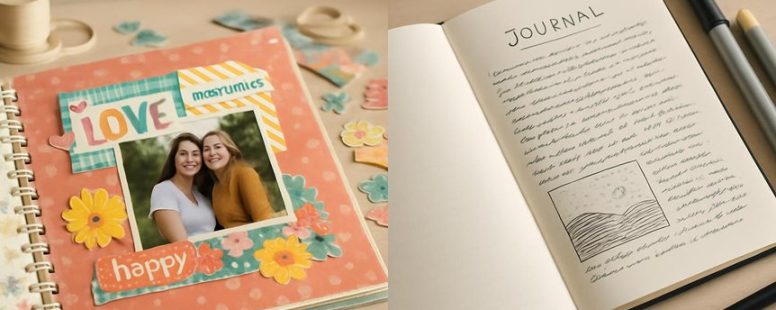
When I started preserving my memories, I was torn between creating a vibrant scrapbook or simply jotting down thoughts in a journal. Each method offers a unique flavor—one a burst of visuals that dance off the page, the other a quiet space for feelings and reflections.
Imagine blending these two worlds, like a symphony of images and words coming together to tell your story. Surprisingly, combining scrapbooking and journaling can unlock a deeper connection to your memories, turning them into a rich tapestry you can savor long after the moment has passed.
This journey into memory-keeping might just inspire your next creative adventure.
What Are Scrapbooking and Journaling? An Overview
Scrapbooking and journaling are two popular ways to keep and share memories. Scrapbooking is a visual craft where you create a decorated album with photos, stickers, and keepsakes to tell a story. It’s like making a colorful picture book of your life. For example, you might add a photo from a family trip along with decorative paper and fun stickers to highlight the moment. Journaling, on the other hand, is writing down your thoughts, feelings, and daily experiences. It’s more like talking to yourself on paper. For instance, you might write about how you felt on your birthday or what you did during the week.
Both methods help keep memories alive but in different ways. Scrapbooking uses images and design to show your story visually. Journaling uses words to share your inner thoughts and details. Some people prefer colorful scrapbooks because they are easy to look at and fun to make. Others like journaling because it helps them understand their feelings better.
If you want to start scrapbooking, here are simple steps: pick a blank album, gather photos and decorations, then arrange everything on the pages. Be creative and have fun with it. For journaling, start by choosing a notebook, then write about your day or how you feel. You can write every day or just when you want to remember something special.
Both ways have their good and bad sides. Scrapbooking can take more time and money because of supplies. Journaling is easier to do anywhere but may not be as colorful or visual. Whether you make a bright scrapbook or a quiet journal, both are good ways to hold onto your memories so you can remember them later.
Why Your Personal Goals Matter When Choosing a Memory-Keeping Method
Your personal goals are very important when choosing a way to keep memories. If your goal is to remember daily moments, a simple photo album or journal may work best. If you want to reflect on your growth over years, a scrapbook or digital timeline can help you see your progress. When the method fits what you want to achieve, it feels more meaningful and easier to stick with. For example, if you hope to share your memories with family, a shared online album might be best.
Some people prefer quick ways to save memories, like social media posts, because they are easy and fast. Others might want detailed keepsakes, like handwritten letters or art projects, which take more time but feel more personal.
Knowing your long-term goals can help you pick the right method. Do you want to look back and see how far you’ve come? Or do you want a simple way to capture everyday moments? Thinking about what you hope to gain from your memory-keeping can guide your choice and make the process more fun and rewarding.
Aligns With Personal Values
Choosing a memory-keeping method depends on what matters most to you. The best way is the one that fits your personal values and goals. For example, if expressing your feelings is very important, journaling can give you a private space to write down your thoughts and emotions. If preserving family traditions through visual stories is your goal, scrapbooking might be better.
Some people prefer methods that reflect their core beliefs. For instance, someone who values cultural heritage might choose photo albums or cultural artifacts. Others might want a quiet way to process feelings, like writing a diary. Both options have their strengths and limits. Journaling can be very personal but might not show family traditions, while scrapbooking creates colorful stories but may take more time and effort.
Think about what makes your memories meaningful. Do you want to share stories with others or keep them private? Do your memories connect to your family, culture, or personal growth? When you pick a method that matches your values, it feels more authentic and satisfying.
Supports Long-Term Aspirations
Long-term goals tell us how to choose memory-keeping methods because they show what we want to achieve in the future. If you want to keep special moments for your family or leave a legacy, your choice of method should help you reach those goals.
Scrapbooking is great if you want to preserve memories with photos and stories. It focuses on sentimental value and keeps detailed stories and images that your family can enjoy later. For example, if you want your children to remember family trips or special occasions, scrapbooking can be a good choice.
Journaling is better if you want to record your thoughts and feelings over time. It is flexible and helps you think about your personal growth or reflect on your life. For instance, if you want to track your goals or write about your daily experiences, journaling works well.
Knowing your long-term goals can help you pick the best method. If your goal is to create a family keepsake, scrapbooking might be best. If you want to understand yourself better or reflect, journaling will be more helpful.
How Do Scrapbooking and Journaling Differ? Key Goals Explained
Scrapbooking and journaling are both ways people keep memories, but they have different main goals.
Scrapbooking is mainly about creating a visual record of special moments. People use photos, ticket stubs, and decorative items like stickers or ribbons to make pages that tell a story. The goal is to make something pretty and meaningful that shows feelings and memories through images. For example, a scrapbook of a family vacation might include photos of the beach, souvenirs from the trip, and colorful borders. It’s about capturing the emotion of the moment in a visual way.
Journaling is about expressing thoughts and feelings with words. It is a personal space where people write about their daily experiences, hopes, worries, or reflections. The main goal is to understand oneself better and process emotions. Someone might write in a journal after a tough day to feel better or to remember how they felt at a certain time. It’s more about inner reflection than making something look perfect.
Both methods are valuable, but they serve different purposes. Scrapbooking focuses on the visual and sentimental side of memories, making a beautiful story with pictures and mementos. Journaling focuses on self-expression and understanding, helping people explore their feelings through words. Some people combine both, using photos to tell a story and writing to share their thoughts. But remember, scrapbooking can take a lot of time to decorate, while journaling can be quick and spontaneous. Each one offers a different way to preserve memories and feelings.
Creative Projects: Examples of Scrapbooking and Journaling
Creative projects like scrapbooking and journaling are popular ways to keep memories alive. Scrapbooking is a visual storytelling method. It uses photos, tickets, stickers, and decorative paper to create a colorful page that shows a story or special event. For example, a scrapbook about a family vacation might include pictures, maps, and little notes about what happened each day. This makes the memories easy to look back on and share with others.
Journaling is different because it focuses on personal writing. It helps you reflect on your feelings, thoughts, and daily experiences. People often use prompts or write about what they are grateful for or how they felt during a certain moment. For example, someone might write a journal entry about a challenging day or a happy moment with friends. Journaling is a good way to understand yourself better and keep a record of your inner thoughts.
Both scrapbooking and journaling have their advantages and limits. Scrapbooking is great if you are visual and love making things look pretty. But it can take more time and money to gather supplies. Journaling is usually faster and cheaper since you just need paper and a pen. However, some people find it hard to express their feelings in words or may not enjoy writing.
If you want to try these projects, start with simple steps. For scrapbooking, choose a small photo album or a notebook. Pick a theme, like holidays or birthdays, and add photos and decorations to match. For journaling, get a notebook and write regularly about your day or your thoughts. You can use prompts to help if you’re unsure what to write about.
Both methods let you create a personal story and preserve memories in a creative way. Whether you prefer colorful pages or written reflections, these projects give you a nice way to look back and see your life from your own perspective.
Visual Storytelling Techniques
Visual storytelling is a way to share stories, feelings, and memories through pictures and designs. It helps us tell more than just words can. For example, using bright colors like red or orange can make a page feel energetic and lively. Cool colors like blue or green can make it feel calm and peaceful. How you arrange your photos and decorations also matters. A good layout guides the viewer’s eye to the most important parts of your story. In scrapbooking, you might put photos, stickers, and words in a way that flows naturally, so someone can see the story at a glance. In journaling, adding doodles or small pictures next to your written thoughts can make your feelings more clear and strong. Both scrapbooking and journaling use these techniques to make their stories more interesting and easier to remember. Learning how to choose the right colors and organize your pages can turn simple pages into powerful visual stories that catch people’s attention.
Personal Reflection Methods
Personal reflection methods like scrapbooking and journaling are ways to process your experiences and share your feelings creatively. These methods help you keep memories alive and explore your thoughts in a fun way. Here are some simple ways I use these techniques:
I add photos and keepsakes, like ticket stubs or shells, to my scrapbooks. This helps me remember special trips vividly.
I use different textures and mixed media, such as fabric, stickers, or paint, to make my pages more interesting and artistic.
I write prompts or questions to guide my writing. For example, I might ask myself, “What made this moment special?” or “How did I feel during this trip?”
I play with colors and handwriting styles to show my feelings and make my journal or scrapbook unique.
These methods make reflecting more fun and meaningful. Whether I am recording a trip or just jotting down daily thoughts, using creative techniques helps me understand myself better and keeps my memories fresh. Some people might find it hard to stay consistent or feel they aren’t artistic enough, but even simple notes and photos can make a big difference. Overall, these methods turn personal reflection into an enjoyable and creative habit.
Essential Tools and Supplies for Scrapbooking and Journaling
Having the right tools and supplies is key when starting a scrapbook or journal. Good quality paper, pens, scissors, and adhesive are basics that make your project look neat and professional. For scrapbooking, adding fun stickers, ribbons, and themed decorations helps give your pages personality. These embellishments make your scrapbook stand out and can tell a story without words. Journaling usually needs fine-tipped pens and markers for writing clearly and adding style. If you prefer digital journaling or scrapbooking, you’ll want software or apps like Canva or Adobe Spark. These let you design layouts, add text, and include digital images or stickers easily.
Organizing your supplies is also helpful. Use storage boxes or folders for physical items, and digital libraries or folders for your images and templates. This saves time and keeps your work area tidy. Some people like to keep all their supplies in one place, while others prefer separate containers for different types of items.
Choosing the right tools depends on your style and what you enjoy. For example, if you love adding lots of decorations, stock up on stickers and ribbons. If you prefer writing, invest in good pens and markers. Just remember, having too many supplies can be overwhelming, so start with the basics and add more as you go.
In the end, the best supplies help make your project easier and more fun. Whether you prefer traditional paper or digital tools, having what you need close by encourages creativity and helps you enjoy the process.
How to Decide if Scrapbooking or Journaling Fits Your Style
Scrapbooking and journaling are two popular ways to keep memories, but they fit different styles. The best choice depends on how you like to express yourself and what you have time for.
If you like to tell stories with words and keep things simple, journaling might be your best fit. Journals are easy to start, just a notebook and a pen. You can write about your day, your feelings, or funny things that happen. Journaling gives you flexibility to write as much or as little as you want. It’s great if you want a quick way to capture memories without needing a lot of supplies.
On the other hand, if you enjoy being creative with pictures, colors, and decorations, scrapbooking could be better. Scrapbooking uses photos, stickers, patterned paper, and other crafts. It can take more time and supplies but offers a chance to make a visual story. Imagine turning a simple photo into an art piece with colorful borders and embellishments. Scrapbooks are perfect if you want a colorful, artistic way to remember special moments.
To decide which fits your style, ask yourself some questions. Do you prefer writing or decorating? Do you have lots of time to spend on your project? For example, if you only want to jot down quick thoughts now and then, journaling is easier. If you love to craft and spend weekends on projects, scrapbooking might be more fun.
Some people use both. They might journal daily and make a scrapbook for big events like vacations or birthdays. Remember, neither is better — just choose what makes you happy and feels natural. Just keep in mind that scrapbooking can cost more money and take more time, while journaling is simple and quick.
In the end, the right choice depends on what makes you excited to keep your memories alive. Try both if you’re unsure, and see which one you enjoy more!
Personal Expression Preferences
Personal expression preferences help you choose between scrapbooking and journaling. These two ways of creating are different, and understanding what feels best for you can make your hobby more fun.
Scrapbooking is a way to tell a visual story. It uses bright colors, decorative papers, stickers, and other embellishments. If you like adding lots of colors and textures, scrapbooking might be your favorite. For example, you might create a page about a vacation with photos, colorful borders, and fun stickers. This method is great if you enjoy working with images and visual details.
Journaling is more about writing your thoughts and feelings. It usually involves simple pages with words and minimal decorations. If you prefer to keep things straightforward and explore your inner thoughts, journaling could be better. For example, you might write about your day or your dreams without adding many pictures or decorations. This style is good if you want a quiet, reflective space.
When deciding which is best for you, think about a few key points. Are you comfortable with bright colors and busy designs? Do you like feeling textures from different papers? Do you want to tell a story mostly through pictures or words? How much do you want to decorate your pages?
Some people find that scrapbooking makes their memories more lively because of the visuals. Others prefer journaling because it helps them focus on their feelings and ideas. Both methods have their strengths and limitations. Scrapbooking can take more time and supplies, but it creates a colorful keepsake. Journaling is quicker and more personal but might feel less decorative.
Knowing what type of personal expression you enjoy will help you pick the right method. Whether you want to create artistic pages or just write your thoughts, choosing the style that feels right makes your hobby more meaningful and fun.
Available Time and Materials
Deciding whether scrapbooking or journaling is better for you depends on how much time and materials you want to use. Scrapbooking is usually more time-consuming because it involves collecting photos, decorative papers, stickers, and other decorations. It also costs more because of the supplies needed. Scrapbooking is a hands-on activity that needs planning and patience.
Journaling is simpler and faster. You only need a notebook and a pen. It takes less time and costs less. If you want a quick way to write down your thoughts and don’t want to buy many supplies, journaling might be best for you.
Some people enjoy crafting and don’t mind spending extra time and money on scrapbooking. They like making their pages look special with decorations. Others prefer journaling because it is easy to do anytime and anywhere.
Think about how much time you have and how much money you want to spend. If you like making detailed projects, scrapbooking could be fun. But if you want something simple and quick, journaling might suit you better.
Tips for Getting Started With Scrapbooking and Journaling
Getting started with scrapbooking and journaling means taking simple steps to make it easier. First, organize your digital files, photos, and notes. This helps you find what you need quickly and saves time when you start creating. For example, you can make folders on your computer for different projects or themes.
Second, decide on a main idea or purpose for your project. Do you want to remember special trips, celebrate family moments, or write about your feelings? Having a clear theme keeps your project focused and fun.
Third, gather basic materials like scissors, glue, stickers, or explore digital tools. Digital options such as Canva or PicMonkey are great for editing photos and making digital scrapbooks, especially if you want to share your work online. If you prefer hands-on crafting, start with simple supplies you already have at home.
Fourth, think about how you want to share your work. Do you want to post pictures on social media, create a private online album, or keep it just for yourself? Sharing can motivate you to keep going and get new ideas from others.
Some people find that planning ahead helps them stay inspired. Others prefer to just start and see where their creativity takes them. Both ways work, but be aware that digital tools can sometimes be tricky to learn at first, and sharing online means you should be careful about privacy.
Pros and Cons of Scrapbooking vs. Journaling
Scrapbooking and journaling are two popular ways to keep and share memories, but they serve different needs.
Scrapbooking is a visual way to remember special moments. It combines photographs, decorations, and creative layouts to tell a story with images. For example, you might make a scrapbook page about a family vacation with photos, stickers, and handwritten notes. This method is great if you like looking at pictures and enjoy creating colorful, artistic pages. The emotional benefit comes from physically working on the scrapbook, which can make memories feel more real and special. But, scrapbooking can take a lot of time and needs supplies like paper, glue, and scissors. It is less flexible if you want to add quick updates later.
Journaling is mostly about writing down your thoughts and daily events. It is a simple way to keep a record of what happens each day or how you feel. For example, you might write a few lines about your day or a special moment. Journals can be kept on paper or stored digitally on a computer or phone, making it easy to save and access your entries later. Writing can be faster than designing a scrapbook, especially if you want to record a lot of thoughts quickly. However, some people find journals less visually appealing and miss having pictures or decorations.
Both scrapbooking and journaling have their good points. If you enjoy making colorful pages and showcasing photos, scrapbooking might be better for you. If you prefer quick writing and easy storage, journaling could be your choice. Think about what matters most—visual impact or quick, easy writing—when deciding which method to try.
How to Combine Scrapbooking and Journaling in One Memory Book
Combining scrapbooking and journaling creates a memory book that is both visual and written. This method can make your memory book more meaningful and personal. To do this well, you should keep the theme consistent throughout your pages, making sure everything supports your story. Here are some steps to help you get started:
Pick a color scheme and style that fit the mood or topic you are sharing. For example, bright colors might work for happy memories, while softer tones suit sentimental stories.
Choose materials like patterned paper, stickers, and decorations that match your story. These add visual interest and make your pages more lively.
Write directly on your scrapbook pages. Use captions, quotes, or handwritten notes to give extra details about the pictures and stories.
Balance your images and writing. Combine photos with words in a way that makes it easy to follow your story and keeps the pages interesting.
Some people find that blending images and words makes their memory books more emotional and easier to connect with. However, be careful not to make the pages too cluttered or busy, which can make your story hard to follow. Also, remember that combining these styles takes practice, so don’t worry if your first few pages aren’t perfect. With patience, your memory book can become a beautiful keepsake that shows both your pictures and your thoughts.
Common Mistakes to Avoid When Preserving Memories
Preserving memories is a meaningful task, but many mistakes can ruin your keepsakes over time. Knowing what to avoid helps your memories stay clear and special for years.
First, proper storage is key. If you don’t store photos and papers correctly, they can get damaged. For example, exposure to sunlight, moisture, or heat can cause photos to fade or papers to mold. Using acid-free boxes or folders from stores like Michaels or Hobby Lobby keeps your items safe. Think of it as giving your memories a cozy home that protects them from harm.
Second, avoid putting too many items on one page or in one album. Cluttering makes it hard to see what’s important and can make your project look messy. Instead, leave some space around photos and keepsakes. This makes each item stand out and keeps your album easy to look through. Imagine trying to find a favorite photo in a jumble — it’s frustrating! Giving each keepsake room helps you enjoy your memories better.
Third, don’t use cheap or non-archival materials. Regular glue, tape, or paper can cause your keepsakes to fade or fall apart over time. It’s better to buy acid-free paper, photo-safe glue, and sleeves made for preservation. These materials might cost a little more but are worth it if you want your memories to last. For example, some old photos fade quickly when glued with regular glue, but stay vibrant with proper materials.
Fourth, labeling and journaling are often skipped. Writing down details like dates, places, or stories behind the photos gives your memories context. Without this, it’s easy to forget the story later. For instance, a simple note like “Grandma’s 80th birthday” helps you remember the moment years later. It’s like writing a small story that keeps your memories alive.
Some people might think saving everything is enough, but quality matters. Using the right storage, materials, and labels makes a big difference. Others might worry about the cost or time, but think of it as an investment. Your future self and family will thank you for keeping these memories safe and meaningful.
To provide the best experiences, we use technologies like cookies to store and/or access device information. Consenting to these technologies will allow us to process data such as browsing behaviour or unique IDs on this site. Not consenting or withdrawing consent, may adversely affect certain features and functions.
Functional
Always active
The technical storage or access is strictly necessary for the legitimate purpose of enabling the use of a specific service explicitly requested by the subscriber or user, or for the sole purpose of carrying out the transmission of a communication over an electronic communications network.
Preferences
The technical storage or access is necessary for the legitimate purpose of storing preferences that are not requested by the subscriber or user.
Statistics
The technical storage or access that is used exclusively for statistical purposes.The technical storage or access that is used exclusively for anonymous statistical purposes. Without a subpoena, voluntary compliance on the part of your Internet Service Provider, or additional records from a third party, information stored or retrieved for this purpose alone cannot usually be used to identify you.
Marketing
The technical storage or access is required to create user profiles to send advertising, or to track the user on a website or across several websites for similar marketing purposes.