Picture yourself gliding through crystal-clear waters as sunlight dances across the ocean floor. Suddenly two majestic shapes soar beneath the waves—one with wings that seem to stretch forever the other hugging the sand with mysterious grace. You might wonder if you’re seeing twins of the sea or creatures from entirely different worlds.
It’s easy to mix up manta rays and stingrays but their differences go far beyond what meets the eye. Discovering how these fascinating animals live feed and interact with their environment can change the way you see the ocean. Unlock secrets about their surprising intelligence unique defenses and the vital roles they play beneath the surface—knowledge that just might transform your next beach adventure.
Overview of Rays: Manta Rays vs. Stingrays
You spot a broad shadow gliding beneath turquoise waves—a question pops into your mind: is it a manta ray, or a stingray? These distinct marine animals differ in more ways than just their graceful movement. Rays, members of the subclass Elasmobranchii (along with sharks), challenge your expectations with their variations. Their evolutionary roots stretch back to 150 million years ago, making each encounter a glimpse into prehistoric oceans.
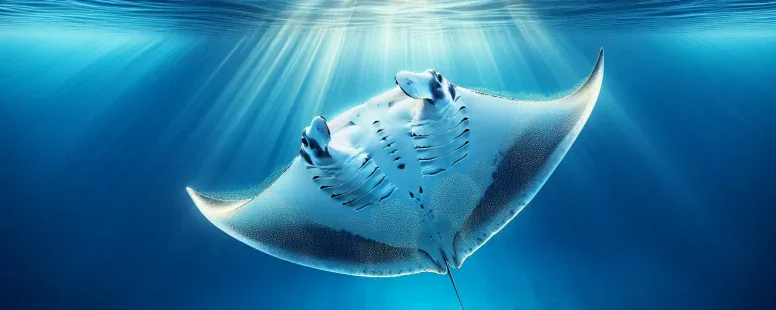
Manta rays, reaching widths up to 23 feet (Smithsonian Ocean), often feel like the ocean’s gentle giants, sporting tall cephalic fins that curl while they feed. Their movement, almost like underwater flying, stirs awe among divers. It’s curious how their massive size rarely deters cleaner fish, which gather by mantas’ mouths for a free meal—a symbiotic relationship that reveals how interconnected reef life really is.
But, if you notice a flat disc partially buried in sand, you’ve probably found a stingray—a creature with a story of its own. Stingrays, like the southern stingray (Dasyatis americana), use camouflage for survival rather than sheer size. Picture the sudden tension in a shallow lagoon when a swimmer steps near—they holds a venomous barb on their tail that got infamously publicized by media in 2006. Yet, even though their reputation, stingrays avoid confrontation, using this defense only when threatened.
As you compare the two, ask yourself: how do these evolutionary cousins succeed in such different ways? Some people call manta rays ‘devil rays’—but these plankton-eating filter feeders don’t possess a stinger, and their presence marks healthy oceans, says the Marine Megafauna Foundation. Stingrays, on the other hand, prey on crustaceans, using their electroreceptive sense to track tiny heartbeats beneath the sand.
Researchers, like Dr. Andrea Marshall, shine spotlights on manta intelligence and memory, with anecdotes of rays returning to divers they’d previously encountered. In contrast, stingrays gather for coordinated mating rituals in the wild, a spectacle rarely witnessed yet documented by National Geographic scientists. Both inspire respect and caution—divers shuffle their feet in stingray habitats, but approach manta rays with cameras, not fear.
Which would you rather meet at sea—a giant with wings or a master of disguise? Every ray tells a different story, inviting you to look past appearances and dive deeper into the mysteries of elasmobranch life.
Physical Differences Between Manta Rays and Stingrays
Physical differences between manta rays and stingrays shape how you recognize each in the wild. Shared heritage puts both under the elasmobranch umbrella, but your eye catches dramatic contrasts.
Size and Shape
Size dominates the conversation when you compare manta rays and stingrays. Manta rays, with disc-shaped bodies, span up to 23 ft (7 m) across, like a small car gliding by underwater. You spot them by their triangular pectoral fins and cephalic lobes, curved forward like the horns of a bull. Stingrays appear more subdued—picture a sandy dinner plate, rarely exceeding 6.5 ft (2 m) wide. Southern stingray or blue-spotted stingray rely on this compact, rounded build to blend into the sea floor, which offers them camouflage from predators.
Tail and Stingers
Tail structures on manta rays and stingrays set a divide between defense and flight. Manta rays have short or whip-like tails and, curiously, you’ll never find a venomous barb at the end. Stingrays, from Atlantic stingray to freshwater variants, feature long tails equipped with one or more serrated, venomous stingers. Ever visited a beach where signs warn about shuffling your feet? That advisory references the stingray’s tail—a built-in, last-resort defense if stepped upon. Injuries typically happen to unwary swimmers or divers, and medical case reports (NOAA, 2023) document these frequent incidents. Manta rays, giants they are, seem to invite awe, while stingrays command a wide berth.
Mouth and Feeding Adaptations
Mouth placement reveals the secret life of each ray. Manta rays sport cavernous, forward-facing mouths—engineered for filter feeding—pulling plankton and krill into their gaping jaws as they soar through the open ocean, sometimes trailed by a squadron of cleaner wrasses. Stingrays, in contrast, have mouths tucked beneath their bodies, set up for bottom feeding. Using electroreceptors to detect prey like crabs and shrimp hiding in sand, they can crush shells with flat dental plates. If you ever saw footage of a stingray “vacuuming” the seabed after a tidal shift, you’ve witnessed this adaptation in action.
These nuanced differences let you tell—at a glance—which ray greets you beneath the waves. Would you jog along the surf wary of hidden barbs, or would you scan the open blue for a shadow with wings?
Species
Max Width (ft)
Tail Type
Stinger Presence
Mouth Position
Feeding Strategy
Manta Ray
23
Whip-like/Short
Absent
Forward-facing
Filter plankton/krill
Stingray
6.5
Long
Present
Underside
Bottom feeder—crustaceans
Habitat and Distribution
You may think the ocean’s vast canvas paint manta rays and stingrays with the same brushstrokes, but each species claims a unique stretch of marine real estate. The places you might cross paths with these majestic rays reveal much about their life stories.
Preferred Environments
Picture the open water, sunlit and blue. That’s where you’ll find manta rays soaring, wings outstretched, near the ocean’s surface. Most mantas, like Manta birostris, travel through tropical and subtropical seas, seeking the upwelling currents that swirl with plankton. Giant mantas glide past reefs, coastal bays and, sometimes, hover at cleaning stations while smaller reef mantas loop gracefully around coral gardens—almost like they’re ballet dancers relying on the rhythm of the tides (NOAA, 2023).
Stingrays, on the other hand, prefer to keep a low profile. Picture walking along a sandy seabed and seeing a strange pattern—chances are, it’s a stingray buried in the sand. Southern stingrays, Atlantic stingrays or bluespotted ribbontail rays, for example, thrive in shallow, warm waters of lagoons, estuaries, and seagrass meadows. Freshwater stingrays in the Amazon basin break the saltwater stereotype altogether (Smithsonian, 2022).
Geographic Range
Stare at a world map and trace your finger from the Pacific to the Atlantic. Manta rays embrace a wide territory—you might spot one soaring off the coast of Mozambique, leaping in the Maldives, or even patrolling the Gulf of Mexico. Their migratory range spans thousands of miles, linking coral reefs and offshore islands in a vast blue network.
Stingrays, by contrast, tend to be homebodies—regional loyalists. Their species hug coastlines in the Caribbean, the Great Barrier Reef, the Mediterranean, and even California’s kelp forests. Some, like the Dasyatis pastinaca, reside in brackish or freshwater rivers across South America and Southeast Asia. If you’re wading at the beach, looking for mystery beneath your toes, you’re far more likely to meet a stingray than a manta.
Ray Type
Habitats
Geographic Range
Example Species or Locations
Manta Ray
Open ocean, reefs
Tropical & subtropical world oceans
Maldives, Mozambique, Gulf of Mexico
Stingray
Shallow coast, estuaries
Global, including freshwater rivers
Caribbean, Amazon basin, California Coast
Can these ancient mariners change their habitats in response to human encroachment? Conservationists debate the future—overfishing and pollution threaten both manta rays and stingrays, but your decisions on the shore can echo beneath the waves. What story will your next swim tell about your place in this shared aquatic world?
Behavior and Diet
Behavior and diet paint vivid pictures of both manta rays and stingrays, immersing you deeper into their secretive underwater world. You might spot a manta ray gliding through bright plankton blooms, a spectacle that can looks almost choreographed, while a stingray burrows beneath the sand, invisible to all except the sharpest of eyes.
Feeding Habits
Feeding sets manta rays apart from stingrays using both dependency and symmetry within their ecological roles. Manta rays are filter feeders—think of them as the whales of the ray family—opening their enormous mouths to sweep plankton, zooplankton, and small fish into their gills as they move. They often gather in groups during plankton-rich events, such as the famous Hanifaru Bay aggregation in the Maldives, a phenomenon documented by National Geographic. These gentle giants depend on locations with dense plankton, linking their migrations directly to microscopic abundance.
Stingrays, in contrast, rely on the seafloor as both hunting ground and hiding spot. Using electroreceptors called ampullae of Lorenzini, stingrays detect prey—crabs, shrimp, and mollusks—lurking beneath sand. With their mouths underneath their bodies, these rays crush shellfish with strong dental plates. If you’ve ever waded into a shallow bay and shuffled your feet, you might’ve been closer to a stingray hunt than you realized. While manta rays rarely interact with humans outside viewing encounters, stingrays, like those in Stingray City (Grand Cayman), regularly interact with visitors offering bits of squid.
Social Behavior
Social interactions among manta rays show complex dependency webs, often challenging classic assumptions about fish intelligence. Manta rays, for instance, display signs of self-awareness, occasionally recognizing themselves in mirrors—an ability rarely observed in marine creatures, as noted by researchers at the Okinawa Churaumi Aquarium. You’ll often see these giants swimming together in loose groups during feeding and cleaning, exchanging parasite removal services with cleaner wrasse at “cleaning stations.” These fleeting alliances suggest intricate social structures and even cooperative behaviors in certain seasons.
Stingrays, on the other hand, are solitary. While you’ll find them in groups during mating season or in popular feeding grounds, their interactions are more pragmatic than emotional. Some species, such as cow-nose rays, migrate in massive schools numbering in the thousands—forming moving shadows across coastal waters—but even then, each ray keeps to its own path, only occasionally brushing up against kin or rival. The stingray’s venomous barb remains sheathed, used defensively only when close interactions cross the threshold from curiosity to threat.
Can you picture gliding beside a manta ray as it arcs gracefully, or feeling the whisper-quiet ripple of sand when a stingray darts away? Those experiences embody the mystery of their respective diets and behaviors, each ray carving out a niche in a vast, interconnected ocean—yours to observe, learn from, and protect.
Interaction With Humans
You might picture manta rays and stingrays weaving through tropical currents, but your encounter with either often hinges on chance, curiosity, and the dance of nature’s rhythms. Swimmers recall the awe of seeing a manta ray’s silhouette glide under their surfboard, its cephalic lobes unfurled like wings from some ancient myth. A diver may still wonder, “Did that stingray sense my heartbeat through the sand?” Every meeting at the water’s edge rewrites the delicate script of coexistence between rays and humans.
Safety and Conservation Status
Manta rays interact with you peacefully, offering one of nature’s gentlest spectacles. They hold no venomous stinger. You swim among mantas at cleaning stations in Raja Ampat or the Maldives, where remoras and cleaner wrasse dart between their gills. Unlike stingrays, mantas rarely approach the seafloor, so you won’t find them hidden beneath your toes. Most people describe sharing water with a manta ray as swimming beside a living kite (Stewart et al., 2018).
Stingrays, on the other hand, write a different safety chapter. While generally passive, stingrays possess a venomous barb, coiled with evolutionary intent. You hear stories about waders stung at sandbars, a reminder to shuffle your feet so rays aren’t startled. The fatal accident involving Steve Irwin etched caution into public memory, yet millions interact safely with rays each year (NOAA, 2021). Some dream of “Stingray City” in Grand Cayman—where rays brush against visitors like velvet ghosts, taught through generations that humans mean lunch.
Both species face threats because of humans. Overfishing, habitat destruction, and climate change thin their numbers. You see rays in tourist lagoons, but wild populations dwindle, often unnoticed. Manta rays are listed as “Vulnerable” by the IUCN after targeted fishing for their gill rakers and accidental bycatch (IUCN Red List, 2023). Stingrays face localized declines, pushed by coastal development and water pollution.
Species
Human Threat Level
Venomous Risk
IUCN Conservation Status
Manta Ray
Low
None
Vulnerable
Stingray
Moderate
Present
Varies by species
Can you change the tide, or does the sea simply outlast us all? Conservation groups encourage “look, don’t touch” encounters, pushing for ray sanctuaries and sustainable tourism. It’s a reminder—the ocean’s tapestry weaves your footprint with creatures older than civilization, offering endless chapters for those who listen and protect.
Conclusion
Whether you’re snorkeling in tropical reefs or strolling along a sandy shoreline, knowing the difference between manta rays and stingrays adds a new layer of wonder to your ocean adventures. Appreciating their unique traits and behaviors helps you become a more mindful observer and a better steward of marine life.
Your curiosity and respect for these fascinating rays can inspire others to protect their habitats. Every thoughtful encounter and informed choice contributes to the ongoing story of these incredible creatures and the health of the oceans they call home.
To provide the best experiences, we use technologies like cookies to store and/or access device information. Consenting to these technologies will allow us to process data such as browsing behaviour or unique IDs on this site. Not consenting or withdrawing consent, may adversely affect certain features and functions.
Functional
Always active
The technical storage or access is strictly necessary for the legitimate purpose of enabling the use of a specific service explicitly requested by the subscriber or user, or for the sole purpose of carrying out the transmission of a communication over an electronic communications network.
Preferences
The technical storage or access is necessary for the legitimate purpose of storing preferences that are not requested by the subscriber or user.
Statistics
The technical storage or access that is used exclusively for statistical purposes.The technical storage or access that is used exclusively for anonymous statistical purposes. Without a subpoena, voluntary compliance on the part of your Internet Service Provider, or additional records from a third party, information stored or retrieved for this purpose alone cannot usually be used to identify you.
Marketing
The technical storage or access is required to create user profiles to send advertising, or to track the user on a website or across several websites for similar marketing purposes.