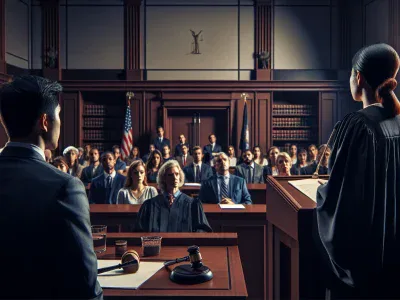
Picture a courtroom where every detail crackles with tension—the air thick with anticipation as a jury leans in to catch every word. Two lives, two stories, but only one question: was it murder or manslaughter? The line between these charges isn’t just legal jargon—it’s a razor-sharp divide that can change a verdict, a sentence, even a life’s trajectory.
You might think you know the difference, but the truth is far more nuanced than TV dramas let on. Understanding how intent, circumstance, and emotion shape these charges doesn’t just satisfy curiosity—it can empower you with knowledge that most overlook. Dive deeper and you’ll uncover how the law weaves together motive and moment, revealing a world where the smallest detail can tip the scales of justice.
Understanding the Difference Between Murder and Manslaughter
Understanding the difference between murder and manslaughter shapes your grasp of criminal law and the human stories behind headlines. Murder means an intentional act, where the perpetrator plans or knows their act’ll kill another. Think of a person who buys poison and slips it into a rival’s coffee for profit—the planning, the intent, the cold calculation. These cases echo through courtrooms like cautionary tales, their verdicts reminding you that the law doesn’t treat all violence equal.
Manslaughter, on the other hand, means a life taken without that same intent or premeditation. Picture a furious argument after a fender bender; emotions surge, someone pushes too hard, and tragedy follows. You see this in cases where emotions override reason—those moments when judgment collapses in the heat of the moment or due to recklessness. Prosecutors and defense attorneys will battle over the precise intentions and circumstances. Sometimes, the fate of the accused’ rests on a single overlooked word—a text message, a dash-cam recording, a neighbor’s memory.
Courts weigh evidence to separate deliberate acts from reckless or heat-of-passion events. Legal scholars like Wayne LaFave (“Criminal Law,” West Academic, 6th ed.) underline intent and forethought as central murder hallmarks, while manslaughter convictions arise from negligence or mitigated circumstances. These distinctions, elusive as mist, turn on whose story the jury believes, what context’s revealed, and which semantic nuances sway their sense of justice.
Picture you’re the juror. Did the accused act in cold blood, or did they snap with provocation? Would a reasonable person have reacted similarly? Ask yourself what would you have done in that moment? Reflect on how a single second, shaped by motive and circumstance, can mean decades in a cell or a chance for redemption.
Criminal charges rarely stand alone—each case branches into new questions about intent, control, and consequences. As statutes and verdicts evolve, your perception of guilt, mitigation, and accountability evolves in tandem. Maybe one day, you’ll recall these distinctions when reading about alleged crimes, applying the law’s lessons to see the story beneath the surface.
Legal Definitions
Legal definitions of murder and manslaughter draw distinct lines between premeditated violence and reckless or impulsive acts. You see these definitions shape how courts and juries weigh facts and evidence.
What Constitutes Murder?
Murder means knowingly causing someone’s death with intent or extreme indifference. Criminal codes in most states use statutes like “malice aforethought” to describe the deliberate mindset. You might picture two neighbors—after months of feud—one waits and shoots the other. That’s planned, qualifying as murder under almost any U.S. jurisdiction (Model Penal Code § 210.2). Prosecutors look for evidence like written threats, purchased weapons, or detailed plans.
First-degree murder involves preparation or lying in wait. Second-degree murder covers acts showing disregard for life, like firing into a crowd or speeding a car toward a pedestrian. If you follow headlines, cases like the 2020 George Floyd killing led to murder charges, sparking public debates about intent and police conduct.
What Constitutes Manslaughter?
Manslaughter occurs when someone causes death without prior intent, often in the heat of the moment. Legal systems use terms like “involuntary” when deaths result from reckless conduct—think of a drunk driver causing a fatal crash. “Voluntary” manslaughter involves provocation; say, you walk in on a spouse cheating, and react violently. The law recognizes human emotional limits and lower culpability (see 18 U.S.C. § 1112 for federal standards).
Courts examine whether ordinary people might react similarly under the circumstances. You’ll find historic trials—like the People v. Wu (1991)—where juries weighed cultural and emotional contexts. Questions linger: When do emotions excuse fatal actions? How judges interpret “heat of passion” can flip a verdict from murder to manslaughter.
Term
Definition
Example
Statute/Source
Murder
Killing with intent, premeditation, or extreme recklessness
Lying in wait, deliberate shooting
Model Penal Code § 210.2
Manslaughter
Killing without prior intent, from reckless actions or emotional disturbance
Drunk driving fatality, crimes of passion
18 U.S.C. § 1112
Key Elements That Distinguish Murder and Manslaughter
Key elements like intent and classification shape the legal difference between murder and manslaughter. Understanding these distinct characteristics helps you parse courtroom narratives and legal arguments.
Intent and State of Mind
Intent separates murder from manslaughter at its core. Murder involves a calculated or knowing mindset. You see this when prosecutors demonstrate premeditation or a “depraved heart,” a legal term for extreme disregard for life (Cornell Law School). Picture a feud where someone lies in wait, weapon hidden, then strikes with full knowledge someone’s life will end—murder is clear.
Manslaughter, on the other hand, grows from sudden emotional storms or reckless choices. Someone lashing out during an argument, acting without forethought, or a driver texting before a fatal crash typifies manslaughter. Both instances take life, but only the first reveals a deadly plan or total indifference.
Jurors are often challenged to feels the weight of intent behind each act. Was it a cold calculation, or an accident in the heat of the moment? Sometimes, the difference hinges on subtleties: a word shouted, a timeline reconstructed from witness recollections. If these clues align with deliberate planning, a murder conviction follows.
Degrees and Classifications
Degrees and classifications of homicide provide structure to legal consequences. First-degree murder requires intent, premeditation, or the commission of another felony (Model Penal Code §210.2). Second-degree murder, often less planned but equally deadly, might involve sudden acts with a clear disregard for life.
Manslaughter splits into voluntary and involuntary forms. Voluntary manslaughter happens under extreme distress—think of someone discovering betrayal and striking fatally in rage. Involuntary manslaughter emerges from unsafe decisions, such as reckless driving or neglectful caretaking, where death was possible but not designed.
Courts considers these tiers because each carries different penalties. Convictions for first-degree murder often results in life sentences or even capital punishment, whereas involuntary manslaughter may lead to significantly reduced jail time. If you’re watching the trial, these labels might decide the defendant’s future—justice can hangs on where the evidence fits these grids.
Legal Consequences and Penalties
Legal consequences and penalties create very different futures for those charged with murder compared to those found guilty of manslaughter. The sentencing landscape stands as a high-stakes arena, where one word changes everything. Judges, juries, and attorneys—the real life characters—decide freedom or decades, sometimes entire lives, behind bars.
Sentencing for Murder
Sentencing for murder operates with a severity unmatched by most crimes. Courts across the United States use fixed mandatory minimums for murders, particularly for first-degree offenses. For example, sentences for first-degree murder can reach life imprisonment without parole, as stablished by statutes in California and New York. Death penalty may still used in states like Texas or Florida, raising questions about justice and mercy in modern times.
Sometimes, second-degree murder brings 15-year to life penalties, depending on if the act involved intent or extreme recklessness (New York Penal Law § 125.25). Picture a defendant who meticulously planned an attack for months, leaving behind evidence—messages, surveillance, even purchases from a hardware store—this forms the backbone of a first-degree murder conviction. Some cases find sympathy in the jury, who debate whether “underlying malice” fits an intent threshold, adding layers to sentencing debates.
How would you feel—given the facts—to decide if someone spends forever in prison? This moral weight shapes every debate about sentencing, from premeditation to remorse.
Sentencing for Manslaughter
Sentencing for manslaughter brings more flexibility, reflecting the blurred emotional and circumstantial lines that separate it from murder. Voluntary manslaughter, characterized by a “heat of passion” response—such as an argument erupting into violence—leads to sentences often between 3 and 11 years in California (California Penal Code § 192). Involuntary manslaughter, like a fatal traffic accident or accidental discharge of a firearm, sometimes results in even lighter penalties, sometimes as low as 2 years of imprisonment.
Take the story of a parent who, in a split-second, lashes out after provocation—courts sometimes see fit to recommend therapy and community service as part of a sentence alongside incarceration. Mistakes during sentencing can ruined lives or let deserving people start anew if rehabilitation is possible.
Can one act of recklessness equal a lifetime behind bars? Laws attempt to measure intent and outcome, with jury members weighing the tragedy for both victim and defendant. You see, judges and attorneys walk a legal tightrope, balancing justice, public safety, and compassion.
Offense Type
Typical Sentence Range
Example States
Example Scenario
First-degree murder
Life without parole or death penalty
California, Texas, Florida
Planned killing after days of preparation
Second-degree murder
15 years to life
New York, Illinois
Killing during a violent outburst, intent present
Voluntary manslaughter
3 to 11 years
California, Ohio
Crime of passion after extreme provocation
Involuntary manslaughter
2 to 5 years
Georgia, Pennsylvania
Fatal accident caused by reckless driving
Every year, hundreds of individuals find themselves at this crossroads, their futures hinging on the complex web of legal definitions, motives, and subjective interpretation. Statutes and case law serve as both sword and shield—you never truly know its outcome until the gavel falls.
Real-World Examples and Case Studies
Picture you, standing in a courtroom—every eye fixed on the accused. The air thrums with tension, each testimony shaping the path of justice. Is it murder or manslaughter? The distinction turns real when you see the impact.
Homicide Trials That Reshaped Law: One famous murder case, the trial of Scott Peterson (California, 2002), captured national attention. Prosecutors painted a chilling picture of premeditated intent—Peterson planning the death of his wife, Laci, months ahead of time. The evidence was circumstantial, but the web of lies and secret affairs led the jury to convict him of first-degree murder (CNN, 2004). Suddenly, you realize a jury’s judgment on intent and planning can decide a person’s fate.
Heat of Passion Caught on Camera: Now, think of the 2013 case where a Texas man, Rashad Owens, killed several people while fleeing police during South By Southwest. Owens didn’t wake up intending to end lives—that night spiraled out of control in moments of poor decision-making. The court convicted him of felony murder, but discussion swirled—was this reckless disregard or intent? If someone acts from fear or confusion, do you see murder or manslaughter?
Celebrity Tragedies and Public Outcry: In 2009, professional football player Donte Stallworth struck and killed a pedestrian in Miami while driving under the influence (Associated Press, 2009). The act lacked malice aforethought, and the plea deal led to a conviction for DUI manslaughter. Some called the sentence lenient, others pointed to remorse and mitigating factors. When the public learns new facts, opinions about intent and justice can shift overnight.
Jury Decisions and Human Complexity: Each trial holds a world of context—personal histories, motives, impulsive triggers. You might wonder, would a different lawyer or jury have swayed the outcome? A 2016 study in the Yale Law Journal (vol. 125, pp. 1662–1732) found disparate sentencing in similar homicide cases, driven by emotional factors as much as legal ones.
Questions for Critical Reflection:
How much weight should intent or planning truly carry?
If you made a split-second decision under pressure, would you want your life defined by one moment?
Why does society react more strongly to planned violence compared to tragic accidents?
You’re not just learning definitions—these cases and questions ask you to see the people, choices, and consequences behind every verdict.
Conclusion
Understanding the difference between murder and manslaughter isn’t just about definitions—it’s about recognizing how intent and circumstance shape justice. When you look beyond the headlines and legal jargon you’ll see that these distinctions can change lives forever.
If you find yourself interested in the complexities of the law or facing questions about criminal charges it’s crucial to know how intent and context influence outcomes. Every detail matters and your awareness could make all the difference in understanding or navigating the legal system.
To provide the best experiences, we use technologies like cookies to store and/or access device information. Consenting to these technologies will allow us to process data such as browsing behaviour or unique IDs on this site. Not consenting or withdrawing consent, may adversely affect certain features and functions.
Functional
Always active
The technical storage or access is strictly necessary for the legitimate purpose of enabling the use of a specific service explicitly requested by the subscriber or user, or for the sole purpose of carrying out the transmission of a communication over an electronic communications network.
Preferences
The technical storage or access is necessary for the legitimate purpose of storing preferences that are not requested by the subscriber or user.
Statistics
The technical storage or access that is used exclusively for statistical purposes.The technical storage or access that is used exclusively for anonymous statistical purposes. Without a subpoena, voluntary compliance on the part of your Internet Service Provider, or additional records from a third party, information stored or retrieved for this purpose alone cannot usually be used to identify you.
Marketing
The technical storage or access is required to create user profiles to send advertising, or to track the user on a website or across several websites for similar marketing purposes.