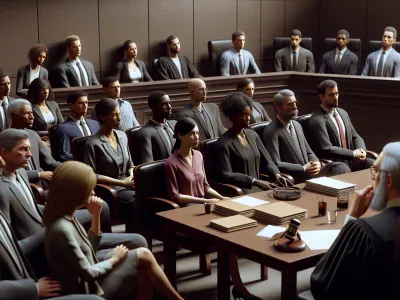
Picture a courtroom pulsing with tension—the jury hangs on every word while the air crackles with uncertainty. During it all the difference between 1st-degree and 2nd-degree manslaughter can tip the scales of justice in unexpected ways. You might think these legal terms are just technicalities but they can shape the fate of a life in the blink of an eye.
Picture the ripple effect: a single distinction changes not just sentences but futures. Understanding these differences doesn’t just satisfy curiosity—it arms you with knowledge often hidden behind courtroom doors. As you peel back the layers you’ll discover how intent, circumstance, and emotion weave together in ways more complex than any crime drama. Ready to see what really separates these two charges? The answer is more surprising than you might think.
Understanding Manslaughter: An Overview
You encounter manslaughter in nearly every criminal law textbook, but do you recognize its depth beyond the headlines? Manslaughter hinges on the presence—or absence—of intent, setting it apart from murder in United States law. It sits at the intersection of criminal negligence, sudden passion, and societal standards of recklessness. Picture a person driving home, tired after a long shift, and accidentally strikes a pedestrian after rolling through a stop sign. That’s manslaughter—not murder—because no one means for a life to be lost. New York Penal Law §125.15 and Model Penal Code §210.3 define manslaughter precisely, demonstrating how regional nuances shape its interpretation.
You’ll find manslaughter categorized further into degrees. First-degree manslaughter, for instance, typically involves intent to cause serious harm, but something derails before that malice evolves into murder. A heated argument during a family dinner might be push someone past their emotional breaking point—emotion clouds judgment, tragically. Second-degree manslaughter usually relates to gross recklessness or criminal negligence. Think of a childcare worker leaving a baby in a locked car on a sweltering summer day. It’s horrifying, and yet the courts examine if the act meets the threshold of criminal disregard for life.
Did you ever consider how the state of mind—culpable mental state—drives the distinction between degrees? Attorneys and judges will analyze every detail, questioning: Did the person act out of impulsive rage, or did they exhibit a shocking lack of care? Legal scholars like Paul Robinson (Penn Law) argue that a line blurs when emotion, context, and consequence overlap, making each manslaughter case unique in its sorrow and significance.
If you ever served jury duty, you might recall feeling the weight of responsibility, decoding actions, intent, and consequences like a puzzle missing one vital piece. In many states—California, Texas, Minnesota—statutes and precedents bend ever so slightly, so someone’s fate could turn on a single phrase: “recklessly” versus “intentionally.”
Next time you see a headline about a manslaughter charge, ask yourself: What tangled sequence of choices and chance led to this tragedy? Every case brings new questions. Understanding manslaughter isn’t just about statutes—it’s about seeing how law, language, and life meet in the courtroom, shaping real people’s futures.
Definition of 1st‑Degree Manslaughter
1st-degree manslaughter involves someone intentionally causing serious harm, but not specifically planning to kill. You might picture a heated argument in a crowded bar, voices rising, tempers flaring—suddenly, a punch gets thrown. In seconds, what began as words turns tragic, the victim’s life ending with no premeditated plan. Legal language characterizes this as an act carried out with intent to cause injury, yet lacking the deliberation found in murder charges.
Legal Elements
Statutes in states like New York or Oklahoma define 1st-degree manslaughter using core legal elements:
Intent: Prosecutors must prove you intended to inflict serious physical injury, not necessarily death (N.Y. Penal Law § 125.20).
Mitigating Circumstance: The act occurs under extreme emotional disturbance or provocation, which courts recognize as a factor that reduces culpability but doesn’t excuse the crime.
Absence of Premeditation: The crime lacks advance planning. If intent to kill existed, the charge escalates to murder.
States apply different statutory language. In Minnesota, for instance, causing death while committing misdemeanor assault or by acting in the heat of passion following provocation also fits the 1st-degree manslaughter definition.
Common Examples
You’ll see 1st-degree manslaughter charges in situations where human emotion explodes into irreversible action:
Bar Fights: Someone hits another during a dispute, intending harm, and the victim dies from the injuries.
Domestic Disputes: Heated altercations between partners escalate, leading to tragic outcomes without prior planning.
Medical Error: A doctor, under immense stress, makes a reckless decision knowing it could cause harm, but not expecting death—rare, but courts sometimes charge under manslaughter statutes if the act is deemed intentional but not murder.
Vehicular Incidents: A person intentionally rams another’s vehicle in anger, causing fatal injuries.
State-specific anecdotes often carry real consequences, as in People v. Walker (2022), where a man, enraged by an affair, struck his romantic rival. Even if his intention was only to injure, the fatal result brought a 1st-degree manslaughter conviction.
Does intent always translate to predictable outcomes? Juries grapple with mental state, context, and motive. Even where all facts seem plain, law leaves room for reasonable doubt, asking you to examine not just what occurred, but the emotional currents beneath.
Example Scenario
Intent Present
Emotional Disturbance
Advance Planning
Typical Charge
Bar Fight Death
Yes
Yes
No
1st-Degree Manslaughter
Domestic Dispute
Yes
Yes
No
1st-Degree Manslaughter
Premeditated Killing
Yes
Possibly
Yes
Murder
1st-degree manslaughter blurs lines—it reflects both the chaos of the moment and the measured response of the law.
Definition of 2nd‑Degree Manslaughter
2nd-degree manslaughter means causing someone’s death through reckless or criminally negligent conduct, without intent to kill. You’ll find this charge hinges on actions that disregard risk, not on a deliberate wish to harm.
Legal Elements
2nd-degree manslaughter relies on a key legal framework. Prosecutors got to prove that your actions created a substantial and unjustifiable risk of death. If someone fails to perceive that risk in a situation where a reasonable person would have—like distracted driving or unsafe workplace practices—the law considers it more blameworthy than a simple accident. The “mens rea,” or mental state, sets this degree apart: you acted recklessly or with criminal negligence, never willfully or premeditated. Various state statutes (see New York Penal Law § 125.15 for reference) frame the same core requirement. Surprisingly, even experts sometimes debate the threshold for “recklessness” in these cases—raising questions, should emotional distraction count as criminal negligence if someone texts while driving? The courts sometimes split over that very distinction.
Common Examples
You’ll see 2nd-degree manslaughter surface in courtrooms through vivid real-world scenarios. A daycare worker who forgets a sleeping infant in a hot car with fatal results, like the 2017 Georgia case reported by NBC News, can face this charge due to reckless disregard for the child’s safety. Drunk drivers who speed and crash, unintentionally killing a pedestrian, frequently face prosecution under this law; news outlets like The New York Times often documents these tragic incidents. Construction supervisors ignoring safety regulations—leading to a worker’s fatal fall—may get prosecuted for criminal negligence rather than an accident.
Think about this, could ordinary distractions—phone calls, loud music, fatigue—push your behavior from tragic accident into criminal recklessness in the eyes of the law? 2nd-degree manslaughter reminds you: not all tragedies have intent, but some risks are far too big to ignore.
Key Differences Between 1st‑Degree and 2nd‑Degree Manslaughter
Key legal differences between 1st-degree and 2nd-degree manslaughter shape court outcomes and public perception. Both charges revolve around the act of killing without premeditation, yet hinge on intent, recklessness, and the risks accepted by the defendant. You’ll see below how the distinction plays out in both language and lives.
Intent and State of Mind
Intent and mental state define the razor-thin margin between 1st-degree and 2nd-degree manslaughter. In 1st-degree manslaughter, your actions show intent to cause serious harm, not necessarily death. Picture a heated argument—frustration boils over, a punch lands, and someone dies unexpectedly. Here, prosecutors seek clear evidence that you meant to injure, driven by sudden passion or extreme emotional disturbance (New York Penal Law §125.20; Cornell Law School).
Contrast this with 2nd-degree manslaughter, where your choices display a reckless disregard for life, not intent. You ignore an obvious risk—say, texting while driving or forgetting a baby in a hot car—then tragedy follows. You might never thought someone could die, yet you consciously disregard those dangers. The law weighs recklessness (Model Penal Code §210.3), not mere accident, and requires jurors to explore what a reasonable person would have known.
Severity of Punishment
Sentencing for 1st-degree and 2nd-degree manslaughter exposes disparities in societal judgement. Most states treat 1st-degree manslaughter as a Class B or C felony, punishable by 5–25 years imprisonment (New York: max 25 years; Minnesota: 15 years; Oklahoma: up to life). These harsher penalties reflect public contempt for acts rooted in intent—even if fleeting.
2nd-degree manslaughter typically brings lighter—but still serious—sentences. Class D or E felonies range from 1–15 years in prison depending on state law (New York: max 15 years; Texas: 2–20 years). Judges and juries examine recklessness, not premeditated malice, granting some legal mercy. Still, for victims’ families, the emotional burden hardly seems lighter because the risk seemed preventable in hindsight.
Manslaughter Degree
Typical Felony Class
Prison Sentence Range (Years)
Intent Required
Example Scenario
1st-degree manslaughter
B or C
5–25
Intent to injure
Fatal bar fight
2nd-degree manslaughter
D or E
1–15
Reckless conduct
Drunk driving fatality
Real-World Case Studies
Case studies reveal the murky boundaries and emotional stakes behind manslaughter’s legalese. Take the 2017 Oklahoma case of Betty Shelby, a police officer charged with 1st-degree manslaughter after shooting Terence Crutcher. Jurors decided that Shelby intended to harm, not kill, as she said she acted in fear but without premeditation—raising questions about implicit bias, high-pressure split decisions, and the scope of “reasonable” fear.
Compare that with the 2007 Minnesota case, State v. Torgerson, where a tired truck driver crossed a median, causing a fatal crash. Prosecutors charged 2nd-degree manslaughter, arguing that choosing to drive while dangerously fatigued was grossly negligent. But did he realize the full risk? Or act with casual disregard? Jurors struggled with the knowledge that everyday behavior—like working back-to-back shifts—can become criminal in the flash of a moment.
As you read case law, you might wonder: how often do we flirt with risk, trusting our luck or instincts, never thinking tragedy’s probability curve could intersect our path?
You’re not just reading about statutes—you’re confronting the unpredictable, messy reality of human decision-making when pressure, emotion, and chance collide.
Factors Influencing Charges
Criminal charges for manslaughter often hinge on details hidden in scenes and stories. You might watch courtroom actors weigh specifics the way an artist examines every brushstroke. The questions echo—was the act reckless, or did a motive hide in the shadows? You’ll see how legal, moral, and emotional evidence interlace.
Role of Evidence
You find that evidence in manslaughter cases shapes every turning point. Prosecutors and defense attorneys dissect text messages, surveillance footage, and forensic reports—each clue is a thread forming the tapestry of intent or negligence. Judges resemble conductors, orchestrating testimonies from eyewitnesses who stumbled upon chaos in a parking lot or a living room split by rage. Sometimes, DNA on a shattered bottle or a voicemail left in panic speaks more than hours of debate.
Police bodycam footage, as in the 2017 Betty Shelby case (Tulsa World), captured seconds leading to a verdict—was fear evident or calculation clear? Psychological expert reports reveal culprits’ mental states, piecing together trauma, or moments of lapse. Motive isn’t always a spotlight; sometimes it’s a flashlight flickering in the storm, making jurors question what really happened before tragedy struck.
Impact of Circumstances
Circumstances swirl around manslaughter charges like weather around a storm center. Heightened emotion, sleep deprivation, background noise—any can amplify or blur events. For instance, you see the way a parent leaving a child in a car on a searing July afternoon ignites debate: tragic error, or gross negligence? In State v. Torgerson (Minnesota, 2007), jurors untangled impulsivity from intent in a split-second bar fight involving drinks, insults, and a fatal punch.
Community standards shape perception too. Urban neighborhoods and tight-knit towns sometimes interpret “reasonable” differently, just like local climates dictate daily routines. Self-defense claims find fertile or rocky ground depending on culture and recent headlines. Prosecutors weigh suspects’ histories—does this person’s past peek out from behind their actions, or does circumstance stand alone? Social media reactions can cast long shadows over jury pools, adding complexity that the law must navigate carefully.
Law’s language tries to capture the wildness of real moments, but you know courtrooms rarely hold silence. The stories ripple. Layers of evidence and circumstance collide, and every verdict becomes a lens you see your own actions reflected in.
Conclusion
When you’re faced with the complexities of manslaughter charges it’s essential to grasp how subtle differences in intent and recklessness can change everything. Your understanding of these legal distinctions could make all the difference if you or someone you know ever encounters such a situation.
Staying informed not only helps you navigate the legal system but also deepens your awareness of how the law interprets human behavior. Remember the stakes are high and each case is unique—so approach these issues with both knowledge and empathy.
To provide the best experiences, we use technologies like cookies to store and/or access device information. Consenting to these technologies will allow us to process data such as browsing behaviour or unique IDs on this site. Not consenting or withdrawing consent, may adversely affect certain features and functions.
Functional
Always active
The technical storage or access is strictly necessary for the legitimate purpose of enabling the use of a specific service explicitly requested by the subscriber or user, or for the sole purpose of carrying out the transmission of a communication over an electronic communications network.
Preferences
The technical storage or access is necessary for the legitimate purpose of storing preferences that are not requested by the subscriber or user.
Statistics
The technical storage or access that is used exclusively for statistical purposes.The technical storage or access that is used exclusively for anonymous statistical purposes. Without a subpoena, voluntary compliance on the part of your Internet Service Provider, or additional records from a third party, information stored or retrieved for this purpose alone cannot usually be used to identify you.
Marketing
The technical storage or access is required to create user profiles to send advertising, or to track the user on a website or across several websites for similar marketing purposes.