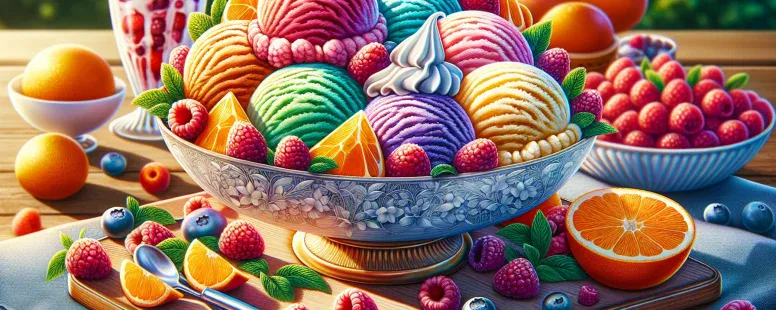
Picture a scorching summer day when the sun blazes overhead and you crave something cool and sweet. You stand before the freezer aisle, eyes darting between tubs of creamy ice cream and vibrant sherbet. Both promise a refreshing escape, but what sets them apart beyond their tempting colors and flavors?
As you consider your choice, you might wonder if one offers a lighter treat or a surprising health twist. The answer isn’t as simple as you’d think. With each spoonful, you’ll discover distinct textures, tastes, and even unexpected benefits that could sway your loyalty. Get ready to uncover the delicious secrets that make ice cream and sherbet unique in their own right.
What Is Ice Cream?
Ice cream holds a starring role at birthday parties, summer carnivals, and family gatherings across the US. You’ll find it everywhere—at the grocery store’s frosty aisles, roadside stands, or inside a classic soda fountain glass. When you pick up a scoop swirled atop a waffle cone, the cool, creamy texture brings an immediate smile and may stir up childhood memories too.
Key Ingredients
Key ingredients in ice cream set it apart from other frozen desserts. Standard recipes combine dairy milk, heavy cream, sugar, and sometimes egg yolks. Real vanilla, cocoa, or fruit purees often flavor the base. Federal regulations in the US call for no less than 10% milkfat and 20% milk solids to label it as “ice cream” (FDA, 21 CFR 135.110). For example, premium brands like Häagen-Dazs and Ben & Jerry’s usually pack 14–18% milkfat, lending their ice creams a richer mouthfeel.
Emulsifiers hold fat and water together in a stable suspension, while stabilizers such as guar gum prevent ice crystals from forming. Curious how “French vanilla” ice cream gets its golden hue and custardy texture? Egg yolks do the work, making it a frozen custard by definition.
Texture And Flavor Profile
Texture and flavor of ice cream create its signature experience. Churned rapidly during freezing, the mixture traps air, yielding a light and airy body. This process—called overrun by food scientists—can double the mixture’s volume. Cheaper brands push overrun to 100% or more, resulting in lighter but less flavorful scoops. In contrast, superpremium ice creams hit as low as 20–40% overrun for a decadent, dense texture.
Flavor profile in ice cream runs the gamut from classic chocolate to experimental collaborations—think bourbon pecan or matcha green tea. Double chocolate chip pieces, caramel swirls, or real strawberry chunks add contrasting bursts of taste and texture. Did you ever try ice cream with real pieces of pie mixed in? Regional creators frequently draw on local specialties (such as Vermont maple or New York cheesecake) to inspire unique flavors you won’t find everywhere.
Do you notice how the ice cream’s cold richness coats your tongue, melting slowly and intensifying sweetness? That smooth mouthfeel comes directly from balanced levels of fat and sugar. If you compare a spoonful of ice cream to lighter sherbet, you’ll likely sense a palpable difference: creamy luxury versus bright refreshment.
What Is Sherbet?
Sherbet sits between ice cream and sorbet—offering fruit-forward brightness mixed with mild creaminess. Restaurants often serve it as a colorful palette cleanser between rich courses, but grocery stores stock scoops packed with nostalgic flavors like orange or rainbow swirl.
Key Ingredients
Sherbet uses a dairy base but leaves out the heavy cream found in ice cream. You get milk or buttermilk, sugar, fruit purée (examples: raspberry, lime, pineapple), stabilizers, and sometimes egg whites. The FDA (21 CFR § 135.140) sets sherbet’s milkfat between 1% and 2%. Ice cream, in contrast, sits above 10%. Fruit acids—like citric or malic acid—spark tart flavors. Some brands add pectin or gelatin, which gives sherbet an ultra-smooth texture. If you find lactose intolerant, sherbet generally contains less lactose than ice cream, but it’s not dairy-free.
Texture And Flavor Profile
Sherbet has a lighter, icier texture than ice cream, but it’s creamier than sorbet. Churning introduces air (overrun) but at a lower rate than ice cream’s dense whip. Think of the first tangy, cold spoonful—your tongue meets crisp fruitiness mixed with subtle dairy softness. Classic flavors—orange, lemon, and raspberry—dominate most supermarket freezer aisles. Sherbet melts faster than ice cream, giving a bright burst of flavor in each bite but also leaving less time to savor the coolness. Your taste experience leans toward refreshing rather than rich, making sherbet ideal for those hot, sticky afternoons when you can’t handle heavy desserts. Sherbet usually, unlike ice cream, carries bolder citrus or berry aromas, inviting you to guess what fruit’s hiding in your next spoonful.
Ever remember birthday parties with orange push-pops sticking to your fingers? That sticky sweetness and tart aftertaste—that’s sherbet’s signature. For a twist, some chefs blend sherbet with club soda or prosecco for fizzy floats. There’s endless ways to enjoy sherbet’s lively and light character.
The Main Differences Between Ice Cream And Sherbet
When comparing ice cream and sherbet, you see differences in every scoop. Each treat delivers a unique experience, shaped by its dairy content, sweetness level and texture.
Dairy Content Comparison
Dairy distinguishes ice cream from sherbet in the base itself. Ice cream contains at least 10% milkfat, coming from heavy cream, whole milk, and sometimes egg yolks. Sherbet uses milk or cream for a lighter touch, but its milkfat content falls between 1% and 2% (FDA, 21 CFR §135.140). For example, strawberry ice cream might include significant cream, while raspberry sherbet relies mostly on fruit purée with only a hint of milk. If you’re sensitive to dairy or prefer a lighter option, sherbet offers a more approachable experience. Vegan alternatives of each variety exist, yet traditional recipes preserve this dairy divide.
Sweetness And Tartness
Sweetness defines these frozen desserts, yet sherbet goes further with pronounced tartness from real fruit purees. Ice cream typically leans on sugar combined with vanilla, chocolate, or caramel. Sherbet, like orange or lemon, pairs sweetness with a citrusy or berry-driven punch. Taste-testers often describe sherbet as bright or zingy, while ice cream’s sweetness envelops the palate in a slower, creamy bloom. For flavor seekers, the question becomes: Do you crave sherbet’s quick, lively burst or the lasting, rounded sweetness of ice cream? Restaurant menus sometimes use sherbet as a palate cleanser between courses due to that tart finish.
Texture And Consistency
Texture sets the sensory foundation for every frozen spoonful. Ice cream employs air-incorporation—known as “overrun”—to create a thick and smooth body, often fluffy or dense depending on style. Products like premium vanilla have a low overrun, resulting in luxurious density. Sherbet’s consistency lands lighter and more crystalline, echoing its sorbet cousin, yet creamy enough to set itself apart. As an example, when you scoop orange sherbet, it yields easily and melts rapidly, delivering flavor quickly but with a cooler, icier mouthfeel than slow-melting, custard-like ice cream. So parties or celebrations with kids often favor sherbet for easy serving outdoors, while adults savor lingering spoonfuls of classic chocolate ice cream.
Dessert
Typical Milkfat (%)
Texture
Flavor Profile
Common Examples
Ice Cream
10 or higher
Creamy, smooth, airy
Rich, sweet
Vanilla, chocolate, cookie dough
Sherbet
1–2
Light, icy, creamy
Tart, fruity, sweet
Orange, raspberry, lime
Health Considerations
Ice cream’s creamy decadence can feel like luxury, but how does your body handle it on a warm afternoon? Dairy and cream drive its signature texture, but high milkfat—clocking in at about 10% or higher—pushes up both calories and saturated fats. A single scoop, let’s say vanilla, gives you roughly 137 calories, 7g fat, and 14g sugar [USDA FoodData Central, 2024]. Pair this with sprinkles or a waffle cone, suddenly your summer treat rivals a small meal. If you’ve watched your cholesterol, or trying to manage heart health, those saturated lipids matter.
Contrast sherbet, where the story shifts. Lower fat—1% to 2% milkfat, according to the FDA—means fewer calories per serving; orange sherbet offers about 106 calories, 2g fat, and 21g sugar for the same serving size. Sherbet’s bright pop comes from fruit purée, lending vitamins and antioxidants. But, sugar content sometimes climbs even higher than in classic ice cream. Kids at birthday parties, noses painted orange by raspberry sherbet, rarely pause to ponder glycemic indexes, but adults looking for lower fat desserts often go sherbet’s way. Are you comparing cost, too? Sometimes lighter treats have a smaller price tag at grocery chains.
Table: Nutritional Comparison (Per 1/2 Cup Serving)
Dessert Type
Calories
Total Fat (g)
Saturated Fat (g)
Sugar (g)
Notable Nutrients
Ice Cream
137
7
4.5
14
Calcium, Vitamin A
Sherbet
106
2
1.2
21
Vitamin C, Antioxidants
Dietitians from Mayo Clinic and Cleveland Clinic explain that both treats offer pleasure but shouldn’t fill a daily menu. Grab ice cream if you’re after comfort or need a calcium boost, but lean toward sherbet when fruit flavors fit your plans or you’re limiting heavy fats. If you’re lactose intolerant, neither dessert spares you—both contain milk derivatives, though sherbet’s smaller dose might agree with some systems.
Balanced against each other, these desserts speak to different priorities—flavor versus function, tradition versus change, nostalgia versus innovation. Would you swap the thick satisfaction of old-fashioned ice cream for sherbet’s citrus fireworks if your diet was at stake? In the end, your cravings, goals, and maybe doctor’s advice, shape your choice.
When summer sun blazes down and freezer doors swing open, these chilly rivals remind us: every scoop holds a story and a balancing act between pleasure and personal wellness.
Popular Uses And Serving Suggestions
Ice cream and sherbet, they both hold center stage at birthdays, family reunions, and those lazy Sunday afternoons when your cravings lead you straight to the freezer. Picture scooping a heaping portion of rocky road into a waffle cone, creamy ribbons melting, pooling atop your fingertips—Ben & Jerry’s classic flavors, for instance, turn even the average Tuesday into a celebration. Have you ever drizzled espresso over vanilla ice cream for an Italian affogato, letting bitterness meet sweet in a chilly, aromatic duet? You’re not alone: the International Dairy Foods Association notes that 87% of U.S. households buy ice cream according to 2022 data.
Sherbet, in contrast, brings a more playful, sorbet-like swirl to your table. Kids clamor for neon-orange scoops at birthday parties, adults reach for raspberry sherbet floats when the thermometer climbs past 88°F, and brunch hosts pour prosecco over lemon-lime sherbet to craft a show-stopping mimosa twist. Sherbet, by design, melts faster—making those sunny picnics and park gatherings a delicious race against time. There some crafters spin sherbet into cakes and roll it into tangy truffles, setting off a color and flavor explosion in the dessert spread.
For serving suggestions, tradition never grows old: cones, cups, and sundaes. Yet adventurous home cooks blend ice cream with espresso for thick frappes, pile it on warm brownies, or crown dense banana bread with a slab of caramel swirl. Sherbet, meanwhile, slips seamlessly into party punch bowls, lending fizz and tang to citrusy drinks; try bashing together raspberry sherbet with lemon-lime soda, and witness a retro punch that rivals any high-end cocktail. Do you question whether a scoop or a slice fits your next summer barbecue? Try layering both in a parfait glass, alternating creamy chocolate ice cream and tart orange sherbet—each bite, a study in contrast and compatibility.
With so many texture possibilities, you might wonder if there’s a single “right” way to eat these frozen treats. But, the only rule—if there is one—is to chase your personal flavor story. Mix, match, invert, and experiment: use ice cream to sandwich chewy cookies, or roll sherbet into a soft-serve cone and dip in rainbow sprinkles.
You get to choose how to serve and enjoy these treats, letting your taste buds wander as far as your imagination allows.
Conclusion
Whether you reach for a creamy scoop of ice cream or a tangy serving of sherbet you’re choosing more than just a way to cool off. Each treat offers its own unique experience and can fit perfectly into your cravings or dietary needs. Next time you’re standing at the freezer aisle or planning a summer celebration trust your taste buds and let the moment guide your pick. There’s no wrong answer enjoying a little frozen happiness.
To provide the best experiences, we use technologies like cookies to store and/or access device information. Consenting to these technologies will allow us to process data such as browsing behaviour or unique IDs on this site. Not consenting or withdrawing consent, may adversely affect certain features and functions.
Functional
Always active
The technical storage or access is strictly necessary for the legitimate purpose of enabling the use of a specific service explicitly requested by the subscriber or user, or for the sole purpose of carrying out the transmission of a communication over an electronic communications network.
Preferences
The technical storage or access is necessary for the legitimate purpose of storing preferences that are not requested by the subscriber or user.
Statistics
The technical storage or access that is used exclusively for statistical purposes.The technical storage or access that is used exclusively for anonymous statistical purposes. Without a subpoena, voluntary compliance on the part of your Internet Service Provider, or additional records from a third party, information stored or retrieved for this purpose alone cannot usually be used to identify you.
Marketing
The technical storage or access is required to create user profiles to send advertising, or to track the user on a website or across several websites for similar marketing purposes.