Imagine standing at the heart of a colossal cosmic dance where atoms either split apart or merge together, releasing unimaginable energy. This captivating spectacle lies at the core of nuclear fission and fusion, two processes that power our sun and drive nuclear reactors. But what truly sets them apart?
As you investigate into the world of nuclear reactions, you’ll uncover the delicate balance between destruction and creation. Fission, a process where atomic nuclei break apart, fuels nuclear power plants, offering a glimpse of controlled chaos. Fusion, on the other hand, embodies the sun’s fiery embrace, where lighter nuclei combine to form heavier ones, promising a future of clean, limitless energy.
Understanding these processes not only unravels the mysteries of the universe but also opens doors to groundbreaking advancements in energy. So, are you ready to explore the fascinating differences between fission and fusion and their potential to reshape our world?
Understanding Fission and Fusion
Investigate into the world of nuclear reactions by exploring the fundamental differences between fission and fusion. These processes power stars and our technology, capturing the imagination of scientists and visionaries alike.
Basic Definitions
In nuclear fission, you find the splitting of a heavy atomic nucleus into two smaller nuclei, along with the release of energy. This process powers nuclear reactors by breaking apart elements like uranium-235. Conversely, nuclear fusion involves the merging of two light atomic nuclei to form a heavier nucleus and produce energy. Stars, including our sun, use fusion to generate immense amounts of energy as hydrogen nuclei combine to form helium. Both processes convert matter into energy, as described by Einstein’s famous equation (E=mc^2).
Historical Background
Nuclear fission was first discovered by Otto Hahn and Fritz Strassmann in 1938, paving the way for nuclear power and atomic weapons. WWII began an era where fission’s potential was both exploited and feared. Fusion research followed, with scientists like Lyman Spitzer working on controlled thermonuclear reactions after understanding our sun’s energy source. While fission has been extensively utilized in nuclear power plants and warfare, fusion remains primarily a scientific try with projects like ITER aiming to harness its potential for clean energy. These achievements reflect humankind’s quest to harness nature’s most potent forces for progress and peace.
Key Differences Between Fission and Fusion
Understanding nuclear reactions involves comparing fission and fusion, pivotal processes in energy production. Each process operates differently and has distinct implications for future energy solutions.
Reaction Process
Fission involves splitting heavy atomic nuclei. When a neutron collides with a uranium-235 nucleus, for example, it fragments into smaller nuclei, releasing energy. Fusion, on the other hand, merges light nuclei. Hydrogen nuclei combine under extreme pressure and heat to form helium, as in the sun’s core.
Energy Output
Energy release differs significantly between fission and fusion. Fission releases approximately 200 MeV per reaction, while fusion outputs around 17.6 MeV per reaction but requires far more energy to initiate. Once initiated though, fusion has the potential to produce more energy than fission on a per mass basis.
Fuel Requirements
Fission uses scarce and radioactive isotopes like uranium-235 or plutonium-239. Fusion, but, relies on isotopes like deuterium and tritium, which are more abundant. The accessibility of fusion fuel posits it as a sustainable energy source, given effective fusion technology.
Waste and Byproducts
Fission generates radioactive waste needing long-term storage and management. Fusion produces little long-lived radioactive waste, primarily creating helium and some short-lived radioactive litharials. This makes fusion environmentally preferable from a waste management perspective.
Applications of Fission and Fusion
Both nuclear fission and fusion hold significant applications, impacting various sectors with their unique properties and energy outputs.
Nuclear Power
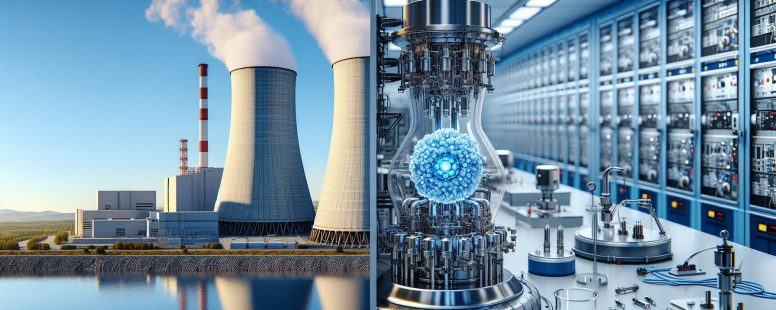
In nuclear power, fission takes center stage by driving most of the world’s nuclear reactors. These power plants split heavy elements like uranium to produce energy on a large scale. According to the World Nuclear Association, fission contributes approximately 10% of global electricity generation. Fusion, though not yet commercially viable, promises a cleaner alternative. Projects like ITER aim to replicate the sun’s energy production process on earth by combining hydrogen isotopes. Such advancements could dramatically change the energy world.
Medical Applications
Fission has valuable applications in the medical field due to its ability to produce radioisotopes used in diagnosis and treatment. Nuclear medicine uses isotopes created from fission for imaging and cancer treatments. For instance, Technetium-99m, a product of fission, plays a critical role in medical diagnostics. Fusion’s potential medical applications are still under research but could lead to breakthroughs. Researchers explore ways to harness fusion’s power safely for medical isotopes production, offering a fresh perspective on tackling cancer and other diseases.
Advantages and Disadvantages
Fission Pros and Cons
Fission powers numerous nuclear reactors globally, providing a consistent energy supply. It’s efficient; uranium-235 releases substantial energy, approximately 200 MeV per reaction. This is significantly effective for electricity generation, translating to lower operational costs compared to fossil fuels. Besides, fission’s application in nuclear medicine, such as generating Technetium-99m, underscores its vital role beyond energy production.
But, fission has notable drawbacks. It creates long-lived radioactive waste requiring careful disposal and management. Accidents like Chernobyl and Fukushima highlight the potential catastrophic risks associated with its misuse. The reliance on scarce and radioactive isotopes, such as uranium-235 and plutonium-239, also raises sustainability concerns for fission’s future energy viability.
Fusion Pros and Cons
Fusion offers the potential of sustainable and cleaner energy. It uses abundant fuel, such as deuterium and tritium, positioning it as an eco-friendly alternative. Fusion reactions mainly produce helium, a non-toxic byproduct, along with minimal short-lived radioactive substances. These advantages indicate fusion’s lower environmental impact when compared to fission.
The significant hurdle for fusion is the immense energy requirement for initiation and control. Even though its promise, technological and economic feasibility has kept fusion largely in research domains, like the ongoing ITER project. Fusion’s commercial inaccessibility limits its current applications, and achieving these breakthroughs remains a critical global scientific try.
In examining fission and fusion, consider each process’s impact on sustainability, safety, and the energy sector’s future.
Current Research and Future Prospects
The exploration of nuclear energy harnessed from fission and fusion remains at the forefront of scientific inquiry. These processes represent a significant focus, with numerous research projects addressing their potential to revolutionize energy production.
Technological Challenges
Various challenges impede the progress of controlled nuclear fusion. One primary hurdle involves achieving the extreme temperatures and pressures needed to force nuclei to overcome their electrostatic repulsion, a process currently requiring more energy than fusion reactions produce. Tokamaks, like ITER in France, exemplify these concerted efforts, yet they still struggle with sustaining stable plasma conditions for extended periods.
Nuclear fission also faces its set of hurdles, albeit different ones. The primary issues revolve around handling radioactive waste and ensuring prolonged reactor safety. By contrast, the instability and risks associated with nuclear reactors highlight the importance of advancements in fission technology for safer energy production. The development of small modular reactors (SMRs) is advancing these technologies by potentially reducing the risk and cost of nuclear power plants.
Potential Developments
Research into alternative fuels for fusion, such as boron or helium-3, could yield breakthroughs by circumventing the challenges posed by tritium and deuterium. This focus has the potential to redefine fusion as a less problematic energy source. Meanwhile, increased investments in fusion technology point towards an optimistic future, with the prospect of achieving net energy gain within the next few decades.
Fission’s future lies in evolving technologies and methodologies. Innovations such as Generation IV reactors and molten salt reactors propose enhanced safety measures and waste management solutions. These technologies could significantly improve efficiency and minimize the environmental impact of nuclear fission, potentially making it a more attractive option for sustainable energy generation.
In both fields, international collaborations continue to push the boundaries of what’s achievable, often heralding future paradigms in energy. While fusion’s promises seem further afield due to technological challenges, the persistent research keeps it within the area of possibility.
Conclusion
Understanding the differences between fission and fusion is crucial as you explore the future of energy. While fission has been a reliable source of power, its challenges highlight the need for innovation. Fusion, with its promise of cleaner energy, continues to be a focal point of research, offering hope for a sustainable future. As you investigate deeper into these processes, consider their potential impacts on technology, environment, and global energy needs. Embracing advancements in both areas could pave the way for groundbreaking developments, ensuring a balanced and eco-friendly energy world.
To provide the best experiences, we use technologies like cookies to store and/or access device information. Consenting to these technologies will allow us to process data such as browsing behaviour or unique IDs on this site. Not consenting or withdrawing consent, may adversely affect certain features and functions.
Functional
Always active
The technical storage or access is strictly necessary for the legitimate purpose of enabling the use of a specific service explicitly requested by the subscriber or user, or for the sole purpose of carrying out the transmission of a communication over an electronic communications network.
Preferences
The technical storage or access is necessary for the legitimate purpose of storing preferences that are not requested by the subscriber or user.
Statistics
The technical storage or access that is used exclusively for statistical purposes.The technical storage or access that is used exclusively for anonymous statistical purposes. Without a subpoena, voluntary compliance on the part of your Internet Service Provider, or additional records from a third party, information stored or retrieved for this purpose alone cannot usually be used to identify you.
Marketing
The technical storage or access is required to create user profiles to send advertising, or to track the user on a website or across several websites for similar marketing purposes.