choosing flooring for your home, the warmth and allure of hardwood have likely caught your attention. But, deciding between engineered hardwood and solid hardwood can pose a challenge due to their distinct features and advantages.
Understanding Hardwood Flooring Types
What Is Engineered Hardwood?
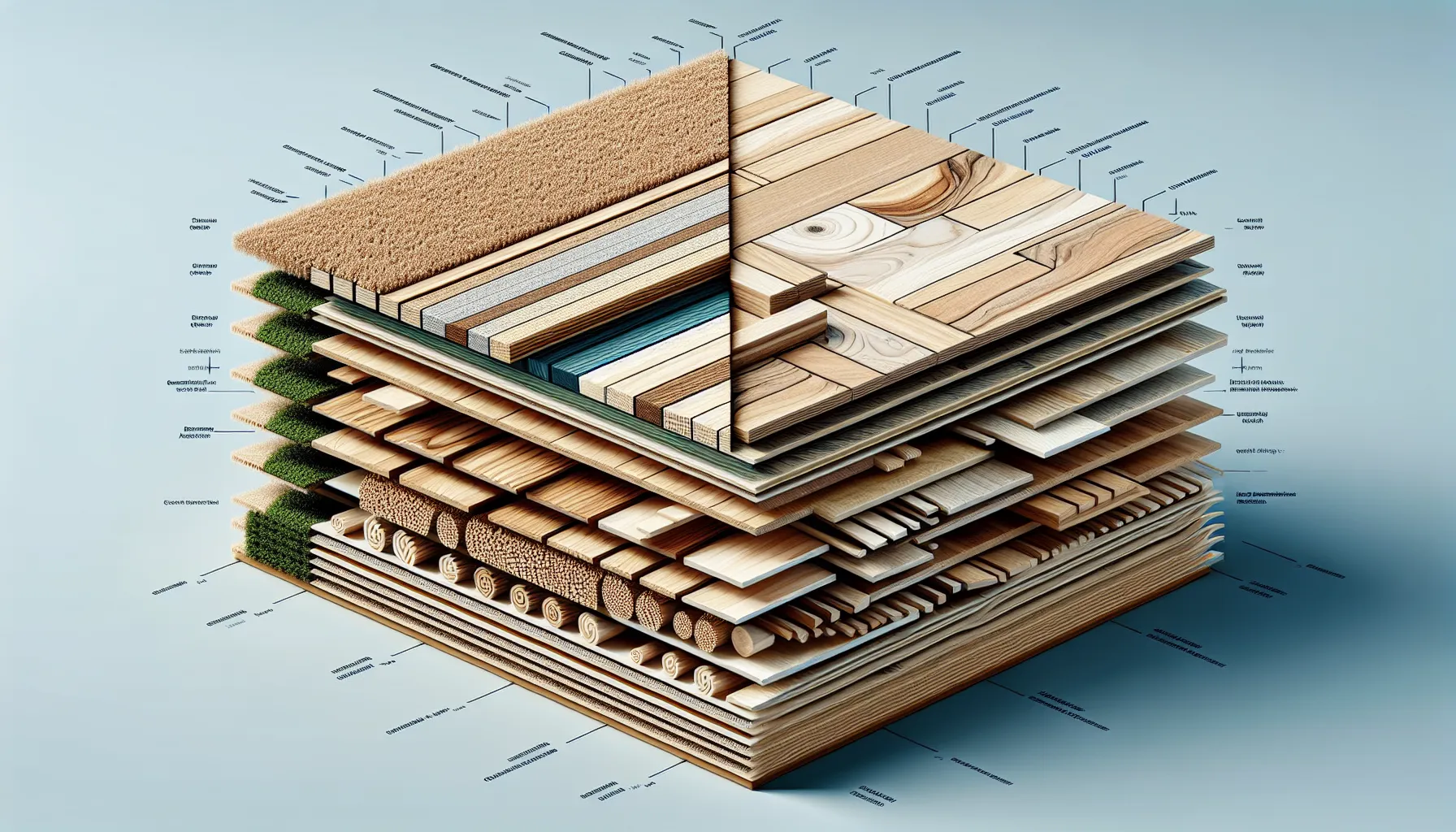
Engineered hardwood consists of multiple layers: a central core made from high-quality plywood or fiberboard topped with a layer of real hardwood. This layered construction grants engineered hardwood its durability and adaptability.
Composition and Structure
The top layer of engineered hardwood is authentic wood, offering a natural appearance, while the supportive layers provide stability against moisture and temperature changes.
Common Applications and Benefits
Engineered hardwood’s resistance to humidity makes it an excellent choice for below-grade spaces, such as basements, or high-moisture areas, like kitchens.
What Is Solid Hardwood?
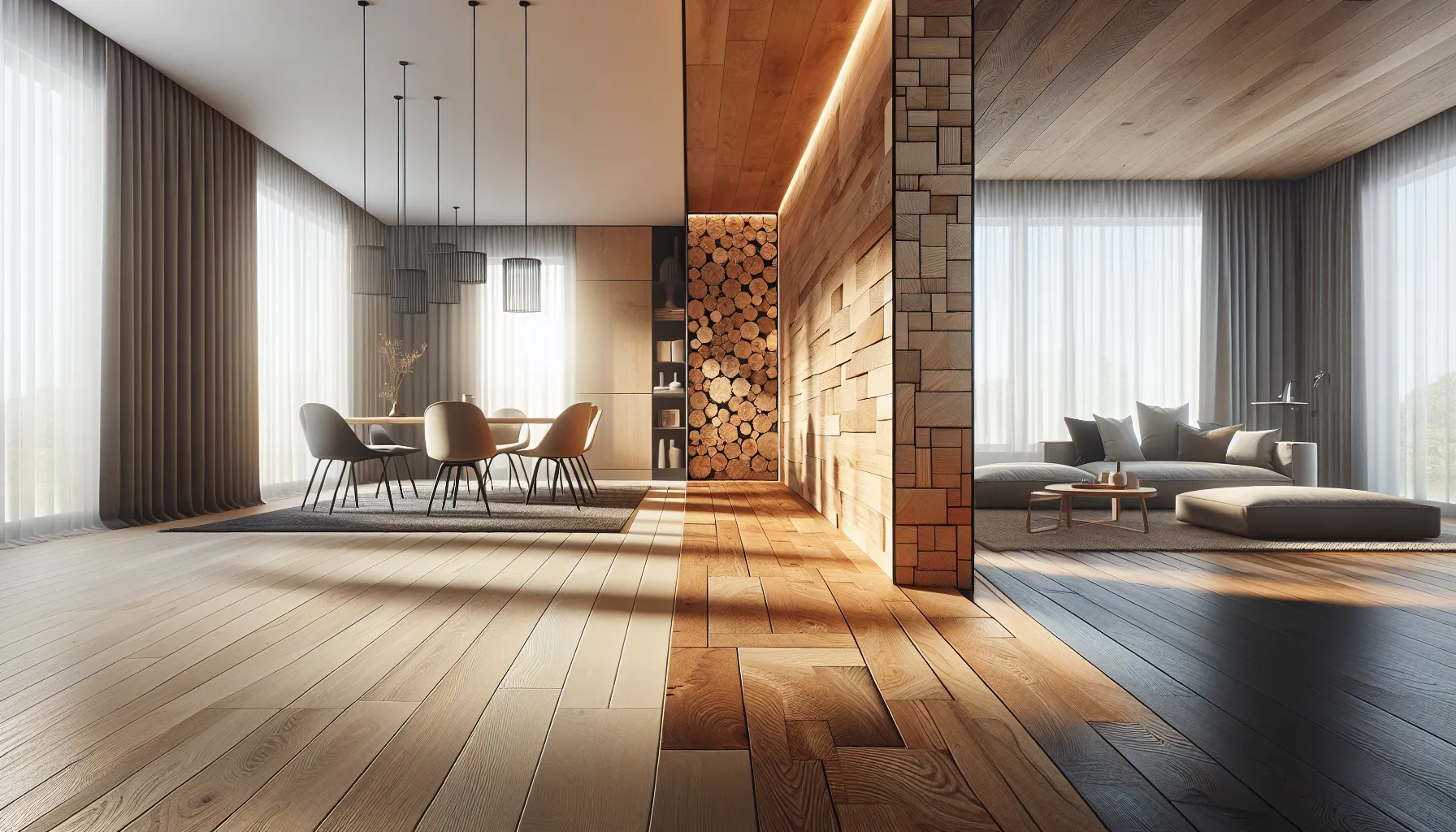
Solid hardwood is composed of a single, thick piece of hardwood all the way through. This traditional flooring type radiates authenticity and elegance.
Material Composition and Durability
Due to its all-wood construction, solid hardwood can be sanded and refinished multiple times, extending its lifespan considerably.
Use Cases and Benefits
Ideal for rooms above ground level, solid hardwood is perfect for spaces where charm and tradition take precedence.
Key Differences Between Engineered and Solid Hardwood
Durability and Lifespan
Solid hardwood generally offers a longer lifespan, as it can be refinished multiple times. Engineered hardwood’s lifespan depends on the thickness of its top layer, which determines the refinishing capacity.
Installation and Maintenance
Engineered hardwood features versatility in installation, including potential for floating-floor setups, whereas solid hardwood often requires nail-down installation for stability.
Appearance and Aesthetic Options
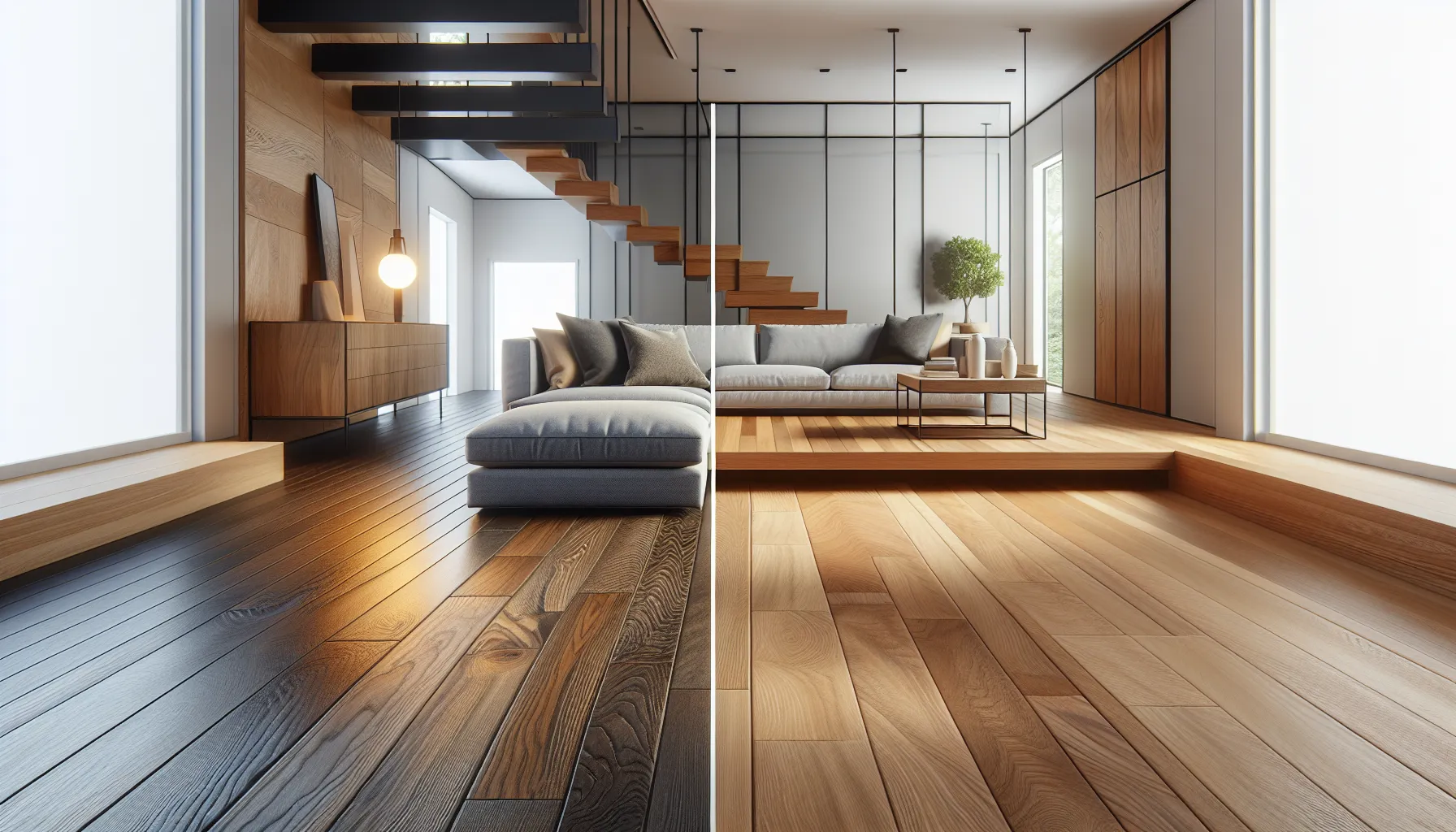
Both options feature a wide array of wood species and finishes. But, engineered hardwood’s uniformity in appearance across planks often provides a more contemporary look.
Cost Considerations
Engineered hardwood typically tends to be more budget-friendly than solid hardwood due to its layered construction, which uses less of the expensive top layer material.
Selecting the Right Hardwood for Your Needs
Factors to Consider When Choosing
When selecting between engineered and solid hardwood, consider aspects like the room’s moisture levels, your preferences for potential refinishing, and overall budget.
Homeowner Preferences and Styles
Solid hardwood often appeals to those valuing tradition and longevity, while engineered hardwood tends to attract homeowners seeking modern simplicity and functional diversity.
To provide the best experiences, we use technologies like cookies to store and/or access device information. Consenting to these technologies will allow us to process data such as browsing behaviour or unique IDs on this site. Not consenting or withdrawing consent, may adversely affect certain features and functions.
Functional
Always active
The technical storage or access is strictly necessary for the legitimate purpose of enabling the use of a specific service explicitly requested by the subscriber or user, or for the sole purpose of carrying out the transmission of a communication over an electronic communications network.
Preferences
The technical storage or access is necessary for the legitimate purpose of storing preferences that are not requested by the subscriber or user.
Statistics
The technical storage or access that is used exclusively for statistical purposes.The technical storage or access that is used exclusively for anonymous statistical purposes. Without a subpoena, voluntary compliance on the part of your Internet Service Provider, or additional records from a third party, information stored or retrieved for this purpose alone cannot usually be used to identify you.
Marketing
The technical storage or access is required to create user profiles to send advertising, or to track the user on a website or across several websites for similar marketing purposes.