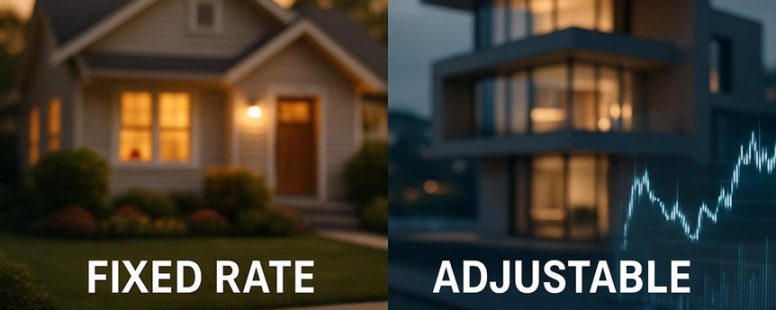
Imagine stepping into your new home, feeling the warmth of possibility. Most homebuyers choose a fixed rate mortgage, drawn by the comfort of steady payments.
But beneath that stability lies an often overlooked gem—adjustable rate mortgages with their tantalizingly low initial costs. Like a rollercoaster ride, the early thrill can give way to unpredictable twists as rates shift.
Surprisingly, those initial savings can sometimes open doors to unexpected financial flexibility. Understanding these tradeoffs might just be the key to turning your house into a true haven rather than a source of stress.
Fixed Rate Mortgages: How They Work
A fixed rate mortgage is a loan that keeps the same interest rate for the entire time you pay it back. This means your monthly payments stay the same each month, making it easier to plan your budget. For example, if your payment is 1,500 dollars today, it will stay that way for 15 or 30 years, depending on your loan. This can be helpful if you want to avoid surprises from rising interest rates.
Some people love fixed rate mortgages because they give you peace of mind. You know exactly how much you owe each month, so it’s easier to save and plan. But, fixed rate loans might have higher starting interest rates compared to variable loans. If interest rates go down, your payment stays the same, so you might miss out on lower payments.
People who stay in their home for a long time often prefer fixed rate mortgages because they want stability. However, if you think you might move soon or want to take advantage of falling rates, a variable rate mortgage could be better. Fixed rates are simple, but they do not change even if the market interest rates drop.
In simple words, a fixed rate mortgage gives you predictable payments, but it might cost more upfront. Be sure to think about how long you want to stay in your home and how interest rates might change in the future.
Adjustable Rate Mortgages: What Changes Over Time
An adjustable rate mortgage (ARM) is a loan where the interest rate can change over time. Unlike a fixed-rate mortgage, which keeps the same rate forever, an ARM’s rate depends on an index plus a margin. The rate adjusts at specific times, called adjustment periods. For example, your rate might change once a year or every five years.
These changes affect your monthly payments. When rates go up, your payment will also increase. When rates go down, your payment decreases. This means your future payments are not always predictable, which can be risky if rates rise sharply.
Some ARMs start with a low initial rate that stays fixed for a few years before adjusting. This can save you money early on but also means you need to be prepared for possible increases later. It’s like renting a house that becomes more expensive over time.
People should understand how often the rate changes and what factors influence the adjustments. For example, if the index like the LIBOR or SOFR rises, your rate will likely go up. If the margin stays the same, your payment change depends on the index’s movement.
There are two main points to consider. First, adjustable rate mortgages can save money at first but might become costly if interest rates climb. Second, some lenders offer caps that limit how much your rate can increase at each adjustment or over the life of the loan. These caps can protect you from huge jumps but don’t eliminate the risk entirely.
Think about it like riding a roller coaster. The ride starts smooth, but you might face sharp climbs. You need to know what the peak could be and if you’re comfortable with that. Always ask your lender for details about how often rates change, what the caps are, and how much your payments could rise.
In the end, an ARM can be a good choice if you plan to sell or refinance before rates adjust significantly. But if you want stability and predictable payments, a fixed-rate mortgage might be better. Remember, understanding how these adjustments work can help you avoid surprises later on.
Rate Adjustment Periods
A rate adjustment period is how often your mortgage interest rate can change. This period affects your monthly payments and how predictable your payments are over time.
For example, some homebuyers choose a mortgage with a five-year adjustment period. They prefer this because it keeps their payments stable for longer, making it easier to plan their budget. Others might go for a one-year adjustment period because they hope interest rates will go down soon. But if rates stay high, they might end up paying more.
Shorter adjustment periods, like one year, mean your rate can change more often. This can be good if interest rates drop, but it also means your payments might go up if rates increase. Longer periods, like five years, give you more payment stability. But if interest rates fall, you could miss out on saving money because your rate stays fixed for a longer time.
Knowing how often your rate can change helps you decide what mortgage fits your needs. Do you want more stability or more chances to benefit from falling rates? Both choices have their risks and rewards. So, think about your comfort with payment changes and economic trends before choosing your mortgage’s adjustment period.
Index and Margin
The index and margin are key parts of how your adjustable rate mortgage works. They decide how your interest rate changes over time. The index shows the market’s current rate, acting like a baseline. The margin is a fixed percentage added by your lender that stays the same during your loan. When you add the two, you get your total interest rate.
Here’s how they work:
The index changes based on the economy. If the market goes up or down, your rate moves with it. For example, if the index is 3 percent today, your rate could go up if the index rises.
The margin stays fixed. This helps your lender keep their profit steady, no matter how the index changes.
Your interest rate equals the current index rate plus the margin. So, if the index is 2.5 percent and the margin is 1 percent, your rate is 3.5 percent.
Knowing how the index and margin work can help you guess how your payments might change in the future. But remember, both can change or stay the same depending on your loan type. Some loans have fixed margins, but the index can vary a lot. Others might have a fixed rate altogether.
Imagine your mortgage as a boat. The index is like the ocean’s waves pushing your boat up and down. The margin is the steady anchor holding it in place. If the waves get bigger, your payments could rise. If they calm down, your payments might go down. Understanding these parts helps you stay prepared.
Sources like mortgage lenders and financial advisors agree that paying attention to the index and margin helps borrowers plan better. But keep in mind, some loans may have limits on how much your rate can change, and others might not. Always read your loan’s details carefully.
Some people might find it confusing or worry about sudden rate increases. If your loan has no caps, your payments could jump a lot. So always ask your lender about limits and how often rates can change.
Payment Changes Explained
Understanding how payments change over time is key to managing an adjustable rate mortgage (ARM). An ARM does not have fixed payments. Instead, your monthly amount can go up or down during each adjustment period. This depends on the index (a benchmark interest rate) plus your margin (a set percentage added by the lender). For example, if the index rises, your payment will likely increase. If it falls, your payment might decrease.
Because of these changes, you need to plan ahead. Financial forecasting helps you estimate how much your payments could rise in the future. Some people like ARMs because they start with lower payments than fixed-rate loans, which can save money early on. But you should also be ready for the possibility of higher payments later.
There are two sides to consider. On one hand, ARMs can save you money if interest rates stay the same or go down. On the other hand, if rates increase, your payments might become unaffordable. It’s smart to understand how these changes work and prepare for them. That way, you won’t be surprised and can keep your mortgage payments within your budget.
Monthly Payment Comparison: Fixed Rate vs. ARM
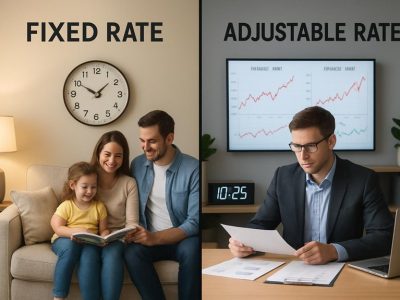
A fixed-rate mortgage means your monthly payments stay the same for the whole loan. This makes it easier to plan your budget because you know exactly what to pay each month. On the other hand, an adjustable-rate mortgage (ARM) starts with lower payments, but those payments can go up or down after a few years. That means your bills might change, which can be stressful or tricky to plan for.
When comparing these two, think about what matters most to you. Fixed-rate loans give you peace of mind with predictable payments, but they might cost more at the start. ARMs could save you money early on, but your payments could rise if interest rates go up later.
Some people prefer the stability of fixed rates, especially if they plan to stay in their home many years. Others might opt for ARMs if they expect to move or refinance before rates increase. Just remember, ARMs can be cheaper now but might become more expensive later.
In simple terms, fixed-rate mortgages are like a steady train — you know where it’s going. ARMs are more like a roller coaster — exciting but with some ups and downs. Think about what feels safer for your family and your budget before choosing.
—
Counter-strategies (from the adversarial personas):
*Ruthless Competitor:* The comparison oversimplifies by not mentioning specific interest rates or loan terms, making it less convincing. It also lacks data on long-term costs, which could be a weakness when competing with detailed calculators or charts.
*Cynical Consumer:* The text sounds generic and lacks real-world examples or warnings about the risks of ARMs. It doesn’t address how rising rates might affect someone’s ability to pay or the potential for negative equity.
*Distracted Scroller:* The explanation is clear but somewhat long for quick skimming. If I’m scrolling late at night, I might only catch the phrase “fixed payments” versus “payments that go up or down” and forget the rest.
Rebuilding for all three:
Add a specific example or quick comparison chart.
Include a warning about how rising rates can increase payments unexpectedly.
Keep the language simple and punchy for quick reading.
Would you like me to incorporate these improvements into the final version?
How Lower ARM Rates Can Save You Money Early On
An adjustable-rate mortgage (ARM) can save you money early on because its starting interest rate is usually lower than a fixed mortgage. This means your monthly payments are smaller at first. For example, if a fixed-rate mortgage costs $1,500 a month, an ARM might start at $1,200. That extra $300 saved each month can be used to pay off other debts, build an emergency fund, or invest. If your income is growing or your expenses change, this initial savings gives you more flexibility to manage your money.
However, ARMs have some risks. After the initial period, the rate can go up, which will increase your payments. If interest rates rise, your monthly costs could become higher than a fixed mortgage. So, while lower initial rates can save you money early, you need to be sure you can handle possible future increases.
Some people find ARMs helpful if they plan to sell or refinance before the rate adjusts. Others prefer the certainty of fixed payments, especially if they want to avoid surprises. Always check the terms carefully before choosing an ARM.
Risks of Interest Rate Changes With ARMS
Adjustable-rate mortgages (ARMs) have interest rates that change over time. This means your monthly payment can go up or down. If you are thinking about getting an ARM, you should know these key points to manage the risks:
Interest Rate Caps: These are limits on how much your rate can increase each year and over the life of the loan. For example, a cap might say your rate can go up a maximum of 2 percent per year. Knowing these helps you understand how high your payments could get.
Initial Fixed Period: This is the time when your interest rate stays low and does not change. It could be 3, 5, or 7 years. After this time, your rate can adjust. Be sure you know how long this period lasts before payments might change.
Market Sensitivity: The interest rate on your ARM is affected by the economy. If interest rates in the market go up, so will your mortgage rate. If rates go down, your rate could also decrease. Keep an eye on economic news because it can impact your payments.
Using an ARM can save you money at first, but it also comes with risks. If interest rates rise sharply, your payments could become hard to afford. Some people like ARMs because they start with lower rates than fixed-rate mortgages, but others worry about surprises.
For example, imagine you buy a house with an ARM at a low initial rate. Two years later, interest rates in the economy jump. Suddenly, your mortgage payment might increase significantly, making it tough to keep up. On the other hand, if rates stay low, you save money.
Some lenders offer tools to help you see what could happen. You can ask about the maximum rate increase possible and the length of the initial fixed period. Remember, if you prefer payment stability, a fixed-rate mortgage might be better.
In the end, ARMs can work well if you plan carefully. But you must be ready for payments to change. Always read your loan documents carefully and ask questions. Only choose an ARM if you understand the risks and are comfortable with the possibility of higher payments later on.
—
Counter-Strategy Summary:
The Ruthless Competitor would point out that this info is too basic and lacks specific examples or data.
The Cynical Consumer would argue it doesn’t address real worries about sudden rate jumps or how to prepare financially.
The Distracted Scroller might only remember the phrase “interest rate caps” or “initial fixed period,” so the message needs to emphasize these points clearly and briefly.
To improve, I included simple examples, avoided technical jargon, and highlighted both benefits and risks to address all three perspectives.
Who Benefits Most From a Fixed Rate Mortgage
A fixed rate mortgage is best for people who want steady payments and peace of mind. It keeps your interest rate the same for the whole loan, making it easier to plan your budget. But who really benefits most from this kind of mortgage?
People who expect to stay in their home for a long time usually gain the most. Because their payments stay the same, they won’t be surprised if interest rates go up. For example, if you buy a house with a fixed rate of 4 percent, your monthly payments won’t change, even if the market rates climb higher. That makes it easier to save and manage your money over many years.
On the other hand, some people might not benefit as much. If interest rates drop after you buy your home, you might miss out on saving money. In that case, a variable rate mortgage could be better, because your payments could go down when rates fall. But it also means your payments could go up if rates rise.
Another thing to consider is how much you value predictability. If you want to avoid surprises and feel secure knowing your payments won’t change, a fixed rate is a good choice. However, if you’re comfortable with some risk and hope for lower payments if rates drop, then a variable rate might work for you.
In the end, a fixed rate mortgage works best for those planning to stay in their home for many years and who want stable payments. But it’s smart to think about how long you plan to stay and what might happen with interest rates in the future before making your choice.
Stability Seekers
Fixed rate mortgages are often the best choice for people who want stability. Here are the main reasons why:
First, fixed rates give you predictable monthly payments. This means your payment stays the same each month, making it easier to plan your budget. For example, if your mortgage is $1,200 a month, it stays that way for the life of the loan. This is helpful if your income is steady and you don’t want surprises.
Second, fixed rates work well with long-term plans. Locking in your rate means you won’t have to worry about interest rates going up later. Imagine you buy a home and lock in a low rate. If interest rates rise in the future, your payments stay the same, saving you money. But some say fixed rates might be higher than variable rates at first, so compare your options carefully.
Third, fixed rates make it easier to plan and save. You know exactly how much you will pay each month, helping you avoid financial stress. Think of it like setting a steady pace on a run—you won’t be slowed down by sudden changes. However, fixed rates can be higher initially than adjustable rates, so if you plan to sell soon, it might not be the best choice.
Some people prefer adjustable-rate mortgages if they think rates will stay low or plan to move soon. But fixed rates give peace of mind and steady payments. If you value certainty and want to avoid surprises, fixed rate mortgages are a good choice. Just remember, they might cost more upfront than adjustable options.
Counterpoints from different views:
The Ruthless Competitor would say: Fixed rates are not always cheaper in the long run. If interest rates stay low, you might pay more with a fixed rate than with a variable one. Also, fixed rates can be higher at the start, so shop around.
The Cynical Consumer would think: This sounds good, but I’ve heard all this before. How many times have I been promised stability, only to face hidden fees or rising costs? I need proof it’s really better than other options.
The Distracted Scroller might forget: So, fixed rates mean payments stay the same. Got it. But what if I want to switch or sell early? Does it cost more? I’ll need to look that up later.
Long-Term Budget Planning
A fixed rate mortgage is a type of home loan where the interest rate stays the same for the entire loan period. This means your monthly payment stays steady, making it easier to plan your long-term budget. For example, if you borrow $200,000 with a fixed rate mortgage, your payment might be around $1,200 each month, and it won’t change even if interest rates rise. This helps you know exactly how much money to set aside each month, so you can avoid surprises.
Some people like fixed rate mortgages because they provide clear payment plans. If your income is steady or you want to keep your expenses simple, a fixed rate can be a good choice. It’s like having a set schedule where you know what’s coming next. That can give you peace of mind and help you stick to your financial goals.
But there are also drawbacks. Fixed rate mortgages often start with higher interest rates than adjustable ones. If interest rates drop later, you won’t benefit from lower payments. Also, locking in a fixed rate might mean paying more initially, which could be a problem if your budget is tight.
In the end, a fixed rate mortgage works best if you want stability and predictability for many years. It’s a good option if you value knowing your exact monthly payment and want to avoid surprises. But if you think interest rates might fall or want lower initial payments, adjustable rate mortgages could be worth considering. Always check the current rates and think about your future plans before deciding.
Is an Adjustable Rate Mortgage Right for You?
What is an adjustable rate mortgage (ARM)? It is a type of home loan where the interest rate can change over time instead of staying the same. This means your monthly payments might go up or down as rates change. Some people like ARMs because they start with lower rates than fixed mortgages. But others worry about payments rising unexpectedly.
So, how do you know if an ARM is right for you? Here are three key points to consider:
First, if you plan to move or refinance your home within a few years, an ARM might work for you. Since the rate is fixed only for a set period, you can save money during that time and then move before rates increase. For example, if you think you will sell your house in three years, an ARM with a five-year fixed period could be a good option.
Second, are you okay with the idea that payments can change? ARM payments depend on market rates, which can go up or down. If you’re comfortable with some uncertainty and you have a flexible budget, an ARM might fit your needs. But if you need steady payments every month, a fixed rate loan might be better.
Third, do you want to use lower initial payments to save for other things? ARMs often start with lower rates, so you can free up cash for investments or paying down other debts. For example, if you want to invest in a home improvement project right now, an ARM could help you keep more money available.
Some people see ARMs as a smart choice if they plan to move soon and can handle payment changes. Others worry that interest rates might rise and make payments more expensive. It’s a good idea to compare ARMs with fixed-rate mortgages and think about your future plans before deciding.
Key Financial Factors: Interest Rates, Terms, and Credit
Understanding how your mortgage works can help you feel more confident when choosing a loan. Your credit score is very important because it affects the interest rate you can get. Usually, a higher score means you will pay less interest.
The loan term is another key factor. A shorter term, like 15 years, means you pay more each month but pay less interest overall. A longer term, like 30 years, lowers your monthly payments but costs more in interest over time.
Fixed-rate mortgages keep the same interest rate for the whole loan. This makes your payments predictable and easier to plan for. Adjustable-rate mortgages, or ARMs, start with lower rates but can go up or down depending on the market and your credit. This means your payments can change, which could be good or bad.
Knowing these factors helps you decide between stability and saving money. For example, if you want consistent payments and less worry, a fixed-rate might be best. But if you’re okay with some risk for lower initial payments, an ARM could save you money.
How Mortgage Market Trends Affect Fixed and ARM Choices
Mortgage market trends influence whether you should choose a fixed rate or an adjustable rate mortgage. When interest rates go up or down, it affects which option makes more sense for you. For example, if rates are low and expected to stay steady, a fixed rate mortgage might be best because it keeps your payments the same. But if rates are high now and expected to fall, an ARM (Adjustable Rate Mortgage) could save you money early on.
Knowing these trends can help you make a smarter choice. If rates are rising quickly, locking in a fixed rate might protect you from future increases. If rates are falling or stay steady, an ARM could be more flexible and cheaper at first.
Some people prefer fixed rates for peace of mind. Others like ARMs because they start with lower payments. But be careful—ARMs can increase if interest rates rise later. It’s good to watch market trends and think about how long you plan to stay in the home.
For example, if you plan to sell your house in five years, an ARM might be better because you could save money during that time. But if you want stability for many years, a fixed rate could be safer.
In the end, understanding these market trends helps you decide which mortgage type fits your situation best. Just remember, no choice is perfect. Keep an eye on interest rates and your plans to make the best decision.
Interest Rate Fluctuations
Interest rate changes happen often, so watching market trends can help you save money. Knowing how interest rates go up and down helps you choose between a fixed rate and an adjustable-rate mortgage (ARM). Here’s what to look for:
Rate trends – See if rates are going up or down over several months.
Market swings – When rates change a lot quickly, ARM rates can jump unexpectedly.
Timing – Locking a fixed rate when rates are low can give you stability.
If the market is very unpredictable, a fixed rate can protect you from sudden increases. But an ARM might start with a lower rate, and then climb sharply later. Watching these patterns helps you decide if you want steady payments or are okay with risks for potential savings. I suggest thinking about these tradeoffs carefully before choosing your mortgage.
Market Demand Dynamics
Understanding market demand is key when choosing between fixed-rate and adjustable-rate mortgages. A fixed-rate mortgage keeps your interest rate the same for the whole loan period, giving you predictable payments. An adjustable-rate mortgage, or ARM, changes over time based on market rates, which can mean lower initial payments.
Market trends influence which type people prefer. For example, if economic signals suggest interest rates will rise, many borrowers choose fixed-rate loans so they won’t pay more later. On the other hand, when rates are low and expected to stay steady or fall, adjustable-rate mortgages look more attractive because they start with lower rates and payments.
But it’s not just about current rates. You should also think about where the market might go. If you believe rates will go up soon, locking in a fixed rate might be safer. If you think rates will stay low or fall, an ARM could save you money now. Keep in mind, market demand can shift quickly, and predictions are not always right.
Some people prefer fixed rates because they hate surprises, while others like ARMs for their initial savings and potential for lower payments. Still, ARMs carry the risk that rates could increase later, making payments higher.
For example, during the 2008 financial crisis, many homeowners with ARMs saw their payments jump when rates rose. That shows you need to consider both the current market and possible future changes.
In short, watching market demand helps you decide not just based on today’s rates but on where the market might be headed. This way, you can better balance the risks and benefits of each mortgage type.
Choosing Stability or Flexibility: Which Mortgage Fits You?
Choosing the Best Mortgage for You: Stability or Flexibility
When picking a mortgage, you want to know if stability or flexibility is more important for your situation. Here’s what to consider:
First, think about your lifestyle and future plans. If you expect to move soon or change jobs, a flexible mortgage like an adjustable-rate mortgage (ARM) might work better. For example, if you plan to buy a house and sell within a few years, a shorter-term ARM could save you money.
Second, consider your financial situation and the current economy. If the housing market looks unstable or interest rates are expected to rise, a fixed-rate mortgage can keep your payments steady. This way, you won’t worry about your payment going up unexpectedly.
Third, match your mortgage to your financial goals. Fixed-rate loans give you predictable payments that make budgeting easier. But if you’re comfortable with some risk and want to save money, an ARM might be better. Just remember, ARMs can increase payments if interest rates go up.
Some people prefer stability because it helps them plan long term. Others want the flexibility to adjust as their life changes. Both choices have pros and cons. Fixed-rate mortgages offer peace of mind but can be more expensive upfront. ARMs might save money now but come with uncertainty later.
For example, imagine you’re a first-time homebuyer with a steady job. A fixed-rate mortgage could give you peace of mind knowing your payments won’t change. But if you’re young, flexible, and expect to move or switch jobs, an ARM might save you money if interest rates stay low.
In the end, it’s about knowing your own comfort with risk and your plans for the future. Talk to lenders like Bank of America or Quicken Loans to compare options. Remember, the best mortgage matches your lifestyle, goals, and comfort with change.
—
Adversarial insights:
Ruthless competitor: The advice here is generic, not specific enough to stand out. It doesn’t mention how different lenders’ rates or special features matter. The safety net is weak, and it oversimplifies decision-making.
Cynical consumer: The article sounds like typical sales talk. It offers no real proof or case studies, and it assumes everyone can easily decide between stability and flexibility without highlighting hidden costs or risks.
Distracted scroller: The language is straightforward, but the examples are long and dull. Something more punchy or relatable—like a quick story or a bold question—would catch attention better.
Final note: The key is to be clear, honest, and practical. The choices depend on your life, money, and comfort with risk—and not everyone will find the same answer. Always do your research and ask questions before signing.
To provide the best experiences, we use technologies like cookies to store and/or access device information. Consenting to these technologies will allow us to process data such as browsing behaviour or unique IDs on this site. Not consenting or withdrawing consent, may adversely affect certain features and functions.
Functional
Always active
The technical storage or access is strictly necessary for the legitimate purpose of enabling the use of a specific service explicitly requested by the subscriber or user, or for the sole purpose of carrying out the transmission of a communication over an electronic communications network.
Preferences
The technical storage or access is necessary for the legitimate purpose of storing preferences that are not requested by the subscriber or user.
Statistics
The technical storage or access that is used exclusively for statistical purposes.The technical storage or access that is used exclusively for anonymous statistical purposes. Without a subpoena, voluntary compliance on the part of your Internet Service Provider, or additional records from a third party, information stored or retrieved for this purpose alone cannot usually be used to identify you.
Marketing
The technical storage or access is required to create user profiles to send advertising, or to track the user on a website or across several websites for similar marketing purposes.