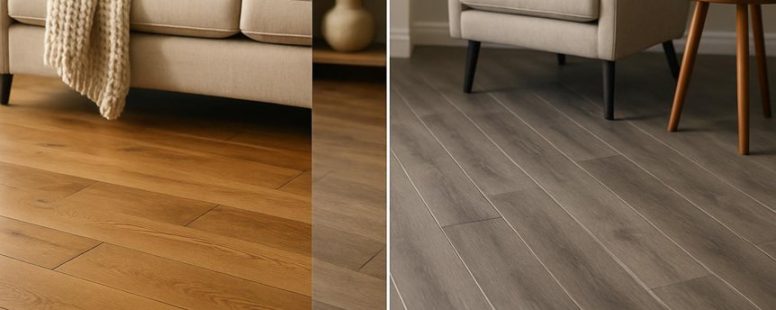
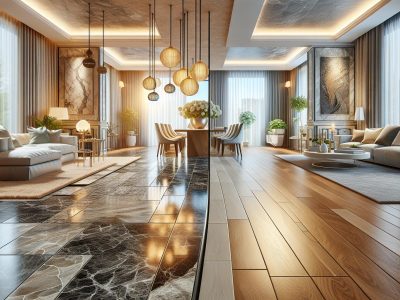
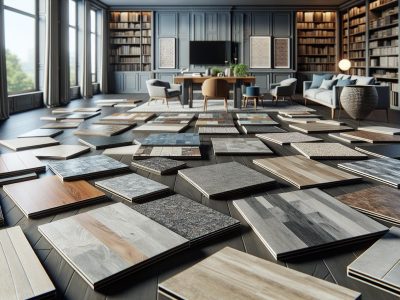
Choosing between hardwood and luxury vinyl plank is like deciding whether to wear a timeless suit or a rugged jacket—both have their charm, but each sets a different tone for your space.
Imagine the warm glow of sunlight dancing on polished hardwood, inviting elegance into your home, yet knowing it demands gentle care when spills occur.
LVP, with its resilient surface and budget-friendly nature, feels like a dependable friend—ready to withstand life’s surprises.
Surprisingly, LVP can mimic the texture of natural wood so closely that even seasoned eyes might hesitate to tell the difference.
Understanding these subtle differences helps you pick the perfect foundation for your daily life and style—because your floors are the stage where your home’s story unfolds.
Which Flooring Works Best for Your Lifestyle: Hardwood or LVP?
Hardwood and luxury vinyl plank (LVP) are two popular flooring options, but which one is better for your lifestyle? The best choice depends on how you live and what you need from your floors.
Hardwood floors are known for their classic beauty. They add warmth and value to a home. But they can be tricky if you have pets or kids. Hardwood scratches easily and might need regular polishing or refinishing. If you want a flooring that lasts a long time and looks elegant, hardwood is a good choice. However, it costs more upfront and needs more maintenance. For example, spills or scratches can be costly to fix. If you live in a dry climate and want a timeless look, hardwood works well.
LVP, or luxury vinyl plank, is more flexible and durable. It can handle moisture better, making it ideal if you have a humid climate or areas prone to spills like kitchens or bathrooms. LVP is also cheaper than hardwood and easier to clean. It looks like real wood but usually at a lower price. If you have pets or children who play rough, LVP might be better because it resists scratches and dents more effectively. Still, some people worry it doesn’t feel as warm or high-quality as hardwood.
Both floors have pros and cons. Hardwood offers unmatched style but needs more care. LVP provides durability and affordability but may not have the same look or feel. Think about your daily life. Do you have pets? Do you care about a fancy look? How much can you spend? These questions help you pick the right flooring.
In short, if you want something that lasts and looks beautiful for years, hardwood might be the best. But if you need something tough that can handle moisture and rough usage, LVP could be smarter. Each has its place, so consider what fits your home and habits best.
Key Differences Between Hardwood and LVP Flooring
Hardwood flooring is made from real wood, giving a natural and warm look. It’s often seen in homes with traditional or upscale styles. Luxury vinyl plank (LVP) flooring is made from synthetic materials that mimic wood. It’s usually less expensive and easier to install than hardwood.
Hardwood floors are installed by nailing or gluing planks directly to a wood subfloor. They can be sanded and refinished multiple times, which helps them last longer. LVP floors are installed with adhesive or click-lock systems. They are waterproof and resist scratches better but cannot be refinished like hardwood.
When it comes to durability, hardwood can last for decades if cared for properly. But it can scratch or dent easily, especially in high-traffic areas. LVP is more resistant to water and scratches, making it a good choice for kitchens or bathrooms. However, it might show signs of wear after many years, and you can’t sand it down to fix damage.
Some people prefer hardwood for its natural beauty and the ability to sand and refinish it. Others choose LVP because it’s cheaper, easier to maintain, and better for places with moisture. Both have pros and cons, so think about your budget, lifestyle, and where you want to install the floors.
In short, hardwood offers a timeless look and can last a long time but needs more care. LVP provides durability and water resistance but might not look as authentic over many years. Which one fits your home better? That depends on what you need most.
Material Composition Differences
Hardwood and luxury vinyl plank (LVP) flooring are popular choices, but they are made of very different materials. Hardwood flooring is usually made from real wood, often engineered wood that has a real wood veneer glued on top of plywood layers. This makes it look natural and warm, but it can be sensitive to temperature and moisture changes. If you spill water or the air gets very humid, hardwood can warp or crack.
LVP is made from layers of vinyl plastic. It has a wear layer on top that protects it from scratches and a core layer that adds stability. Because it is plastic, LVP can mimic many wood looks and even stone patterns. It is more flexible and resistant to water, making it easier to install in places like kitchens or bathrooms. LVP also absorbs sound better than hardwood, which can be helpful in apartments.
When thinking about the environment, engineered hardwood is renewable because trees grow back, but making it uses more resources. LVP is synthetic, so it is not as eco-friendly and might be harder to recycle.
In terms of durability, LVP usually resists wear and scratches better than hardwood. However, hardwood can last a long time if well cared for, sometimes even decades. But it can also be more prone to damage from moisture or heavy furniture.
Some brands like Armstrong, Shaw, and Mohawk make both hardwood and LVP options. If you want a floor that’s easy to install and resists damage, LVP could be a good choice. If you prefer a natural look and don’t mind more maintenance, hardwood might be better.
Both options have their good and bad points. Hardwood looks authentic but needs careful maintenance. LVP is cheaper, easier to put down, and more water-resistant, but it’s made from synthetic materials. So, understanding these differences helps you choose what fits your home best. Would you want a floor that lasts longer or one that looks more natural? That’s the tradeoff you need to consider.
Installation Methods Explained
Hardwood and luxury vinyl plank (LVP) flooring are installed differently, and knowing how they go in can help you decide which is best for your home.
Hardwood flooring is usually nailed or glued down. This means it needs a flat, solid subfloor. Because it involves special tools and skills, most people hire a professional for hardwood installation. It can take longer to install hardwood, especially if you’re doing it the old-fashioned way with nails or glue. Hardwood is also sensitive to moisture and temperature changes, so it’s best for homes with stable climates.
LVP, or luxury vinyl plank, is easier to install. It often uses a floating method with click lock systems. You just snap the planks together and lay them over a prepared surface. This makes LVP a popular choice for DIY projects. It can go over many types of floors if you add the right underlayment. LVP is also more forgiving if your subfloor isn’t perfectly flat. Plus, it takes less time to install than hardwood.
Here’s what to keep in mind:
Hardwood needs a smooth, solid subfloor. LVP can work over many surfaces with the correct underlayment.
Installing hardwood with nails or glue takes longer and needs special tools. LVP can often be installed quickly with just basic tools.
Most people hire pros to install hardwood. LVP is easier enough for most homeowners to do themselves.
If you’re on a tight budget or want a quick project, LVP might be better. But if you want a classic look and have the time and tools, hardwood could be the way to go. Just remember, hardwood costs more and needs more careful installation.
Durability and Maintenance
Hardwood flooring can last a long time if you take good care of it, but it also needs regular cleaning. You should sweep it gently to remove dirt and dust. Sometimes, you might need to refinish it to fix scratches or dull spots. Repairs are possible but can be expensive, especially if water gets on the wood and causes damage.
LVP flooring is easier to keep clean because you just wipe it with a damp cloth. It resists dents and moisture better than hardwood. Hardwood can last 20 to 30 years with good care, but LVP usually lasts 10 to 20 years and needs less maintenance.
Choosing between these floors depends on your lifestyle. Hardwood looks great but needs careful cleaning and quick repairs. LVP is more durable and easier to care for, making it a good choice if you want less hassle.
Environmental impact matters too. Hardwood comes from trees, so it is renewable but can cause deforestation if not sourced responsibly. LVP uses synthetic materials, which might not be as eco-friendly.
In the end, think about how much time and money you want to spend on keeping your floor looking good. Both have pros and cons, but knowing what each needs will help you pick the right one.
Durability and Water Resistance: Hardwood vs. LVP Compared
Hardwood and luxury vinyl plank (LVP) are two popular flooring choices, especially when it comes to durability and water resistance.
Hardwood is known for its strength against scratches and impacts. If you drop a heavy object or walk with high heels, hardwood can usually handle it without much damage. But, if water spills or high humidity happen frequently, hardwood can warp or swell. For example, in a kitchen or bathroom, hardwood might not hold up well over time because of moisture.
Luxury vinyl plank, on the other hand, is very water-resistant. It won’t warp or swell if water spills on it, making it a good choice for bathrooms or basements. However, LVP can be scratched or dented more easily if you drag heavy furniture or have pets with long nails.
Some people think hardwood is better for long-term beauty, but it needs more care around water. LVP is cheaper and easier to maintain if water exposure is common.
Remember, each flooring type has its limits. Hardwood can last decades if kept dry, but it’s not a good pick where water is often present. LVP might not look as rich as real wood, but it can save you from costly repairs caused by moisture.
Scratch and Impact Resistance
Hardwood floors are known for their classic look, but they are not always the best when it comes to resisting scratches and impacts. If you want flooring that stays looking good longer, luxury vinyl plank (LVP) might be a better choice. Here’s why:
LVP is much better at resisting scratches and dents. If you have kids or pets who run around or drop things, LVP can handle it better than hardwood. Hardwood floors can scratch easily and may need repair or refinishing more often. LVP also absorbs some of the force when something heavy drops, so it’s less likely to crack or show damage.
Some people say hardwood is easier to clean and maintain, but it can be more fragile. If you want floors that look great after years of busy living, LVP is a smart pick. It’s more pet-friendly too, since scratches are less obvious.
However, hardwood has its fans who love the natural look and feel. It can be sanded and refinished, which some see as a way to keep it looking new. But keep in mind, hardwood needs more careful maintenance to stay scratch-free.
In the end, if your main concern is durability under daily use, LVP wins. It balances beauty with the ability to handle everyday accidents better than hardwood. Would you rather worry about scratches or enjoy a floor that looks good longer?
Moisture Exposure Performance
Moisture resistance is a key factor when choosing flooring. The best option for wet or humid areas is often Luxury Vinyl Plank (LVP). Unlike hardwood, LVP resists water well and absorbs very little moisture. This means LVP can handle humidity and spills better without warping or swelling. Hardwood floors can get damaged in damp environments. They may warp, swell, or need more maintenance to stay good looking. Installing hardwood in places like bathrooms or basements can be tricky and may lead to costly problems later.
LVP is more durable over time because it resists moisture damage better. Many brands, like Shaw or Armstrong, offer warranties that cover water-related issues. But there is a downside. Vinyl flooring like LVP can be less eco-friendly and harder to recycle.
Some people still prefer hardwood for its natural look and feel. If you choose hardwood, be ready for careful upkeep and avoid damp spots. Hardwood can last many years if maintained properly but may not be the best choice if moisture is a constant concern.
In short, if water or humidity worries you, LVP is usually the smarter pick. Hardwood requires more work and caution to prevent water damage. Think about your space and what matters most—long-lasting water resistance or natural beauty.
Maintenance and Longevity: What to Expect From Each Flooring
Hardwood and luxury vinyl plank (LVP) floors differ a lot in how long they last and how easy they are to care for. If you want floors that stay nice with little work, it’s good to know what to expect from each.
Hardwood floors look beautiful, but they need more careful cleaning. You should sweep regularly to remove dirt and dust. Every few years, you might need to sand and refinish them to keep them looking new. Hardwood is more sensitive to scratches and moisture, so you should avoid spilling water or dragging heavy furniture. It can last for decades if you take good care, but it’s more vulnerable to damage.
LVP floors are more durable and easier to maintain. You can clean them with a damp mop and household cleaners. They resist stains and dents better than hardwood. LVP usually lasts over 20 years without needing refinishing, making it a good choice for busy households or places with moisture like kitchens and bathrooms.
Here’s a quick summary:
Hardwood needs refinishing every 7 to 10 years.
LVP resists stains and dents better.
Hardwood requires gentle cleaning products.
LVP can handle regular household cleaners.
Choosing between hardwood and LVP depends on how much effort you want to put into maintenance. If you love the look of real wood and don’t mind the upkeep, hardwood might be right for you. But if you want floors that are tough and easy to care for, LVP could be the better option. Just remember, neither is completely maintenance-free, and all floors need some care to last.
Hardwood vs. LVP: Cost Breakdown and Long-Term Value
Hardwood and luxury vinyl plank (LVP) are popular choices for flooring. The main question is which one offers better value for your money. Here is a simple comparison to help you decide.
Hardwood lasts longer and looks classic. It costs more upfront because the materials and installation are expensive. For example, real oak or maple can cost hundreds of dollars per square foot, and professional installation adds to that. Hardwood’s natural beauty and ability to increase home value make it a good long-term investment. If you plan to stay in your house for many years or want a timeless style, hardwood might be worth the extra cost.
LVP is a cheaper option at the start. It is easier to install and often less expensive than hardwood. LVP is made of synthetic materials, which makes it resistant to water and scratches. This makes it a good choice for busy families or homes in humid places. While it may not last as long as hardwood, many brands now offer warranties of 10 to 20 years. For example, brands like Shaw or CoreLuxe provide affordable, durable options that look like real wood.
Both flooring types have good and bad points. Hardwood can increase your home’s resale value, but it can also get scratched or dented easily if not careful. LVP resists moisture better and is easier to maintain, but it might not add as much value to your home.
If you want a classic, high-end look and are okay with the higher cost, hardwood is a good choice. But if you need a low-cost, low-maintenance floor that can handle moisture and wear, LVP could be better. Think about what matters most to you: long-term value or initial savings.
Style and Aesthetics: How Hardwood and LVP Transform Your Space
Hardwood and LVP flooring each create a different look in your home. Hardwood is known for its natural, warm appearance with rich textures that add character. It gives a classic and elegant feel that many homeowners love. LVP, or luxury vinyl plank, is very versatile. It can mimic the look of real wood with designs, colors, and finishes that suit any style.
Hardwood’s authentic wood grain adds a sense of depth and tradition. It’s great if you want a timeless, cozy atmosphere. But hardwood can be damaged by moisture or spills, so it might not work well in bathrooms or basements. On the other hand, LVP is water-resistant, making it a good choice for areas prone to moisture. LVP also offers many options for patterns and colors, so you can experiment with different looks easily. It can be more affordable too.
Both types of flooring can change how a room feels. Hardwood is often seen as more upscale and classic, while LVP tends to look more modern and flexible. For example, if you want a warm, traditional living room, hardwood might be the best pick. If you want a stylish kitchen that handles spills well, LVP could be better.
Your choice depends on what style you want and how much you’re willing to spend. Hardwood brings natural beauty but needs more care. LVP gives you lots of design options and works well in tricky spots. Think about what fits your home’s personality and your lifestyle.
Making Your Choice: Essential Tradeoffs Between Hardwood and LVP
Hardwood and luxury vinyl plank (LVP) are two popular choices for flooring, but they have different strengths. Here’s a simple way to compare them.
Hardwood looks beautiful and adds value to your home. It feels warm and natural underfoot. But it needs regular care, like cleaning and refinishing. Hardwood can also be more harmful to the environment because trees are cut down for it. For example, oak or maple floors are common hardwood options. If you want a classic look and don’t mind the upkeep, hardwood is a good choice.
LVP is a type of plastic flooring that looks like wood or stone. It is very durable and resistant to water. This makes it great for kitchens or bathrooms. LVP is also usually cheaper than hardwood. Many brands, like Shaw or Armstrong, make eco-friendly LVP from recycled materials. But, LVP doesn’t usually add as much value to your house as hardwood does. If you need a tough, budget-friendly floor that handles moisture well, LVP might be better.
There are some tradeoffs to think about. Hardwood can make your home more attractive to buyers, but it costs more and needs more care. LVP is cheaper and tougher, but might not increase your home’s value as much. Think about how you live. Do you want long-lasting beauty and don’t mind cleaning? Hardwood might be right. Or do you want a floor that is easy to care for and better for the environment? Then LVP could be the way to go.
In the end, your choice depends on what matters most to you. Both have good points and some limits. Decide based on your budget, lifestyle, and goals. It’s not just about looks, but what will work best for your home over time.
To provide the best experiences, we use technologies like cookies to store and/or access device information. Consenting to these technologies will allow us to process data such as browsing behaviour or unique IDs on this site. Not consenting or withdrawing consent, may adversely affect certain features and functions.
Functional
Always active
The technical storage or access is strictly necessary for the legitimate purpose of enabling the use of a specific service explicitly requested by the subscriber or user, or for the sole purpose of carrying out the transmission of a communication over an electronic communications network.
Preferences
The technical storage or access is necessary for the legitimate purpose of storing preferences that are not requested by the subscriber or user.
Statistics
The technical storage or access that is used exclusively for statistical purposes.The technical storage or access that is used exclusively for anonymous statistical purposes. Without a subpoena, voluntary compliance on the part of your Internet Service Provider, or additional records from a third party, information stored or retrieved for this purpose alone cannot usually be used to identify you.
Marketing
The technical storage or access is required to create user profiles to send advertising, or to track the user on a website or across several websites for similar marketing purposes.