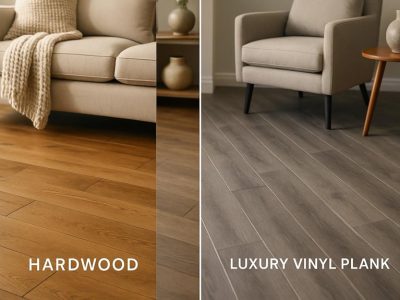
When choosing flooring for your space, the decision often narrows down to a couple of options that balance durability, aesthetics, and costs. Two popular flooring materials stand out in today’s market: Luxury Vinyl Plank (LVP) and engineered hardwood. Both offer unique benefits, but understanding their differences can empower you to make the best choice for your specific needs. Let’s investigate deeper to uncover what each brings to the table.
Understanding the Basics
What Is LVP?
Luxury Vinyl Plank (LVP) is a type of flooring designed to mimic the appearance of natural hardwood but crafted using synthetic materials, primarily polyvinyl chloride. It boasts a layered construction, incorporating a wear layer, a printed image layer, and a core base. Known for its resilience, water resistance, and affordability, LVP is a versatile choice for modern homes.
What Is Engineered Hardwood?
Engineered hardwood consists of a thin veneer of real hardwood bonded over multiple layers of a plywood core. This unique construction allows engineered hardwood to maintain the elegance of natural wood while increasing its structural stability against moisture and temperature variations. It serves as a middle ground between solid hardwood and completely synthetic flooring options.
Key Differences Between Materials
Durability and Maintenance
When considering durability, LVP shines with its resistant design. It withstands scratches, dents, and moisture, making it ideal for high-traffic households or those with pets. On the other hand, engineered hardwood is susceptible to wear and tear, requiring refinishing over its lifespan. But, its natural composition makes it relatively easy to repair small damages.
Appearance and Texture
Engineered hardwood showcases genuine wood grains and textures, offering unmatched authenticity and warmth to your interiors. LVP, while highly realistic in its wood patterns, cannot fully replicate the tactile texture and unique imperfections of real wood. But, advanced manufacturing processes have resulted in high-quality finishes that come impressively close.
Cost Comparison
Initial Investment
LVP generally requires a lower upfront cost compared to engineered hardwood, both in terms of materials and installation. This difference often makes it a preferred option for budget-conscious homeowners.
Long-Term Value and Resale
Engineered hardwood tends to offer better resale value due to its authentic quality and recognition as a premium material. Conversely, LVP, while improving in perception, doesn’t yet command the same value in real estate terms but compensates through long-term durability with minimal maintenance costs.
Environmental Impacts and Sustainability
Production Processes
LVP relies on synthetic materials, which often raises concerns about environmental sustainability and emissions during production. Engineered hardwood, although derived from natural wood, involves significant resource use but is often regarded as a greener alternative when sourced from responsibly managed forests.
Lifespan and Recycling Options
About lifespan, engineered hardwood can last up to several decades with proper care, while LVP has a generous but generally shorter lifespan. Recycling potential also favors engineered hardwood due to its organic components, aligning more with eco-conscious recycling efforts.
To provide the best experiences, we use technologies like cookies to store and/or access device information. Consenting to these technologies will allow us to process data such as browsing behaviour or unique IDs on this site. Not consenting or withdrawing consent, may adversely affect certain features and functions.
Functional
Always active
The technical storage or access is strictly necessary for the legitimate purpose of enabling the use of a specific service explicitly requested by the subscriber or user, or for the sole purpose of carrying out the transmission of a communication over an electronic communications network.
Preferences
The technical storage or access is necessary for the legitimate purpose of storing preferences that are not requested by the subscriber or user.
Statistics
The technical storage or access that is used exclusively for statistical purposes.The technical storage or access that is used exclusively for anonymous statistical purposes. Without a subpoena, voluntary compliance on the part of your Internet Service Provider, or additional records from a third party, information stored or retrieved for this purpose alone cannot usually be used to identify you.
Marketing
The technical storage or access is required to create user profiles to send advertising, or to track the user on a website or across several websites for similar marketing purposes.