Imagine standing on a sunlit beach, watching the waves dance and shimmer as they crash against the shore. Just like those waves, light behaves in fascinating ways, bending and spreading as it encounters obstacles. Here lies the intriguing dance between diffraction and refraction—two phenomena that shape our visual experience yet often go unnoticed.
Have you ever marveled at a rainbow or noticed how a straw seems to bend in a glass of water? These everyday wonders are the handiwork of refraction, where light changes direction as it passes through different mediums. On the other hand, diffraction occurs when light waves encounter an obstacle or slit, causing them to spread and create patterns. Understanding these concepts not only deepens your appreciation of the natural world but also unveils the secrets behind many technological advancements. Jump into this exploration and discover how these light-bending acts impact your perception and the world around you.
Understanding Diffraction
Diffraction describes how light spreads when it encounters obstacles or openings. This wave phenomenon is distinct from refraction and offers insight into the behavior of light and other waves.
Definition and Principles
Diffraction occurs when light waves bend around edges or pass through narrow slits. This bending results in the interference of light waves, forming patterns of alternating bright and dark bands known as diffraction patterns. Thomas Young’s double-slit experiment in the early 19th century confirmed the wave nature of light through corresponding interference patterns. The degree of bending depends on the size of the obstacle relative to the wavelength of the light. Smaller obstacles cause greater diffraction, while larger ones tend to obstruct more light.
Common Applications
Diffraction plays a significant role in various technological fields. In optics, diffraction gratings disperse light into its spectral components, crucial for spectrometers analyzing material compositions. X-ray diffraction enables scientists to determine crystal structures, revealing the atomic arrangement within new compounds. Also, photographers use diffraction to their advantage when creating soft-focus effects by deliberately introducing minimal diffraction through small apertures in lenses. Understanding diffraction enhances the development and application of these technologies across scientific and practical domains.
Understanding Refraction
Refraction fascinates with its ability to bend light as it transitions between different mediums like air and water. This bending alters the light’s speed and direction, revealing intriguing optical illusions.
Definition and Principles
Refraction occurs when light passes from one medium to another, changing speed due to varying densities. The phenomenon hinges on Snell’s Law, which relates the incident angle and refracted angle to the refractive indices of the two media.
A fundamental principle of refraction is that light speeds up or slows down based on the medium. For instance, light travels faster in air than in water, leading to its bending. Index of refraction quantifies this medium-dependent speed change, with higher values indicating greater bending.
Common Examples
During daily experiences, refraction appears in several captivating instances. When you observe a straw immersed in a glass of water, the straw seems bent or broken, showcasing light’s change in speed as it moves from water to air.
Rainbows, another example of refraction, occur as sunlight disperses through water droplets in the atmosphere, separating into a spectrum of colors. They illustrate how light’s path and speed vary, creating visual wonders.
Refractive phenomena influence lenses in eyeglasses and cameras, too. These lenses manipulate the path of light to focus images, correcting vision or capturing photos with clarity.
By understanding refraction, you investigate into the world where light bends and alters perceptions, highlighting the scientific principles with everyday marvels.
Key Differences Between Diffraction and Refraction
Understanding the distinction between diffraction and refraction helps demystify their effects on light’s behavior. The two phenomena exhibit unique characteristics, which influence a variety of fields including optics, photography and scientific research.
Behavior of Light
Diffraction involves the bending and spreading of light waves when encountering obstacles or slits, forming patterns such as fringes. Light diffracts significantly when obstacles are comparable in size to its wavelength. This characteristic enables the wave nature of light to be evident, as seen in interference patterns like those confirmed by the famous double-slit experiments.
Refraction occurs when light passes from one medium to another, causing a change in speed and direction. The refraction angle relies on the refractive indices of both mediums, as described by Snell’s Law. For instance, when light enters water from air, it bends towards the normal, altering its path and creating phenomena like rainbows.
Conditions and Environments
In conditions where light waves meet edges or pass through narrow openings, diffraction noticeably occurs. Diffraction becomes apparent when the dimensions of obstacles are comparable with the light wavelengths. For example, you notice diffraction patterns in crystals through X-ray diffraction or camera lens designs.
Refraction occurs when light transitions between mediums with different densities. For example, when you observe a straw in a glass of water appearing bent. Refraction amplifies in clear media transitions, revealing effects such as mirages or the focusing abilities of lenses in eyeglasses and cameras.
Diffraction and refraction’s unique characteristics influence not only technology but also enrich your understanding of natural phenomena, enhancing your perspective of the world.
Importance in Scientific Studies
Understanding diffraction and refraction is crucial in scientific studies. They provide insights into light behavior and essential principles in physics. Diffraction allows you to explore wave properties of light, while refraction enhances understanding of light propagation through different materials.
Scientists use diffraction techniques, such as X-ray diffraction, to analyze crystal structures. If a substance’s molecular arrangement is unknown, X-ray diffraction reveals detailed information about atomic spacing and bond lengths.
Refraction principles are vital in optics design. Engineers develop lenses using refraction principles to improve imaging systems, like those in telescopes and cameras. If there’s a need to create precise optical instruments, grasping refraction ensures accuracy and performance.
These phenomena also play a role in advancing telecommunications. Fiber optic cables, which rely on refraction, transmit vast amounts of data through light signals. Diffraction patterns assist in improving fiber optic technologies, ensuring efficient data transmission.
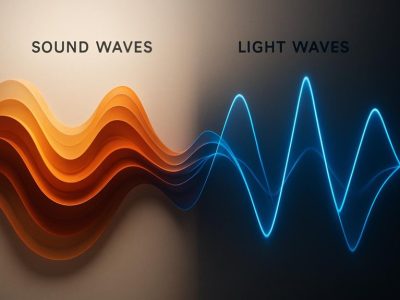
In acoustics, diffraction aids in sound wave manipulation. It helps design better architectural acoustics and speaker systems, enabling sound clarity in various environments. If studying sound distribution, diffraction offers valuable insights.
By understanding diffraction and refraction, you gain a comprehensive view of how light, sound, and other waveforms interact with the environment. These principles fuel innovations and drive progress across numerous scientific fields.
Conclusion
Grasping the differences between diffraction and refraction enriches your understanding of light’s behavior and its practical applications. These phenomena not only enhance your appreciation of natural wonders but also play a crucial role in technological advancements. Whether it’s the intricate patterns created by diffraction or the precise bending of light through refraction, each concept offers unique insights into the world around you. By exploring these principles, you unlock a deeper comprehension of both everyday experiences and complex scientific endeavors. As you continue to learn about light’s fascinating properties, you’ll find that these concepts are fundamental to innovation across various fields, from optics to telecommunications.
To provide the best experiences, we use technologies like cookies to store and/or access device information. Consenting to these technologies will allow us to process data such as browsing behaviour or unique IDs on this site. Not consenting or withdrawing consent, may adversely affect certain features and functions.
Functional
Always active
The technical storage or access is strictly necessary for the legitimate purpose of enabling the use of a specific service explicitly requested by the subscriber or user, or for the sole purpose of carrying out the transmission of a communication over an electronic communications network.
Preferences
The technical storage or access is necessary for the legitimate purpose of storing preferences that are not requested by the subscriber or user.
Statistics
The technical storage or access that is used exclusively for statistical purposes.The technical storage or access that is used exclusively for anonymous statistical purposes. Without a subpoena, voluntary compliance on the part of your Internet Service Provider, or additional records from a third party, information stored or retrieved for this purpose alone cannot usually be used to identify you.
Marketing
The technical storage or access is required to create user profiles to send advertising, or to track the user on a website or across several websites for similar marketing purposes.