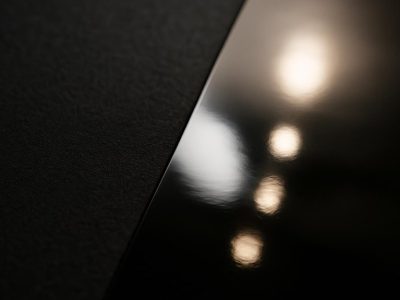
Reflection occurs when light bounces off a surface without passing through it. This phenomenon depends on the surface’s texture and angle.
Definition Of Reflection
Reflection involves the change in direction of light when it strikes a surface. Incoming light rays, also called incident rays, reflect at an angle equal to the angle of incidence. This follows the Law of Reflection, which states that the angle of incidence equals the angle of reflection.
Types Of Reflection
Specular Reflection: Occurs when light reflects off smooth surfaces, like mirrors or polished metals. The reflected rays are parallel, creating clear and sharp images.
Diffuse Reflection: Happens when light strikes rough surfaces, such as paper or wood. The reflected rays scatter in different directions, producing an uneven, blurred image.
Everyday Examples Of Reflection
Mirrors: Using mirrors to view your reflection is a clear example of specular reflection.
Calm Water: Seeing a sharp image of trees or buildings on a still water surface.
Rough Surfaces: Light scattering off walls or fabrics contributes to diffuse reflection, enabling you to perceive their textures.
Reflection plays a significant role in how you see and interact with the environment. It defines the way light behaves when encountering various surfaces.
Understanding Refraction
Refraction describes how light changes direction when moving between different mediums, such as air to water. This phenomenon is key to understanding optical behaviors in various fields.
Definition Of Refraction
Refraction is the bending of light as it passes from one medium with a specific refractive index to another with a different refractive index. This bending occurs due to a change in light’s speed.
When light enters a denser medium, such as water, it slows down and bends toward the normal line (a perpendicular line to the surface). If light enters a less dense medium, such as air, it speeds up and bends away from the normal.
Causes Of Refraction
Light refraction happens because of variations in light speed in different substances. Changes in density and refractive indices between mediums impact light’s velocity.
For instance, air has a refractive index of approximately 1.0003, while water has a refractive index of about 1.33. This difference alters light’s speed, causing refraction.
Common Examples Of Refraction
Glass Lenses: Magnifying glasses or eyeglasses bend light to focus images.
Water Bodies: Objects underwater appear bent or distorted due to light refracting at the air-water boundary.
Prisms: Light splits into colors (a spectrum) when refracted through a prism due to varying wavelengths.
Key Differences Between Reflection And Refraction
Reflection and refraction involve distinct interactions of light with materials. Reflection occurs when light bounces off a surface, while refraction involves bending as light passes through different mediums.
Behavior Of Light
In reflection, light travels back into the same medium after hitting a surface. The angle of reflection equals the angle of incidence, maintaining light’s direction symmetry. In refraction, light changes speed when entering a new medium, altering its direction. This directional change depends on the medium’s refractive index and the angle at which light enters.
Surface Interaction
Reflection happens on smooth or rough surfaces. On smooth surfaces like mirrors, light produces clear images, while rough surfaces scatter light, leading to diffuse reflections. Refraction occurs at boundaries between two mediums, such as air and water. The extent of the bending depends on the density difference between the mediums and their respective refractive indices.
Real-Life Applications
Reflection is visible in mirrors, polished metals, and calm water surfaces. It enables devices like periscopes and telescopes to function. Refraction appears in lenses, prisms, and magnifying glasses. It helps correct vision in eyeglasses and creates optical illusions like a straw appearing bent in water.
Practical Applications Of Reflection And Refraction
Reflection and refraction have essential uses in technology, nature, and science, impacting vision, optical systems, and environmental phenomena. These applications demonstrate how light behavior shapes practical devices and natural processes.
Use In Optical Instruments
Reflection improves imaging in instruments like periscopes, telescopes, and cameras. Mirrors direct and focus light to form clear images. For example, concave mirrors are used in telescopes to magnify distant objects, while flat mirrors in periscopes enable safe viewing over obstacles.
Refraction enables functions in eyeglasses, microscopes, and cameras by bending light. Lenses use refraction to focus light, correcting vision or magnifying objects. For instance, convex lenses in magnifying glasses enlarge small details, while refractive lenses in cameras focus light on sensors for clear photographs.
Role In Nature And Physics
Reflection influences visibility in natural settings. Calm water surfaces reflect surroundings, creating mirrored images. Animals like cats benefit from reflective layers in their eyes, improving night vision.
Refraction explains phenomena such as rainbows and mirages. Rainbows form when sunlight passes through water droplets, bending and splitting into colors. Mirages occur when light bends due to temperature gradients in the air, making distant objects appear misplaced or distorted. Physicists study refraction to understand light interactions at a microscopic level, advancing fields like fiber optics and material science.
Conclusion
Understanding the differences between reflection and refraction deepens your appreciation of how light shapes the world around you. These phenomena not only explain everyday visual experiences but also power essential technologies and natural wonders. By exploring their unique characteristics and applications, you gain insight into the fascinating ways light interacts with various mediums. Whether it’s the clarity of a mirror’s reflection or the bending of light through a lens, both reflection and refraction play significant roles in science, nature, and modern innovations.
To provide the best experiences, we use technologies like cookies to store and/or access device information. Consenting to these technologies will allow us to process data such as browsing behaviour or unique IDs on this site. Not consenting or withdrawing consent, may adversely affect certain features and functions.
Functional
Always active
The technical storage or access is strictly necessary for the legitimate purpose of enabling the use of a specific service explicitly requested by the subscriber or user, or for the sole purpose of carrying out the transmission of a communication over an electronic communications network.
Preferences
The technical storage or access is necessary for the legitimate purpose of storing preferences that are not requested by the subscriber or user.
Statistics
The technical storage or access that is used exclusively for statistical purposes.The technical storage or access that is used exclusively for anonymous statistical purposes. Without a subpoena, voluntary compliance on the part of your Internet Service Provider, or additional records from a third party, information stored or retrieved for this purpose alone cannot usually be used to identify you.
Marketing
The technical storage or access is required to create user profiles to send advertising, or to track the user on a website or across several websites for similar marketing purposes.