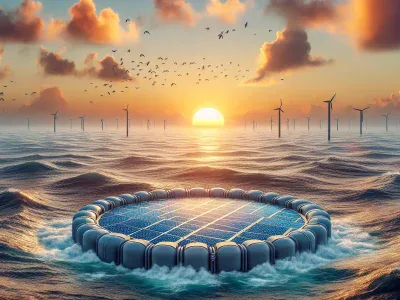
Picture yourself standing on a sunlit beach, the salty breeze brushing against your skin as the ocean stretches endlessly before you. The rhythmic crash of waves fills your ears, while the waterline inches forward and retreats in a steady dance. what drives these mesmerizing movements? While tides and waves seem like two sides of the same coin, they’re powered by entirely different forces.
Tides are nature’s slow and deliberate pulse, influenced by celestial bodies like the moon and sun. Waves, on the other hand, are bursts of energy born from wind or underwater disturbances. Understanding their differences not only deepens your appreciation for Earth’s dynamic oceans but also reveals how these forces shape coastlines, marine life, and even human activities. So next time you’re at the shore, you’ll see more than just water in motion—you’ll witness a fascinating interplay of science at work.
Understanding Tides
Tides are long-period waves caused by gravitational interactions between celestial bodies, primarily the Earth, moon, and sun. They result in the periodic rise and fall of sea levels along coastlines.
What Are Tides?
Tides represent the rhythmic rising and falling of ocean water over an estimated 12-hour cycle. Unlike waves, which are surface movements, tides involve the entire water column. Coastal areas experience high tide when water reaches its peak level and low tide during its minimum level. Mariners rely on tidal charts to navigate shallow waters safely.
Causes Of Tides
Gravitational forces from the moon play a primary role in generating tides; but, the sun’s gravity also contributes. The moon’s proximity to Earth creates stronger tidal forces than those caused by the sun even though its smaller size. Centrifugal force from Earth’s rotation further influences tidal patterns globally.
Spring tides occur when Earth aligns with both the moon and sun, producing higher high tides due to combined gravitational pulls. Neap tides form during quarter moons when these forces counteract each other, resulting in lower highs and higher lows.
Types Of Tides
Diurnal Tides: A single high tide followed by one low tide daily is observed (e.g., Gulf of Mexico).
Semi-Diurnal Tides: Two nearly equal high and low tides occur each day (e.g., Atlantic Coast).
Mixed Semi-Diurnal Tides: Unequal highs or lows define this type (e.g., Pacific Coast).
Exploring Waves
Waves are surface movements of water that transfer energy across the ocean without transporting matter. Unlike tides, waves primarily impact the upper layers of water and form dynamic patterns visible on the sea’s surface.
What Are Waves?
Waves are oscillatory motions created by energy passing through water, causing it to move in a circular pattern. They vary in size from small ripples to massive swells. The height, length, and power of a wave depend on its source and environmental factors like wind speed or seabed topography.
For example, gentle breezes often create small ripples seen near shores, while storms generate larger waves capable of traveling across entire ocean basins. Even though their movement appearance, water particles typically remain in place as energy propagates forward.
Causes Of Waves
Different forces cause waves, with wind being the most common factor. When wind blows over a water surface, friction between air and water generates ripples that grow into waves if conditions persist. Wind duration and fetch (distance over which it blows) determine wave size.
Seismic activities beneath oceans can also produce waves known as tsunamis. These result from underwater earthquakes or volcanic eruptions displacing large volumes of water rapidly. For instance, the 2004 Indian Ocean earthquake caused a devastating tsunami impacting multiple countries.
Other causes include gravitational interactions influencing tidal bores or human activities like ship movements forming wake waves behind vessels.
Types Of Waves
Wind-Driven Waves: Commonly observed at sea; their size depends on wind strength and duration.
Tsunamis: Created by sudden geological disturbances; they travel far distances at high speeds.
Capillary Waves: Small ripples formed by light winds; visible near calm waters.
Rogue Waves: Unpredictable and unusually large; occur due to overlapping wave systems.
Standing Waves (Seiches): Oscillations within enclosed bodies like bays or lakes caused by atmospheric pressure changes or seismic activity.
Key Differences Between Tides And Waves
Tides and waves, though both involve ocean water movement, differ significantly in origin, behavior, and impact. Understanding these distinctions clarifies their roles in shaping marine ecosystems and coastal environments.
Origin And Movement
Tides originate from gravitational forces exerted by the moon and sun on Earth’s oceans. These forces create predictable, large-scale vertical movements across the entire water column. For example, during high tide, water levels rise uniformly along coastlines due to this celestial interaction.
Waves result from energy transfer through wind or seismic events like underwater earthquakes. Unlike tides, waves affect only the ocean’s surface layer with oscillatory motion. Wind-driven waves form when strong winds blow over vast stretches of open water (e.g., the Pacific Ocean), while tsunamis are caused by sudden geological shifts beneath the sea.
Frequency And Duration
Tidal cycles occur regularly every 12 hours and 25 minutes on average due to Earth’s rotation relative to the moon. This rhythmic pattern leads to two high tides and two low tides daily in most regions.
Wave frequency depends on factors such as wind speed and fetch (distance wind travels over water). Individual waves can last seconds (small ripples) or minutes (swells), with rogue waves appearing unpredictably due to overlapping wave systems.
Effect On Marine Life And Coastal Areas
Tides play a crucial role in nutrient distribution for marine organisms like crabs that rely on intertidal zones for feeding. They also influence sediment transport along shorelines, contributing to beach formation or erosion.
Waves shape coastal landscapes through constant impact against cliffs or beaches but have limited effect below surface depths. For instance, powerful storm-generated waves accelerate shoreline erosion yet support recreational activities like surfing near coasts where they break consistently.
Conclusion
Understanding the differences between tides and waves unlocks a deeper appreciation for the ocean’s complex behavior. These natural phenomena, driven by distinct forces, shape our planet in remarkable ways and influence everything from coastal ecosystems to human activities.
Next time you’re near the water, take a moment to observe how these dynamic movements interact with their surroundings. Whether it’s the steady rise and fall of tides or the rhythmic motion of waves, both reveal the endless power and beauty of Earth’s oceans.
To provide the best experiences, we use technologies like cookies to store and/or access device information. Consenting to these technologies will allow us to process data such as browsing behaviour or unique IDs on this site. Not consenting or withdrawing consent, may adversely affect certain features and functions.
Functional
Always active
The technical storage or access is strictly necessary for the legitimate purpose of enabling the use of a specific service explicitly requested by the subscriber or user, or for the sole purpose of carrying out the transmission of a communication over an electronic communications network.
Preferences
The technical storage or access is necessary for the legitimate purpose of storing preferences that are not requested by the subscriber or user.
Statistics
The technical storage or access that is used exclusively for statistical purposes.The technical storage or access that is used exclusively for anonymous statistical purposes. Without a subpoena, voluntary compliance on the part of your Internet Service Provider, or additional records from a third party, information stored or retrieved for this purpose alone cannot usually be used to identify you.
Marketing
The technical storage or access is required to create user profiles to send advertising, or to track the user on a website or across several websites for similar marketing purposes.