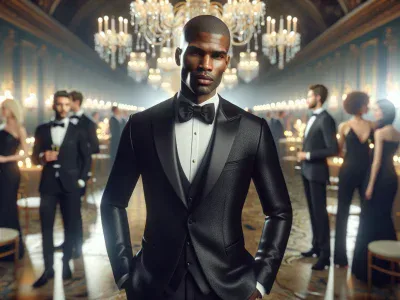
Picture the soft gleam of polished shoes on a marble floor, the crisp snap of fabric as you slip into something that feels almost magical. You stand in front of the mirror, heart thumping, wondering—does the occasion call for a suit or a tux? The difference might seem subtle at first glance, but it can shift the entire mood of your evening.
What if the right choice could elevate your confidence or even open unexpected doors? Knowing when to choose a tux over a suit isn’t just about tradition—it’s about making a statement without saying a word. Get ready to discover how these two iconic looks can transform not just your appearance, but the way you experience life’s most unforgettable moments.
Overview of Formal Menswear
Formal menswear sets you apart in social rituals where dress codes speak louder than words. From the velvet-lined entrances of black-tie galas to the bright lights of city weddings, your choice—tuxedo or suit—reflects not just style but the gravity of the occasion.
Picture yourself at a charity ball where tails sweep across the marble floor. Here, tuxedos, marked by glossy satin lapels and single-button jackets, signal evening elegance (source: Esquire, “Tuxedos vs Suits: Everything You Need to Know”, 2023). Suits, by contrast, boast versatility. They allow you to blend seamlessly into both business meetings and semi-formal gatherings like a corporate awards luncheon or graduation.
Which piece carries more prestige? Some might argue tuxedo traditions make you the protagonist of a narrative set against candlelight, while suits position you as a perennial supporting character, ready for everything from boardrooms to best-man speeches. Is it the silk stripe down the trousers or the understated tailoring that tells the real story?
Experts, such as GQ fashion editors, insist that context decides the winner. “Wearing a tux to a daytime event looks out of place,” notes stylist Jack Carson. You quickly become the subject of whispers—sometimes even admiration, but usually questions. A suit, though, never feels like an overstatement. It accommodates your expression, swapping fabrics and fits from linen summer lounge suits to heavy wool double-breasted classics.
Here’s something most people doesn’t realize: Accessories like bow ties, cummerbunds, and cufflinks transform both tuxedos and suits, but the rules govern them stricter in black-tie attire. You ever wondered why James Bond never wears a necktie to Monte Carlo? The answer lies in tradition—a tuxedo only ever invites a bow tie.
Whether you’re aiming for the sartorial confidence of a Gatsby-era soirée or the businesslike poise of a Wall Street pitch, formal menswear becomes more than clothing. It becomes narrative, memory, identity—shaped by fabric, cut, and moment.
What Is a Tuxedo?
A tuxedo stands as the iconic black-tie ensemble, instantly marking you as part of a tradition of formal menswear. Its crisp lines and distinctive sheen signal celebration, formality, and exclusivity at any glance.
Key Features of Tuxedos
Tuxedos distinguish themselves from suits through signature elements. Satin touches set tuxedos apart: satin lapels, satin-covered buttons, and a satin side stripe down the leg. For example, James Bond’s dinner jacket gleams under gala lights, while a classic notch-lapel suit blends into an office. Tuxedos typically require a formal white shirt with a pleated or piqué bib—never with button-down collars. You’ll likely see a classic black bow tie, while regular suits use long ties in numerous colors and patterns. Most event hosts expect patent leather shoes with tuxedos, not brogues or loafers. Tuxedo jackets often have a single button—suits typically have two or three.
Tuxedo Feature
Example
Suit Counterpart Example
Satin lapel
Shawl collar lapel
Wool notch lapel
Satin-covered buttons
Black silk buttons
Plastic dark buttons
Satin side trouser stripe
Black pants with stripes
Flat-front wool pants
Shirt style
Pleated-front tux shirt
Spread-collar poplin
Neckwear
Black bow tie
Patterned silk tie
Shoes
Black patent oxfords
Leather brogues
Many people ask: Is a midnight blue tuxedo still a tux? Yes, it is—if featuring the classic attributes, midnight blue tuxedos, like those worn by Daniel Craig at the Oscars, outclass black under certain lighting.
When to Wear a Tuxedo
Tuxedos belong to black-tie events, evening weddings, and formal galas—occasions where expectations are as clear as the starch in your shirt. If your invitation lists “Black Tie Preferred,” tuxedo signals respect for tradition and occasion. School proms still honor tuxedos as the badge of coming-of-age. Some grooms picture themselves, perhaps for just one night, as the star of a classic film, stepping out beneath glittering chandeliers. Proper venues include opera premieres, award ceremonies, or diplomatic dinners—rare, but unforgettable moments.
Could you wear a tux to a business conference? Some try, but such contrast often comes off as theatrical, not professional. Context remains your strongest style compass. Studies by etiquette guides (Emily Post Institute) confirm that when the sun sets and celebration rises, donning a tuxedo places you among a distinguished company.
If you wish to harness the gravitas and narrative of the black-tie tradition, choose the tuxedo for the pinnacle moments of your story.
What Is a Suit?
A suit completes your look for countless occasions. With clean lines and understated charm, it’s a canvas for your personal style, shifting between business, celebration, and everyday sophistication.
Key Features of Suits
Suits, distinguished by matching jacket and trousers, rely on details like fabric, lapel shapes, and tailoring. Wool, cotton, and linen fabrics pop up across boardrooms and city streets—think navy worsted wool at a Fortune 500 company or light linen for a summer garden party. Notched lapels dominate modern suits, but peaked and shawl lapels also surface, especially in double-breasted options.
Single-breasted jackets, usually with two or three buttons, remain the most common, offering a sleek look that suits just about anyone. Sleeve buttons, flat or pleated trousers, and varying vents all let you refine the silhouette. Color choices cover a spectrum, from sober gray, black, and blue in law offices to bold burgundies and greens at industry mixers (source: Esquire, 2023). You ever tried on a three-piece suit and felt like you could negotiate world peace?
When to Wear a Suit
Wear a suit when the moment demands polish but not formality overload. Business meetings, job interviews, cocktail receptions, and religious services all nod to the social power of a tailored suit—think Tom Hanks at an awards night, exuding approachability plus poise. Semi-formal weddings, pivotal presentations, and dinner dates often see a tailored suit delivering just the right touch.
Cultural context shapes the rules, through: darker and more conservative in finance or government, lighter and more playful during creative industry events. Whether you’re heading to a friend’s milestone birthday or lobbying for that big promotion, the suit signals purpose and respect without shouting for attention. What does your favorite suit say about your story?
Main Differences Between a Tux and a Suit
You notice contrasts between tuxedos and suits the moment you step into a fitting room—each garment whispers its own social story. The gap may look small, but event photos and lasting impressions often proves otherwise.
Materials and Fabric Choices
Materials in tuxedos usually show a high sheen, high end fabrics like wool-mohair blends or silk combinations that reflects light under chandeliers. Suits are made of more matte materials; wool, cotton, and linen, as seen on office floors and summer weddings, make the suit adaptable. For example, you may find a midnight blue tuxedo shimmering at a gala, while a charcoal wool suit blends quietly in a boardroom. The satin on a tuxedo declares evening elegance, while the suit’s texture tells about everyday reliability. Can you picture wearing linen to a black-tie affair? This question highlights just how much fabric signals the right audience.
Lapels, Buttons, and Accents
Lapels on tuxedos grab attention with glossy satin or silk, giving the classic shawl or peaked shape iconic status. Suit lapels—whether notched, peaked, or shawl—use self-fabric, offering subtlety instead of shine. Tuxedo buttons usually get covered in satin, standing out like cufflinks on a distinguished dinner guest. Suits prefer unadorned, usually horn or plastic buttons that blend with the tapestry of the jacket. Accents on tuxedos include piped silk stripes on trousers, while suit pants choose simplicity, their seams quietly stitched and never ornamented. Have you spotted the contrast stripe down the leg at a formal reception? That’s the DNA of a tux showing in its details.
Shirt and Tie Options
Tuxedos pair best with white formal shirts—pleated or pique bib fronts—plus wing or turndown collars. By tradition, tux shirts avoid patterns, letting their clean lines shine. A black bowtie, universally unchallenged, finishes most tux looks; some gentlemen—even celebrities at the Oscars—swap in a silk necktie or daring black silk ribbon. Suits go versatile: solid or patterned dress shirts, classic turndown collars, and almost any tie shape or color appear at weddings, interviews, or after-work happy hours. Is your shirt choice plain broadcloth or subtle stripes? Suit wearers, the story is yours to write, while tuxedos asks you stick to the script.
Accessories and Footwear
Accessories complete the story. Tuxedos came with strict rules: studs, cufflinks—silver or black onyx—and pocket squares in white linen or silk. Shoes must be black patent oxfords or slippers, sometimes with velvet evening loafers daring the tradition. Suits lets you adapt—brown brogues, black derbies, patterned or subtle socks, vibrant pocket squares, even the playful lapel pin or woven belt. Consider James Bond’s pared-down formal look at the Casino Royale tables, compared to Don Draper’s steady suit-and-tie routine in the Mad Men offices. Which fits your moment, black patent lace-ups glinting under chandeliers or brown leather aged by city streets?
Element
Tuxedo Example
Suit Example
Fabric
Black wool-silk blend
Charcoal wool or navy linen
Lapel
Black satin peak
Notched wool
Buttons
Satin-covered
Plastic or horn
Shirt
Pleated white bib
Blue broadcloth
Tie/Bowtie
Black silk bowtie
Diagonal stripe necktie
Accessories
Cufflinks, studs
Watch, pocket square
Shoes
Patent Oxfords
Brown leather brogues
If you reflect on when you last dressed up, did your choices blend in or stand out? Each decision crafts a narrative, with the tuxedo and suit as different chapters.
How to Choose: Tux vs. Suit
Navigating occasions like black-tie galas or career-changing interviews, you’re faced with a pivotal question—Tux or suit? Event context shapes your decision, yet personal narrative runs as a hidden thread in every seam. Have you ever stepped inside a ballroom, noticed how the shimmering lapel of a tuxedo reflects every chandelier, subtly setting its wearer apart? Meanwhile, consider the confident stride of someone in a sharply tailored navy suit at a city networking mixer—blending polish with comfort, their chosen fabric hinting at ambition and adaptability.
Examine formality first. Tuxedos, with satin lapels and covered buttons, exists to make a strong statement at formal evening events—weddings, charity balls, or exclusive award ceremonies, as GQ’s style guides show. Suits, constructed from matte wool or linen and featuring notch lapels or flat buttons, feels at home in quieter but no less important settings, from afternoon ceremonies to crucial business meetings. Is your chosen garment whispering “celebration” or “occasion to impress”? Sometimes, the difference is not just in the weave, but in the message.
Let social expectations guide you. Etiquette experts at Debrett’s advise matching your attire to the invitation’s dress code—black-tie leaves little room for deviation, while “cocktail” or “business” opens the door for personal interpretation. Consider anecdotes from stylists: one groom regrets outshining his own wedding party by arriving in full tux, while another recalls the quiet authority projected by a tailored gray suit at a company gala, earning both respect and comfort.
Factor in accessories and tradition. Traditionally, tuxedos pair with black patent shoes and bow ties, cementing a timeless narrative. Suits encourage expression: patterned ties, colored pocket squares, and classic Oxfords, each detail writing a chapter in your style story. Notice how James Bond rarely strays from his iconic black tuxedo in 007 films, yet in boardrooms, power brokers worldwide rely on subtle, impeccably cut suits to signal trust and acumen.
Ask yourself: What memory do you want captured in photographs? Which silhouette feels truer to your identity in this moment? Sometimes people got caught up worrying about what rules dictates, but fashion history shows rules evolve—Humphrey Bogart in a white dinner jacket or Barack Obama in a classic two-button suit both redefined formalwear archetypes in their own eras.
The choice between tux and suit isn’t just fabric-deep—it layers confidence, context and cultural expectation. Next time you study the invitation, remember, it’s your story that everyone’s reading between the lines.
Conclusion
Your decision between a tux and a suit isn’t just about dress codes—it’s a reflection of how you want to be seen and remembered. Every detail, from the cut of your jacket to the shine of your lapel, helps tell your story at life’s most important moments.
Choose what feels right for your event, your personality, and the memories you want to create. When you step out in the right ensemble, you’re not just dressed for the occasion—you’re ready to own it.
To provide the best experiences, we use technologies like cookies to store and/or access device information. Consenting to these technologies will allow us to process data such as browsing behaviour or unique IDs on this site. Not consenting or withdrawing consent, may adversely affect certain features and functions.
Functional
Always active
The technical storage or access is strictly necessary for the legitimate purpose of enabling the use of a specific service explicitly requested by the subscriber or user, or for the sole purpose of carrying out the transmission of a communication over an electronic communications network.
Preferences
The technical storage or access is necessary for the legitimate purpose of storing preferences that are not requested by the subscriber or user.
Statistics
The technical storage or access that is used exclusively for statistical purposes.The technical storage or access that is used exclusively for anonymous statistical purposes. Without a subpoena, voluntary compliance on the part of your Internet Service Provider, or additional records from a third party, information stored or retrieved for this purpose alone cannot usually be used to identify you.
Marketing
The technical storage or access is required to create user profiles to send advertising, or to track the user on a website or across several websites for similar marketing purposes.