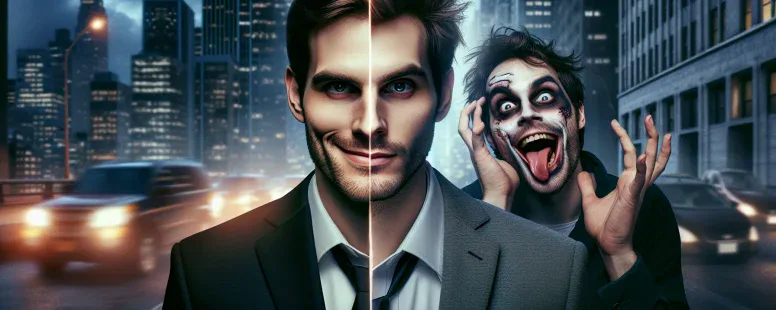
Step into a world where charm can mask chaos and a smile may hide secrets darker than midnight. You might think you can spot danger from a mile away but the lines between a sociopath and a psychopath blur like fog on a moonless night. What really sets these two apart when both seem to walk the same shadowy path?
Picture trying to read someone’s intentions as they weave stories with silver tongues or remain eerily calm while the world burns around them. Understanding the subtle yet significant differences isn’t just fascinating—it can sharpen your instincts and help you navigate relationships with more confidence. Discovering what separates a sociopath from a psychopath could change how you see the people around you and maybe even yourself.
Understanding Antisocial Personality Disorders
Antisocial Personality Disorder (ASPD) describes persistent patterns of disregard for others’ rights, rooted in Diagnostic and Statistical Manual of Mental Disorders (DSM-5) criteria. Both sociopath and psychopath types exist as subtypes within this broader disorder, according to the American Psychiatric Association[^1^]. Picture you’re observing two chess players—one acts impulsively, moving pieces with bursts of frustration, while the other calculates every step, never betraying emotion. Although both break the rules for their gain, their motivations diverge.
Real-world stories add depth to definitions. In 2016, neuroscientist Dr. James Fallon discovered his own brain scans matched those with psychopathic traits, yet he lived a law-abiding life[^2^]. His anecdote challenges the notion that all with ASPD commit crimes. whether some colleagues or friends fit this diagnostic pattern but mask it behind charm or success?
Patterns of deceit, impulsive behavior, and lack of remorse typify ASPD. You might notice repeated lying in certain individuals (think con artists like Frank Abagnale Jr.) or dangerously reckless conduct, like drivers weaving through traffic with disregard for others’ safety. Not every sociopath or psychopath gets caught; research by the University of Glasgow found many operate unnoticed within corporations or politics[^3^].
If you see differing opinions about origin and treatment, that’s because ASPD holds both biological and environmental roots—genetic predisposition, brain structure anomalies, or adverse childhood experiences all show statistical correlations. But, very few people with ASPD seek help unless compelled by legal or external pressure.
When you recognize these patterns—disregard for rules, manipulative charisma, or repeated legal trouble—you’re not just labeling; you’re identifying deep-rooted brain-behavior links. Could this awareness shift the way you navigate toxic environments? Next time someone’s actions perplex you, consider whether underlying personality dynamics shape their decisions.
[^1^]: American Psychiatric Association. (2013). DSM-5.
[^2^]: Fallon, J. (2013). “The Psychopath Inside.” Penguin Books.
[^3^]: Babiak, P., & Hare, R. D. (2006). “Snakes in Suits: When Psychopaths Go to Work.” HarperCollins.
Defining Sociopaths and Psychopaths
Sociopaths and psychopaths both belong within the spectrum of Antisocial Personality Disorder, but their core behaviors and motivations diverge in distinct ways. You’ve probably wondered if charisma can mask danger—both types excel at blending in, yet tell-tale cues often emerge with observation.
Traits of a Sociopath
Sociopaths demonstrate a pattern of volatile emotionality and impulsive actions. Unlike psychopaths, empathy exists for select individuals, sometimes dogs or family, but rarely broad empathy for strangers or society. For example, the notorious con artist Frank Abagnale, Jr., depicted in Catch Me If You Can, charmed friends yet broke social contracts without much regard for the law.
Grammatically, sociopaths shift verb tenses erratically in conversation, like “I was gonna do that, but then I do something else.” This inconsistency often matches disorganized lifestyles. Emotional outbursts, fits of rage or panic, surface under stress. They might admit, “I lose control when someone gets in my way,” revealing frustration that feels raw and unfiltered.
Community roots anchor most sociopaths. They’re prone to alliances with local groups, whereas striking partnerships based on mutual distrust. That loyalty, though, can turn quickly into betrayal if their interests change. Researchers (e.g., Blair 2008, Journal of Forensic Psychiatry & Psychology) connect these traits to chaotic upbringings or early life trauma, such as physical abuse or emotional neglect.
Traits of a Psychopath
Psychopaths chart a deeply different course. The cold, calculating nature of a psychopath shows up in measured tones and poker-faced expressions. If you recall Dr. Hannibal Lecter from Silence of the Lambs, you picture cool charm masking total detachment. Scholars at the University of Oxford (Kiehl, “The Psychopath Whisperer”, 2015) compare a psychopath’s brain to a piano missing the keys for guilt or fear.
Unlike sociopaths, grammatical constructions from psychopaths are nearly flawless, with practiced speech patterns and elaborate syntax that rarely betrays nervousness. Long sentences can roll out as if rehearsed, creating unsettling calm.
Manipulation acts as their signature. Psychopaths devise elaborate plans, segue from topic to topic with uncanny smoothness, and feigning remorse with phrases like, “I deeply regret any inconvenience I’ve caused,” even as empathy never registers. The conman Charles Sobhraj, “The Serpent,” navigated international law enforcement by charming and deceiving authorities in multiple countries.
Stories of corporate psychopaths abound. You might recall executives who orchestrate ruthless takeovers yet socialize at charity galas, unfazed by ethical quandaries. Studies (Babiak & Hare, 2006, “Snakes in Suits”) estimate up to 4% of CEOs exhibit pronounced psychopathic features, four times the prevalence found in the general population.
Do you ever think: how do people miss these traits? The answer lies partly in language, partly in behavior, but mostly in a hardwired lack of conscience revealed only through close, critical observation.
Key Differences Between a Sociopath and a Psychopath
Key differences between sociopaths and psychopaths anchor the diagnostic and practical framework for navigating antisocial personality disorder. Understanding these differences helps you see beneath the surface charisma and unravel the risk patterns hidden in social circles.
Behavioral Differences
Behavioral differences between sociopaths and psychopaths shape their interactions and daily conduct. Sociopaths, like Frank Abagnale from Catch Me If You Can, live impulsively. They’re often erratic, lashing out unexpectedly and leaving behind chaos. You might notice a neighbor who builds quick friendships but burns bridges days later, never considering long-term consequences. Psychopaths, on the other hand, operate with surgical precision. Robert Hare, the psychologist, famously described them as “ice-cold architects of manipulation.” Psychopaths plan actions meticulously, mask their intent with practiced charm, and rarely act on impulse. Think about what kind of person never let emotions leak into their voice during heated negotiations–that’s classic psychopathic conduct.
Emotional Response and Relationships
Emotional responses and relationship patterns separate sociopaths from psychopaths in their ability to connect and empathize. Sociopaths can form attachments, usually to a select few, but their relationships are fragile and turbulent. For example, a boss might champion one loyal employee but turn vicious when feeling slighted. Sociopaths sometimes blush when caught in a lie, revealing the flicker of guilt or embarrassment. Psychopaths, by contrast, remain emotionally flat. Studies using fMRI scans (e.g., Blair et al., 2006) show little brain activity in areas linked with empathy even during distressing social scenes. They mimic empathy expertly–picture smiling at a mourning friend without a trace of shared sadness beneath the surface. Relationships, for psychopaths, serve as chess pieces; disposable and purely functional.
Criminal Tendencies and Risk Factors
Criminal tendencies and risk factors differ, reflecting the interplay between genetics, neurobiology, and upbringing. Sociopaths might commit spontaneous acts of violence due to poor impulse control, leading to chaotic criminal records littered with vandalism or bar fights. Psychopaths orchestrate planned offenses; infamous serial killers like Ted Bundy epitomize this–enacting crimes with chilling strategic foresight. According to the FBI’s Behavioral Analysis Unit, only 1% of the general population exhibits psychopathic traits but they’re disproportionately represented among corporate fraudsters and white-collar criminals. While sociopaths often emerge from unstable or abusive environments, psychopaths show brain structure differences even in childhood; the amygdala, for example, appears smaller (Kiehl, 2014). why some criminals blend in at executive tables while others spiral in and out of jail? The roots stretch deep into both brain and circumstance, and understanding that can open your eyes to hidden dangers in daily life.
Causes and Diagnosis
Understanding how sociopathy and psychopathy develop can feel like staring into a labyrinth—genetic strands intertwine with environmental echoes, leaving you to wonder where fate ends and free will begins. Diagnosis rarely presents with clean edges. Instead, evaluations reveal shades of gray, shaped by evolving criteria and complicated personal histories.
Genetic and Environmental Factors
Genetic links shape both sociopaths and psychopaths, but environment always draws in its own color. Research by Dr. Adrian Raine, highlighted in The Anatomy of Violence, shows that twins separated at birth but raised apart both showing psychopathic traits. That doesn’t mean you’re destined, though—biology is rarely the whole story.
Childhood trauma, inconsistent discipline, and unstable home environments frequently mark the early lives of sociopaths. In contrast, psychopaths sometimes emerge from backgrounds that seem picture-perfect, perplexing those around them. Examples like notorious con artist Frank Abagnale Jr., who charmed his way through society, reveal how environmental cues can sharpen manipulative skills, but genes provided the canvas.
Epigenetic research suggests that stress during childhood can flip certain genes on or off, increasing the likelihood for antisocial behavior, explained by a 2014 study from the Journal of Neuroscience. Neighborhood, family strength, and even peer dynamics all matter—especially when risk factors stack up.
Diagnostic Criteria and Challenges
DSM-5 maps sociopathy and psychopathy under Antisocial Personality Disorder, but the clinical process often resembles detective work more than medicine. Professionals rely on interviews, behavioral analysis, and self-report tools like the Hare Psychopathy Checklist-Revised (PCL-R). Each metric, from superficial charm to shallow affect, forms just one puzzle piece.
False negatives slip through, as psychiatrists can’t always peer beneath meticulously crafted masks. Some individuals, like Dr. James Fallon, publicly uncover latent psychopathic traits even though high-functioning lives. Undiagnosed cases may quietly run organizations or steer public opinion—powerful positions sometimes mask core pathologies.
Cultural background complicates diagnosis. In cultures where assertiveness is prized, manipulative traits can blend with ambition, blurring clinical lines. Overlapping symptoms with borderline personality disorder or narcissistic personality disorder make confident labeling tricky, as reported in a 2020 Psychological Medicine review.
Do labels create clarity or reinforce stigma? You face a diagnostic system that’s always evolving, asking you to see both the forest and the trees—while wondering who’s really hiding in the shadows.
Media Portrayals vs. Clinical Reality
You’ve probably watched Dexter or American Psycho and thought, “That’s how all psychopaths act.” Hollywood loves its villains, each sharpened to terrifying perfection—smooth-talking, fearless, remorseless. But media gets things wrong. Is your office nemesis really hiding a body in their basement, or just planning their next passive-aggressive email? The lines easily blur when directors swap complexity for shock value, making the difference between sociopaths and psychopaths feel almost cinematic.
Clinical experts, like Dr. Robert Hare—the creator of the Hare Psychopathy Checklist (PCL-R)—offer a different lens. Unlike the exaggerated, knife-wielding maniac you’ll see in films, most people with psychopathic traits don’t end up in prison. Some end up leading boardrooms. According to a 2010 study published in Behavioral Sciences & the Law, about 4% of CEOs score high in psychopathic traits—so you’re more likely to spot one in the corner office than on a crime scene. Dr. James Fallon’s real-life discovery of his own psychopathic neurobiology while living a harmless family life stands in stark contrast to every “cold-blooded killer” stereotype (Fallon, 2013).
Sociopaths, on the other hand, rarely get the leading role. When they do appear, think of the hot-headed, unpredictable sidekick—raw nerves, quick tempers, poor planning. Media often shows them as emotional villains, but clinical criteria (see DSM-5) paint a picture that’s messier, more rooted in environmental chaos. Childhood neglect, trauma, or social instability frequently appear in their backgrounds—a pattern echoed by research from Mayo Clinic and the American Psychological Association (APA). So, diagnosable sociopathy isn’t always dramatic; sometimes it’s woven into everyday misconduct and impulsive outbursts.
When you consume news headlines screaming “psychopath” or “sociopath,” pause for a second. Ask yourself: Is the label grounded in assessment, or just a convenient villain mask? Clinicians draw lines using standardized criteria, like the DSM-5 for Antisocial Personality Disorder (APD) and the PCL-R. One blurs empathy, another shatters impulse control. Both challenge the simple black-and-white portrayals that feeds our curiosity.
You might wonder, why do these labels get thrown around so easily? Partly, it’s narrative bias. Stories need heroes and monsters. Complexity is difficult to explain in a soundbite or 90-minute movie. True psychopathy or sociopathy spotlights the tangled interaction of neurobiology, upbringing, and normalized social camouflage—not the man behind the mask or woman with a glare, but the ordinary person at your team lunch.
Consider: When’s the last time a news story questioned its own use of “psychopath” or “sociopath”? Clinical reality demands a more nuanced view; media wants audience engagement. The next time you spot a character swept up in the “crazy villain” trope, remember: the real diagnostic dividing lines might be hidden beneath the script. Anchoring your critical thinking—rather than your popcorn thrill—on the clinical definitions can help you spot the difference, and possibly navigate your human interactions with sharper clarity.
Conclusion
When you’re faced with the terms sociopath and psychopath it’s easy to fall back on stereotypes or media hype. By looking beyond the labels and understanding the subtle differences you’ll be better equipped to spot manipulative behavior and protect your own well-being.
With this knowledge you can approach relationships and workplace dynamics with greater confidence. Staying informed helps you recognize red flags early and make smarter decisions about who you trust and how you engage with those around you.
To provide the best experiences, we use technologies like cookies to store and/or access device information. Consenting to these technologies will allow us to process data such as browsing behaviour or unique IDs on this site. Not consenting or withdrawing consent, may adversely affect certain features and functions.
Functional
Always active
The technical storage or access is strictly necessary for the legitimate purpose of enabling the use of a specific service explicitly requested by the subscriber or user, or for the sole purpose of carrying out the transmission of a communication over an electronic communications network.
Preferences
The technical storage or access is necessary for the legitimate purpose of storing preferences that are not requested by the subscriber or user.
Statistics
The technical storage or access that is used exclusively for statistical purposes.The technical storage or access that is used exclusively for anonymous statistical purposes. Without a subpoena, voluntary compliance on the part of your Internet Service Provider, or additional records from a third party, information stored or retrieved for this purpose alone cannot usually be used to identify you.
Marketing
The technical storage or access is required to create user profiles to send advertising, or to track the user on a website or across several websites for similar marketing purposes.