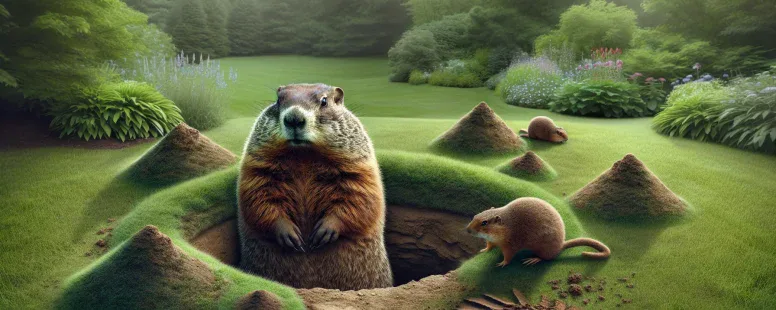
Picture yourself walking through a sun-dappled meadow as the earthy scent of fresh soil drifts up from a patchwork of burrows. You spot a furry creature darting into the shadows—was it a groundhog or a gopher? The answer isn’t as simple as you might think. Both animals tunnel beneath your feet but their worlds are strikingly different.
You might be surprised to learn that knowing the difference can transform your garden, protect your lawn, or even spark a new appreciation for the wild lives unfolding right outside your window. With a closer look at their habits and habitats you’ll unlock secrets that most people overlook. Are you ready to dig deeper and uncover what truly sets these underground neighbors apart?
Overview Of Groundhogs And Gophers
You’ll often spot groundhogs and gophers scuttling across fields, burrowing beneath gardens, and shaping the ecosystem as ecosystem engineers. Both mammals, but their lifestyles and impacts differ greatly, creating a puzzle for curious observers like you.
Key Characteristics Of Groundhogs
Groundhogs, also called woodchucks, belong to the Marmota genus. You notice their robust bodies—typically 16 to 26 inches long, tail included—and they weigh up to 14 pounds in some cases (National Geographic). Their thick brownish fur, bushy tails, and semi-upright postures give them a bear-like appearance. They dig wide burrows—sometimes over 45 feet long with multiple chambers—under lawns, fields, and forest edges. These burrows offers refuge from predators like foxes and hawks. During summertime, a groundhog might emerge at dawn, pause, and survey before munching wildflowers or vegetables. Unlike gophers, groundhogs hibernate for months—your garden rests easy in winter.
Key Characteristics Of Gophers
Gophers, on the other hand, are smaller rodents from the Geomyidae family, averaging 5 to 12 inches and weighing around 0.5 pounds (University of California IPM). Their short, soft fur can be brown or almost black—matching the soil they tunnel relentlessly through. Gophers showcase large, external cheek pouches, used for carrying roots and bulbs during a foraging trip. You’ll find their telltale dirt mounds—crescent-shaped, plugged, and fresh—dotting lawns. Unlike groundhogs, gophers rarely surface, preferring the protection and food supply of their underground tunnels. Some gardeners say: “If you seen a gopher on the lawn, it’s already found your carrots.” Gophers, active year-round, may devastate plant roots before you notice the damage, showing why knowing their habits matters.
Feature
Groundhog
Gopher
Taxonomy
Marmota genus
Geomyidae family
Size (length, weight)
16–26 inches, up to 14 pounds
5–12 inches, around 0.5 pounds
Physical Traits
Thick fur, bushy tail, upright stance
Soft fur, large cheek pouches
Burrow Size
Up to 45 feet, large chambers
Complex, shallow, many soil mounds
Hibernation
Yes, winter months
No, active year-round
Visible Signs
Large burrow entrances
Fresh, crescent-shaped soil mounds
Your observations reveal: a quick glance might miss the secretive gopher or mistake a groundhog’s den for just another hole. Ask yourself: who’s really engineering your yard, the woodchuck or the pocket gopher?
Physical Differences Between Groundhogs And Gophers
Physical distinctions between groundhogs and gophers shape every encounter you may’ve in your yard. These two rodents, often confused for one another, present unique clues in their builds and coats for you to identify at a glance.
Size And Appearance
Groundhogs impress with their large, stocky bodies, reaching up to 14 pounds and measuring about 16 to 26 inches long, tail included. Gophers, on the other hand, barely tip the scale at 0.5 pounds and strech only 5 to 14 inches in total length (National Wildlife Federation). You’ll see most groundhogs standing upright, scanning their surroundings, while gophers scurry low, making use of their compact frames to slip through tight tunnels. Groundhogs’ broad heads and short legs further contrast with the gopher’s narrow snout and elongated forefeet. Encountering their burrows, you might ask: how could creatures with such differnt builds dig similar havens under your garden?
Fur And Tail Features
Groundhogs sport thick, brownish fur, often grizzled with lighter or grayish tips, that shields them from weather changes during long hibernation periods. You can spot a groundhog’s furry, bushy tail as it suns on a lawn’s edge—a tail usually 7 to 10 inches, quite like a small raccoon’s. Gophers are wrapped in soft, velvety fur that comes in colors from light brown to almost black, adapted for life below ground. Their tails are short and almost hairless, serving more as tactile sensors that help them navigate their dark tunnels. Ever peeked into a shadowy opening and pondered: is that a groundhog’s bushy brush, or a gopher’s pale rope, vanishing into the soil?
Observing these details, you harness the power to distinguish two world-renowned diggers—no need to only rely on their digging.
Habitat And Range
Groundhogs and gophers carve out their lives in strikingly different spaces, each shaping the land in its own way. Your backyard ecosystem might host one or both, yet their homes reveal unique stories.
Preferred Environments
Groundhogs thrive in open fields, meadows, forest edges, and grassy slopes, where sunlight bathes the entrance to their expansive burrows. You’ll sometimes spot them basking at the mouth of a tunnel, surveying surroundings or feasting on clover. Farms and suburban lawns, with their easy digging and abundant greens, draws them close to human habitats (Penn State Extension). In contrast, gophers gravitate to loose, sandy soils found in prairies, pastures, and gardens. Soft earth lets them tunnel with astonishing speed, constructing labyrinths beneath vegetable patches and landscapes alike. You might notice fan-shaped mounds, a hallmark of their secretive work. Unlike groundhogs, gophers stick to underground paths, rarely venturing into open spaces.
Picture looking at a vacant lot and trying to guess: Is it a groundhog’s manor or a gopher’s maze beneath your feet? Landscapes, vegetation, and even the soil itself might whisper the resident’s identity if you pay enough attention.
Geographic Distribution
Groundhogs, as members of the Marmota monax species, live mostly in the eastern and central United States, reaching from Alabama all the way up to Alaska and much of Canada. You’ll see their range stretching far into temperate forests, their homes sometimes edging up to city limits in places like Pennsylvania or Ohio. They rarely push into arid or deeply southern regions.
Gophers, mainly the pocket gopher family Geomyidae, claim turf mostly across western and central North America. They dominates the Great Plains, stretches through Texas, and dig deep under California’s valleys. Some species even extend into Central America. Their adaptability to diverse soils—from cultivated fields to desert plains—lets them outnumber groundhogs across wider terrain.
When you walk through wild grasses in Minnesota or stroll a California orchard, ask yourself: does the ground’s soft upheaval mark the passage of a gopher, or could a groundhog—in a moment of sunlight—be looking back at you?
Behavior And Lifestyle
Behavior and lifestyle differences between groundhogs and gophers shape everything, from their digging styles to their daily routines. Both shape the landscape in noticably different ways, leaving unique imprints on your garden’s soil, but which one leaves a bigger mark?
Feeding Habits
Feeding habits set groundhogs apart from gophers in both preference and impact. Groundhogs, these chunky vegetarians, enjoy feasting above ground—clovers, dandelions, and garden veggies like beans or peas often making up their buffet [Smithsonian’s National Zoo]. Gophers, meanwhile, use those famous fur-lined cheek pouches to sneak roots, tubers, and bulbs beneath the surface—your carrots and potatoes can disappear over night. One Maryland gardener described seeing a broccoli plant vanish “right before her eyes,” pulled underground as if the soil itself was hungry.
Both critters threaten crops, but groundhogs surface boldly for leafy greens, while gophers create invisible plant graveyards below. Which pest comes for your harvest sometimes, depends not just on taste but on how bold they feeling that day.
Burrowing And Nesting Patterns
Burrowing and nesting patterns define the secret architecture under your feet. Groundhogs, architects of sprawling towns, dig tunnels up to 66 feet, forming rooms for sleeping, hibernation, and nurseries. Some burrows host generations—one Ohio scientist noticed groundhog “condos” with five entrances, as if the woodchucks expected visitors. They even lines nest chambers with dry grasses for winter comfort; every burrow stands as testament to their engineering prowess [University of Michigan Animal Diversity Web].
Gophers work on a smaller but more aggressive scale. Their tunnels, typically 200-2,000 square feet, are straighter and nearer to the surface, studded with soil “molehills.” Sometimes, gophers relocate tunnel sections overnight—an ecosystem remakes itself as you sleep. Urban planners could envy their dirt-moving efficiency, but most homeowners see only ruined lawns and raised mounds.
Which tunnels belong to which rodent? If you find high mounds with plugged centers, expect gopher residents. Find wide, open holes rimmed with gnawed vegetation, and it’s a groundhog’s signature. Each animal leaves reveal clues in the patterns, so look closely the next time you step outside—your own backyard may hide more drama than you’d picture.
Common Misconceptions And Identification Tips
You probably think any small brown digger in your yard is just a “burrowing rodent”—but the tale isn’t so simple. Mistaking a groundhog for a gopher can set your yard down the wrong path, like puzzling over footprints in wet cement. Did you ever pause and ask, “What’s really living under my tomatoes?” Many do mix’em up and that’s no surprise since both leave dirt clues behind, but they live separate lives right beneath your turf.
Numerous homeowners—especially those in the Midwest and Northeast (see National Wildlife Federation, 2023)—confuse groundhogs’ chunky silhouettes for the swift shadow of gophers. Groundhogs, when startled, stand upright like sentinels at a fort’s gate, which gophers never do; they hugs the earth tightly, like living shadows. One garden enthusiast from Michigan shared, “My neighbor swore it was a gopher munching her herbs, but one brisk evening she spotted a shaggy brown back sitting up, watching traffic go by. She realized her gopher theory was full of holes.” Groundhogs—Marmota monax—eat clover and grasses above ground, while gophers (Thomomys and Geomys species) tirelessly pull roots under the surface, rarely surfacing except to push fresh dirt up in crescent-shaped mounds.
For clear differentiation, look for four signs:
Size check: Groundhogs look cat-sized (8–14 lbs), gophers rarely tip the scale at 2 lbs.
Sightings: Groundhogs sunbathe openly, gophers rarely risk open air.
Misconceptions can linger, especially online—some sites even use “gopher” and “groundhog” interchangeably (see Audubon reports). Don’t let vague terms muddy your projects. You’ll want to notice the little things: If the figure pops up to watch you, it’s a groundhog. If all you see are fresh heaps of dirt and not a peep, a gopher’s likely at work.
Picture, next spring, standing amid your tomatoes or wildflowers, and knowing instantly which neighbor’s tunneling below—armed with nothing but sharp eyes and sharper questions. That’s mastery over mystery, right in your own backyard.
Groundhogs and gophers may love tunnels, but to untangle their riddles, you needs more than one clue—so look twice, dig deeper, and the landscape’s story unfolds beneath your feet.
Conclusion
When you know what sets groundhogs and gophers apart you’re better equipped to manage your yard and protect your plants. Paying attention to the subtle signs each animal leaves behind can help you make informed decisions about wildlife management and foster a deeper connection with your local ecosystem. The next time you spot a burrow or a mound you’ll have the confidence to identify its architect and appreciate the unique role each animal plays in your environment.
Published: July 25, 2025 at 8:49 am by Ellie B, Site owner & Publisher
To provide the best experiences, we use technologies like cookies to store and/or access device information. Consenting to these technologies will allow us to process data such as browsing behaviour or unique IDs on this site. Not consenting or withdrawing consent, may adversely affect certain features and functions.
Functional
Always active
The technical storage or access is strictly necessary for the legitimate purpose of enabling the use of a specific service explicitly requested by the subscriber or user, or for the sole purpose of carrying out the transmission of a communication over an electronic communications network.
Preferences
The technical storage or access is necessary for the legitimate purpose of storing preferences that are not requested by the subscriber or user.
Statistics
The technical storage or access that is used exclusively for statistical purposes.The technical storage or access that is used exclusively for anonymous statistical purposes. Without a subpoena, voluntary compliance on the part of your Internet Service Provider, or additional records from a third party, information stored or retrieved for this purpose alone cannot usually be used to identify you.
Marketing
The technical storage or access is required to create user profiles to send advertising, or to track the user on a website or across several websites for similar marketing purposes.