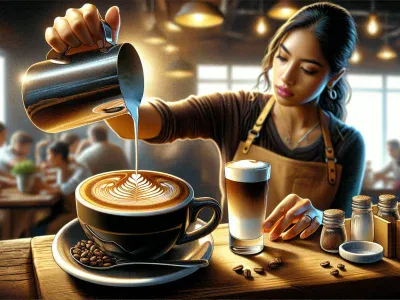
Picture yourself standing in a bustling café, the scent of roasted beans swirling around you while the hiss of steaming milk fills the air. Your eyes scan the menu—latte or mocha? Both promise creamy comfort in a cup, yet each offers a distinct adventure for your taste buds. Do you crave the gentle embrace of silky espresso and milk or the rich, chocolate-kissed decadence that turns an ordinary morning into something extraordinary?
Choosing between a latte and a mocha isn’t just about flavor—it’s about the experience. One delivers subtle harmony while the other tempts with a sweet twist and a touch of indulgence. Understanding the difference opens up a world of possibilities, helping you discover a new favorite or elevate your coffee ritual in ways you never expected.
What Is a Latte?
A latte gives you a canvas of texture and warmth. Each sip pairs creamy steamed milk with bold espresso, creating a mellow balance that echoes through the café air.
Key Ingredients of a Latte
A latte contains three essentials: espresso, steamed milk, and milk foam. Most cafés blend double shots of espresso with about 8 to 10 oz steamed milk, then finish with a thin layer of foam on top. You’ll see this in chains like Starbucks where a “tall” latte follows a 1:3 espresso to milk ratio. Artisan coffee shops sometimes infuse seasonal flavors, but the classic profile stays smooth.
Preparation Method of a Latte
Baristas pull a rich espresso shot, pouring it into a preheated cup first. Next, they steam whole milk to create microfoam, not just bubbles—getting this smooth, velvety milk is considered the heart of latte-making. The milk gets poured over the espresso, letting the layers blend and swirl. Many baristas add latte art, hearts or rosettas, by skillfully moving the pitcher as they pour. The calm ritual of stretching the milk sets lattes apart from cappuccinos or flat whites, preparing a drink that’s soft enough to match a morning pastry or an afternoon pause. If you ever wondered why your latte feels soothing, it’s the harmony in its construction.
What Is a Mocha?
A mocha places chocolate front and center while keeping its espresso foundation intact. Picture that moment when the boldness of coffee meets the sweetness of chocolate—this is the essence of a mocha. You experience a fusion of chocolate, coffee, and milk, with each sip delivering layers of smooth texture and rich cocoa aroma.
Key Ingredients of a Mocha
A mocha features three main elements—espresso, chocolate, and steamed milk. Espresso forms the base, giving depth and intensity to the drink. Chocolate often appears in the form of cocoa powder, sweetened chocolate syrup, or sometimes even melted chocolate bars. For example, specialty coffee shops may use single-origin dark chocolate syrup to add distinct character. Steamed milk brings creaminess, blending the espresso and chocolate together. Baristas frequently finish the drink with a dollop of whipped cream or a sprinkle of cocoa powder, which creates visual appeal and a richer mouthfeel. The harmonious combination of these elements sets mocha apart from classics like latte or cappuccino.
Preparation Method of a Mocha
Baristas start by pulling a shot (or two) of fresh espresso into a cup. Layering follows, with chocolate syrup or powder added while the espresso’s still hot. This step lets the chocolate dissolve completely, preventing unpleasant clumps or inconsistent flavor. Next, you see steamed milk poured in, blending all flavors into a smooth mixture. Some cafés swirl the chocolate into elaborate latte art, or finish with whipped cream and a dusting of cocoa for extra flair. Variations abound—some use white chocolate instead of dark, some add flavored syrups. The result’s always a drink that invites both chocolate lovers and coffee enthusiasts to savor each decadent sip.
Baristas sometimes ask whether you like your mocha more chocolate-forward or espresso-dominant, and this choice can shape your entire coffee shop visit.
Key Differences Between a Latte and a Mocha
Both latte and mocha offer distinct experiences that go beyond taste. In your café journey, knowing these differences helps you match your mood, cravings, or even the weather outside to a perfect cup.
Flavor Profiles
Latte showcases a gentle, creamy espresso blend, letting milk’s subtle sweetness rise. If you ever wondered why some drinks comfort instantly, think of a latte’s silk-smooth microfoam bathing your palate in mild warmth. Coffee aficionados compare its taste to a blank canvas—subtle, mellow, and flexible, ideal for experimenting with syrups or spices.
Mocha, on the other hand, delivers a chocolate-coffee duet where cocoa notes dances with bitter espresso. Picture sipping a dessert and coffee at once—mocha offers that unique dichotomy. Baristas recount how guests light up at the first taste of rich chocolate merging with deep roast. It’s your answer when you craving both cocoa and caffeine in a single cup. According to a 2023 Specialty Coffee Association report, over 65% of US cafés saw mochas become the top winter seller, reflecting its satisfying flavor complexity.
Caffeine Content
Latte contains less caffeine than mocha, due to milk volume diluting the espresso ratio. On average, an 8 oz latte with a single shot contains 63 mg caffeine per Mayo Clinic guidelines. Mocha, typically featuring equal espresso portions, sometimes less milk, and more sugar, clocks in similar caffeine—though your chocolate pick (dark vs. milk) can boost this.
Here’s a breakdown:
Drink
Espresso (shots)
Avg Caffeine (mg/8 oz)
Variable Factor
Latte
1
63
Milk volume
Mocha
1
70-80
Chocolate content
Ask a barista next time: “Does the chocolate boost the buzz?” The answer is yes, if cocoa is dark or bittersweet, since dark chocolate adds extra caffeine.
Visual Appearance
Latte features pale beige hues swirled with milk foam art—think classic hearts or rosettas brightening your morning. Instagram exploded with #latteart because of its whimsical surface patterns and clean glass presentation.
Mocha, but, seduces with chocolate ripples and often wears whipped cream crowns dusted with cocoa powder or drizzle. You won’t see intricate foam designs; instead, mocha’s striking contrast pulls eyes instantly from across the marble counter. If you remember seeing a cup topped with creamy mountains and rich brown streaks, you probably saw a mocha.
In essence, when you order a latte, you get refined beauty and texture; a mocha, you get visual indulgence that foreshadows its rich taste.
Choosing Between a Latte and a Mocha
Every café visit turns into a decision tree for you, standing before the counter with your senses heightened by roasted coffee, the hiss of the steam wand, and the distant laughter from the next table. Picture reaching for a menu—espresso drinks blooming with choice—and pausing at the divide: latte or mocha?
Flavor, mood, or memory sometimes guides this choice. You might lean toward a latte if you crave a balanced foundation where espresso and milk form a cloud-like harmony. Baristas often describe the latte as the comfort drink; it’s like warm cashmere in a cup. If you want the ultimate smoothness, ordering a latte means highlighting the espresso’s nuanced notes (SCAA, 2023), with milk serving as a gentle buffer—never overwhelming, always supporting.
Sometimes, though, you chase nostalgia or bold indulgence. Here the mocha commands your attention, swathed in aromas of chocolate that recall childhood treats. Chocolate lovers—think of café mochas topped with peaks of whipped cream and dusted cocoa—often liken the experience to drinking dessert with a caffeine twist. Researchers at Oxford University found chocolate’s scent alone sharpens your anticipation, creating a multi-layered taste sensation (Spence, 2020).
You might ask yourself: Are you sipping for focus or for comfort? Do you want a creamy, almost minimalist cup, or a layered drink with visual excess—chocolate swirls and whipped cream? A friend once told me their best brainstorming sessions happened over mochas—complex thoughts mirrored in chocolate-espresso fusion—while their quiet afternoons paired best with lattes, perfect for slow sips and daydreams.
Social context matters, too. A latte on a first meeting can signal subtlety and approachability, while a mocha in hand often sparks curiosity. Why the extra chocolate today? Is it celebration, or an antidote for a difficult morning?
Nutrition sometimes makes its claim: according to the USDA, a 16-ounce mocha contains about 290 calories, mostly from chocolate and cream, while a latte of the same size hovers around 190 (with skim milk). If monitoring sugar or caloric intake, these facts can plant the seed of doubt or assurance.
Here’s a quick comparison:
Drink
Flavor Profile
Caffeine (mg/16oz)
Calories (16oz)
Signature Element
Latte
Smooth, creamy espresso
150–170
190
Microfoam & latte art
Mocha
Rich coffee, chocolate
150–180
290
Chocolate & whipped cream
Both drinks anchor themselves in espresso, yet steer your experience toward different emotional landscapes. A latte lets espresso shine in subtle tones. A mocha adds cocoa-laden drama. Whichever you choose, you’re not just ordering a beverage—you’re curating a moment, sometimes for the company, sometimes for yourself.
When you think about it, waiting in line with other coffee hopefuls, if your favorite orders shape how others see you—maybe a latte on Monday signals productivity but a mocha on Friday says something about celebration? Next time, consider not just what your taste buds crave but what story you want your coffee to tell. And yes—don’t the baristas, sometimes forget your order once or twice, but that little uncertainty just adds to the charm of your ritual.
Conclusion
Your next visit to the café can be more than just a caffeine fix—it’s a chance to express your mood and savor the experience you crave. Whether you’re drawn to the creamy simplicity of a latte or the decadent layers of a mocha your choice says something about you.
Let your coffee order reflect your moment. Explore both drinks with confidence and you might discover a new favorite that perfectly matches your day.
To provide the best experiences, we use technologies like cookies to store and/or access device information. Consenting to these technologies will allow us to process data such as browsing behaviour or unique IDs on this site. Not consenting or withdrawing consent, may adversely affect certain features and functions.
Functional
Always active
The technical storage or access is strictly necessary for the legitimate purpose of enabling the use of a specific service explicitly requested by the subscriber or user, or for the sole purpose of carrying out the transmission of a communication over an electronic communications network.
Preferences
The technical storage or access is necessary for the legitimate purpose of storing preferences that are not requested by the subscriber or user.
Statistics
The technical storage or access that is used exclusively for statistical purposes.The technical storage or access that is used exclusively for anonymous statistical purposes. Without a subpoena, voluntary compliance on the part of your Internet Service Provider, or additional records from a third party, information stored or retrieved for this purpose alone cannot usually be used to identify you.
Marketing
The technical storage or access is required to create user profiles to send advertising, or to track the user on a website or across several websites for similar marketing purposes.