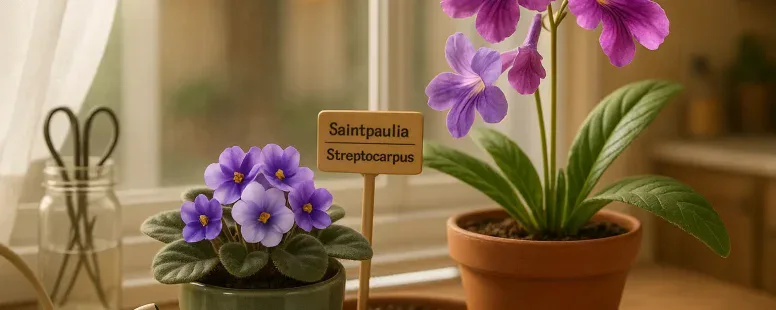
You can get surprising results when you place an African violet next to a Cape primrose on a sunny windowsill: similar-sized rosettes, bright blooms, but very different needs under the surface. African Violet vs. Cape Primrose is not just a comparison of pretty flowers: it’s a guide to what each plant asks of you, light, water, potting, and patience. This article shows the essential differences and gives clear, practical advice so you can choose the right plant for your home, schedule, and style. Read on to discover which one will thrive on your shelf and why.
Origins, Taxonomy, And Key Differences At A Glance
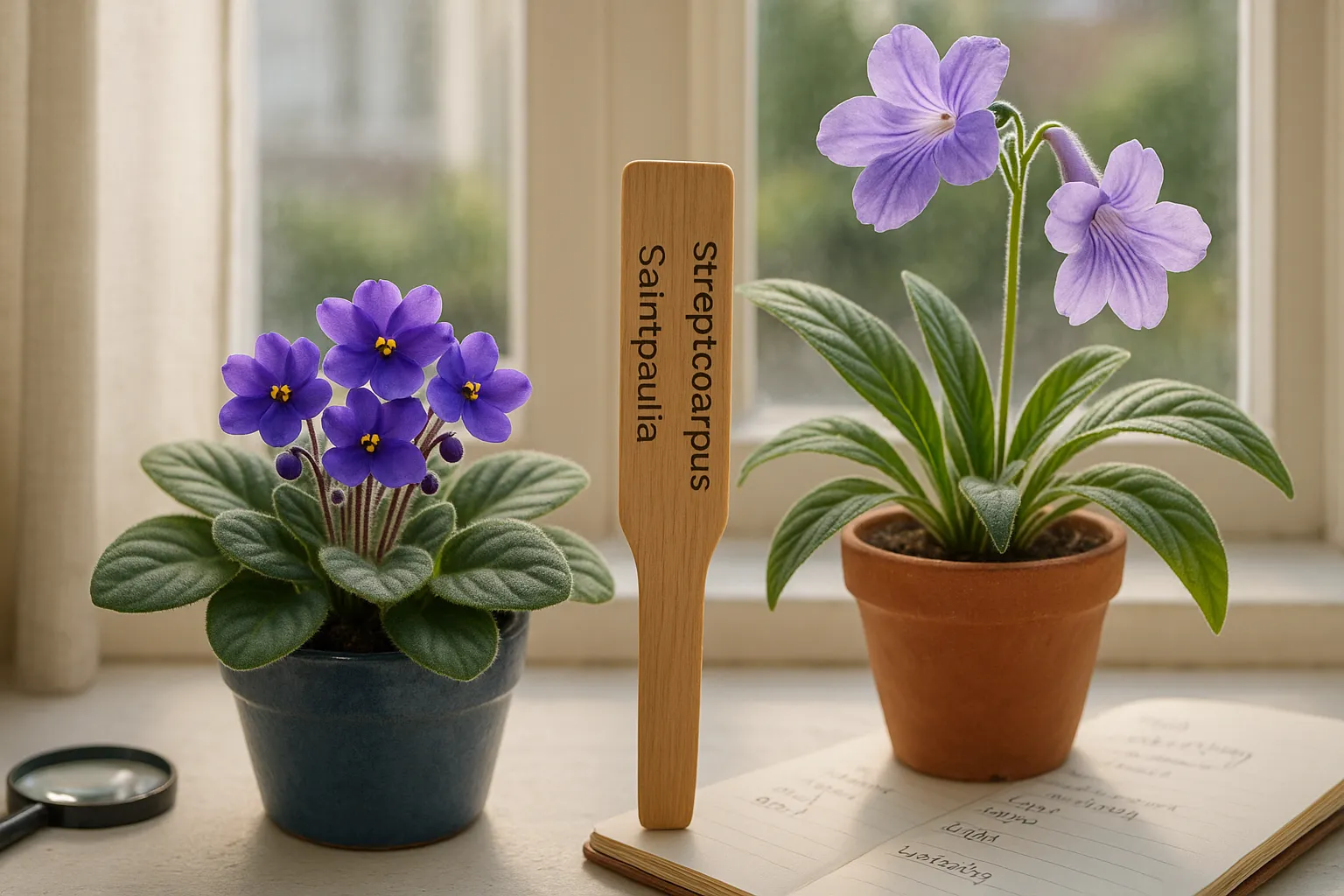
Fact: African violets are Saintpaulia species and Cape primroses are mainly Streptocarpus: they come from different parts of Africa and belong to related but distinct genera.
Saintpaulia ionantha (African violet) originated in the cloud forests of eastern Africa, especially Tanzania and Kenya. Streptocarpus (Cape primrose) comes largely from South Africa and Madagascar: the name covers several species and hybrids including Streptocarpus saxorum and Streptocarpus x hybridus. Taxonomically both sit in the Gesneriaceae family, so they share floral features, but their growth forms and cultural needs diverge.
Key differences at a glance:
Origin and genus: Saintpaulia vs. Streptocarpus. Each has unique wild habitats that shape care needs.
Growth habit: African violets form tight rosettes: many Cape primroses produce single-stemmed or trailing leaves and elongated flower stalks.
Bloom habit: Violets bloom from the crown repeatedly: many Streptocarpus produce waves of large tubular flowers on separate scapes.
These distinctions matter because they tell you how each plant manages light, water, and nutrients. If you want quick clarity: African violets reward consistent indoor conditions and frequent small blooms: Cape primroses tolerate lower light and often give bigger, showy flowers but may need slightly different potting and watering routines.
Appearance And Growth Habit
Fact: African violets grow as compact rosettes while Cape primroses show varied forms from trailing to upright: that affects where you place them.
Flowers: Shape, Color, And Blooming Patterns
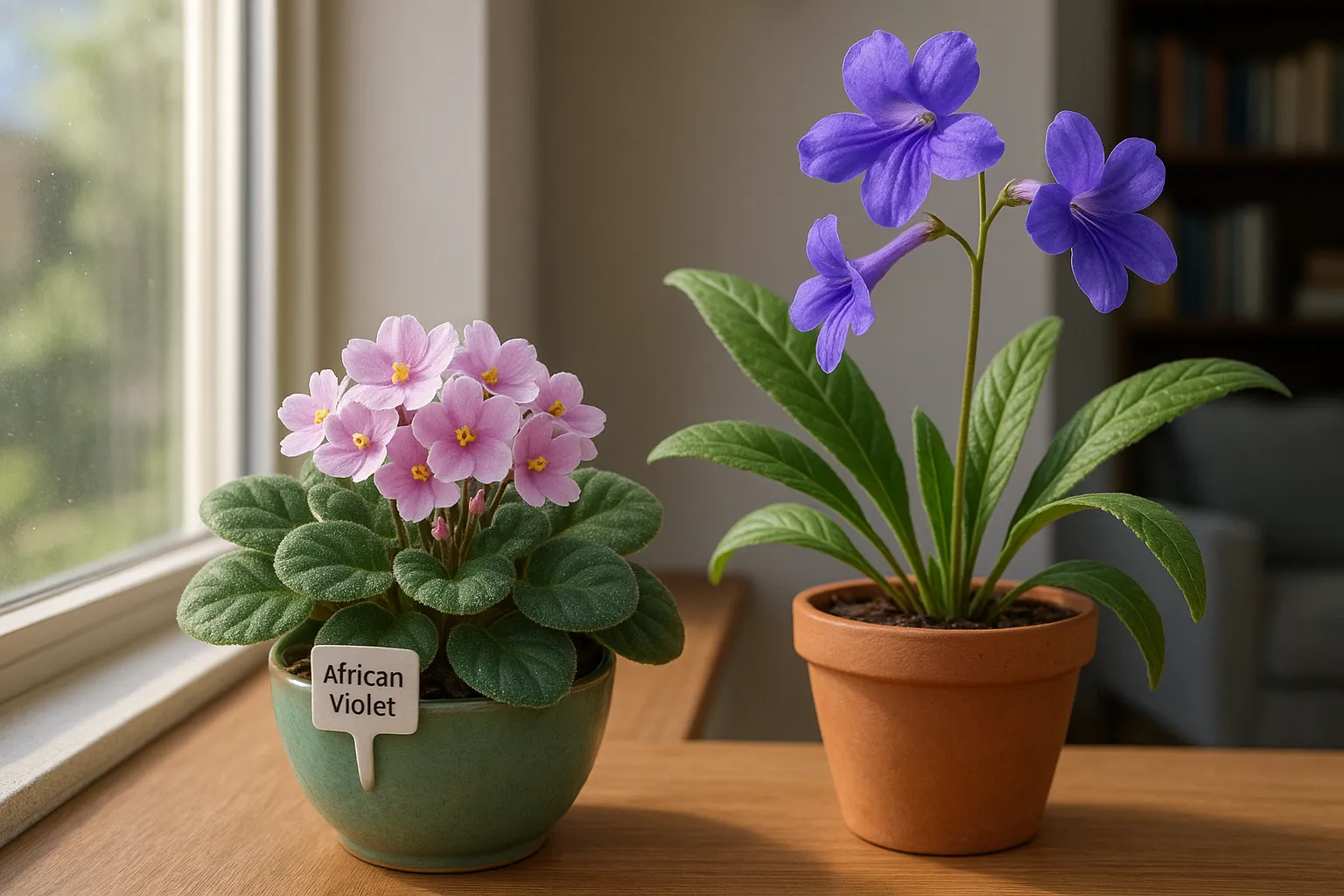
African violets produce small to medium, five-petaled flowers. Colors range from white to deep violet, pink, bi-colors, and even ruffled forms. Flowers sit close to the leaf crown on short peduncles and can bloom year-round if conditions stay steady. You’ll get many small clusters rather than a few large blooms.
Cape primroses make larger, trumpet-shaped or open-faced flowers on tall or arching stems. Colors include blue, purple, pink, red, and white: hybrids often show dramatic veining or flares. Streptocarpus commonly blooms in waves: a strong flush, then a rest. The blooms are showier per flower, but less continuous than a perfectly behaved African violet.
Foliage And Plant Size
African violet leaves are soft, fuzzy, and rounded. Mature rosettes usually stay between 3–8 inches across for common varieties. Some miniature cultivars stay under 3 inches.
Cape primrose leaves vary: some species have long single leaves (Streptocarpus grandis), others form carpets of small leaves (S. saxorum) or elongated rosettes. Plant size ranges from compact to 12+ inches across for vigorous hybrids. The leaf texture often is smoother and thinner than African violet leaves, and stems may be more pronounced.
These physical traits guide placement: pick African violets for small pots and tight shelves: choose Streptocarpus if you want dramatic flowers and don’t mind a larger spread.
Care Requirements Compared
Fact: African violets need consistent, indirect light and careful watering: Cape primroses accept slightly lower light and prefer drier tops between waterings.
Light And Placement
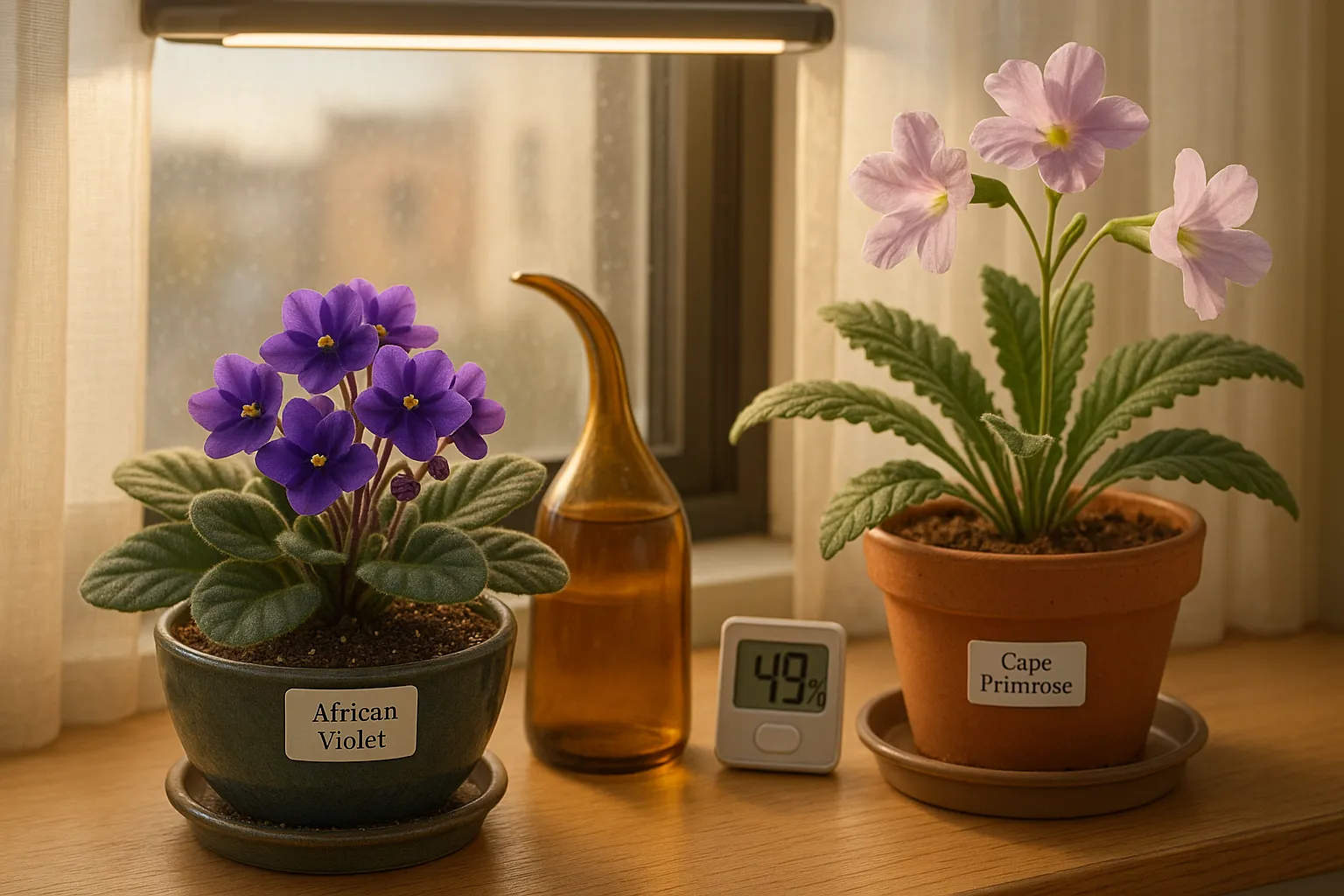
African violets prefer bright, indirect light. Place them on an east- or north-facing window or use sheer curtains. They respond well to 12–14 hours of moderate light including fluorescent or LED grow lights. Too much direct sun scorches leaves: too little light reduces bloom.
Cape primroses tolerate lower light better than most African violets. They do well on east, north, or shaded south windows and often thrive under indirect windowsill light. If you want large blooms, provide bright, indirect light or supplement with grow lighting for 10–12 hours.
Watering And Humidity
African violets dislike wet crowns. Water from the bottom or use a narrow-mouthed jug to pour at the soil surface while avoiding the crown. Keep soil evenly moist but not soggy: allow the top 10–15% of the potting mix to dry between waterings. They enjoy moderate humidity (40–60%).
Cape primroses prefer a slightly drier surface between waterings. Water thoroughly, then allow the top third of the soil to dry. They tolerate lower humidity better, but higher humidity improves bloom quality. Avoid water on thin leaves to prevent spotting and rot.
Soil, Potting Mix, And Drainage
African violets need a light, fast-draining mix. Use mixes labeled for African violets or blend peat-free mixes with perlite and a little fine bark. Good drainage is vital, pots should have clear drainage and you must not leave plants sitting in water for long.
Cape primroses also need well-draining soil but can handle a slightly heavier mix with more organic matter. A standard indoor potting mix amended with perlite and coconut coir works well. Ensure the pot allows excess water to escape.
Temperature And Fertilization
African violets prefer 65–75°F (18–24°C) and steady temps: sudden drops stress them. Use a balanced, mild fertilizer formulated for African violets at half strength every 2–4 weeks during active growth.
Cape primroses prefer similar temperatures but often tolerate cooler nights (60–68°F / 15–20°C). Feed with a balanced fertilizer during growth: some growers switch to a bloom-boost formula during heavy flowering. Avoid over-fertilizing either plant: dark, leggy growth or leaf burn will follow.
Propagation And Repotting Methods
Fact: African violets propagate reliably from leaf cuttings: many Cape primroses root from leaf sections or seeds but require different handling.
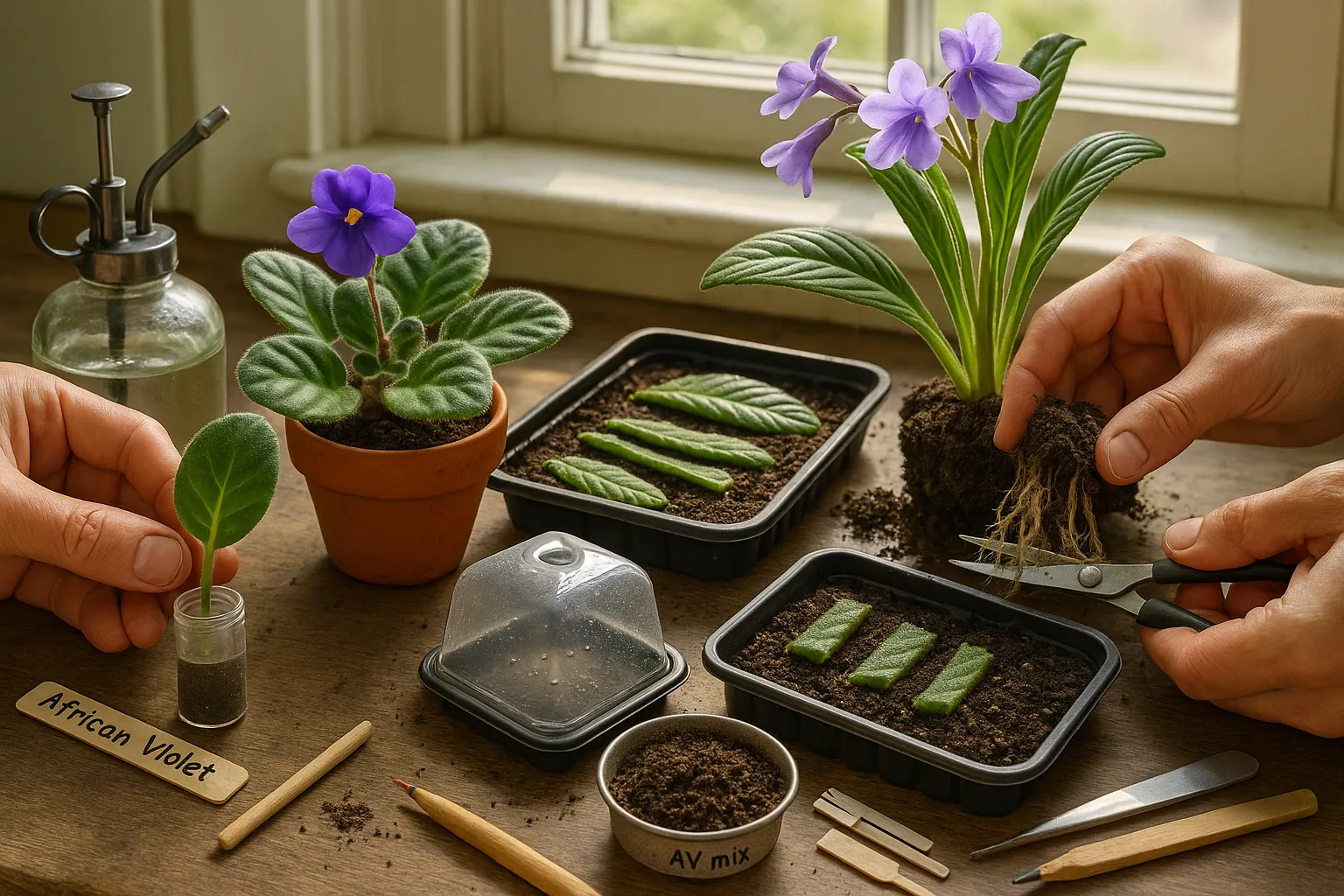
African violet: The simplest method is leaf cuttings. Insert a healthy petiole into moist rooting mix or water: roots and new plantlets form at the leaf base in weeks. You can also grow from seed, but hybrids often don’t come true to type.
Cape primrose: Streptocarpus species propagate from leaf cuttings, crown division, and seeds. Some growers use whole-leaf cuttings laid on damp mix: others slice leaves into sections and plant the pieces, each produces a new plant. Streptocarpus seeds are tiny: start them on a firm, moist surface and keep high humidity until germination.
Division works for clumping Streptocarpus: separate crowns in spring and pot individually.
When And How To Repot
African violets like to be slightly root-bound. Repot every 12–18 months into the next size up (one pot size larger). Use fresh African violet mix, firm the soil gently, and water lightly after repotting.
Cape primroses often need repotting annually if they’re fast growers: divide and refresh soil in spring. Choose a pot that gives room for new growth. Always check roots: prune any mushy areas and use fresh, well-draining mix to reduce disease risk.
Common Problems, Pests, And Troubleshooting
Fact: Both plants face similar pests like mealybugs and thrips, but cultural issues like crown rot are more common in African violets while leaf spots may trouble Streptocarpus.
Pests And Diseases: Identification And Treatment
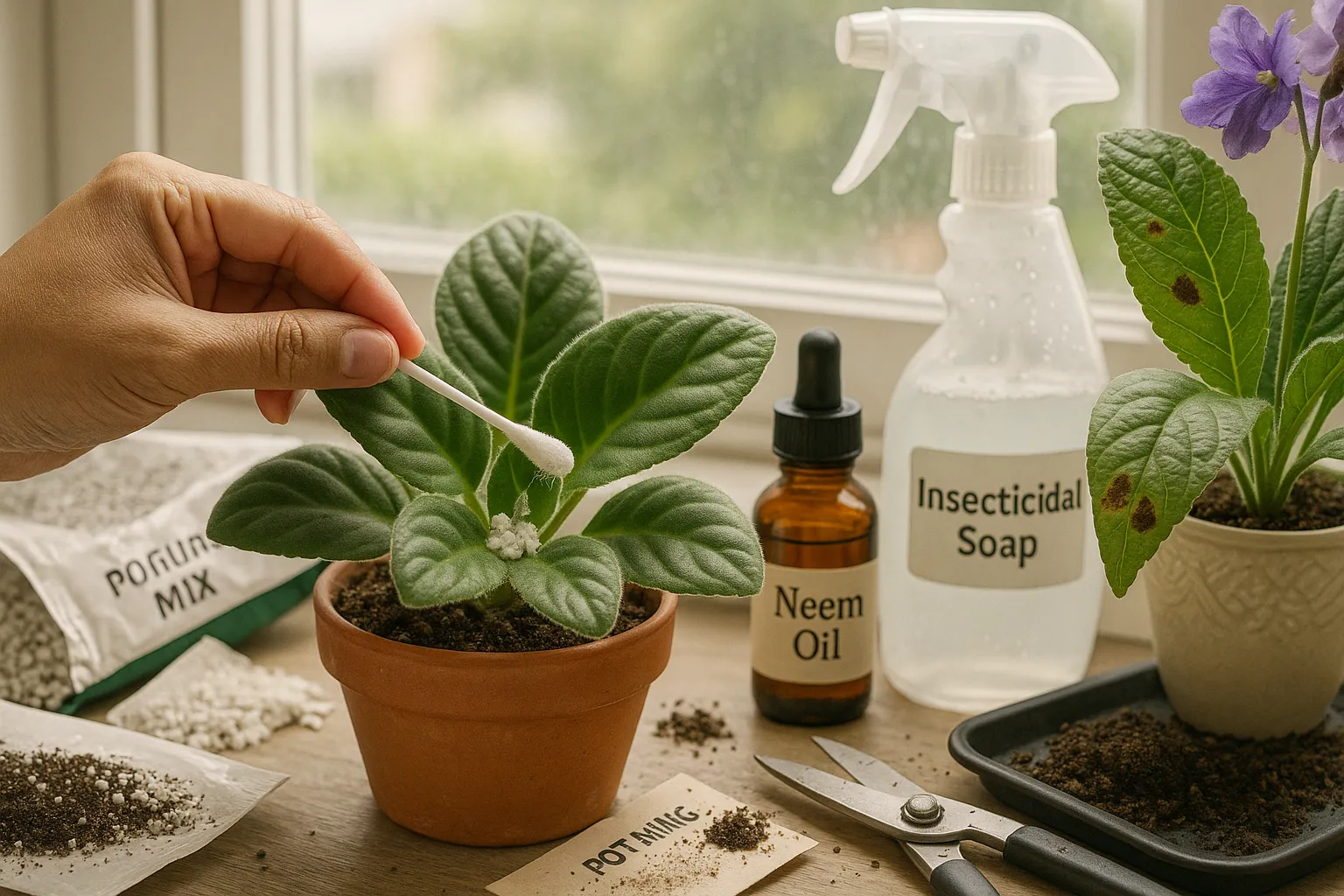
Mealybugs and aphids: Look for cottony clusters or sticky residue. Treat with insecticidal soap, neem oil, or by dabbing with isopropyl alcohol on a cotton swab. Repeat treatments are usually needed.
Thrips and cyclamen mites: These insects damage buds and deform flowers. Isolate affected plants. Use miticides for mites or systemic insecticides carefully, following label directions. Replace heavily infested potting mix.
Fungal and bacterial rot: Overwatering causes root and crown rot in African violets. Remove affected tissue, repot into fresh mix, and reduce watering. For Streptocarpus, leaf spot fungi can develop on damp leaves, improve airflow and remove affected leaves.
Cultural Issues: Bud Drop, Root Rot, And Poor Blooming
Bud drop: Clear causes include temperature swings, low humidity, and sudden drought. African violets are especially sensitive: keep conditions steady and avoid touching buds.
Root rot: This results from poor drainage or prolonged wet soil. Remove damaged roots, repot in clean, well-draining mix, and let the soil dry a bit before watering again.
Poor blooming: Too little light, over-fertilizing, or incorrect temperatures reduce bloom. For African violets, increase indirect light and use a bloom-formulation fertilizer at low strength. For Cape primroses, ensure bright indirect light and rest between heavy bloom cycles.
Side-By-Side Practical Comparison For Growers
Fact: For most indoor growers, African violets demand more consistent micro-care: Cape primroses give bigger single blooms and tolerate varied light.
Best Choice For Beginners, Small Spaces, And Collections
Beginners: African violets are beginner-friendly if you follow simple rules, no crown watering, steady light, and regular, light feeding. They reward routine with frequent flowers. Cape primroses are forgiving too, but seed or leaf propagation and occasional larger size may intimidate a first-timer.
Small spaces: African violets win for tiny apartments and windowsill gardens because many cultivars stay compact. Mini and semi-mini varieties fit narrow sills and shelves.
Collections: Both merit a spot in a collection. Collectors often grow Saintpaulia for the sheer variety of flower forms and colors. Streptocarpus collectors prize dramatic blooms and unusual leaf forms. If you want diversity, keep both, each brings different texture and seasonal interest.
Summary Of Care Effort, Bloom Reliability, And Decorative Use
Care effort: African violets require consistent care, regular, careful watering and stable light. Cape primroses require moderate care with more tolerance for light variation.
Bloom reliability: African violets bloom more continuously under steady conditions. Streptocarpus produce bigger, showy flushes.
Decorative use: Use African violets for tight, formal displays and table clusters. Use Cape primroses for statement pots, hanging baskets, or where you want bold flowers.
If you must pick one: choose African violet for small, steady displays and if you enjoy fiddly, rewarding care. Choose Cape primrose if you want dramatic blooms and slightly lower fuss. Try both if you can, each expands your skill and brings different moods to your home.
To provide the best experiences, we use technologies like cookies to store and/or access device information. Consenting to these technologies will allow us to process data such as browsing behaviour or unique IDs on this site. Not consenting or withdrawing consent, may adversely affect certain features and functions.
Functional
Always active
The technical storage or access is strictly necessary for the legitimate purpose of enabling the use of a specific service explicitly requested by the subscriber or user, or for the sole purpose of carrying out the transmission of a communication over an electronic communications network.
Preferences
The technical storage or access is necessary for the legitimate purpose of storing preferences that are not requested by the subscriber or user.
Statistics
The technical storage or access that is used exclusively for statistical purposes.The technical storage or access that is used exclusively for anonymous statistical purposes. Without a subpoena, voluntary compliance on the part of your Internet Service Provider, or additional records from a third party, information stored or retrieved for this purpose alone cannot usually be used to identify you.
Marketing
The technical storage or access is required to create user profiles to send advertising, or to track the user on a website or across several websites for similar marketing purposes.