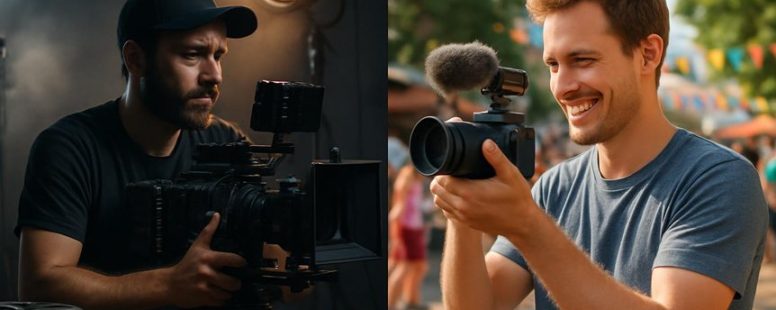
Imagine holding a camera that captures not just images, but emotions and stories woven with artistry. The line between cinematography and videography is as sharp as a knife and can determine whether your project feels like a masterpiece or just a simple recording.
Understanding these subtle yet powerful differences can transform your work from ordinary to extraordinary, revealing a surprising benefit—an enhanced ability to connect deeply with your audience.
Dive in, because unlocking this knowledge could be the game-changer your creative journey has been waiting for.
What’s the Difference Between Cinematography and Videography?
Cinematography is about creating visual stories with artful lighting and camera movement. It focuses on making the scene look beautiful and emotional. For example, a filmmaker might use soft lighting and slow camera moves to make a romantic scene feel warm and intimate. The goal is to tell a story that makes viewers feel something deep inside. Think of cinematography as painting with a camera — it’s about setting a mood and guiding the audience’s feelings.
Videography, however, is mostly about capturing events clearly and efficiently. It is used for things like weddings, interviews, or news reports. Videographers want to record what happens as it happens, with simple lighting and steady shots. Their main goal is to make sure everything is visible and easy to understand. For example, a videographer at a wedding might quickly move around to catch the ceremony from different angles, focusing on getting good coverage rather than creating a mood.
Some people think cinematography is more creative and artistic, while videography is more practical and straightforward. Both are useful, but they serve different purposes. If you want to create a film that tells a story with emotion, cinematography is the way to go. If you need to record an event and tell what happened clearly, videography is better suited.
How Do Equipment and Techniques Differ in Cinematography and Videography?
Cinematography and videography use different equipment and techniques, which change how each looks. Cinematographers often pick high-end, specialized gear like cinema cameras from brands like RED or ARRI to get a very polished, movie-like quality. They also use tools like dolly tracks, steadicams, and large lighting setups to control every shot perfectly. These choices help make movies look dramatic and professional.
Videographers, on the other hand, usually use more simple and portable equipment. They might shoot with a DSLR or mirrorless camera from brands like Canon or Sony that are easier to carry around. They often use smaller tripods, handheld stabilizers, or even smartphones. These tools help them quickly capture events like weddings or interviews without needing complicated setups.
Some say cinematographers can create a more cinematic look because they use special lighting and lenses to add depth and texture. But others believe videographers can make good videos with just basic gear when they know how to use it well.
One warning is that high-end gear can be expensive and heavy to carry. If you’re just starting out, using simpler equipment might be better. Also, remember that technique matters just as much as gear. Good framing, lighting, and story-telling can make a simple camera shot look impressive.
In short, cinematography focuses on advanced, carefully planned gear to get a cinematic feel. Videography relies on portable, easy-to-use tools for quick results. Both have their place, and choosing the right equipment depends on what kind of project you want to create.
Equipment Selection and Use
Choosing the right equipment is key for both cinematographers and videographers, but they focus on different tools to get the best visuals.
Cinematographers often use complex lighting setups to create mood and depth. They choose lights and modifiers like softboxes or reflectors that help shape the scene. They also pick camera accessories such as matte boxes, filters, and rigs to improve image quality and keep the camera steady. For example, a cinematographer might use a large soft light to make a scene look dramatic or a special filter to change the color tone. These tools take time to set up but give more control over the look of the shot.
Videographers tend to pick equipment that is easy to carry and quick to set up. They usually prefer simple, reliable gear like small tripods, LED lights, and compact cameras. For example, a videographer might use a lightweight tripod and a portable LED panel for quick interviews or event coverage. Their goal is to be flexible and ready to shoot fast, so they choose tools that support a fast-paced shooting style.
Both types of shooters understand that equipment should match their goals. Cinematographers focus on creating detailed, carefully crafted images, often using multiple lights and accessories. Videographers, on the other hand, prefer practical, versatile gear that helps them shoot in different locations without hassle.
Technical Shooting Techniques
Technical shooting techniques are quite different between filmmaking and videography because each has different goals. In filmmaking, the focus is on creating a mood and adding depth to the scene. This often means using complex lighting setups with extra lights and diffusers. Camera movements are smooth and planned, like using dollies or cranes, to tell a story better. For example, a slow camera crane shot can make a scene feel dramatic and emotional.
Videography, on the other hand, is more about efficiency and speed. It usually uses simple lighting setups that work well for quick shoots or live events, like weddings or sports. Camera movements are often minimal or static. Sometimes, a handheld shot or a tripod is enough to keep the footage steady. These techniques help capture real-time moments clearly and quickly.
Knowing these differences helps videographers and filmmakers choose the right techniques for each project. For example, if you want a cinematic look, you might spend more time on lighting and smooth camera moves. If you need to film a fast event, keeping it simple works best. Both styles need good skills, but they focus on different priorities: storytelling and mood versus speed and clarity.
Creative Approaches in Cinematography and Videography
Creative approaches in cinematography and videography are ways to make visual stories stand out. They help filmmakers and videographers tell their stories in a way that captures viewers’ attention and emotions.
One of the most effective methods is using natural light. Natural light is sunlight or outdoor lighting that makes scenes feel real and personal. For example, shooting a scene at sunrise can give a warm, peaceful feeling. It’s simple but powerful for creating a sense of authenticity.
Playing with shadows and contrast is another way to add drama and mystery. Shadows can hide parts of a scene or create a sense of tension. For instance, a detective film might use shadows to hide a suspect’s face, making the story more suspenseful. Be careful, though, because too much contrast can make images hard to see or distract from the story.
Color grading is a technique where filmmakers adjust colors after filming to fit the mood. Bright, colorful tones can make a scene feel happy and lively. Dark, muted colors can make a scene feel sad or tense. Think about how movies like “Mad Max” use color to create a harsh, gritty world. But overdoing color grading can make the scene look unnatural.
Silhouette shots are pictures where the main subject is dark against a bright background. This can make a character or idea stand out more. Imagine a person standing against a sunset, their shape clearly visible. Silhouettes work well to show mystery or focus on a character’s form rather than details. However, they can hide important details if overused.
Using these lighting techniques helps tell a story visually and makes the audience feel more involved. Different lighting styles can evoke different emotions, like happiness, fear, or sadness. If you understand how lighting affects mood, you can make your videos more powerful and memorable.
Which Projects Are Best for Cinematography or Videography?
Cinematography is the art of making movies look beautiful and tell stories visually. It uses special lighting, camera angles, and movement to create a mood or emotion. Projects like feature films and music videos are the best for cinematic techniques because they need a polished look and a strong story. For example, a dramatic scene in a movie may use shadows and color to make viewers feel scared or happy. These projects need careful planning and high-quality equipment like cinema cameras from brands like RED or ARRI.
Videography, on the other hand, is more about capturing real-life moments quickly and naturally. It works well for events like weddings, corporate videos, or news coverage. These projects focus on capturing authentic moments without too much staging. Lighting in videography is usually practical and simple, like using natural sunlight or portable lights. For example, a wedding videographer might film the couple’s first dance with minimal setup but still make it look beautiful. Videography is great when speed and authenticity matter most.
Some projects may need a mix of both styles. For example, a documentary might include cinematic interviews and fast-paced event coverage. It’s good to know what your project needs most. If you want a dramatic, story-driven look, go for cinematic techniques. If you need to record events quickly and naturally, videography is best. Remember, each approach has its strengths and limits, so choosing the right one makes your project stand out.
What Gear Do You Need for Cinematography and Videography?
Choosing the right gear is crucial whether you want to make a movie look professional or just capture everyday moments with videography. Here is what you need to get started:
Camera stabilization tools like gimbals or steadicams. These help keep your footage smooth, even if you move around a lot. For example, a DJI Ronin gimbal can make handheld shots look steady and professional. Some videographers prefer steadicams for heavy setups, but gimbals are easier to use for quick shots.
A good camera that allows you to change settings easily. Cameras like the Canon EOS series or Sony Alpha series are popular because they work well for both cinematic scenes and quick shoots. Look for features like manual focus, adjustable aperture, and good low-light performance.
Lighting equipment such as portable LED panels or diffusers. Lighting helps set the mood and makes your footage clear. For example, a small LED panel from Neewer can brighten a scene without being bulky. Keep in mind, natural light is free and often the best, but having portable lights gives you control when shooting indoors or in low light.
Quality lenses that can focus sharply and work well in different situations. For example, a standard 50mm lens is great for portraits, while a wide-angle lens captures more of the scene. Some videographers also use zoom lenses for flexibility.
Both beginners and experienced videographers benefit from these tools. Using a stabilizer and good lighting can make a big difference in how your videos look. But remember, gear alone won’t make a perfect video. Practice and creativity are just as important.
Some people might say that fancy gear is not needed at first. That’s true, but investing in the right tools can save you time and improve your results in the long run. Just be aware that high-end equipment can be expensive and may require learning how to use it properly. Start simple and upgrade as you grow.
How Do Budget and Workflow Vary Between the Two?
Cinematography usually needs a bigger budget and more complicated workflow than videography. This is because movies or high-end videos often require expensive equipment, many different locations, and detailed post-production work. Planning the budget means setting aside money for cameras like RED or Arri, multiple shooting spots, and editing or visual effects. Managing the workflow means organizing large crews, multiple camera setups, and many takes, which can take a lot of time and effort.
On the other hand, videography is generally more budget-friendly and easier to handle. It often uses smaller cameras like DSLRs or mirrorless models and may shoot in just one or two locations. Because of this, the workflow is simpler and requires less planning. Videographers can focus on quick shoots or events like weddings or small business promos, where speed and efficiency matter most.
Some people might think that bigger budgets and complex workflows always mean better quality, but that is not always true. For example, a simple wedding video shot with a good mirrorless camera can be just as heartfelt as a big-budget film. But for large productions like feature films, a bigger budget helps achieve cinematic quality.
Knowing the differences between cinematography and videography helps you plan your project better. If you want a big, polished film, be ready for higher costs and more work. If you need a quick video for social media or a local event, a smaller budget and simple process can work just fine. Both have their strengths and limits, so it depends on what you need for your project.
Choosing the Right Visual Approach for Your Project
Choosing the right visual style for your project helps tell your story better. To do this, you need to match your goals, budget, and style with the tools and techniques that work best. Here are some key factors to consider:
Lighting techniques – Lighting sets the mood and helps tell your story. For example, bright light can make a scene cheerful, while low light adds mystery. Think about what feeling you want to create and choose your lighting accordingly.
Storytelling methods – Decide if you want a cinematic look or a simple, straightforward style. Cinematic videos often use advanced camera techniques and editing to create a movie-like feel. Basic videography is simpler and faster, which might be better if you have a small budget or tight deadline.
Project scope and budget – Bigger projects might need cinematic techniques that cost more and take longer. Smaller projects might focus on quick and simple videos that don’t need fancy effects. Be honest about what you can afford and plan your style around that.
Audience expectations – Think about what your viewers like and what message you want to send. If your audience expects high-quality videos, you might want to go for a more polished look. If they prefer quick and casual videos, a simple style might work better.
Matching these elements makes sure your visual approach helps share your story clearly and meets your goals. For example, a wedding video might use soft lighting and a cinematic style, while a quick social media clip might use bright lighting and a simple look. Both are right — it just depends on what you need.
To provide the best experiences, we use technologies like cookies to store and/or access device information. Consenting to these technologies will allow us to process data such as browsing behaviour or unique IDs on this site. Not consenting or withdrawing consent, may adversely affect certain features and functions.
Functional
Always active
The technical storage or access is strictly necessary for the legitimate purpose of enabling the use of a specific service explicitly requested by the subscriber or user, or for the sole purpose of carrying out the transmission of a communication over an electronic communications network.
Preferences
The technical storage or access is necessary for the legitimate purpose of storing preferences that are not requested by the subscriber or user.
Statistics
The technical storage or access that is used exclusively for statistical purposes.The technical storage or access that is used exclusively for anonymous statistical purposes. Without a subpoena, voluntary compliance on the part of your Internet Service Provider, or additional records from a third party, information stored or retrieved for this purpose alone cannot usually be used to identify you.
Marketing
The technical storage or access is required to create user profiles to send advertising, or to track the user on a website or across several websites for similar marketing purposes.