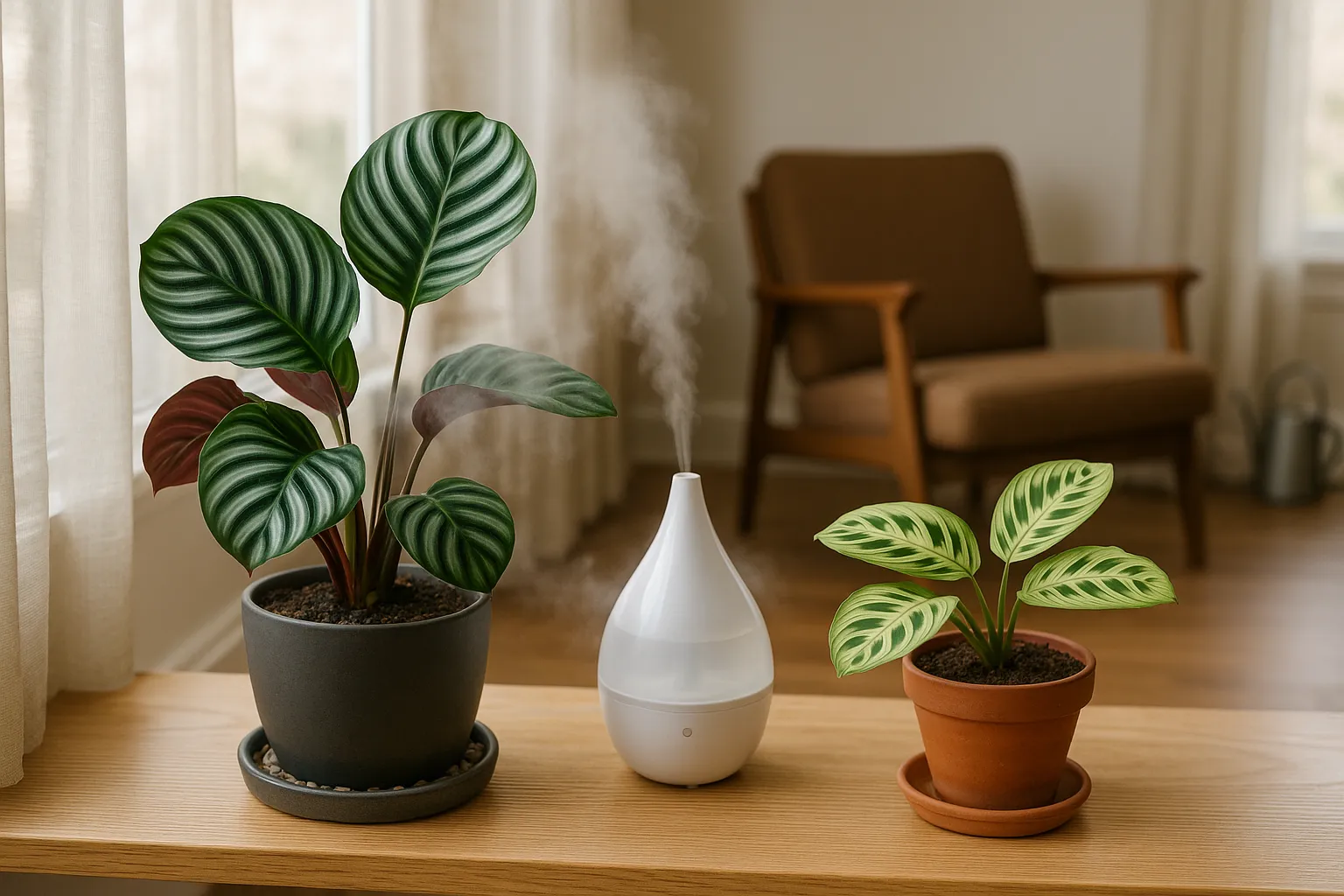
You can judge a houseplant by how it moves. Calathea and Maranta both fold their leaves like silent hands at dusk, but they ask different things from your home and attention. The surprising benefit? Choosing the right prayer plant gives you a living mood-shifter, one that brightens a dim corner or rewards careful humidity with dramatic leaf color. This guide compares Calathea vs. Maranta so you can find the plant that fits your light, time, and design goals.
Quick Side‑By‑Side Comparison
Fact: Calathea and Maranta both belong to the Marantaceae family but they differ in care sensitivity and visual impact.
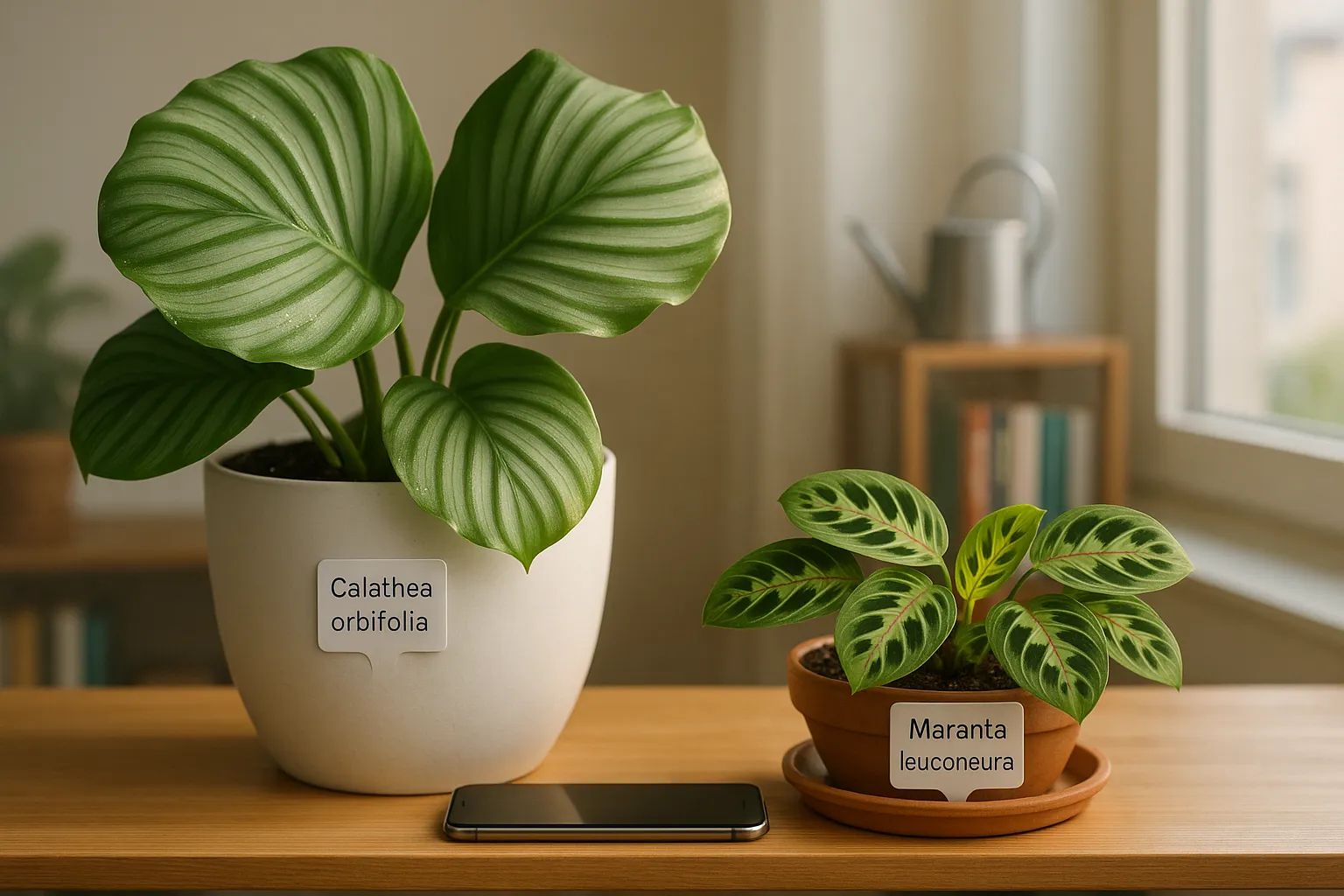
Calathea: Known for bold, often glossy patterns (think Calathea orbifolia, Calathea makoyana). Calathea asks for steady humidity and consistent moisture. It tends to show faster and more dramatic leaf movement, and its leaf undersides can be richly colored (purple, maroon).
Maranta: Often called the prayer plant (Maranta leuconeura), Maranta has smaller, flatter leaves and simpler patterns. It tolerates lower light and drier indoor air better than many Calatheas. It still folds its leaves at night but shows less flamboyant motion.
Quick facts table (summary):
Visual impact: Calathea, high: Maranta, moderate
Humidity need: Calathea, high: Maranta, moderate
Light tolerance: Calathea, bright, indirect: Maranta, low to bright indirect
This quick view helps you match plant to place. If you want drama and you can control humidity, pick Calathea. If you want ease and charm, pick Maranta.
Key Botanical Differences
Fact: Leaf form and growth habit are the clearest botanical differences between the two genera.
Leaf Shape, Pattern, And Movement
Calathea leaves are often large, round to oblong, and show intense variegation or striping. Maranta leaves are typically smaller and oval with a clear midrib and patterned patches. Both perform nyctinasty, they close at night, but Calathea often has stronger, faster movement. The leaf color contrast in Calathea (for example, Calathea zebrina’s zebra stripes) can be more striking than in Maranta leuconeura varieties.
Growth Habit And Size
Calathea species usually reach larger sizes indoors (2–3+ feet in ideal conditions). They form clumps and can produce wider, arching leaves. Maranta tends to stay lower and spreads more horizontally: many stay under 18 inches. That makes Maranta a good table or shelf plant.
Common Species And Varieties To Know
Calathea: Calathea orbifolia, Calathea makoyana (peacock), Calathea lancifolia (rattlesnake). These are showy and often pricier.
Maranta: Maranta leuconeura (variegata, kerchoveana), Maranta trinervia. These species are common in garden centers and propagate easily.
Named entities: Calathea orbifolia, Calathea makoyana, Calathea lancifolia, Maranta leuconeura, Royal Horticultural Society (RHS).
If you read plant labels, compare Latin names to avoid buying a lookalike that needs different care.
Care Requirements: How They Differ And Overlap
Fact: Light, water, humidity, and soil are the core variables that determine success for both plants. You must tune each to the species you choose.
Light: Ideal Levels And Signs Of Too Much Or Too Little
Both prefer bright, indirect light. Maranta tolerates lower light better. Signs of too much light: scorched or bleached leaves, brittle texture (Calathea shows this quickly). Signs of too little light: faded pattern and slow growth. If your plant leans, it seeks more light.
Water: Frequency, Water Quality, And Signs Of Stress
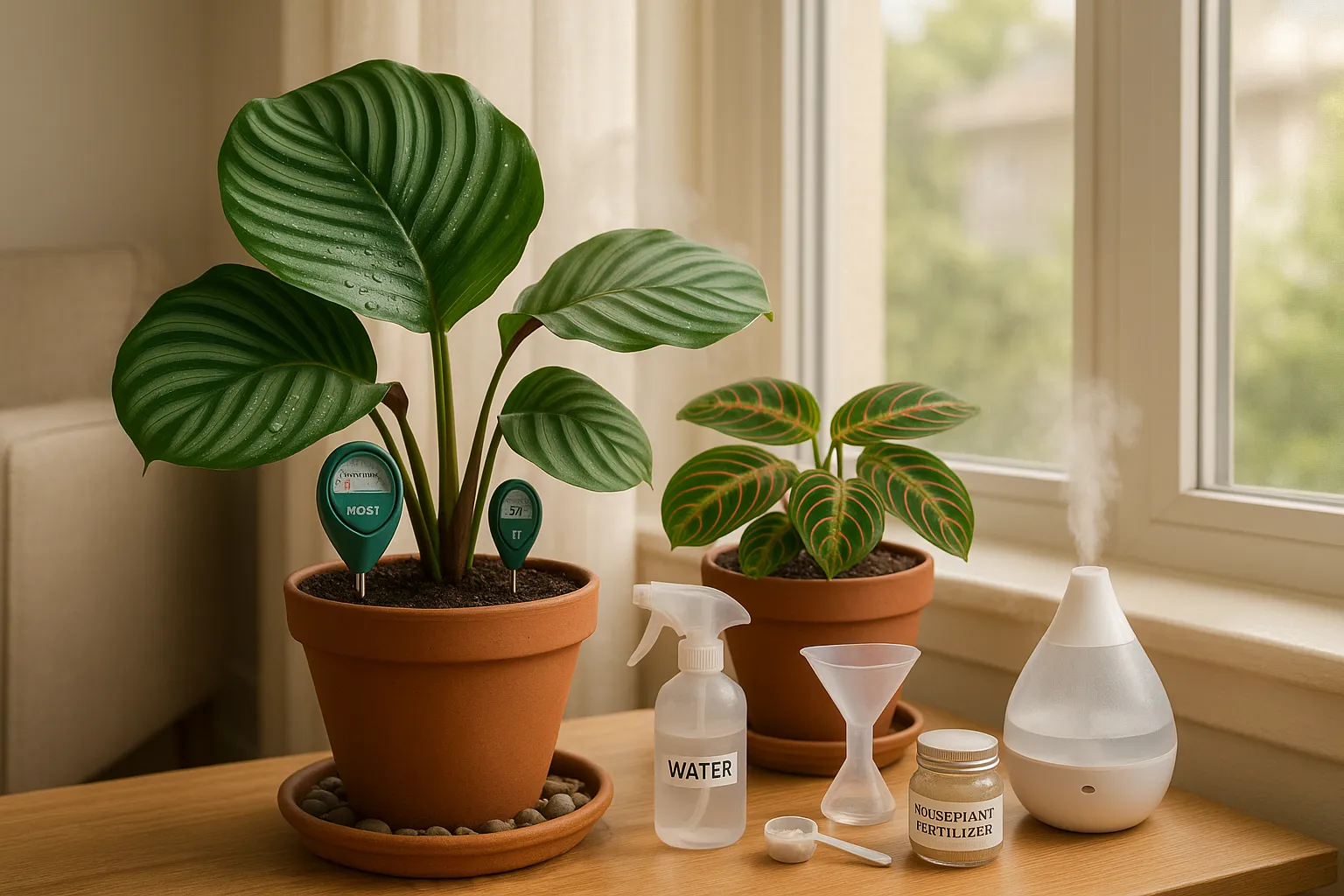
Calathea needs consistently moist soil: water when the top 1 inch feels dry. Maranta prefers the soil to dry slightly between waterings. Both react poorly to hard water, brown tips and edge burn often follow high minerals. Use filtered, rain, or distilled water when possible. Overwatered plants show yellowing and soft stems: underwatered plants curl and drop leaves.
Humidity And Temperature Needs
Calathea: High humidity (50–70% or more). Keep temps 65–80°F. Maranta: Moderate humidity (40–60%), similar temperature range. Low humidity causes brown edges on Calathea faster than on Maranta. Use a pebble tray, humidifier, or grouping to raise local humidity.
Soil, Drainage, And Fertilizer Recommendations
Both prefer loose, well-draining potting mix that retains some moisture. A mix with peat or coco coir, perlite, and bark works well. Ensure a pot with drainage holes. Feed lightly during spring and summer with a balanced houseplant fertilizer (half-strength every 4–6 weeks). Too much fertilizer causes brown tips and leaf margin burn.
Common Problems And How To Fix Them
Fact: Most problems trace back to water, light, or humidity errors. Identify the cause and correct it quickly.
Brown Edges, Leaf Curl, And Yellowing: Causes And Solutions
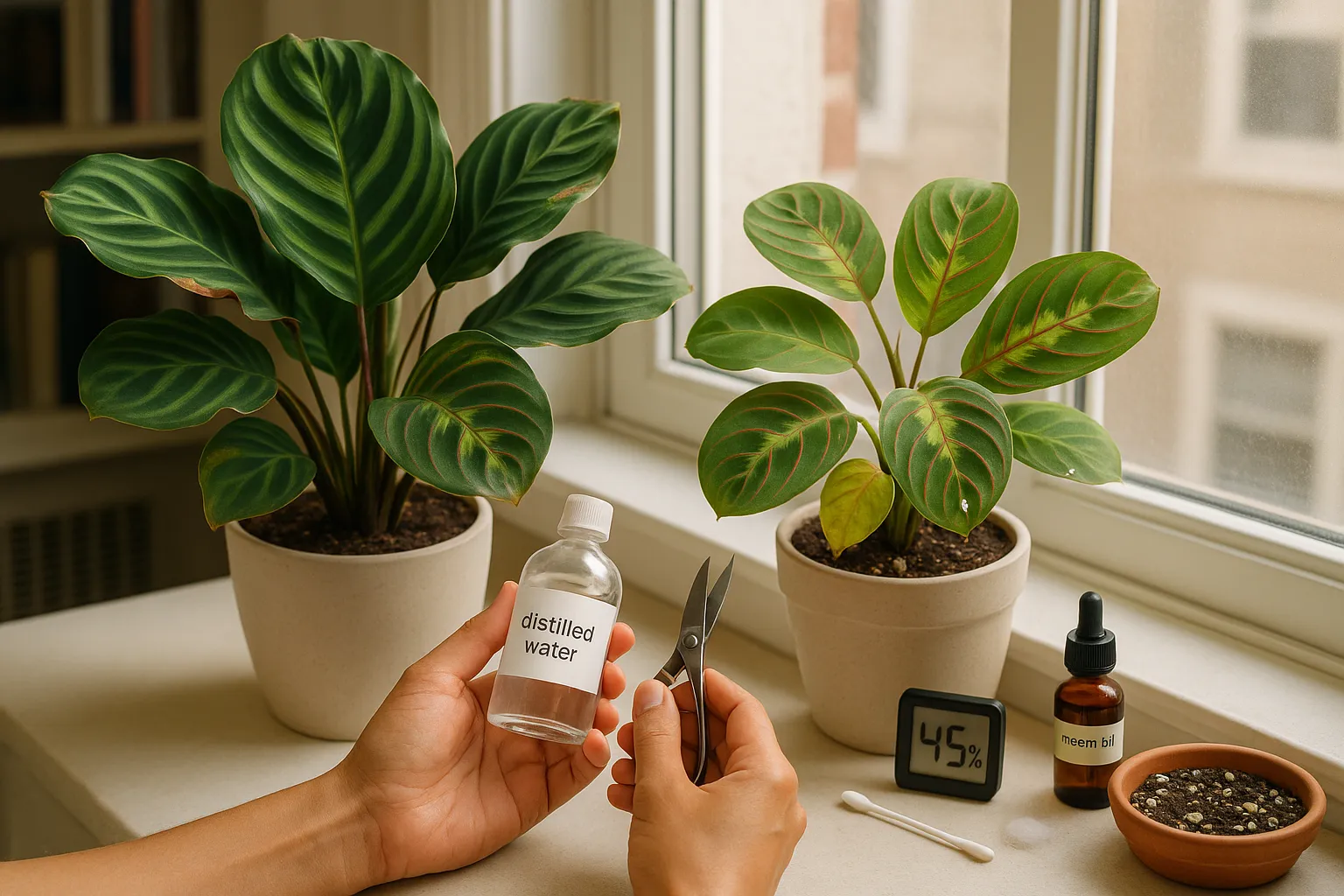
Brown edges: Usually low humidity or hard water. Solution: increase humidity: flush soil with distilled water: trim damaged edges.
Leaf curl: Often underwatering or sudden environment change. Solution: check soil moisture: acclimate plant gradually to new light or room temp.
Yellowing: Typically overwatering or poor drainage. Solution: reduce watering frequency: repot into fresh, well-draining mix: check roots for rot.
Pests And Diseases: Identification And Treatment
Common pests: spider mites, mealybugs, thrips. Look for webbing, white cottony spots, or stippling. Treat with insecticidal soap, neem oil, or wipe leaves with 70% isopropyl alcohol on a cotton swab for small infestations.
Diseases: Root rot from overwatering: foliar fungal spots from poor air circulation. Improve drainage, remove affected leaves, and use fungicide only if necessary.
Troubleshooting Quick Checklist For Healthy Leaves
Swap to distilled water for several weeks if tips brown.
Be honest: I once killed a Calathea by letting it sit near a heater. I thought misting was enough. It wasn’t. You will make mistakes too: they teach you fast.
Propagation, Repotting, And Maintenance
Fact: Division is the most reliable propagation method for both genera: stem cuttings work for some Maranta.
Propagation Methods: Division Vs. Stem/Leaf Cuttings
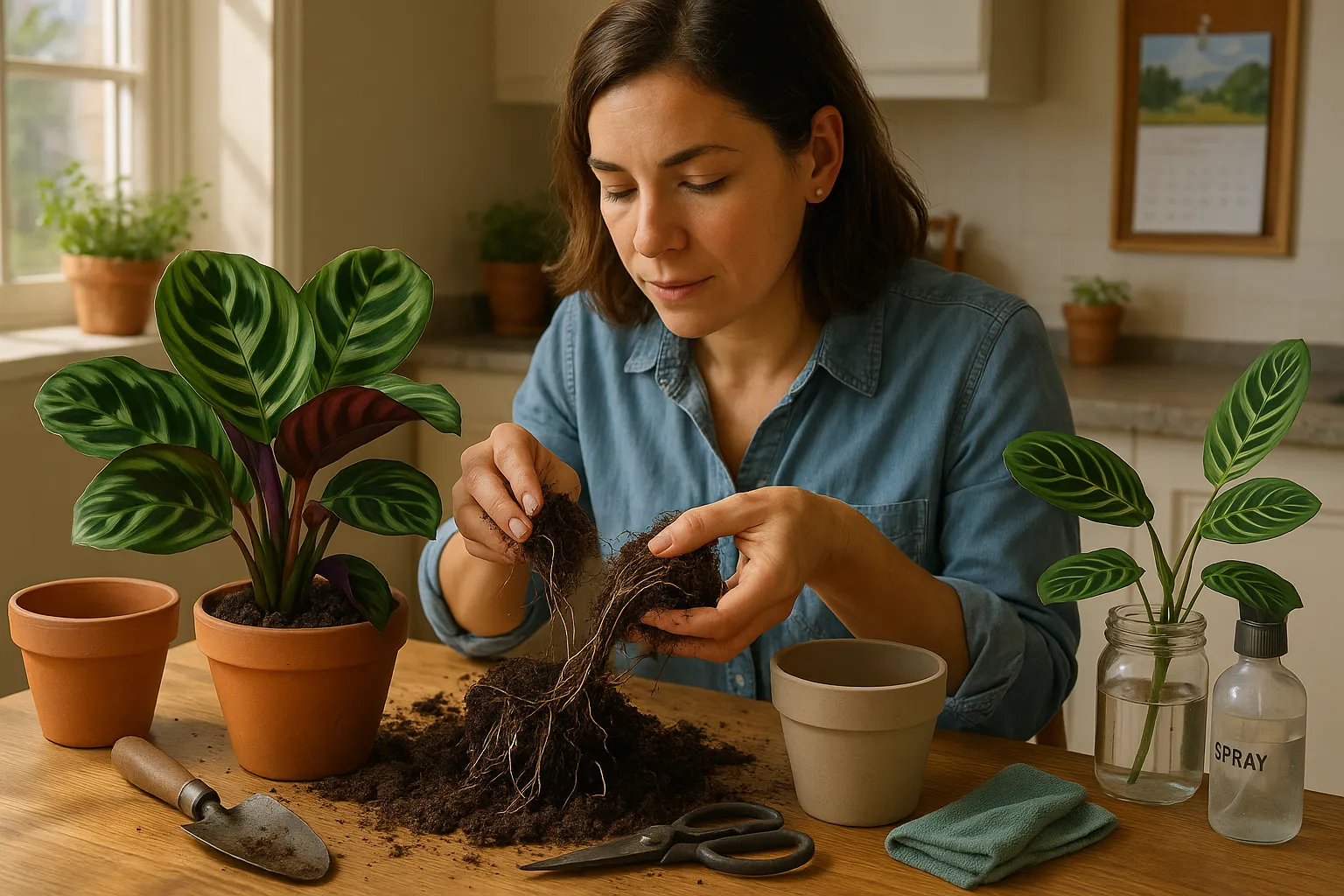
Division: Best for Calathea and Maranta. Remove plant from pot, tease roots apart, and pot sections separately. Do this in spring.
Stem/leaf cuttings: Maranta can root from a stem cutting with node in water or moist mix. Calathea rarely roots from single leaf cuttings: it favors division.
When And How To Repot
Repot when roots circle the pot or topsoil dries rapidly, typically every 12–18 months. Choose a pot 1–2 inches wider. Repot in spring: keep soil evenly moist for several weeks to reduce shock.
Routine Maintenance: Pruning, Cleaning, And Seasonal Care
Prune yellow or dead leaves to encourage new growth. Wipe leaves gently with a damp cloth to remove dust and improve photosynthesis. Reduce watering and skip fertilizing in winter when growth slows.
Choosing Between Calathea And Maranta Based On Your Home
Fact: Your house conditions and patience level should decide which plant you buy.
Best Choice For Low Light Or Beginner Growers
Pick Maranta if you have low natural light or you’re new to houseplants. Maranta tolerates shade and occasional watering lapses. It rewards you with steady growth and fewer humidity demands.
Best Choice For Decorative Impact And Collections
Pick Calathea if you want dramatic leaves and you can keep humidity higher. Collectors favor Calathea orbifolia and Calathea makoyana for their showy foliage. They make a strong statement in living rooms and bathrooms with light but not direct sun.
Budget, Availability, And Where To Buy Healthy Plants
Fact: Maranta is generally cheaper and more available at local garden centers. Calathea can be pricier and sometimes sold only at specialty nurseries or indie growers. Look for healthy root systems and vibrant leaf patterns. Trusted sellers: local nurseries, The Sill (for reliable packaging), and reputable independent growers on plant marketplaces. Avoid plants with many yellow leaves or visible pests.
If you want a forgiving, attractive plant, choose Maranta. If you want a showstopper and you will adjust humidity, choose Calathea. Either way, start small and learn your plant’s signals, you will soon know what it needs.
To provide the best experiences, we use technologies like cookies to store and/or access device information. Consenting to these technologies will allow us to process data such as browsing behaviour or unique IDs on this site. Not consenting or withdrawing consent, may adversely affect certain features and functions.
Functional
Always active
The technical storage or access is strictly necessary for the legitimate purpose of enabling the use of a specific service explicitly requested by the subscriber or user, or for the sole purpose of carrying out the transmission of a communication over an electronic communications network.
Preferences
The technical storage or access is necessary for the legitimate purpose of storing preferences that are not requested by the subscriber or user.
Statistics
The technical storage or access that is used exclusively for statistical purposes.The technical storage or access that is used exclusively for anonymous statistical purposes. Without a subpoena, voluntary compliance on the part of your Internet Service Provider, or additional records from a third party, information stored or retrieved for this purpose alone cannot usually be used to identify you.
Marketing
The technical storage or access is required to create user profiles to send advertising, or to track the user on a website or across several websites for similar marketing purposes.