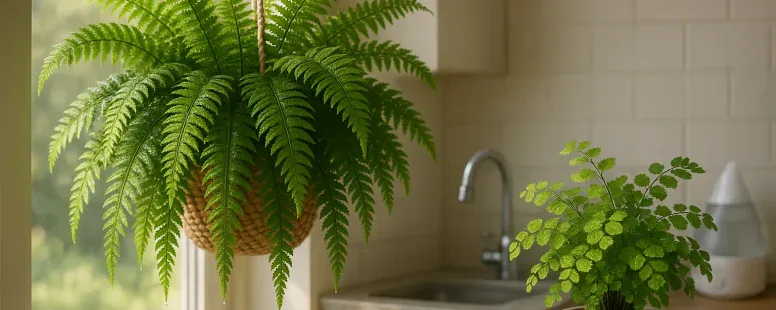
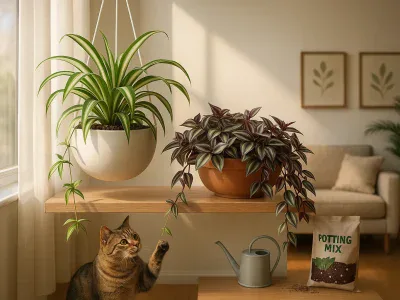
You can tell a room’s mood by its plants: a cascade of feathery green calms a busy kitchen, a delicate fan of leaflets makes a study feel lighter. Boston fern (Nephrolepis exaltata) and maidenhair fern (Adiantum raddianum) are two favorites for that green mood, yet they behave very differently. One offers forgiving, arching fronds that fill space: the other serves fragile, lace-like fans that reward careful attention. This guide compares them closely so you’ll know which fern will thrive in your home, where to place it, and how to rescue it when things go wrong.
Quick Side-By-Side Comparison
Fact: Boston fern is hardier and more tolerant: maidenhair fern is more delicate and demands steady humidity.
Scientific names: Boston fern, Nephrolepis exaltata: maidenhair fern, Adiantum raddianum. These are the clear semantic entities you’ll use when researching care specifics.
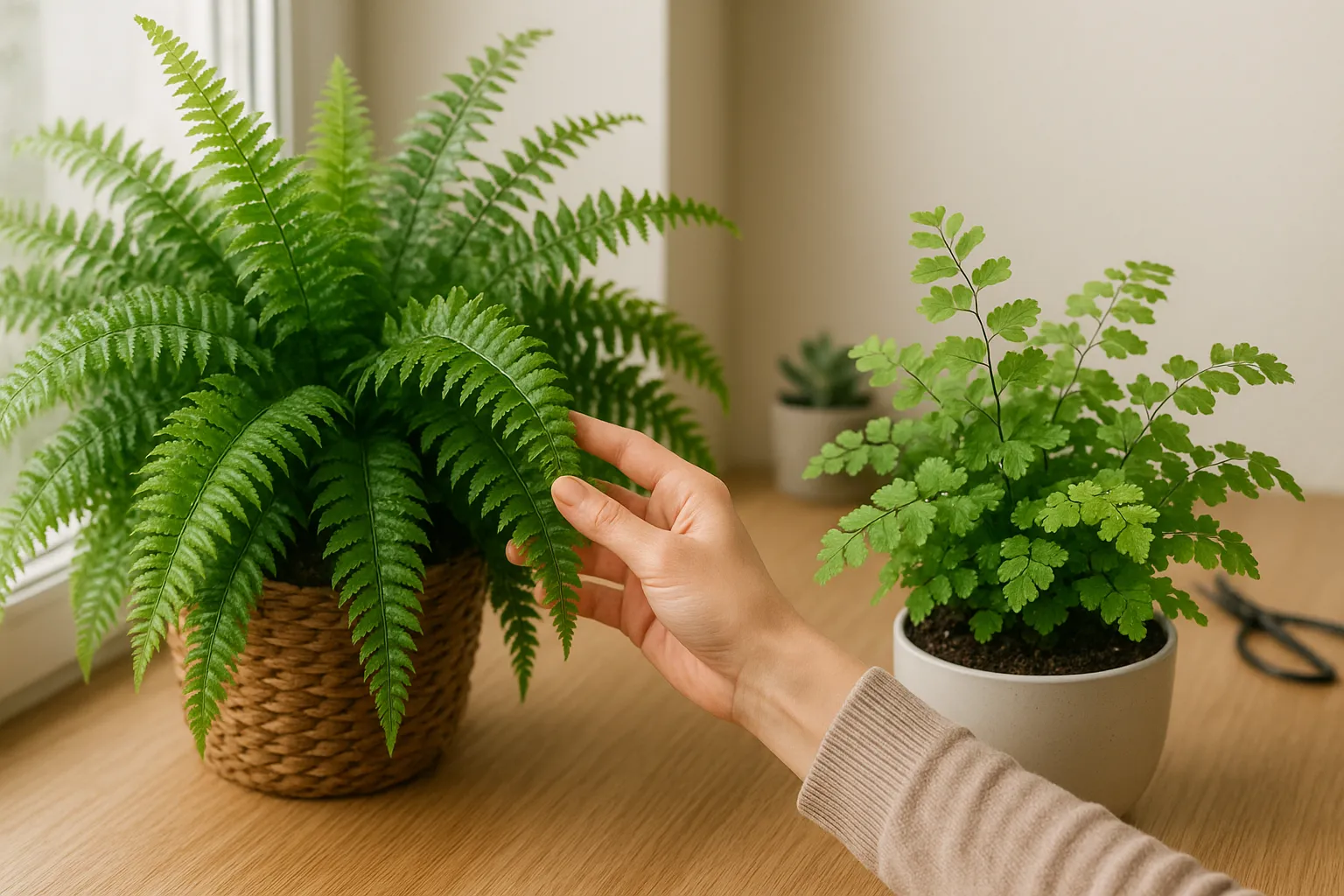
Appearance shortcut: Boston fern has long, arching, pinnate fronds: maidenhair has small, fan-shaped pinnae on wiry black stems.
Care tone: Boston is forgiving with light and water: maidenhair needs consistent humidity and careful watering.
Best for: Boston for beginners, large spaces, hanging baskets: maidenhair for terrariums, bright bathrooms, and close-up display.
This table-like snapshot sets the main differences so you can decide fast. If you want a plant that survives occasional neglect, go Boston. If you want a showpiece you’ll fuss over, and enjoy doing it, pick maidenhair.
Identification And Appearance
Fact: The two ferns differ sharply in frond construction and visual texture.
Frond Shape, Texture, And Color
Boston fern shows long fronds made of many narrow leaflets. The texture feels soft and feathery when you run your hand along a frond. Color ranges from bright to deep green depending on light and cultivar (e.g., ‘Boston’ vs ‘Fluffy Ruffles’). Maidenhair fern shows small, fan-shaped leaflets (pinnae) on thin, dark stems. The contrast of the black rachis and lime-green pinnae creates a delicate, lacy pattern, almost jewelry-like.
Size, Growth Habit, And Lifespan
Boston fern can reach 2–3 feet across indoors and will form a clump that spreads via runners. It lives many years with division and repotting. Maidenhair usually stays smaller, often 12–24 inches across, and grows in graceful mounds. Maidenhair is long-lived too, but it reacts faster to stress, so problems appear sooner.
Root System And Potting Behavior
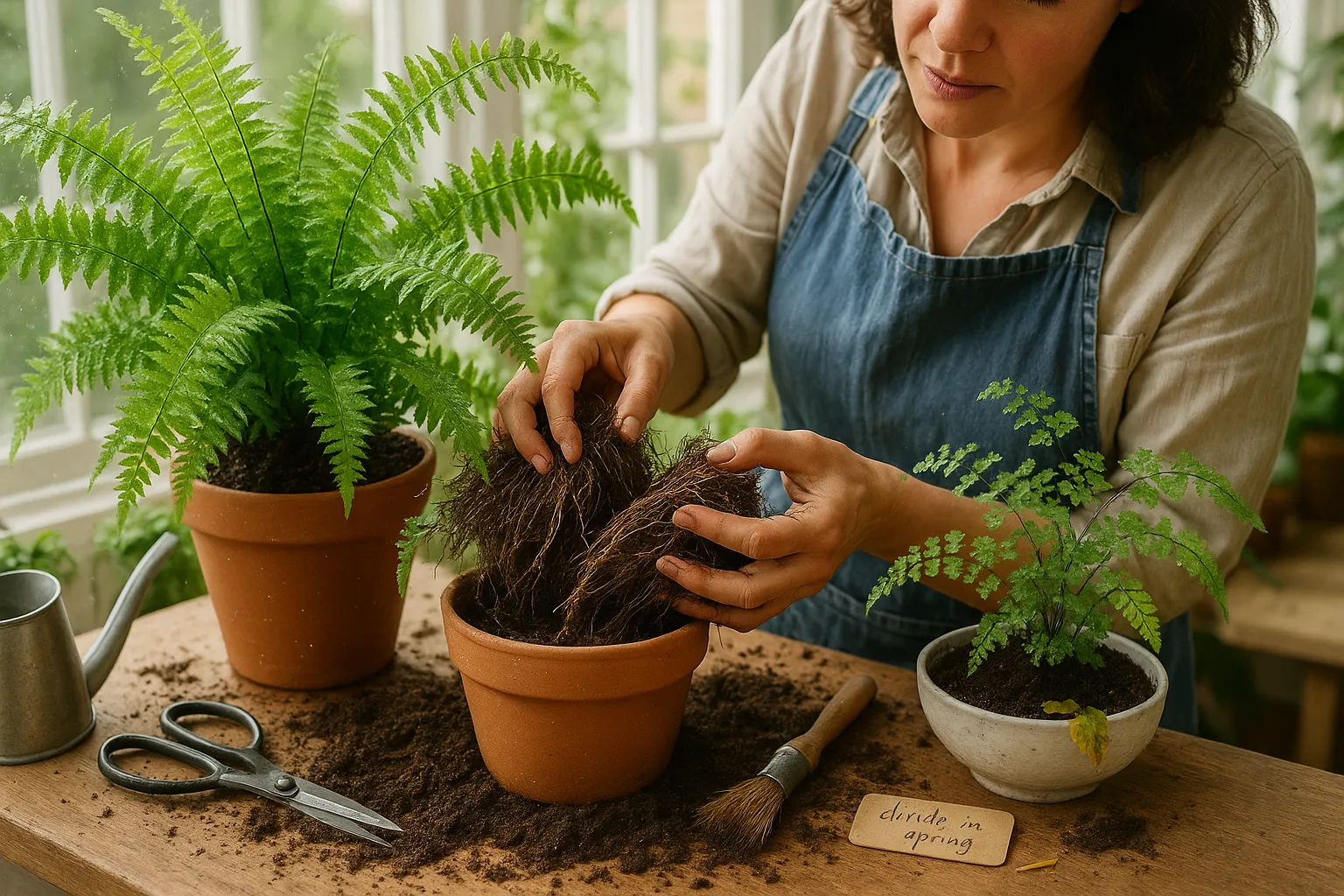
Boston fern has a vigorous, fibrous root system that tolerates crowded pots and benefits from frequent division. It holds shape well in hanging baskets. Maidenhair has a finer root mat and dislikes heavy root disturbance: it prefers a stable, looser mix and often roots shallowly, which means it can dry out fast in small pots.
Care Requirements: What Each Fern Needs
Fact: Light, water, and humidity are the biggest care pivots for both, but thresholds differ.
Light And Placement
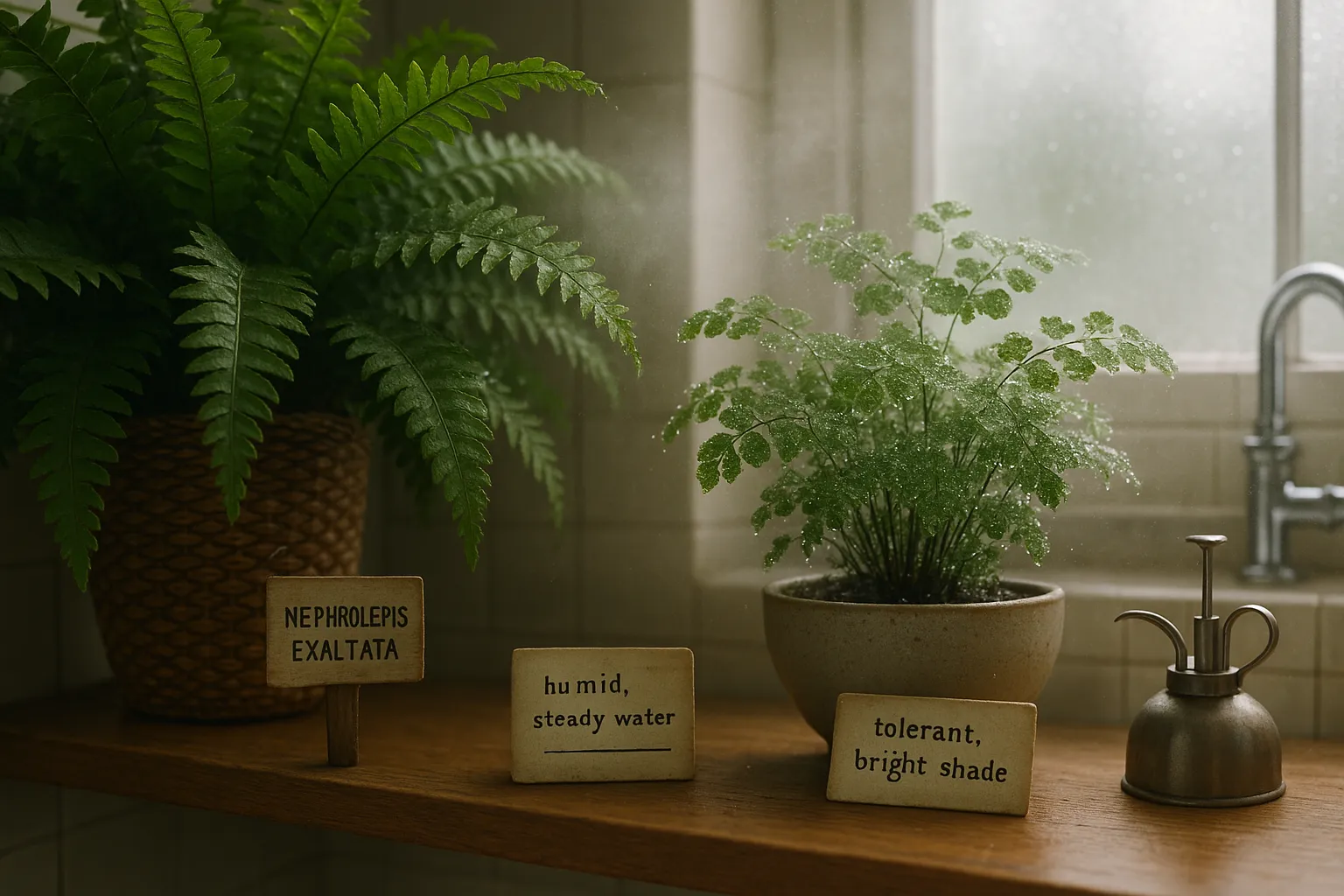
Place Boston fern in bright, indirect light. It tolerates lower light than maidenhair, making it suitable for east or north windows and bright rooms away from direct afternoon sun. Maidenhair needs bright, diffuse light, an east-facing window or a bright bathroom works well. Avoid direct sun for maidenhair: it will scorch the tiny pinnae.
Watering Frequency And Techniques
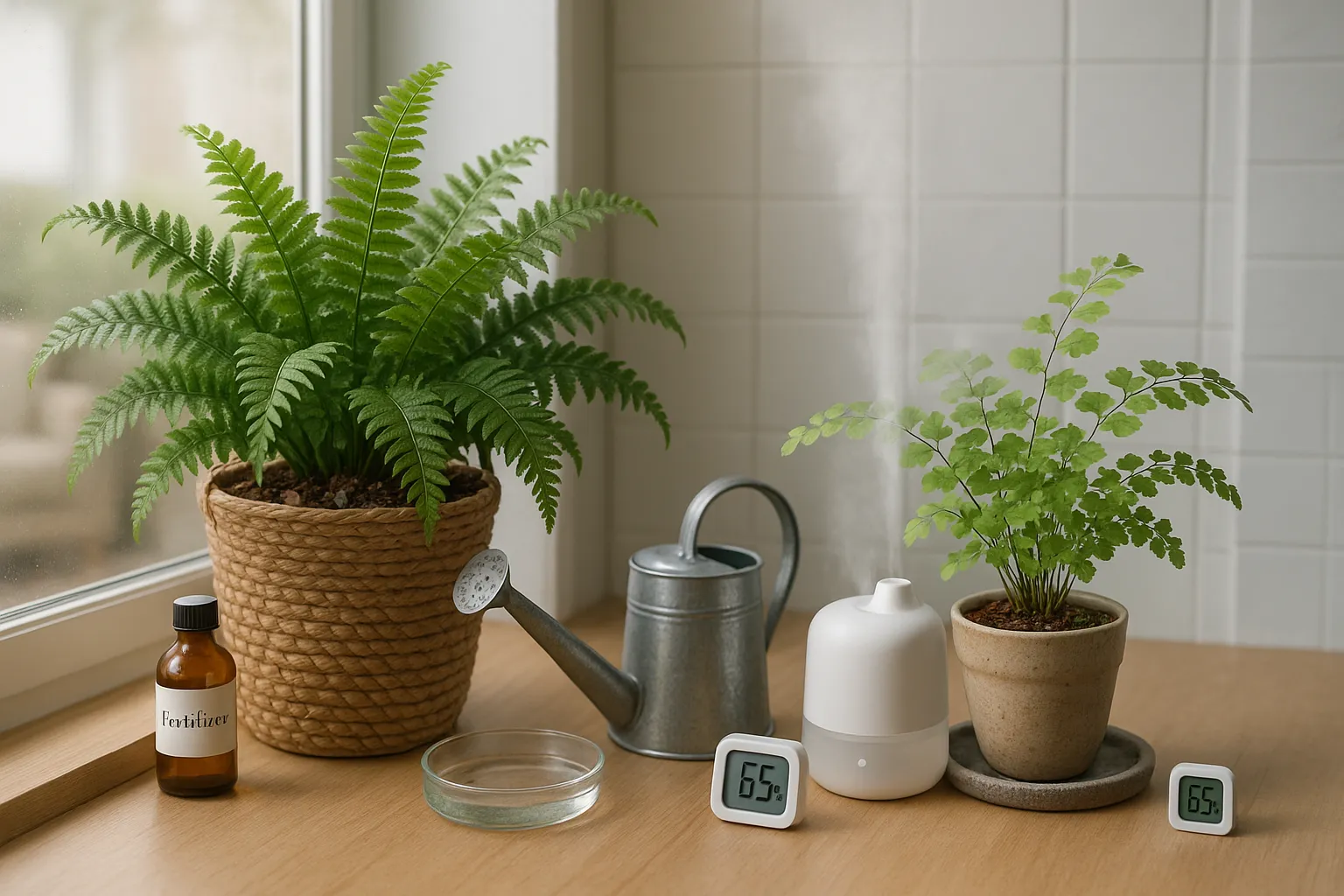
Boston fern likes evenly moist soil but tolerates short dry periods. Water when the top inch of soil feels slightly dry: water thoroughly until excess drains. Maidenhair demands more consistency: keep the soil moist but not waterlogged. Use bottom-watering or a gentle pour to avoid washing soil away from delicate roots.
Humidity And Microclimate Needs
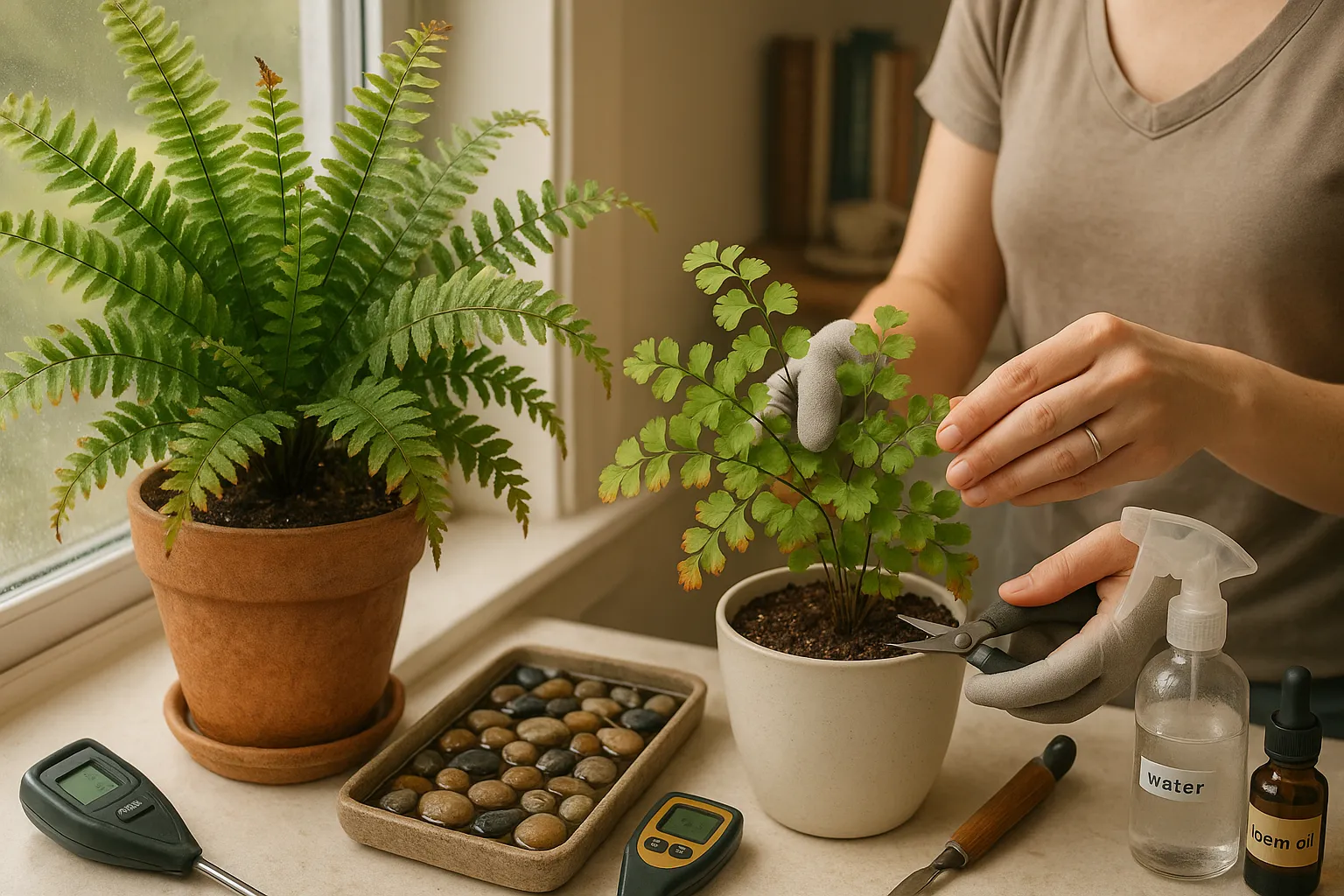
Boston fern prefers high humidity (45–60%) but will survive moderate household humidity. Maidenhair requires higher humidity (55–75%) and benefits from pebble trays, regular misting, or living in a bathroom. A small humidifier near a maidenhair often makes the difference between thriving and struggling.
Soil, Drainage, And Potting Mix
Use a well-draining, humus-rich potting mix for both. Boston fern likes mixes with more coarse peat or orchid bark to keep air around the roots. Maidenhair prefers a lighter, moisture-retentive mix with peat and perlite. Always ensure good drainage to prevent root rot.
Temperature And Seasonal Care
Boston fern tolerates 60–75°F (15–24°C) comfortably and can handle brief cooler nights. Maidenhair prefers steady warmth around 65–75°F (18–24°C) and suffers from cold drafts and temperature swings.
Feeding And Fertilizer Recommendations
Fact: Both ferns appreciate fertilizer during active growth, but modestly.
Feed Boston fern with a balanced liquid fertilizer at half strength every 4–6 weeks during spring and summer. For maidenhair, use a diluted, balanced feed every 6–8 weeks, too much fertilizer causes brown tips on the delicate fronds. Stop feeding in late fall when growth slows.
Propagation, Repotting, And Maintenance
Fact: Division is the easiest propagation method for both: timing matters.
Propagation Methods And Timing
You propagate Boston fern by division in spring when new growth appears. Pull apart the root ball into sections with several fronds and roots, then pot. Maidenhair also divides best in spring: you can propagate by division or by spore, but spores are slow. Division gives quicker results.
When And How To Repot
Repot Boston fern every 1–2 years or when roots circle the pot. Choose a pot one size larger. Maidenhair needs repotting less often: repot when the plant shows stress or the mix breaks down, usually every 2–3 years. For both, repot in spring and water well after moving.
Pruning, Grooming, And Routine Maintenance
Remove dead fronds on both species to encourage fresh growth. Trim brown tips on Boston fern with clean scissors. For maidenhair, snip back whole fronds if they yellow: the plant will refill from the crown. Clean dust off fronds with a soft brush, maidenhair’s small pinnae trap dust fast. Be honest about mistakes: I once over-pruned a maidenhair and it sulked for months: patience and steady humidity fixed it.
Common Problems And Troubleshooting
Fact: Dry air and irregular watering cause most problems for these ferns.
Leaf Browning, Wilting, And Yellowing Causes
Brown tips on Boston fern usually mean low humidity or underwatering. Brown or yellow patches on maidenhair often signal inconsistent watering or too much sun. Yellowing overall can mean overwatering or poor drainage for both.
Pests And Diseases To Watch For
Both ferns can attract scale, mealybugs, and spider mites, especially in dry homes. Root rot occurs with poor drainage. Inspect undersides of fronds regularly and treat pests with insecticidal soap or neem oil. Quarantine new plants for a few weeks to avoid infestation.
How To Revive A Struggling Plant
Start with diagnosis: check soil moisture, light, humidity, and roots. For a dry Boston fern, soak the pot and let excess drain: move it to higher humidity. For a maidenhair with brown fronds, trim damaged tissue, increase humidity, and keep soil consistently moist. If root rot appears, remove affected roots, repot into fresh mix, and reduce watering. Be patient, ferns recover slowly but they often do recover.
Best Uses, Placement, And Styling Tips
Fact: Boston fern fills and softens spaces: maidenhair adds delicate detail.
Indoor Vs. Outdoor Uses
Boston fern works well indoors and outdoors in shaded patios. It tolerates cooler spots and makes a good porch or balcony plant in USDA zones 9–11. Maidenhair prefers indoor display or protected, shaded outdoor spots with high humidity, think terrariums or covered patios.
Container, Hanging Basket, And Landscape Ideas
Boston fern shines in hanging baskets or large floor pots where its fronds can drape. Maidenhair looks best in smaller pots, on shelves, or in glass terrariums where you can admire the fine leaves up close. In landscape beds, use maidenhair as a border plant under trees: Boston makes a lush groundcover in shade gardens.
Matching Fern To Environment And Skill Level
If you travel or forget water occasionally, choose Boston. If you enjoy fussy care and want a showpiece near a humid sink or in a terrarium, choose maidenhair. Both reward attention, but they reward it differently.
How To Choose Between Boston Fern And Maidenhair Fern
Fact: Choose based on how much time you’ll commit and the environment you can provide.
Decision Factors: Appearance, Care Level, And Space
Appearance: choose Boston for sweeping fronds and a bold silhouette: choose maidenhair for intricate, lacy leaves. Care level: choose Boston if you want low-maintenance: choose maidenhair if you can keep humidity and watering steady. Space: choose Boston for hanging or floor space: choose maidenhair for tabletops, bathrooms, or terrariums.
Quick Care Checklist For Each Fern
Boston fern checklist:
Bright, indirect light or moderate light
Keep soil evenly moist: tolerate slight drying
Humidity 45–60% preferred
Feed lightly during growth season
Repot/divide every 1–2 years
Maidenhair fern checklist:
Bright, diffused light: avoid direct sun
Keep soil consistently moist
Humidity 55–75% (use humidifier or terrarium)
Use gentle, diluted fertilizer occasionally
Repot every 2–3 years: avoid root disturbance
Choose the fern that fits your space and patience level. With the right match, your fern will feel like a living roommate who improves your mood, and air quality too.
To provide the best experiences, we use technologies like cookies to store and/or access device information. Consenting to these technologies will allow us to process data such as browsing behaviour or unique IDs on this site. Not consenting or withdrawing consent, may adversely affect certain features and functions.
Functional
Always active
The technical storage or access is strictly necessary for the legitimate purpose of enabling the use of a specific service explicitly requested by the subscriber or user, or for the sole purpose of carrying out the transmission of a communication over an electronic communications network.
Preferences
The technical storage or access is necessary for the legitimate purpose of storing preferences that are not requested by the subscriber or user.
Statistics
The technical storage or access that is used exclusively for statistical purposes.The technical storage or access that is used exclusively for anonymous statistical purposes. Without a subpoena, voluntary compliance on the part of your Internet Service Provider, or additional records from a third party, information stored or retrieved for this purpose alone cannot usually be used to identify you.
Marketing
The technical storage or access is required to create user profiles to send advertising, or to track the user on a website or across several websites for similar marketing purposes.