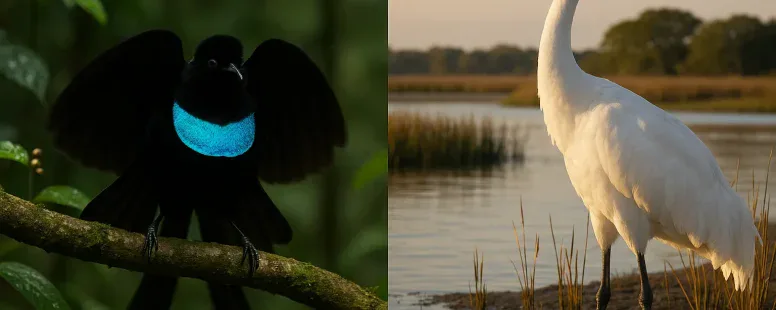
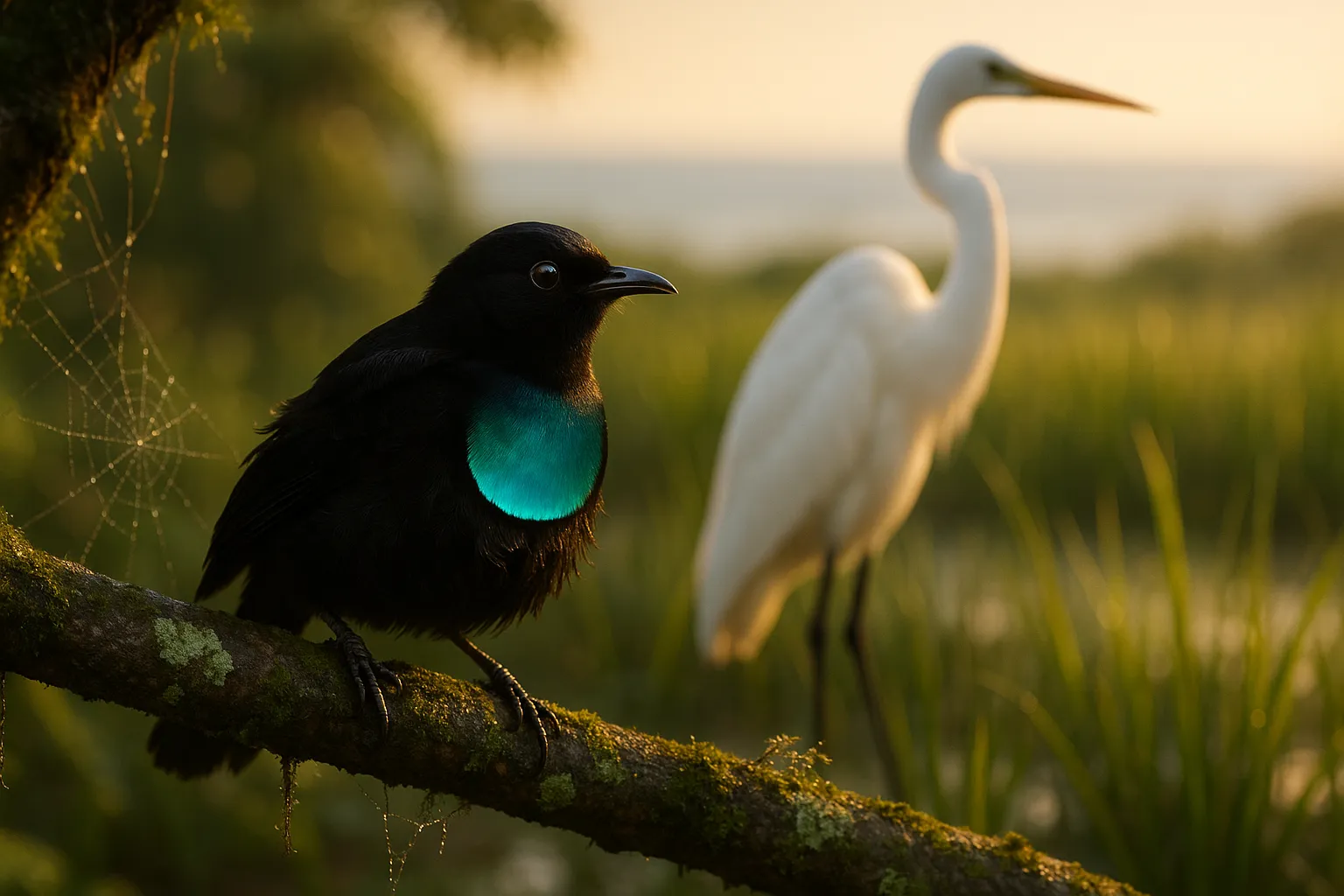
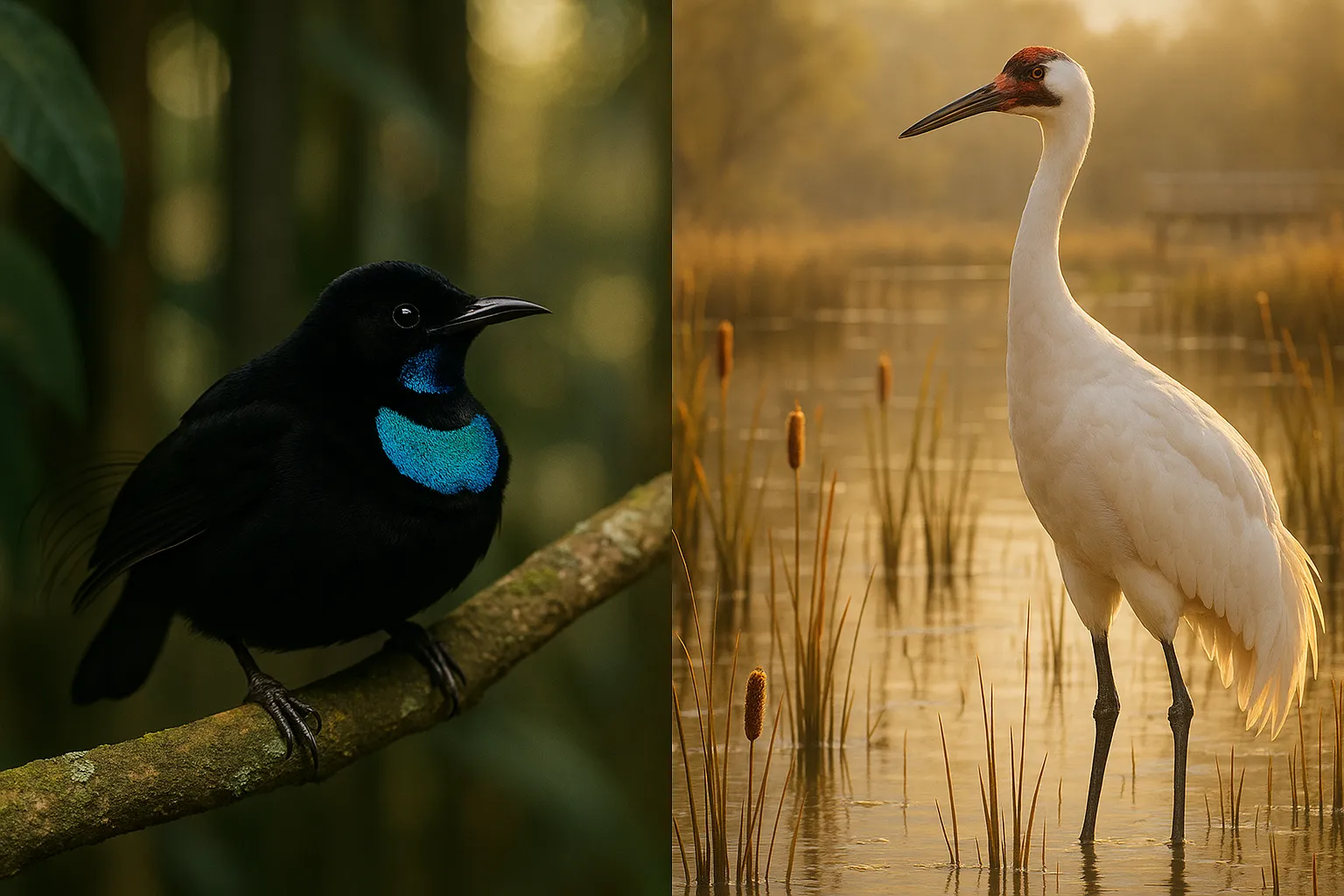
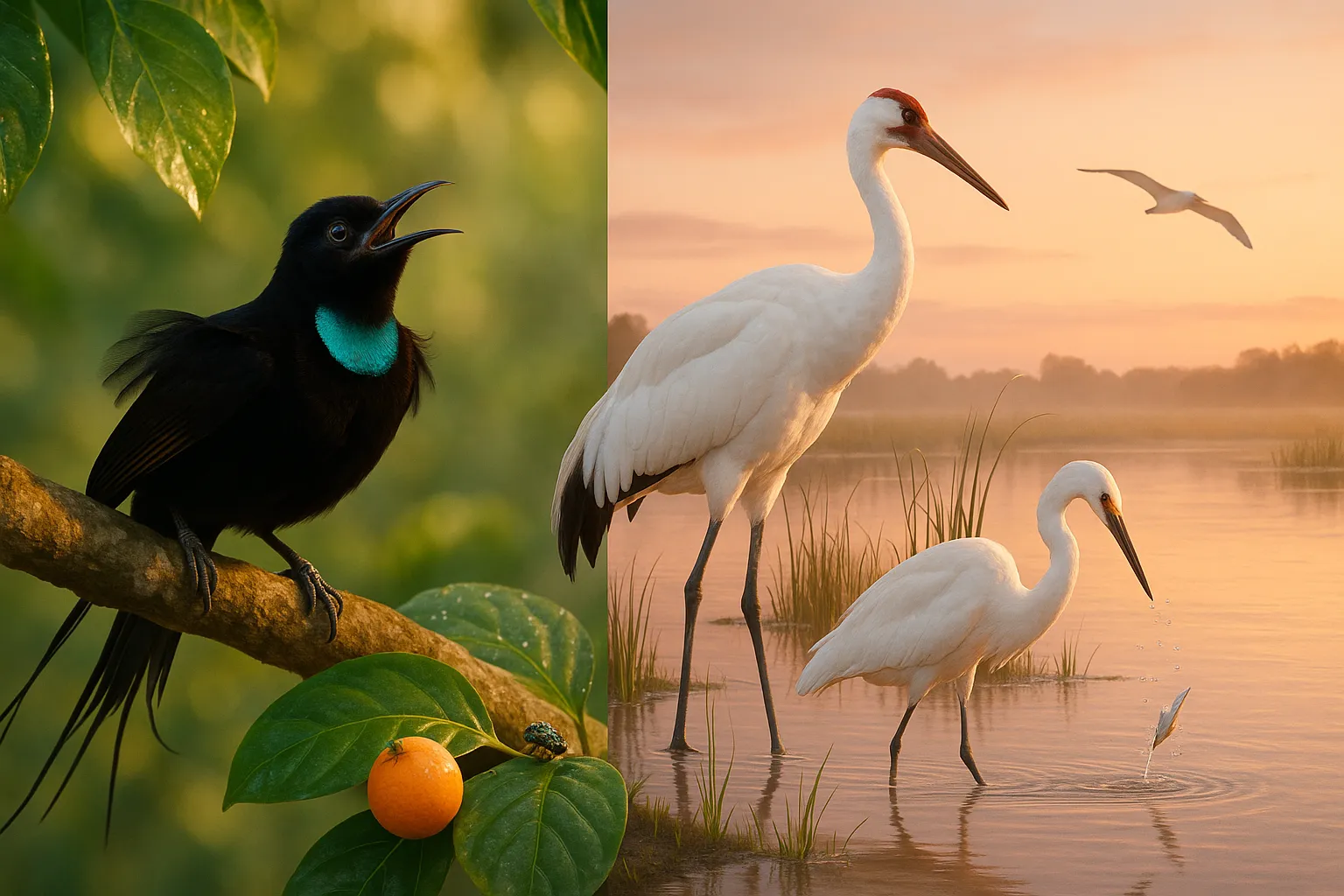
You can tell two birds apart at a glance when one looks like a jewel and the other reads like a blank page, and yet both can stop you cold. This comparison pairs the dazzling Birds of Paradise (Paradisaeidae), ornate, sexually selected forest specialists, against the broad category birdwatchers call “giant white birds,” like the Great Egret (Ardea alba), Whooping Crane (Grus americana), and Wandering Albatross (Diomedea exulans). The contrast is vivid: one group evolved color, ornament, and theater: the other evolved large white surfaces, long wings, and efficient long-distance movement. Read on to learn clear ID cues, ecological differences, and practical tips that will sharpen your field eye and deepen your appreciation for both kinds of birds.
Quick Comparison Snapshot
Fact: Birds of paradise are small-to-medium, colorful forest birds: “giant white birds” are larger, often wading or seabirds with mostly white plumage.
Bird of paradise (Paradisaeidae), think Superb Bird-of-Paradise (Lophorina superba) or Greater Bird-of-Paradise (Paradisaea apoda), you will see bright colors, elaborate plumes, and complex courtship dances. Giant white candidates, think Great Egret (Ardea alba), Whooping Crane (Grus americana), Wandering Albatross (Diomedea exulans), you will notice big silhouettes, long necks or huge wings, and mostly white feathers.
Quick visual hook: if the bird is small, perched low in dense forest and looks like a living ornament, it’s likely a bird of paradise. If the bird towers above marsh grass or glides across an ocean on huge, white wings, it’s in the “giant white” set.
Why this matters: you’ll make faster, more accurate IDs in the field and choose the right gear and approach for photography. Many beginners confuse size and color under poor light: this snapshot sets a simple default rule to test in seconds.
What Is A Bird Of Paradise?
Fact: Birds of paradise form a family (Paradisaeidae) of primarily New Guinea forest birds known for sexual selection and display.
Species Diversity And Range
Birds of paradise include about 40 to 42 species, depending on taxonomy. Named entities include the Greater Bird-of-Paradise (Paradisaea apoda), Raggiana Bird-of-Paradise (Paradisaea raggiana), and Superb Bird-of-Paradise (Lophorina superba). They live mainly in New Guinea and nearby islands: a few reach parts of eastern Australia. Species vary by elevation: some prefer lowland rainforest, others inhabit montane cloud forest.
Appearance And Sexual Dimorphism
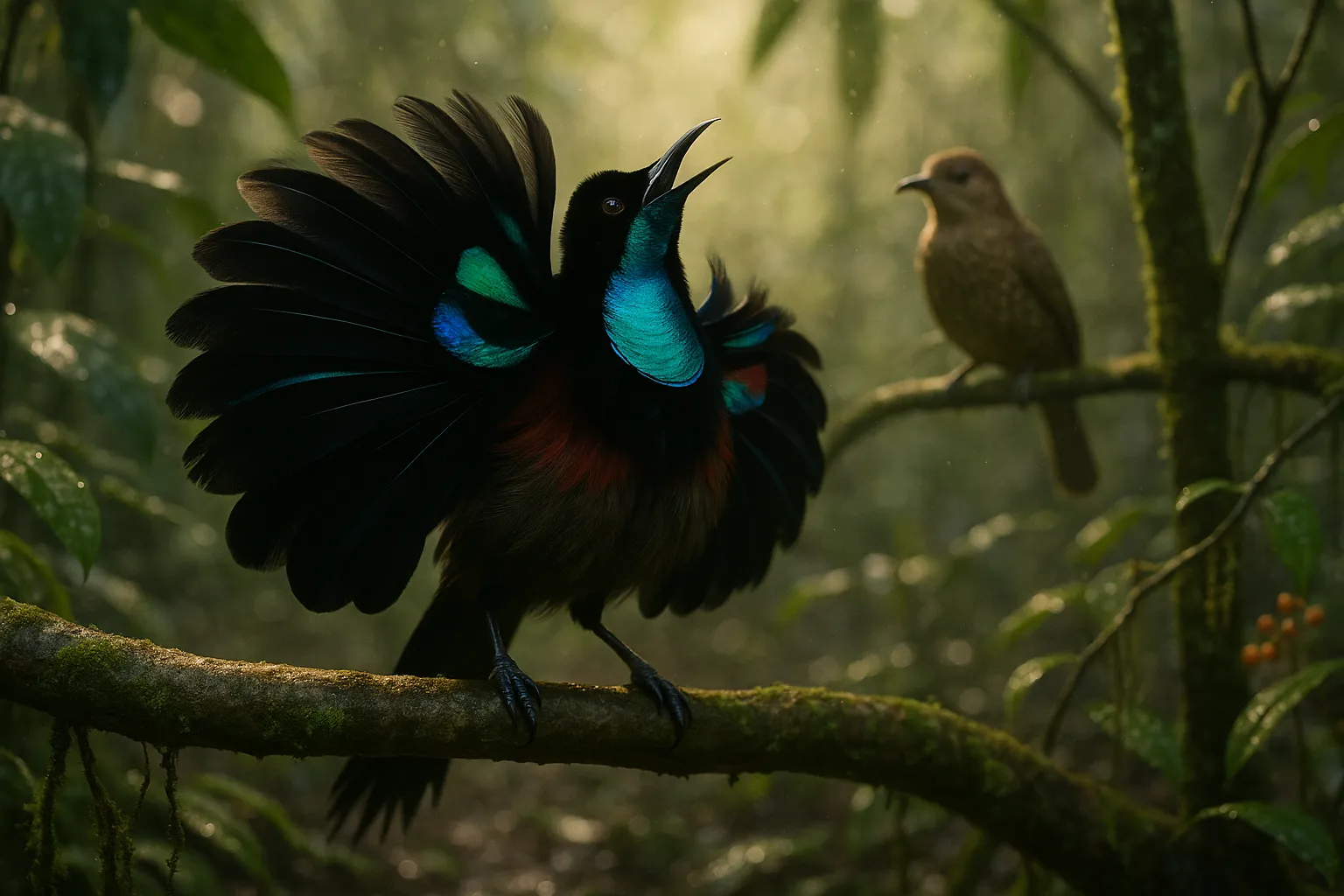
Males show extreme ornamentation: elongated flank plumes, iridescent throat shields, and dramatic color contrasts. Females are cryptic, brown or olive, and smaller. This sexual dimorphism evolved through female choice: males perform elaborate dances and shape-shift their displays with posture and feather arrangement.
Typical Habitat And Behavior
Birds of paradise live in closed-canopy forests. They forage for fruit, arthropods, and small vertebrates. Many species use lekking behavior: males gather and display to visiting females at fixed sites. You’ll watch bursts of movement and sudden color flashes: quiet patience pays.
What People Mean By “Giant White Bird”
Fact: “Giant white bird” is a vernacular label rather than a taxonomic group: it usually points to large, mostly white species across families.
Common Candidates (Great Egret, Whooping Crane, Albatrosses, Others)
Common named entities you’ll hear: Great Egret (Ardea alba), Snowy Egret (Egretta thula), though smaller, Whooping Crane (Grus americana), Tundra Swan (Cygnus columbianus), and oceanic giants like the Wandering Albatross (Diomedea exulans). Local context matters: a beach-goer will likely mean an albatross or gull, while a wetland birder will mean egret or crane.
Key Physical Traits Of Giant White Candidates
These birds are large: long necks, long legs (waders), or massive wingspans (albatrosses). Plumage is primarily white but may include black wingtips, colored bare skin patches (the Whooping Crane’s red crown), or yellow bills. Structural simplicity, broad white surfaces, helps with thermoregulation and signaling at a distance.
Typical Habitats And Ranges For Giant White Species
Great Egrets use freshwater marshes, rice fields, and estuaries. Whooping Cranes breed in Canadian wetlands and winter along the Gulf Coast. Wandering Albatross circumnavigate the Southern Ocean. Range is broad: inland wetlands to pelagic oceans. Your location narrows the likely candidate fast.
Side‑By‑Side Identification Guide
Fact: Use size, silhouette, plumage detail, behavior, and voice together: one cue rarely suffices.
Size, Shape, And Silhouette Comparison
Birds of paradise: compact bodies, rounded silhouettes, often perched horizontally. Male ornament can create odd shapes during display, bill-forward, tail fanned, body flattened.
Giant white birds: long-bodied silhouettes. Waders like Ardea alba show S-shaped necks in flight: cranes show straight necks extended. Albatrosses present extremely long, narrow wings and steady gliding profiles.
Plumage, Color Patterns, And Sexual Differences
Birds of paradise: bright patches, iridescence, and male-only plumes. Females are dull. Giant whites: plumage uniform, limited sexual dichromatism: some subtle seasonal changes occur (e.g., breeding plumes on egrets).
Behavioral Cues: Movement, Feeding, And Flight
Birds of paradise move in short hops, glean fruit, and perform ground or low-perch displays. Giant whites wade, spear fish, or glide widely. Flight differs: birds of paradise have rapid wingbeats and maneuverable flights: large white birds have slower wingbeats or soaring/gliding styles.
Vocalizations And Display Behaviors
Birds of paradise use mechanical sounds, whistles, and silence broken by sharp notes during courtship. Annaul species like the Superb produce clacking or buzzing sounds with feathers. Giant whites call loudly across wetlands: Whooping Crane’s bugle is unmistakable, and albatrosses vocalize with low guttural calls at breeding colonies.
Ecology And Life History Differences
Fact: Life histories reflect habitat and body plan: birds of paradise focus on sexual selection and fruit-rich forests: giant white birds optimize for foraging across open water or marshes.
Diet And Foraging Strategies
Birds of paradise eat fruit and arthropods: some take small vertebrates. They often sit-then-sally or glean from leaves. Great Egret hunts by stalking and striking fish: Whooping Crane probes mud and eats small mammals, amphibians, and plant tubers. Wandering Albatross uses surface-seizing and kleptoparasitism.
Breeding Systems, Courtship, And Nesting
Birds of paradise often lek or use solitary display courts: nests are cup-shaped and placed in trees. Whooping Cranes form monogamous pairs with long-term bonds and build platform nests in marshes. Albatrosses are long-lived, breed at remote islands, and invest heavily in single-egg clutches.
Migration, Territory, And Seasonal Movements
Some birds of paradise are resident: others take short elevational moves. Giant white species show varied movements: Whooping Cranes migrate long distances: Great Egrets may be migratory or resident depending on latitude: albatrosses circumnavigate oceans for months and return to breeding islands.
Conservation Status And Human Impacts
Fact: Both groups face human threats, but the risks and conservation tools differ.
Threats, Population Trends, And Protection Measures
Birds of paradise suffer habitat loss from logging and conversion in New Guinea. Raggiana and Greater species persist, but island endemics are vulnerable. The IUCN lists some species as Near Threatened or Vulnerable. Whooping Crane was nearly extinct: intense recovery programs by U.S. Fish and Wildlife Service and Canadian partners raised numbers but threats remain (habitat loss, collisions). Great Egrets rebounded after pesticide bans. Albatrosses face longline fisheries bycatch: international measures and bycatch mitigation help but threats persist.
How Conservation Needs Differ Between The Groups
You should note: forest protection, indigenous land rights, and sustainable timber policies matter for birds of paradise. For giant whites, wetland protection, safe migration corridors, and fisheries regulation are key. Recovery mixes habitat protection, legal protection (Endangered Species Act, Migratory Bird Treaty Act), and community engagement. Some success stories exist, but many populations need continued monitoring.
Practical Tips For Birdwatchers And Photographers
Fact: You’ll see birds of paradise in forest hides at dawn: you’ll find giant whites at wetlands, coasts, and on pelagic trips.
Where To See Each Group And Best Seasons
Go to New Guinea and eastern Indonesia for birds of paradise. Tour operators and local guides lead early-morning hides at known lek sites. For Great Egrets and Whooping Cranes, visit freshwater marshes in spring and fall migration: Aransas National Wildlife Refuge (TX) hosts wintering Whooping Cranes. For albatrosses, take pelagic trips from southern ocean ports or visit breeding islands like South Georgia.
Ethical Viewing, Safety, And Identification Tips In The Field
Start with the obvious: record size and silhouette first. Use binoculars and a field guide like the Sibley Guide or the Collins Bird Guide for region-specific cues. Respect distance: keep away from nests and display sites. Use a hide or long lens rather than approaching. Be aware of local rules and the needs of species, some displays are disturbed easily and if you flush a displaying male, you may ruin his chance that season.
A human note: on my first trip to Papua New Guinea I crept too close to a lek and the birds fell silent for half an hour, I learned the hard way to hang back. Mistakes like that teach you fast. Take your photos, but leave the behavior intact. Happy watching.
To provide the best experiences, we use technologies like cookies to store and/or access device information. Consenting to these technologies will allow us to process data such as browsing behaviour or unique IDs on this site. Not consenting or withdrawing consent, may adversely affect certain features and functions.
Functional
Always active
The technical storage or access is strictly necessary for the legitimate purpose of enabling the use of a specific service explicitly requested by the subscriber or user, or for the sole purpose of carrying out the transmission of a communication over an electronic communications network.
Preferences
The technical storage or access is necessary for the legitimate purpose of storing preferences that are not requested by the subscriber or user.
Statistics
The technical storage or access that is used exclusively for statistical purposes.The technical storage or access that is used exclusively for anonymous statistical purposes. Without a subpoena, voluntary compliance on the part of your Internet Service Provider, or additional records from a third party, information stored or retrieved for this purpose alone cannot usually be used to identify you.
Marketing
The technical storage or access is required to create user profiles to send advertising, or to track the user on a website or across several websites for similar marketing purposes.