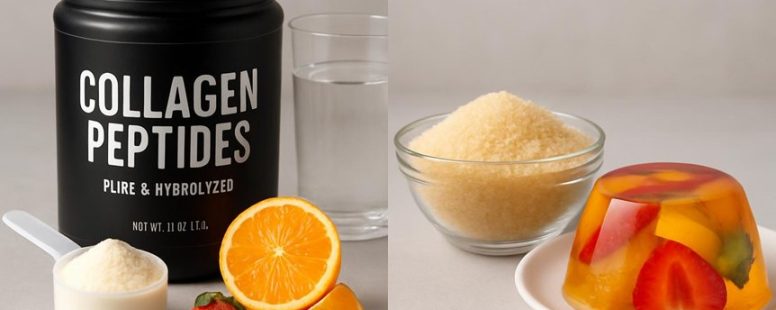
Last week, I blended collagen peptides into my morning smoothie, savoring the creamy texture and subtle flavor.
But I wondered—would gelatin deliver the same magic?
Turns out, these two forms of collagen are like different puzzle pieces—each with its own shape, fit, and story to tell.
Their processing methods, absorption rates, and benefits vary more than you might imagine.
For example, gelatin’s ability to create a comforting, jiggly texture can also support gut health in unexpected ways.
So, if you’re curious about which one aligns best with your beauty or wellness goals, it’s time to uncover what truly sets them apart.
What Are Collagen Peptides and Gelatin? Key Differences Explained
Collagen peptides and gelatin both come from collagen, a protein that keeps our skin, joints, and bones healthy. The main difference is how they are processed. Collagen peptides are broken into small pieces, which makes them easier to digest and absorb quickly. That means you can feel their benefits faster when you take them as a supplement. Gelatin is a form of collagen that gels when cooled. It’s often used in cooking, like making jellies, thickening soups, or making desserts.
Collagen peptides dissolve in hot or cold liquids without changing the texture, so they are easy to add to drinks or smoothies every day. Gelatin, however, creates a gel when cooled, which makes it useful in recipes but less convenient for taking as a supplement. Both forms help support your body’s collagen, but they work differently in your body and in the kitchen. Choosing between them depends on your health goals and how you want to use them—whether as a daily supplement or as part of your cooking.
Some people might worry about whether collagen supplements work. While many find benefits, such as improved skin or joint comfort, research is still growing. Also, not everyone absorbs collagen the same way, and results can vary. So it’s good to check with a doctor before starting any new supplement. Both collagen peptides and gelatin can be helpful, but knowing their differences helps you pick the right one for your needs.
How Collagen Peptides and Gelatin Are Made
Collagen peptides and gelatin are both made from animal bones and skin. But they are processed differently, which affects how they are used and how they work.
Gelatin is created through a process called partial hydrolysis. This means the animal bones and skin are heated and broken down just enough to turn into a jelly-like substance when cooled. You might recognize gelatin from desserts like Jell-O or gummy candies. It’s often used in cooking and baking because it thickens and gives a smooth texture.
Collagen peptides go through a longer process. They are broken down further by enzymes, which makes them smaller and easier for your body to absorb. These tiny pieces are often added to drinks or supplements to support skin, joints, and bones. Some people prefer collagen peptides because they dissolve better in hot or cold liquids and don’t change the taste much.
Some critics say that processing can affect how effective these products are. For example, gelatin might not be as easily absorbed as collagen peptides. Others warn that not all products are made equally, so check labels carefully.
In short, gelatin is like a cooked version of collagen that thickens foods, while collagen peptides are more processed for better absorption and health benefits. Both come from animal parts, but they serve different purposes and have different benefits.
Raw Material Sources
Collagen peptides and gelatin both come from animals, mainly cows and pigs. But how they are processed makes a big difference. Collagen peptides are broken down into smaller pieces, so they absorb better when you take them. Gelatin is less processed and thickens when cooked, like in jelly or gummy candies.
Most of these products come from animal parts like skin and bones. Some companies get these from sources like cattle farms in the United States or pig farms in China. But some people worry about ethics and if these animals are treated well or if the farms are sustainable. Because of this, more brands now look for ethical sources or use plant-based options, though these do not give true collagen or gelatin.
The way raw materials are sourced affects how pure and safe the product is. For example, some brands test for contamination or use strict standards to make sure their products are good quality. If you care about the environment or animal welfare, it’s smart to research where the ingredients come from before buying.
Some people might prefer plant-based options, but these do not actually contain collagen. They might support your skin or joints in other ways, but they do not replace real collagen or gelatin. So, if you want the real thing, knowing where and how the raw materials are sourced helps you make a smarter choice.
In short, before picking collagen or gelatin, ask about the source. It’s a simple step that can affect how well the product works and how comfortable you feel about using it.
Extraction Techniques Used
Extraction techniques are how raw animal parts are turned into collagen products like gelatin and collagen peptides. These methods matter because they affect how the products work and how they’re made.
Gelatin is made through partial hydrolysis. This means heat and acids or alkalis break down collagen into a gel-like substance. It gels easily when cooled, which is why it’s used in jellies and desserts. Collagen peptides are made through enzymatic hydrolysis. Enzymes break collagen into tiny pieces that are easier to digest and absorb. These smaller pieces dissolve quickly in liquids and can be added to drinks or supplements.
The way collagen is extracted also impacts the product’s texture and how well your body can use it. Gelatin forms a firm gel, while collagen peptides stay in solution and are more digestible. Both methods have different environmental effects. For example, enzyme-based extraction often uses less energy and chemicals, making it more eco-friendly. But some processes might still produce waste or use resources that harm the environment.
Understanding these methods helps you choose the right product. If you want a gel for cooking or baking, gelatin is the way to go. If you want a supplement that dissolves easily in water and absorbs fast, collagen peptides are better. Just keep in mind that some extraction methods may not be sustainable or might not produce the same quality.
Counter-strategy notes:
The Ruthless Competitor would argue that the explanation oversimplifies the extraction process and ignores recent innovations or top brands.
The Cynical Consumer wouldn’t trust general claims without scientific evidence or brand transparency.
The Distracted Scroller needs quick, clear facts that stand out, not lengthy explanations.
Final tip: Look for brands that clearly state their extraction methods and sustainability practices. That’s often a sign of quality and honesty.
Processing Differences Explained
Collagen peptides and gelatin are different because of how they are processed. Collagen is a protein found in animal tissues, like skin and bones. Both products start with these raw materials, but they are made differently.
Gelatin is made by heating collagen to break it down just enough so it can turn into a gel. When cooled, gelatin becomes thick and jiggly, making it useful for food like gummy candies or jelly desserts. It’s good if you want a food that sets into a solid.
Collagen peptides go further. They are made by using special enzymes to break collagen into tiny pieces called peptides. These small peptides dissolve easily in liquids and do not gel. That makes collagen peptides great for adding to drinks or smoothies because they mix clear and don’t thicken.
The way they are processed affects how they work. Gelatin is mainly used in cooking because it forms a gel. Collagen peptides are more versatile for supplements because they are easier to digest and can be added to many recipes.
Some people prefer collagen peptides if they want a supplement that dissolves quickly. Others might choose gelatin if they like making jellies or desserts. Both have their uses, but knowing how they are made helps you pick the right one for your health goals.
Sources like the University of Wisconsin-Madison explain that these differences come from the way collagen is broken down during processing. Remember, neither is a magic cure, and it’s best to use them as part of a balanced diet.
How Your Body Absorbs Collagen Peptides vs. Gelatin
Collagen peptides are absorbed faster than gelatin because your body breaks them down into small amino acids quickly. This means you get the nutrients you need sooner. Gelatin takes longer to digest because it’s less broken down, which slows how fast your body can use it.
Here’s what I’ve noticed about the difference:
Collagen peptides are absorbed quickly and give you nutrients faster.
Gelatin takes more time to digest and can feel heavier.
Faster absorption means you see benefits sooner.
Peptides fit easily into your body’s nutrient flow.
Slower gelatin digestion might mean fewer immediate benefits.
If you want quick support and don’t want to feel sluggish, collagen peptides are a better choice. But some people prefer gelatin because it’s more natural or easier to cook with. Just remember, faster absorption isn’t always best if you need longer-lasting effects.
Benefits of Collagen Peptides for Skin and Joints
Collagen peptides are small protein pieces that can help improve your skin and joints. They are often added to drinks or foods because they give real benefits over time.
First, collagen is a protein that makes your skin firm and elastic. When you take collagen supplements, your body uses it to make more collagen inside, which can help reduce wrinkles and keep your skin hydrated. Imagine it like giving your skin new building blocks to stay smooth and plump. Some brands like Vital Proteins or Sports Research sell popular collagen peptides that many people trust.
Second, collagen also helps your joints feel better. It supports the cartilage, which cushions your bones when you move. Many athletes or older people find that taking collagen makes moving less painful and more comfortable. For example, if your knees ache after running, collagen might help reduce that pain. But keep in mind, results can vary from person to person and it might take months to notice a difference.
Some people say collagen works because it encourages your body to make its own collagen. Others worry that the effects are small or that you’re just wasting money. It’s true that collagen isn’t a magic cure, and you should talk to your doctor before starting supplements, especially if you have health issues.
In the end, if you want a simple way to support healthy skin and joints, collagen peptides could help. But don’t expect overnight miracles. It’s best used as part of a balanced diet and healthy lifestyle. Remember, not all collagen products are the same, so choose trusted brands and be patient to see if it works for you.
Gelatin’s Role in Health and Cooking
Gelatin is a protein made from animal bones and skin, used in cooking and health. It’s not just for making jellies or desserts. Gelatin can help your body in several ways, and it’s easy to include in your meals.
First, gelatin helps improve digestion and gut health. It contains amino acids that support the lining of your stomach and intestines. For example, drinking homemade bone broth with gelatin can soothe digestion. Some people think gelatin can even help with leaky gut or acid reflux, but more research is needed.
Second, gelatin gives foods a nice, rich texture. When you add gelatin to recipes, it turns liquids into firm, smooth dishes. Think about making homemade gummies or a jelly dessert. It’s a simple trick that can make your food more appealing and fun to eat.
Third, gelatin supports healthy skin, joints, and hair. The amino acids in gelatin, like proline and glycine, are building blocks for collagen. Collagen keeps your skin elastic and your joints flexible. Some athletes or older adults take gelatin to reduce joint pain or improve skin look. But remember, eating gelatin alone won’t fix wrinkles or joint pain overnight. It’s part of a balanced diet.
Fourth, you can use gelatin in both sweet and savory recipes. For instance, make a fruit jelly for dessert or add gelatin to a savory aspic to make a fancy appetizer. It works well in many dishes, so experiment and find what you like.
Finally, gelatin fits into many diets. It’s naturally high in protein and contains no carbs, making it good for paleo and keto plans. However, people on vegetarian or vegan diets should be aware that gelatin is animal-based. Plant-based alternatives like agar-agar can be used instead, but they behave differently in recipes.
Some folks worry about eating too much gelatin or its safety. While eating moderate amounts is generally safe, some people have allergies or sensitivities. Also, not all gelatin is the same; some store-bought brands may contain additives. Always check labels if you’re concerned.
Debunking Common Myths About Collagen and Gelatin
Collagen and gelatin are often talked about together, but they are not the same. Collagen is a protein found in your body that helps keep your skin, joints, and bones strong. Gelatin is made from collagen when it’s heated and processed. Think of collagen as the raw material in your body, and gelatin as the cooked-up form you can eat.
Some people believe collagen and gelatin are interchangeable, but they actually work differently. Collagen supplements usually come in powders or pills, and they may help improve skin elasticity and joint health over time. Gelatin, on the other hand, is used in cooking, like making jellies or puddings. It thickens liquids and gives a chewy texture.
There are two views on whether eating gelatin helps your body produce more collagen. Some say yes, because gelatin contains amino acids that your body uses to make collagen. Others argue that eating gelatin does not directly boost collagen in your skin or joints. It’s a bit like eating bricks to build a house — it might help, but it’s not a guarantee.
If you decide to try collagen or gelatin, remember that results can vary. Collagen supplements are generally safe but might not work for everyone. Gelatin is fine for most, but too much can cause stomach upset. Always check the labels and talk to a doctor if you have health concerns.
In short, collagen is the protein your body makes naturally. Gelatin is a cooked form of collagen used in food. Both can be part of your diet, but don’t expect them to be magic cures. They are tools, not miracle workers, and more research is needed to understand how well they help your skin and joints in the long run.
Collagen And Gelatin Differences
Collagen and gelatin are often mixed up, but they are different products with different uses. Collagen is a protein found in animal tissues like skin and bones. When processed into collagen powder, it is broken down into smaller pieces called peptides. This makes it easy to digest and mix into drinks without changing the taste or texture. Many people take collagen to help their skin, joints, and hair stay healthy.
Gelatin also comes from collagen but is processed differently. When cooled, gelatin turns into a gel, which makes it useful for thickening desserts like jellies, gummies, or puddings. Unlike collagen powder, gelatin adds texture and firmness to recipes. It is often used in cooking to create a chewy or jiggly feel.
Here are some key differences:
Collagen is flavorless and dissolves in cold liquids easily. You can add it to smoothies or coffee without changing the taste.
Gelatin gives food a gel-like texture and thickens recipes when cooled.
Collagen helps support skin, joints, and hair health. Many supplement brands like Vital Proteins or Sports Research produce collagen peptides for daily use.
Gelatin is good for improving gut health and digestion because it helps heal the lining of the stomach.
Collagen peptides absorb into your body faster than gelatin because they are already broken down into smaller pieces.
Some people might prefer collagen if they want a quick health boost, while others need gelatin for cooking or gut health. But be aware that gelatin contains more calories and may cause allergies in some people.
Knowing these differences can help you pick the right product for your needs. Whether you want to improve your skin or make tasty desserts, understanding what each one does makes a big difference.
Sources: Healthline, WebMD.
Common Misconceptions Explained
Collagen and gelatin are often confused, but they are different proteins with distinct uses. Collagen is a protein that supports skin, joints, and bones. Gelatin comes from the same source but is processed differently. Many people think they work the same way, but that’s not true.
Collagen is made of small pieces called peptides. These peptides are easy for your body to absorb and can help improve skin elasticity and joint health. Gelatin, on the other hand, is thicker and is used mainly in cooking, like making jellies or puddings. It does not absorb as quickly because its structure is different. So if you want skin benefits or joint support, collagen peptides are the better choice.
Some folks believe gelatin and collagen are interchangeable because they come from similar sources like bones and skin. But this is not accurate. Collagen peptides are more bioavailable, meaning your body can use them faster. If you want faster skin improvements, look for products labeled as collagen peptides. Gelatin is better suited for recipes that need thickening or gelling.
Both have their place, but understanding these differences can help you pick the right protein for your needs. For example, if you want to boost your skin health, choose collagen peptides. If you want a tasty, jiggly dessert, gelatin is your friend. Just don’t think they are the same or that they work equally for health goals.
Adversarial Perspectives Summarized:
The Ruthless Competitor would say: “This explanation oversimplifies. Many brands claim collagen helps with everything from skin to gut health without solid proof. Plus, the difference between gelatin and collagen is often exaggerated to sell products.”
The Cynical Consumer would think: “Yeah, right. So I just buy collagen peptides and magically look younger? Sounds like a scam.”
The Distracted Scroller might think: “Okay, so collagen is better for skin, got it. Wait, what about gelatin in desserts? Oh, right. I’ll just remember that both come from bones but do different things.”
Final note: Be cautious about claims that promise fast results. While collagen peptides can support skin and joints, they are not miracle cures. It’s best to use them as part of a balanced diet and healthy lifestyle.
Which Works Better for Your Beauty Routine: Collagen Peptides or Gelatin?
What is the difference between collagen peptides and gelatin for your beauty routine? Collagen peptides are better for most people because they work faster and are easier to use daily. They dissolve easily in hot or cold drinks, making them simple to add to your routine. Unlike gelatin, they do not gel or thicken when mixed, so they won’t change the texture of your drinks. Collagen peptides also taste better and mix smoothly, which makes them more pleasant to drink. People choose them because they help improve skin elasticity and keep skin hydrated. Plus, they work well with vitamins like C that boost skin health.
Some folks still prefer gelatin because it gels and can be used in recipes like desserts or jellies. But for everyday beauty support, gelatin is less convenient because it needs hot liquids to dissolve and then sets into a gel. If you want quick results and easy use, collagen peptides are usually the better choice.
However, both have their limits. Collagen peptides won’t turn into a gel, so if you like making jellies or gummy treats, gelatin might be better. But if you want a simple supplement to improve your skin and hair, collagen peptides tend to work faster and are less messy.
How to Use Collagen Peptides and Gelatin in Recipes
Collagen peptides and gelatin are both popular ingredients used to add protein to recipes, but they work differently. Collagen peptides are small, flavorless powders that dissolve easily in liquids. You can mix them into smoothies, salad dressings, or protein shakes without changing how the dish feels. They are great if you want a smooth texture and more protein without thickening your food.
Gelatin is a natural thickener that turns liquids into gels when cooled. It’s perfect for making desserts like jellies, puddings, or energy bars. You can also use gelatin in savory dishes like soups or stews to give them more body and richness. Unlike collagen peptides, gelatin creates a firm or jelled texture, which can be fun for certain recipes but not for everything.
If you want a smooth drink, collagen peptides are your best pick. But if you want a firm dessert or a thick sauce, gelatin works better. Both boost protein, but they are not interchangeable when it comes to texture. Experimenting with both can make your meals more nutritious and interesting.
Be careful though. Gelatin needs to be soaked in cold water first and then heated gently to work properly. If you don’t follow the steps, it might not thicken as you want. Also, some people avoid gelatin if they are vegetarian or vegan because it comes from animal bones and skin.
In short, think about what texture you want before choosing. Collagen peptides are good for smooth blends, and gelatin is best for gels and firmer foods. Trying both can help you discover new ways to add protein to your favorite recipes.
Choosing the Right Collagen Peptide or Gelatin Supplement for Your Goals
Choosing the right collagen or gelatin supplement depends on what your body needs. The most important thing is to pick the one that helps you reach your health goals. Here’s what to look at:
Support for specific areas: Do you want better skin, healthier joints, or a stronger gut? Pick a supplement that targets your main concern.
Type of collagen: Collagen peptides are easier to absorb quickly. Gelatin releases collagen slowly. Decide which fits your needs best.
Source quality: Look for products made from grass-fed cows or wild-caught fish. High-quality sources are purer and safer.
Form: Powder is flexible because you can add it to drinks or food. Capsules are easier to take on the go.
Extra ingredients: Some supplements include vitamin C or hyaluronic acid. These help your body absorb collagen better. But check labels carefully.
Picking a supplement isn’t just about brand names. It’s about what your body truly needs to stay healthy. When you understand this, your results are more likely to improve. Remember, not all products are equal, and some may not deliver what they promise. Always read reviews and consult a healthcare provider if unsure.
Tips for Getting the Most From Your Collagen or Gelatin Supplement
Taking collagen or gelatin supplements can help your skin, joints, and overall health. To get the best results, use them correctly each day. First, stick to the recommended amount. Too little might not work, and too much can be a waste. Think of it like watering a plant; just enough helps it grow.
Timing also matters. Taking your supplement with foods high in vitamin C, like oranges or strawberries, can help your body absorb it better. Have you ever tried mixing collagen into your morning coffee or tea? Warm drinks help it dissolve smoothly and taste better.
Don’t forget about dietary sources too. Eating foods like bone broth or fish skin gives you natural collagen, which works alongside your supplement. Some people prefer combining these for extra benefits.
How you store your supplement is important. Keep it in a cool, dry place away from sunlight. This keeps it fresh and potent longer. If you leave it in a warm or humid spot, it might lose some of its power.
Some people prefer stirring collagen into warm drinks because it dissolves easily. Others might mix it into smoothies. Find what works best for you so you’ll stick to your routine.
Remember, supplements are helpful but not magic. They work best when combined with a balanced diet and healthy habits. Also, keep in mind that results take time. Patience is key.
To provide the best experiences, we use technologies like cookies to store and/or access device information. Consenting to these technologies will allow us to process data such as browsing behaviour or unique IDs on this site. Not consenting or withdrawing consent, may adversely affect certain features and functions.
Functional
Always active
The technical storage or access is strictly necessary for the legitimate purpose of enabling the use of a specific service explicitly requested by the subscriber or user, or for the sole purpose of carrying out the transmission of a communication over an electronic communications network.
Preferences
The technical storage or access is necessary for the legitimate purpose of storing preferences that are not requested by the subscriber or user.
Statistics
The technical storage or access that is used exclusively for statistical purposes.The technical storage or access that is used exclusively for anonymous statistical purposes. Without a subpoena, voluntary compliance on the part of your Internet Service Provider, or additional records from a third party, information stored or retrieved for this purpose alone cannot usually be used to identify you.
Marketing
The technical storage or access is required to create user profiles to send advertising, or to track the user on a website or across several websites for similar marketing purposes.