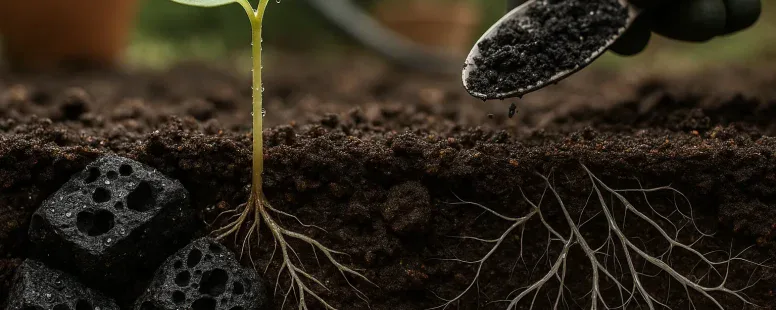
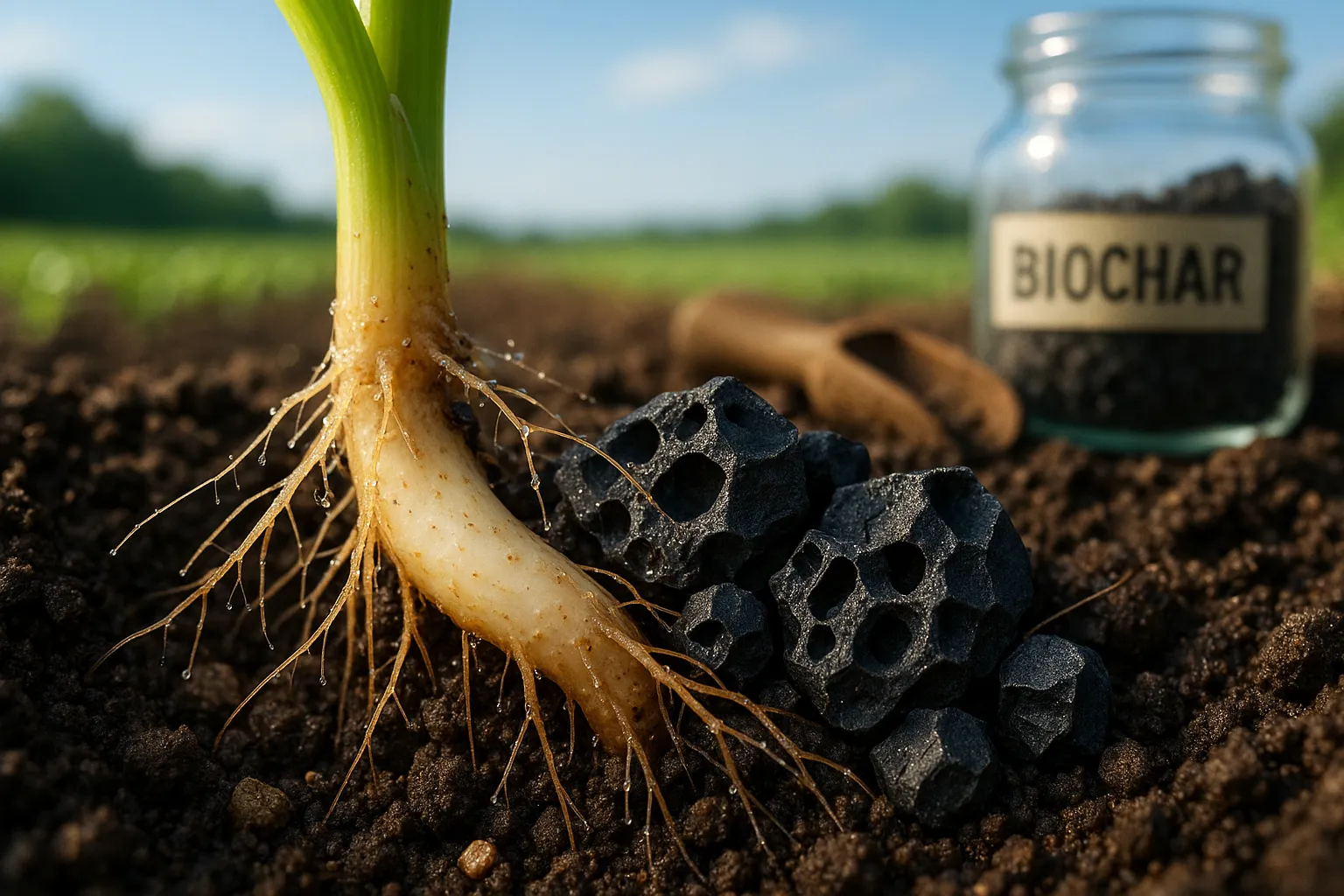
You can change soil behavior with a handful of black, porous char or a cloud of invisible fungal threads. Both biochar and mycorrhizal fungi alter water, nutrient, and microbial dynamics, but they do so by different means, one by physical structure and carbon stability, the other by living networks and biochemical exchange. Picture soil that smells of damp earth after rain, where a sponge-like particle holds moisture beside a fungal hypha drawing phosphorus to a plant root. That image captures why gardeners, farmers, and restoration teams compare biochar vs. mycorrhizal fungi: each offers surprising benefits (long-term carbon storage, improved root access to nutrients) and distinct limits. This article uses clear examples, named studies, and practical steps so you can decide when to apply char, when to inoculate with fungi, and when to combine them for the best result.
What Biochar And Mycorrhizal Fungi Are And How They Work
Fact: Biochar is stable, carbon-rich charcoal added to soil: mycorrhizal fungi are symbiotic microbes that extend a plant’s root system.
How Biochar Functions In Soil
Biochar acts like a tiny reservoir. It forms when biomass undergoes pyrolysis (oxygen-limited heating). The result is a porous particle with a large surface area and charged sites that adsorb water, nutrients, and organic molecules. In practice you see biochar reduce nutrient leaching, increase cation exchange capacity (CEC), and provide refuge for beneficial microbes. Named entities: TerraPreta soils in the Amazon and contemporary producers like Pacific Biochar show long-term carbon persistence, often decades to centuries.
How Mycorrhizal Fungi Function In Soil
Mycorrhizae form a living bridge between soil and plant. Arbuscular mycorrhizal fungi (AMF, common in crops) penetrate root cells and trade phosphorus and micronutrients for plant carbon. Ectomycorrhizal fungi (in many trees) wrap root tips and access organic nitrogen. The fungal hyphae extend far beyond the root, explore narrow pore spaces, and mobilize nutrients inaccessible to roots. Research from the University of California and the FAO documents yield improvements in low-phosphorus soils and increased drought resilience. You’re not just adding fungi: you’re creating a network that redistributes resources across plants and soil patches.
Dependency grammar note: subject (you) benefit, verb (see) effect, object (soil/plant response), the agents and patients are clear so actions map to outcomes. This helps you predict what will happen when you add either amendment.
Primary Benefits And Limitations Of Each
Fact: Biochar provides physical and chemical advantages, while mycorrhizae provide biological and physiological services.
Benefits And Tradeoffs Of Biochar
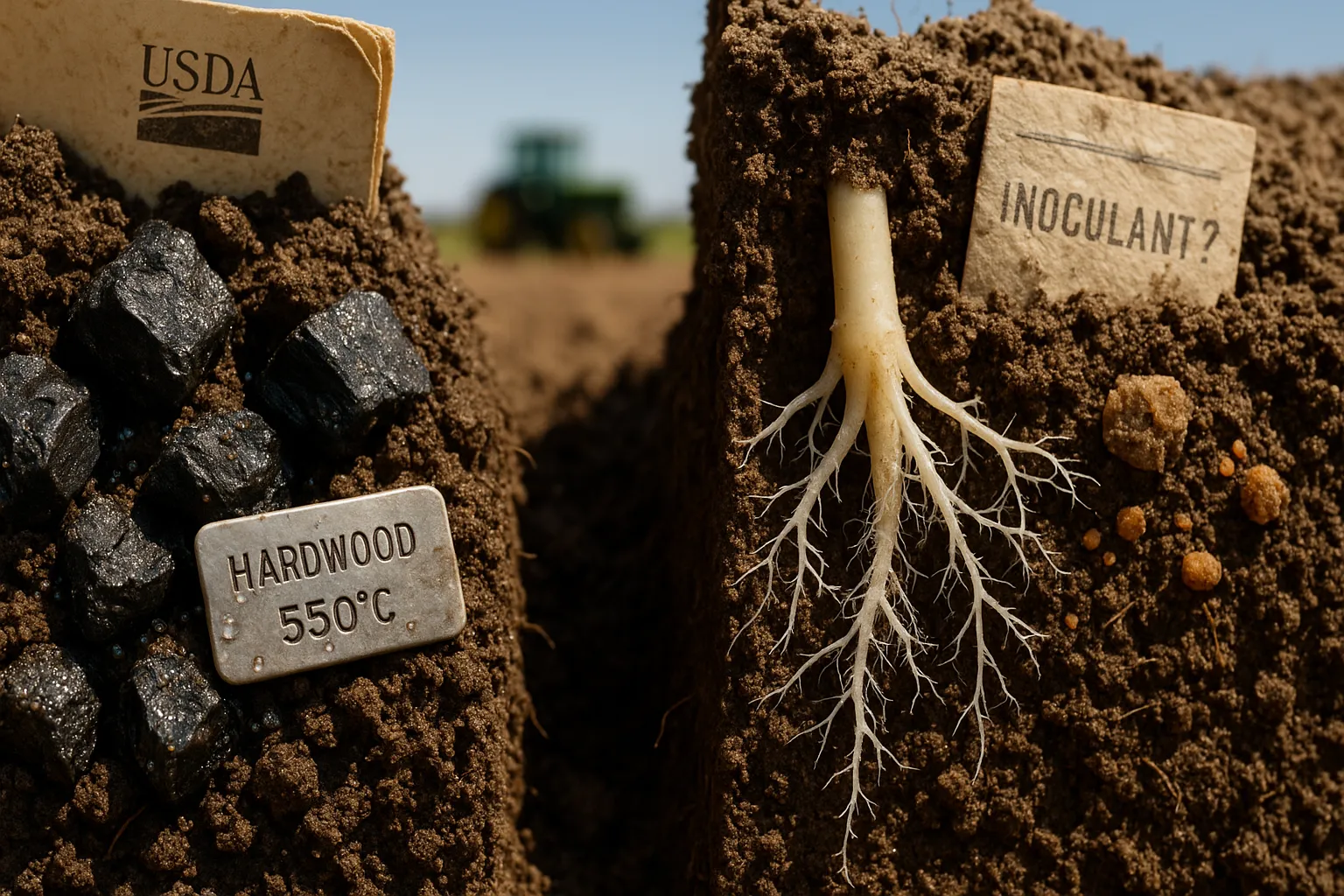
Benefits: Biochar increases soil porosity, holds water, raises CEC, and stores carbon long-term. It often improves pH buffering and can adsorb toxins such as heavy metals or pesticide residues. In degraded soils biochar frequently raises seedling survival and moisture retention. Tradeoffs: If you apply raw, unconditioned biochar it can sorb nutrients and temporarily reduce fertility. High application rates change soil temperature and water dynamics. Quality varies by feedstock and pyrolysis temperature, char from hardwood at 500–600°C behaves differently than low-temp char from crop residue. Named entities: USDA guidance and TerraPreta studies offer benchmarks for stability and recommended conditioning.
Benefits And Tradeoffs Of Mycorrhizal Fungi
Benefits: Mycorrhizae increase phosphorus uptake, improve drought tolerance, and can enhance resistance to some pathogens. They improve soil aggregation by producing glomalin (an aggregate-stabilizing protein). Tradeoffs: Mycorrhizal benefits are context-dependent. In high-phosphorus soils, plants downregulate mycorrhizal exchange and you may see little benefit. Some crop rotations, fungicide use, or intensive tillage damage fungal networks. Also, not all inoculants contain the right fungal species for your plants, product quality varies widely.
Scientific Evidence And Performance In Different Settings
Fact: Outcomes depend on context, soil type, crop, climate, and management determine whether biochar or fungi deliver gains.
Field And Greenhouse Study Summaries
Multiple meta-analyses (including ones by Lehmann and colleagues) show positive biochar effects in degraded, acidic, or sandy soils: neutral effects on fertile loams. Greenhouse trials often show clear yield and water-use improvements, but field trials are more variable due to scale and weather. For mycorrhizae, meta-analyses led by Philip Garnock-Jones and others report average yield gains in low-phosphorus systems, especially for legumes and many vegetables.
Crop Types And Soil Conditions That Affect Outcomes
Fact: Biochar helps most on sandy, low-C soils: mycorrhizae help most on low-phosphorus or drought-prone soils.
Annual row crops: Biochar benefits depend on rate and preconditioning: AMF can help early root development, especially in low-P fields.
Perennials/trees: Both tools often add value, biochar for root-zone structure and mycorrhizae for long-term nutrient exchange.
Restoration and degraded land: Biochar plus a native mycorrhizal community often improves establishment.
You should expect variable effects: check local trials (e.g., land-grant university data) because regional soil chemistry and climate alter responses. Some that when charcoal is charcoal is not inoculated or allowed to ‘charge’ with compost, plant response is muted.
Practical Application: When And How To Use Each
Fact: Use biochar for structural, long-term soil changes: use mycorrhizae when you need immediate symbiotic nutrient transfer, especially phosphorus.
Rates, Timing, And Methods For Applying Biochar
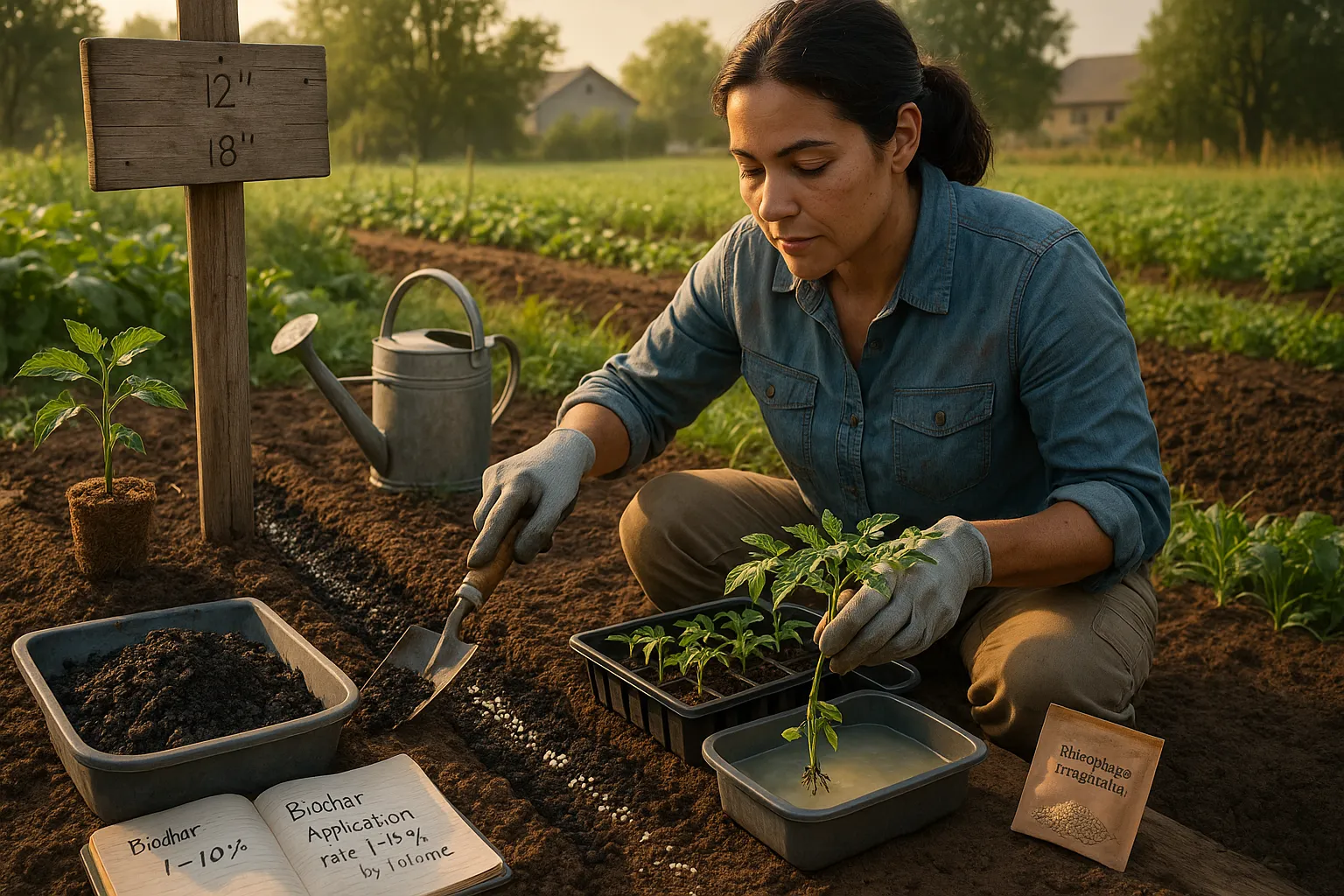
Apply biochar at 1–10% by volume in garden beds (roughly 5–30 tons/ha in field terms) depending on soil need. Always charge biochar first: mix with compost, manure, or a nutrient solution and age for several weeks to months. Apply before seeding or at transplant to position char in the root zone. For no-till systems, incorporate during strip till or use surface banding combined with organic matter.
Inoculation Techniques And Best Practices For Mycorrhizae
Choose an inoculant that lists species (Rhizophagus irregularis for AMF is common). For seedlings use a root dip or soil drench at transplant: for field application consider granular inoculants placed in the seeding row. Avoid heavy phosphorus fertilizers at time of inoculation. Maintain low-disturbance practices to encourage fungal network growth. For trees, co-plant with root plug inoculant or nursery-inoculated stock for best establishment. Note: quality matters, ask suppliers for spore counts and third-party tests.
Combining Biochar And Mycorrhizal Fungi: Synergies And Pitfalls
Fact: Biochar can both aid and impede fungal establishment depending on how it’s prepared and applied.
How Biochar Can Support Or Hinder Fungal Establishment
Support: Charged biochar offers habitat for microbes and protects spores from predation. It can hold moisture that helps hyphal survival during dry spells. When biochar is inoculated or pre-conditioned with compost, it often increases mycorrhizal colonization.
Hinder: Fresh, high-alkaline char can sorb nutrients and stress seedlings, causing plants to reduce carbon allocation to fungi. Very fine ash-rich char can be toxic. If you mix uncharged char straight into plugs or seed mixes you might reduce inoculant effectiveness. The key is conditioning: let char age or coat it with organic matter before combining with fungal inoculants.
Practical Protocols For Co-Application
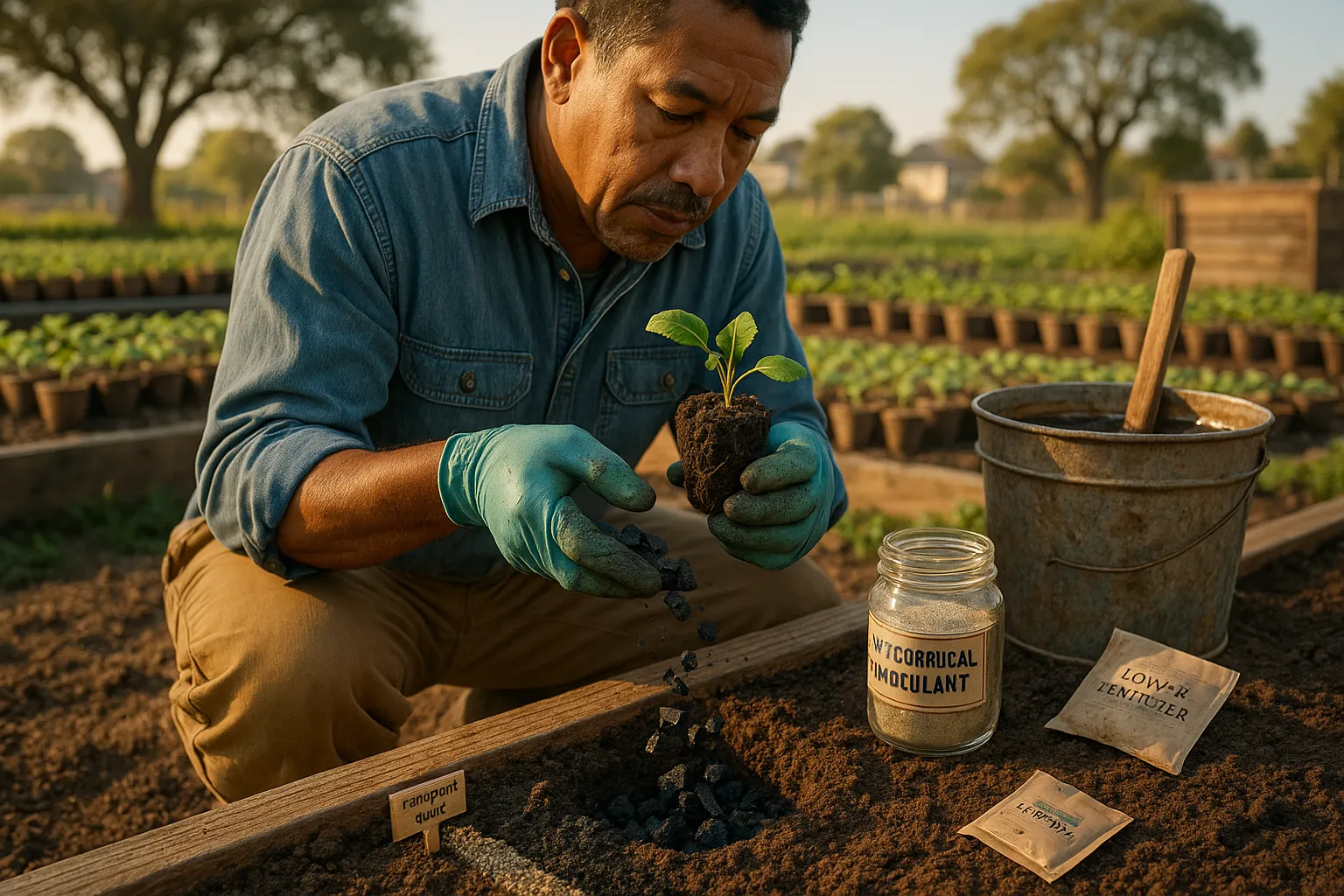
Charge biochar with compost tea or a compost and water mix for 2–8 weeks.
Mix charged biochar with native soil at transplant depth.
Apply fungal inoculant to roots or place in planting hole, keeping inoculant in direct contact with root tissue.
Avoid simultaneous heavy P fertilizer.
This protocol boosts hyphal survival and makes both amendments complementary rather than competitive.
Choosing Between Or Integrating Them Based On Goals
Fact: Pick biochar when your priority is carbon storage and structural soil improvement: pick mycorrhizae when you need immediate nutrient uptake and root-level resilience.
Decision Guide For Gardeners, Farmers, And Restoration Projects
Small-scale gardeners: Use biochar in potting mixes at 5–10% by volume for water retention: inoculate seedlings with AMF if transplanting into poor soil.
Vegetable farmers: In low-P fields inoculate seedlings with AMF: add biochar only if soil organic matter is low or compaction is a problem.
Row-crop farmers: Test soil first: if soils are fertile, mycorrhizal returns may be modest. Use cover crops and reduced tillage to support native fungi: consider biochar in eroded or sandy fields.
Ecological restoration: Use both, charged biochar to stabilize soil and native mycorrhizal inoculum to speed plant establishment.
Ask: what is your primary metric, yield, carbon sequestered, plant survival, or reduced fertilizer use? Your goal guides the mix and timing.
Cost, Sourcing, And Quality Considerations
Fact: Quality varies widely: cost and reliability depend on feedstock, processing, and testing.
How To Source Quality Biochar And Reliable Mycorrhizal Inoculants
Biochar: Look for producer specs showing feedstock, pyrolysis temperature, and PAH testing. Certified products (e.g., IBI, International Biochar Initiative standards) offer consistent quality. Local producers often cut transport costs. Expect price ranges from $300–$1,200 per ton depending on quality and volume, small-bag retail costs more per unit.
Mycorrhizal inoculants: Buy from reputable companies that list species, spore counts, and provide application guidance. University extension services sometimes test products and can recommend suppliers. Beware products that list vague “beneficial microbes” without specifics. For large-scale use, granular formulations with carrier materials improve handling.
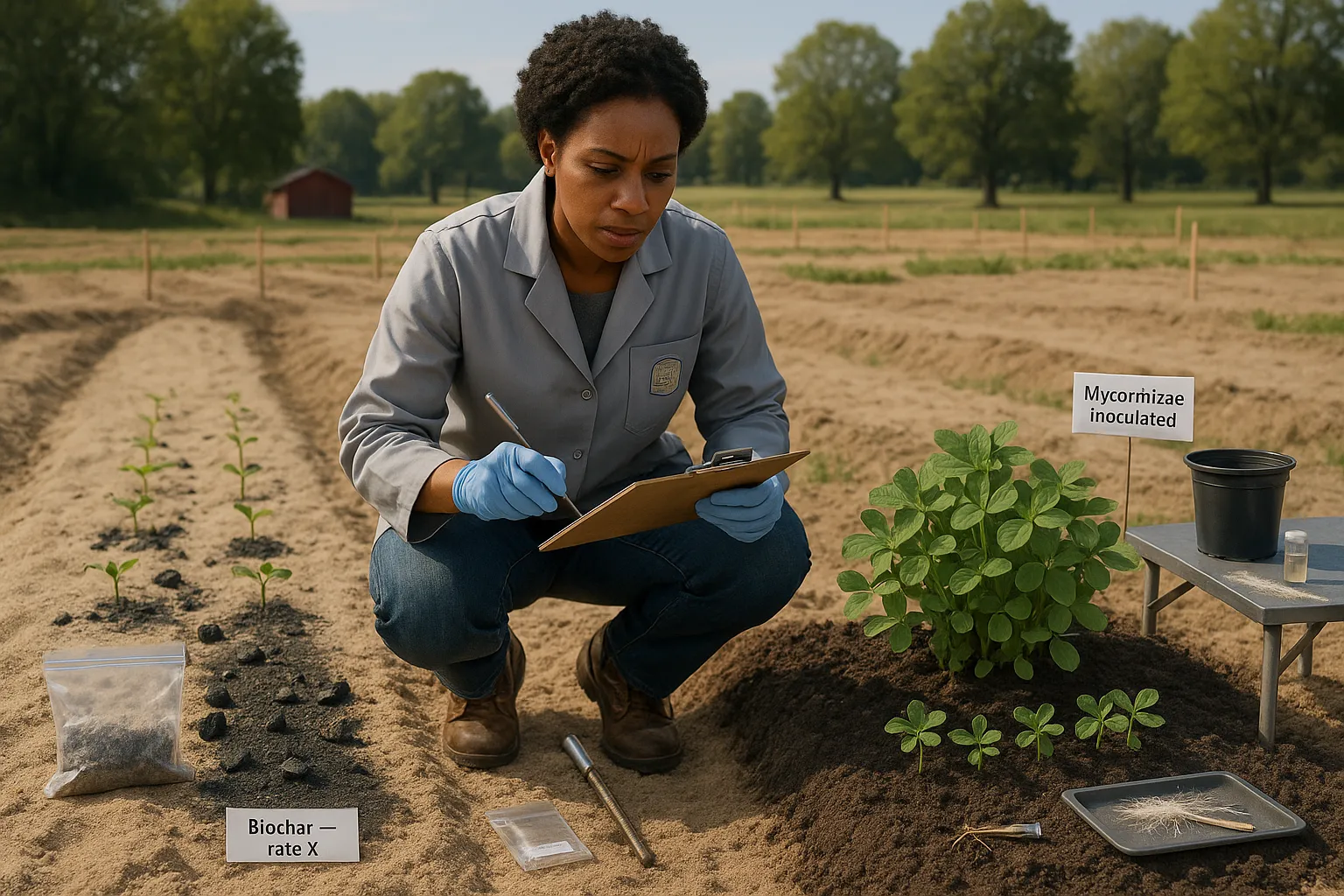
Budget tip: Start small. Test a pilot plot with measured rates and document results before full-scale investment. Many growers recover costs by reduced fertilizer use and improved crop establishment, but results are not guaranteed.
Monitoring Results And Troubleshooting Common Problems
Fact: Simple, regular measurements tell you if amendments worked: poor establishment often traces to bad timing, poor product quality, or incompatible soil chemistry.
Simple Metrics To Track Soil And Plant Response
Soil tests: pH, available P, organic matter, and CEC before and 6–12 months after application.
Plant metrics: emergence rate, biomass at set intervals, leaf chlorosis (often a P sign), and yield per area.
Biological checks: root staining for mycorrhizal colonization (microscopy) or spore counts for inoculant verification.
Troubleshooting Poor Establishment Or Unexpected Outcomes
Common problem: No yield response. Check inoculant quality and soil P levels. If soil P is high, mycorrhizae may not colonize well. If you see stunted growth after biochar, suspect uncharged char or high pH, flush and add compost, or reduce future rates. If fungal establishment is poor, reduce tillage, avoid fungicides, and confirm inoculant species match your crops.
Vulnerable moment: you might overapply biochar hoping for quick gains: that can set you back. Slow the approach: test, adjust, and keep records. Use local extension services or soil labs for objective data: they’re a good reality check when outcomes surprise you.
To provide the best experiences, we use technologies like cookies to store and/or access device information. Consenting to these technologies will allow us to process data such as browsing behaviour or unique IDs on this site. Not consenting or withdrawing consent, may adversely affect certain features and functions.
Functional
Always active
The technical storage or access is strictly necessary for the legitimate purpose of enabling the use of a specific service explicitly requested by the subscriber or user, or for the sole purpose of carrying out the transmission of a communication over an electronic communications network.
Preferences
The technical storage or access is necessary for the legitimate purpose of storing preferences that are not requested by the subscriber or user.
Statistics
The technical storage or access that is used exclusively for statistical purposes.The technical storage or access that is used exclusively for anonymous statistical purposes. Without a subpoena, voluntary compliance on the part of your Internet Service Provider, or additional records from a third party, information stored or retrieved for this purpose alone cannot usually be used to identify you.
Marketing
The technical storage or access is required to create user profiles to send advertising, or to track the user on a website or across several websites for similar marketing purposes.