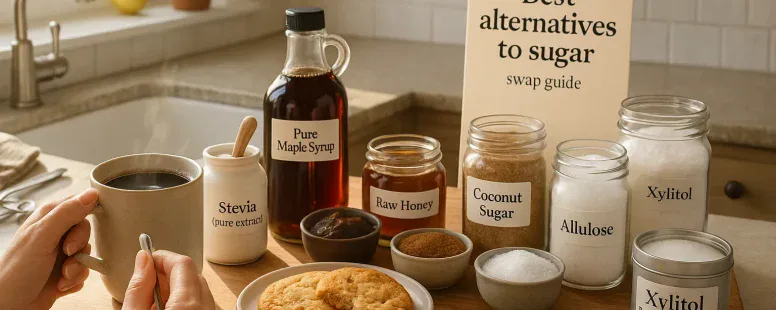
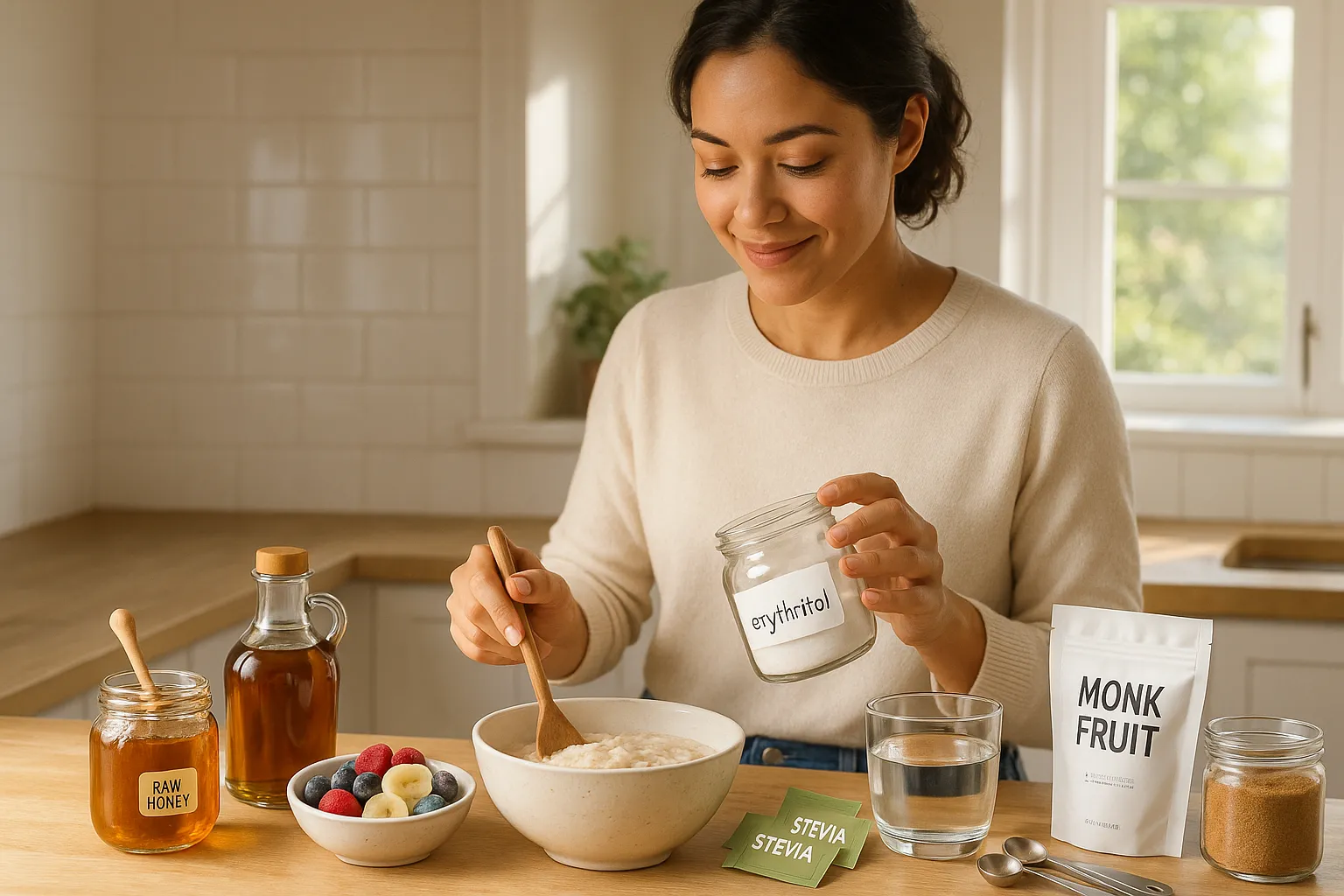
Sugar raises calories and spikes blood sugar quickly. If you want fewer empty calories, steadier energy, and fewer cravings, switching some or all of your sugar is a high-impact move. Picture your morning coffee keeping you alert without the mid-morning crash, or cookies that taste familiar but don’t send your glucose soaring. This guide walks you through practical, tested alternatives to sugar, from zero-calorie sweeteners to whole-food options, so you can pick the right swap for each recipe and each goal.
Why Replace Refined Sugar? Health Effects And Benefits Of Switching
Fact: Refined sugar contributes to excess calories, blood sugar spikes, and inflammation. When you eat table sugar (sucrose) or high-fructose corn syrup often, you raise your risk for weight gain, type 2 diabetes, and fatty liver disease. Scientific reviews link high added-sugar intake to increased cardiometabolic risk.
Switching away from refined sugar lowers calorie intake and smooths blood sugar. You may notice steadier energy, fewer energy crashes, and smaller sweet cravings within weeks. Reduced sugar can also improve skin oiliness and dental health: public health agencies like the WHO recommend limiting added sugars to under 10% of daily calories.
Practical benefit: less sugar often means better portion control. When you use lower-calorie or less-sweet options you reduce the total sweetness in your diet, which helps reset taste preference over time. Be aware: some substitutes bring their own issues (e.g., laxative effects or aftertaste). We’ll cover those next so you can weigh trade-offs.
How To Choose The Right Sugar Alternative
Fact: The right alternative depends on taste goals, health targets, and recipe use. Start by listing what matters to you: calorie reduction, glycemic control, natural ingredients, or exact baking performance.
Taste, Sweetness Intensity, And Baking Behavior
Fact: Sweetness intensity and how an ingredient behaves under heat determine suitability. Stevia and monk fruit are intensely sweet: you need tiny amounts. Sugar alcohols like erythritol behave more like sugar in recipes. When you bake, sugar does more than sweeten: it adds bulk, browns, and holds moisture.
Glycemic Impact, Calories, And Metabolic Effects
Fact: Many alternatives have minimal effect on blood glucose. Erythritol, stevia, monk fruit, and allulose produce little to no glycemic response. Natural sweeteners with calories (honey, maple syrup, coconut sugar) raise blood glucose but often less sharply than white sugar. Choose based on whether you prioritize calorie count or glycemic control.
Processing, Purity, And Ingredient Transparency
Fact: Not all “natural” labels mean minimal processing. Some stevia or monk fruit blends include sugar or maltodextrin. Read labels. If you want pure extracts, pick products listing only the sweetener (e.g., “pure stevia extract”).
Use Case: Hot Drinks, Baking, Sauces, And Cold Recipes
Fact: Different uses require different swaps. For hot drinks, dissolving speed and aftertaste matter. For baking, bulk and browning matter. For sauces, viscosity and caramelization matter. Match the substitute to the use case: monk fruit works well in drinks: erythritol and allulose perform better in baked goods: honey and maple fit sauces and marinades.
Natural Low‑Calorie Sweeteners
Fact: Natural low-calorie sweeteners let you reduce calories while keeping sweetness high. They include stevia, monk fruit, and allulose.
Stevia: Use Cases, Strengths, And How To Mask Aftertaste
Fact: Stevia is plant-derived and calorie-free. You use very small amounts because it is 200–400 times sweeter than sugar. Best uses: coffee, tea, cold drinks, and some no-bake desserts. Strengths: stable at high temperatures and zero calories. Weakness: some people detect a bitter or licorice-like aftertaste. To mask aftertaste, blend stevia with erythritol or add a pinch of salt, vanilla, or citrus zest.
Monk Fruit: Flavor Profile And Best Uses
Fact: Monk fruit extract is intensely sweet and often has a cleaner profile than stevia. You’ll find it in single-ingredient extracts or blends. Best uses: beverages, sauces, and low-moisture baking. It works well when you want a less bitter option than stevia but still want zero calories.
Allulose: Low‑Calorie, Baking Properties, And Tolerance
Fact: Allulose is a rare sugar that tastes like sugar but provides about 0.2 kcal/g and elicits minimal glycemic response. It browns and caramelizes like sugar, making it ideal for cookies, sauces, and some baked goods. Tolerance: in large amounts, allulose can cause mild digestive upset for some people, but generally it’s better tolerated than sugar alcohols.
Sugar Alcohols And Low‑Calorie Options
Fact: Sugar alcohols offer bulk and sugar-like mouthfeel with fewer calories. The most common are erythritol and xylitol.
Erythritol: Benefits, Digestive Tolerance, And Baking Notes
Fact: Erythritol has about 0.2 kcal/g and 60–70% the sweetness of sugar. Benefits: it adds bulk, has no aftertaste for many people, and does not promote tooth decay. Digestive tolerance: erythritol is better tolerated than many sugar alcohols because it absorbs in the small intestine: yet very high doses can cause bloating in sensitive people. Baking notes: it can recrystallize and give a cooling sensation: combine with allulose or a liquid sweetener to reduce cooling.
Xylitol: Dental Benefits, Safety Considerations, And Uses
Fact: Xylitol tastes like sugar, helps reduce dental cavities, and has similar sweetness to sucrose. Use it in chewing gums, mints, and some baked items. Safety consideration: xylitol is highly toxic to dogs, never use it in pet foods. In people, large doses may cause digestive upset. Xylitol also participates in browning and caramelization better than erythritol.
Natural Sweeteners With Calories (Less‑Processed Options)
Fact: Some less-processed sweeteners provide flavor complexity and micronutrients but carry calories and glycemic effect. These include honey, maple syrup, coconut sugar, and date-based products.
Honey: Nutrition, Flavor Varieties, And When To Use
Fact: Honey provides about 64 kcal per tablespoon and contains small amounts of vitamins, antioxidants, and distinct flavor compounds. Varieties (manuka, clover, wildflower) change flavor dramatically. Use honey in dressings, glazes, and when you want floral or robust notes. Avoid giving honey to infants under one year because of botulism risk.
Maple Syrup And Coconut Sugar: Flavor, Glycemic Notes, And Substitution Ratios
Fact: Pure maple syrup has minerals like manganese and provides complex caramel notes. Coconut sugar retains some nutrients and has a brown-sugar-like flavor. Both raise blood glucose but often less sharply than refined sugar because they contain small amounts of fiber or minerals. Substitution: use 3/4 cup maple or honey for 1 cup sugar (reduce liquids slightly). Use coconut sugar 1:1 for dry goods but expect darker color and different caramelization.
Date Sugar And Date Paste: Whole‑Food Alternatives For Baking And Snacks
Fact: Date sugar is ground whole dates and provides fiber and micronutrients. Date paste (blended soaked dates) adds moisture and sweetness and works well in bars, muffins, and energy bites. Dates do not dissolve like sugar: they add texture and a fruity flavor. When you use date paste, decrease other liquids and expect denser results.
Artificial Sweeteners: When They Make Sense And Caveats
Fact: Artificial sweeteners offer intense sweetness with near-zero calories. They can help you cut calories quickly but they come with trade-offs.
Common Options (Sucralose, Aspartame, Saccharin) And Practical Uses
Fact: Sucralose (Splenda) is heat-stable and common in baking mixes: aspartame (Equal) is not heat-stable and suits cold drinks: saccharin (Sweet’N Low) is extremely sweet but has metallic notes for some. Use sucralose for baked goods where you want sugar-like sweetness without calories. Use aspartame for beverages.
Safety, Regulatory Status, And Long‑Term Considerations
Fact: Regulatory bodies like the FDA and EFSA consider approved artificial sweeteners safe at recommended intakes. Long-term mixed results on appetite and weight management, some people compensate by eating more calories later. If you prefer whole-food options, limit artificial sweeteners. Always follow acceptable daily intake (ADI) guidelines and consult your clinician if you have specific health concerns.
Practical Substitution Guide And Recipe Conversion Tips
Fact: Substitutions depend on the sweetener’s sweetness, bulk, and moisture. Use these general rules as a starting point and test small batches.
General Conversion Ratios For Cooking And Baking
Fact: Common ratios: stevia extract 1 tsp ≈ 1 cup sugar (varies by product): monk fruit blends often use 1:1 if blended with erythritol: erythritol is about 0.7 sweetness of sugar so use ~1:1 with taste adjustment: allulose is roughly 0.7–1.0 sweetness and can often replace sugar 1:1 in many recipes. For liquid sweeteners: replace 1 cup sugar with 3/4 cup honey or maple and reduce overall liquid by 3 tablespoons.
Adjusting Texture And Moisture When Removing Sugar
Fact: Sugar holds moisture and helps structure. When you reduce sugar, increase binding ingredients or liquid slightly. Add 1–2 tablespoons of applesauce, yogurt, or mashed banana per cup of sugar removed for moisture. For bulk, add a bit more flour or a neutral filler like maltodextrin in small amounts if the recipe needs volume.
Blends And Taste‑Balancing Tricks (Acids, Spices, And Salt)
Fact: Balancing sweetness often requires acid or aromatics. A squeeze of lemon, a pinch of salt, or a dash of cinnamon, vanilla, or ginger can reduce perceived sweetness and improve flavor complexity. If a sweetener has cooling or bitter notes, add a small amount of butter or oil to round the mouthfeel.
Health Considerations, Dosage, And Special Populations
Fact: Dosage and population matter. Some sweeteners suit diabetes control: others present risks to infants, pets, or pregnant people.
Diabetes, Weight Management, And Blood Sugar Monitoring
Fact: Low- and zero-calorie sweeteners (stevia, monk fruit, erythritol, allulose) produce minimal glycemic changes and can help manage blood glucose when used instead of sugar. But, monitor your response: individuals vary. Use a glucose monitor if you have diabetes and track how different sweeteners affect your readings.
Pregnancy, Children, And Pets, Safety Notes
Fact: Avoid honey for infants under one year. Pregnant people should follow guidance from their clinician: limited evidence supports occasional use of stevia and monk fruit, but high-dose artificial sweeteners should be checked with a provider. Pets: never give xylitol to dogs, even small amounts can be deadly. Keep products containing xylitol well away from pets.
How To Transition Your Palate: Practical Habits And Meal Ideas
Fact: You can lower your sweet preference with small, consistent swaps. Start by reducing added sugar by 10–25% in recipes and drinks each week.
Sample Swaps For A Day: Breakfast, Snacks, Drinks, And Desserts
Fact: Practical swaps make change simple. Example day:
Breakfast: plain yogurt with a spoon of date paste and fresh berries instead of flavored yogurt.
Snack: apple slices with a smear of almond butter instead of a candy bar.
Drink: black coffee with a drop of monk fruit or a touch of allulose instead of a sugar-sweetened latte.
Dessert: dark chocolate (70% cacao) and a small baked oatmeal cookie made with banana and a blend of erythritol and allulose.
Tips For Reducing Overall Sweet Preference Over Time
Fact: Repeated exposure to lower sweetness recalibrates taste. Practice: reduce added sugar gradually, pair sweets with protein or fat to slow glucose response, and prioritize whole fruits when you want sweet. Expect cravings for a few weeks: they will fade as your palate adjusts. Be patient, taste change takes time, but it’s doable.
If you want experiment ideas, try a 30-day sugar-reduction challenge with daily swaps and a food log: you’ll learn what replacements you tolerate best and which recipes need tweaks.
To provide the best experiences, we use technologies like cookies to store and/or access device information. Consenting to these technologies will allow us to process data such as browsing behaviour or unique IDs on this site. Not consenting or withdrawing consent, may adversely affect certain features and functions.
Functional
Always active
The technical storage or access is strictly necessary for the legitimate purpose of enabling the use of a specific service explicitly requested by the subscriber or user, or for the sole purpose of carrying out the transmission of a communication over an electronic communications network.
Preferences
The technical storage or access is necessary for the legitimate purpose of storing preferences that are not requested by the subscriber or user.
Statistics
The technical storage or access that is used exclusively for statistical purposes.The technical storage or access that is used exclusively for anonymous statistical purposes. Without a subpoena, voluntary compliance on the part of your Internet Service Provider, or additional records from a third party, information stored or retrieved for this purpose alone cannot usually be used to identify you.
Marketing
The technical storage or access is required to create user profiles to send advertising, or to track the user on a website or across several websites for similar marketing purposes.