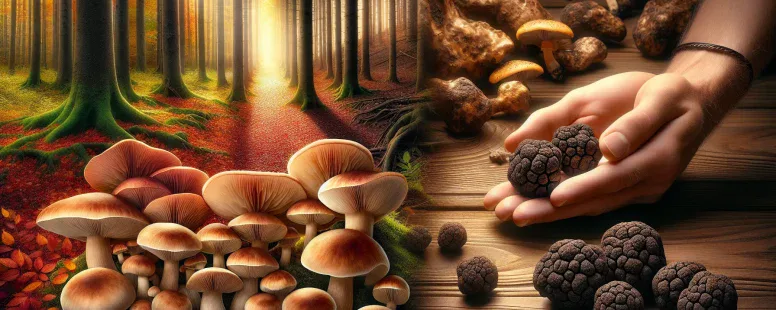
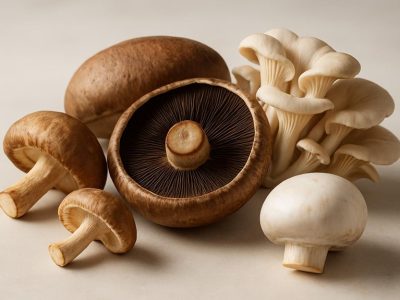
When exploring the intriguing realm of fungi, two stand-out members often take center stage: mushrooms and truffles. Both renowned and sought after, these organisms boast unique traits that distinguish them within the culinary realm and beyond. To truly appreciate their value and significance, let’s investigate into what makes mushrooms and truffles exceptional yet distinct.
Introduction to Fungi: Mushrooms and Truffles
Defining Fungi and Their Role in Nature
Fungi play a crucial role in our ecosystem as decomposers, recycling organic material and facilitating nutrient circulation. They include an extensive range of species, from molds to the renowned mushrooms and truffles.
What Are Mushrooms?
Mushrooms are the fruiting bodies of fungi found above ground or their growing substance. They come in various sizes, shapes, and colors and have been utilized for their nutritional, medicinal, and culinary properties for centuries.
Understanding Truffles
Truffles are subterranean fungi that grow symbiotically with specific tree roots. Revered for their unique aroma and flavor, they are considered a luxury in the culinary world, often sought after by chefs and gourmets.
Key Distinctions Between Mushrooms and Truffles
Biological Differences
Mushrooms and truffles belong to different fungal classifications and possess structural differences. Mushrooms generally feature a cap and stem, while truffles grow as irregularly-shaped masses underground.
Growth Patterns and Habitat
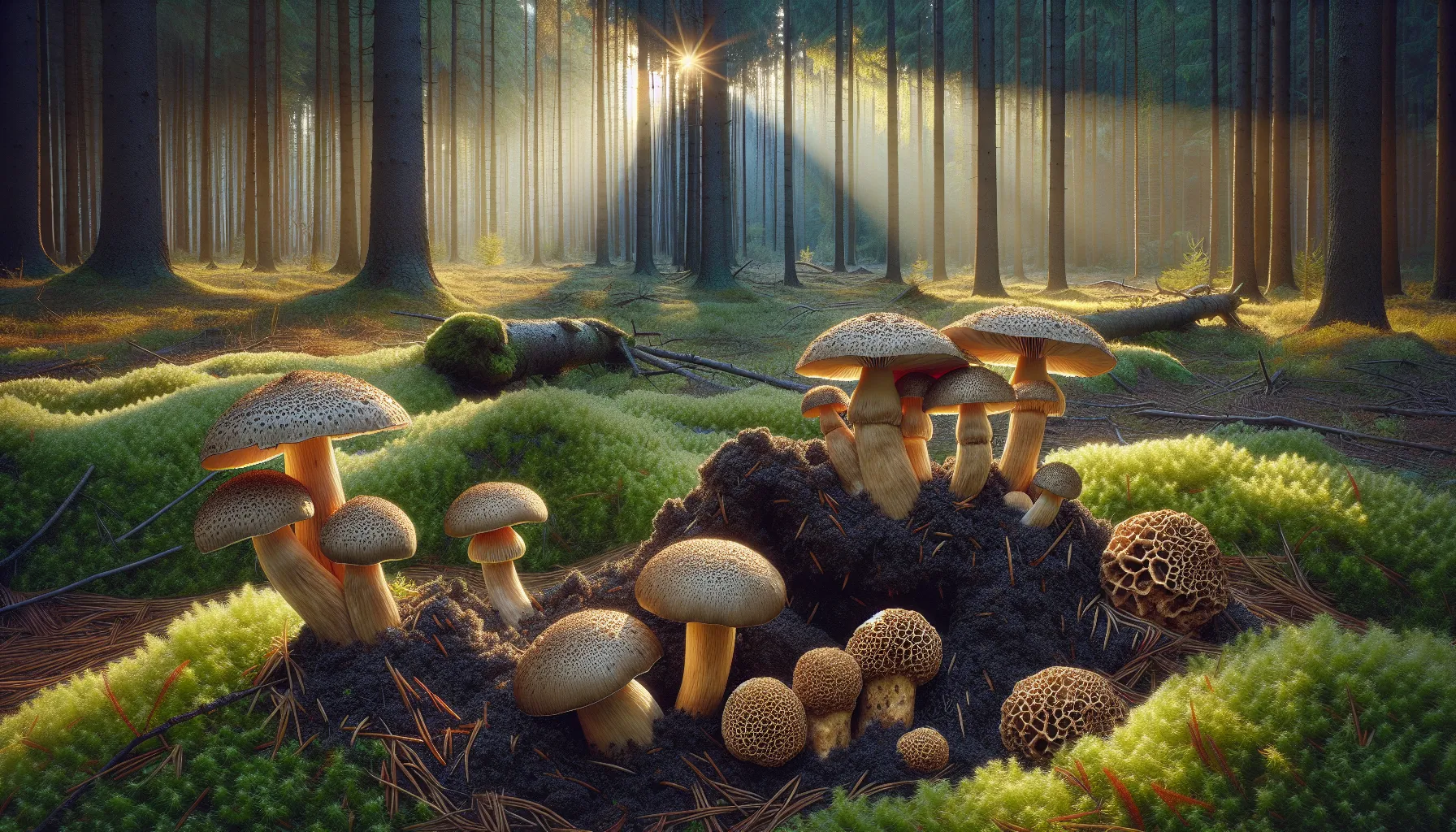
Mushrooms emerge above ground in various environments, like forests and meadows, while truffles develop beneath the soil near the roots of host trees, relying on a symbiotic relationship for nutrients.
Culinary Uses and Cultural Significance
Mushrooms in Cuisine
Mushrooms are prized ingredients worldwide, versatile in soups, sauces, stir-fries, and salads. Varieties such as shiitakes and portobellos bring unique flavors and textures to dishes.
Truffles: The Gourmet Delight
Truffles enhance culinary creations with their distinct flavor and aromatic richness. Freshly shaved truffles or truffle-infused oils are popular additions in gourmet cooking.
Importance and Value in the Culinary World
Mushrooms provide everyday culinary luxury, while truffles bring exclusivity and are celebrated during truffle festivals and auctions, emphasizing their esteemed status and appeal.
Cultivation and Harvesting of Mushrooms and Truffles
Methods for Cultivating Mushrooms
Mushrooms are cultivated under controlled conditions using substrates such as straw, wood chips, or compost, which can support consistent production for food supply.
The Unique Harvesting Process of Truffles
Truffles cannot be cultivated traditionally. Instead, they’re located and unearthed with the help of trained dogs or pigs, making their retrieval an artful and effort-intensive process.
Challenges in Cultivation and Market Demand
While mushroom cultivation is relatively straightforward, growing conditions and demand fluctuations introduce challenges. Truffles, due to their rarity, face high market demand and impact prices accordingly.
To provide the best experiences, we use technologies like cookies to store and/or access device information. Consenting to these technologies will allow us to process data such as browsing behaviour or unique IDs on this site. Not consenting or withdrawing consent, may adversely affect certain features and functions.
Functional
Always active
The technical storage or access is strictly necessary for the legitimate purpose of enabling the use of a specific service explicitly requested by the subscriber or user, or for the sole purpose of carrying out the transmission of a communication over an electronic communications network.
Preferences
The technical storage or access is necessary for the legitimate purpose of storing preferences that are not requested by the subscriber or user.
Statistics
The technical storage or access that is used exclusively for statistical purposes.The technical storage or access that is used exclusively for anonymous statistical purposes. Without a subpoena, voluntary compliance on the part of your Internet Service Provider, or additional records from a third party, information stored or retrieved for this purpose alone cannot usually be used to identify you.
Marketing
The technical storage or access is required to create user profiles to send advertising, or to track the user on a website or across several websites for similar marketing purposes.