You want the same creamy lift mayo gives your sandwich or salad, but without the jar on the table. Whether you’re cutting calories, avoiding eggs, or experimenting with new flavors, the best substitute for mayo can deliver texture, moisture, and taste without compromise. Picture a spread that melts into bread like butter but adds protein or fiber instead of empty fat. Below you’ll find clear choices and quick recipes that help you swap mayo confidently, with surprising benefits, more nutrients, less cholesterol, and new flavor possibilities.
Top Mayo Substitutes Explained
Fact: Several common foods work very well as mayo substitutes and each brings its own texture and nutrition.
Greek Yogurt: Creamy, Tangy, And Protein-Rich
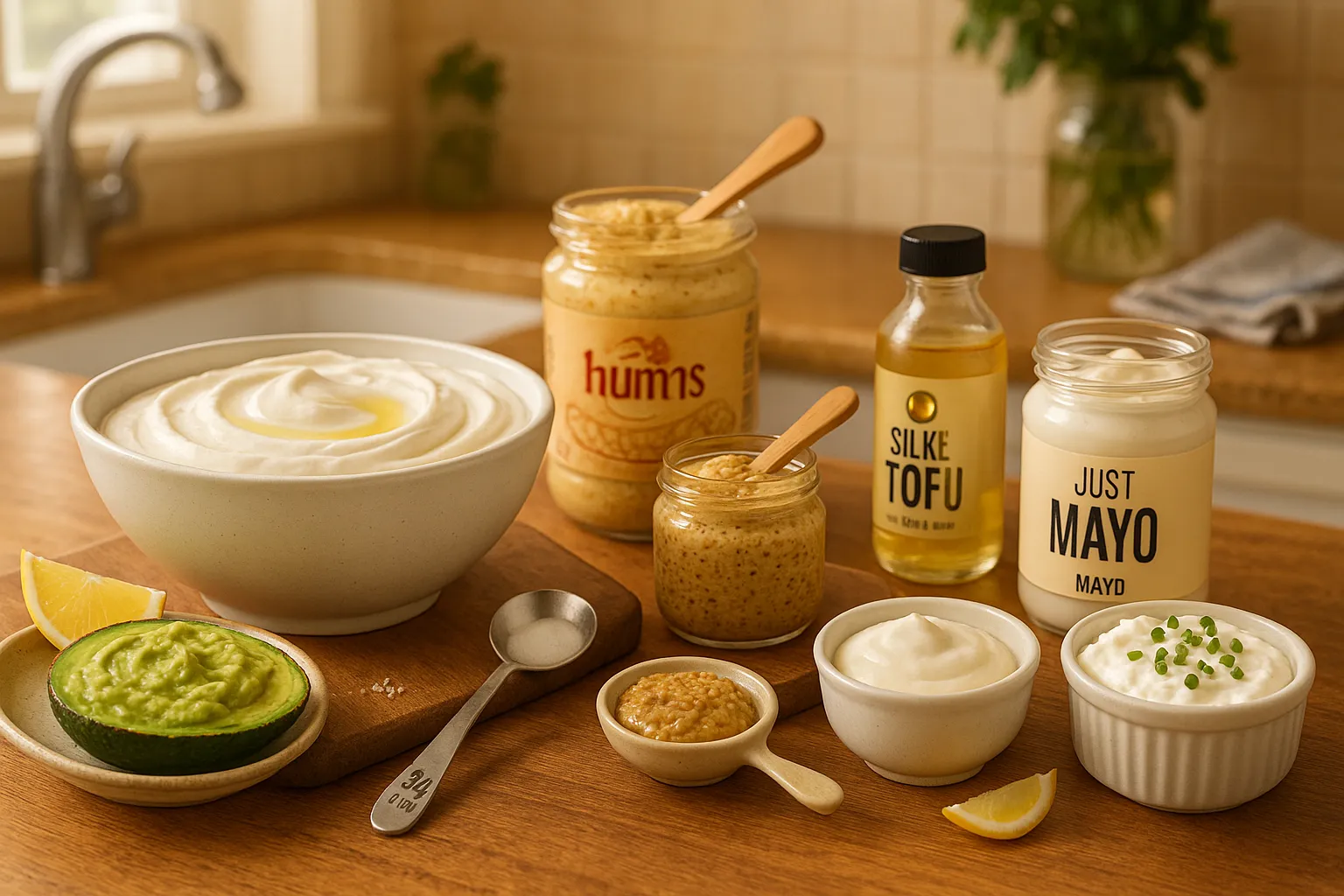
Greek yogurt gives you creaminess and a tang similar to mayonnaise, but with more protein and less fat. Use brands like FAGE or Chobani for thick, reliable texture. For every 1 cup of mayo, substitute 3/4 cup of full-fat Greek yogurt to keep richness. You can thin it with a teaspoon of olive oil when you need more mouthfeel. Because dependency grammar favors clear SVO order: yogurt adds protein, you get flavor, and meals become more filling.
Avocado: Healthy Fats And Silky Texture
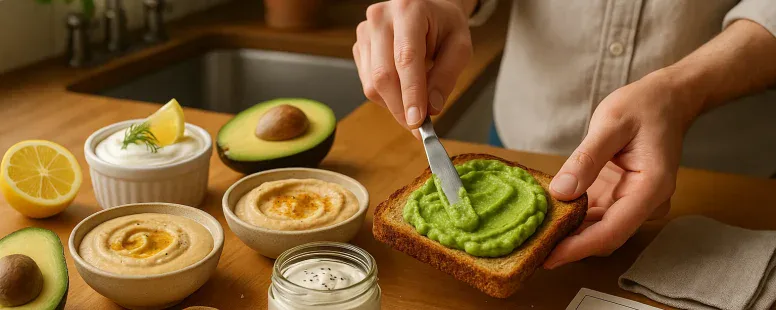
Avocado provides a silky texture and heart-healthy monounsaturated fats. Mash a ripe Haas avocado with a pinch of salt and lemon juice: it replaces mayo in sandwiches and spreads. Avocado is particularly good when you want a neutral, green-tinted spread that also adds potassium and fiber. It goes especially well with turkey, smoked salmon, or a spicy sriracha sauce.
Hummus: Flavorful Plant-Based Alternative
Hummus offers a chickpea-based alternative rich in fiber and plant protein. Store-bought hummus from Sabra or homemade hummus both work. Hummus pairs well with vegetables, roasted meats, and in wraps. It binds salads and adds a savory, earthy note that mayo does not provide. Use a 1:1 swap in most cases, but thin with lemon juice if the salad needs more moisture.
Mustard-based sauces, like Dijon or whole-grain mustard mixed with a little olive oil, reduce fat while boosting flavor. They are lower in calories than mayo and add a bright, acidic bite. For egg salads or potato salads, mix mustard with Greek yogurt to mimic mayo’s body while keeping fat low.
Silken Tofu And Vegan Mayo: Neutral, Protein-Packed Replacements
Silken tofu blends into a neutral, creamy base with good protein. Brands such as Mori-Nu make shelf-stable silken tofu that you can blend with lemon, salt, and a touch of oil to create a mayo-like emulsion. Vegan mayos from Just Mayo or Follow Your Heart offer ready-made egg-free options: read labels for oils and additives.
Cottage Cheese And Sour Cream: Mild, Dairy-Based Swaps
Cottage cheese and sour cream provide mild dairy flavors and work as mayo stand-ins in salads and dips. Blend cottage cheese until smooth for a creamy texture. Low-fat cottage cheese raises the protein while keeping calories down. Sour cream gives tang and body similar to full-fat mayo, mix with herbs to brighten the flavor.
How To Choose The Right Substitute For Your Recipe
Fact: You select a substitute by matching texture, flavor, and dietary needs to the dish.
Match Texture And Fat Content To The Dish
Start by identifying the role mayo plays. If mayo acts as a binder in coleslaw or chicken salad, choose Greek yogurt or blended tofu for similar hold. If mayo primarily adds moisture to a sandwich, avocado or a thinned hummus may be better. They keeps moisture, while some swaps add more density. For a light vinaigrette that needs body, mix mustard with oil and yogurt.
Consider Flavor Compatibility And Seasoning Needs
Consider whether the substitute will clash or enhance other ingredients. Avocado brings a neutral, buttery note that suits bacon or tomato. Hummus adds sesame and garlic notes that complement Mediterranean flavors. Greek yogurt behaves like mayo in most savory contexts but requires salt and perhaps a squeeze of lemon to match mayo’s brightness. If you use vegan mayo, check for sugar or stabilizers that could affect taste.
Account For Dietary Restrictions And Allergies
If you or your guests avoid eggs, pick silken tofu, vegan mayo, or hummus. For nut allergies, avoid mayo alternatives made with almond or cashew creams. If you follow a low-sodium plan, inspect labels on prepared products, Hellmann’s or Kraft light options may still contain salt. Choose plain, unsweetened options to keep added sugars low. If you’re on a keto plan, consider avocado or full-fat Greek yogurt to keep carbs down.
Quick Recipes: How To Make Mayo Substitutes At Home
Fact: You can make most mayo substitutes in under five minutes with a blender or a bowl.
Easy Greek Yogurt Dressing (2–3 Ingredients)
Ingredients: 1 cup full-fat Greek yogurt, 1 tablespoon lemon juice, salt to taste.
Method: Mix the ingredients in a bowl until smooth. Add a teaspoon of olive oil for silkiness. Use as a 1:1 mayo replacement in tuna salad or as a dip.
Method: Blend all ingredients until smooth. If needed, add a tablespoon of water to thin. This spread works as a sandwich spread or as a binder for egg-free salads.
Method: Blend until smooth. Thin with water or olive oil to reach desired consistency. Use it in wraps, as a mayo substitute on burgers, or tossed into grain salads for creaminess and protein.
Practical Uses And Adjustment Tips For Each Substitute
Fact: Each substitute needs small tweaks to behave like mayo in different recipes.
Sandwiches And Wraps: Spreading And Moisture Tips
Use avocado and hummus for moist sandwiches: they stick well to bread and don’t make it soggy fast. Greek yogurt can be spread thinly, pat it on and press the sandwich briefly so it adheres. If you use silken tofu, add a little oil for slip. Hummus and avocado can mask dryness in lean meats like chicken breast.
Salads And Coleslaws: Emulsifying And Binding Tricks
For coleslaws, choose Greek yogurt or blended cottage cheese to bind shredded cabbage and carrots. Stir in a teaspoon of mustard or a splash of vinegar to help emulsify and keep the dressing from separating. If you try avocado in a salad, mash it first and toss immediately to avoid browning. Silken tofu needs high-speed blending to reach an emulsion that holds dressings.
Dips, Dressings, And Sauces: Thickening And Flavor Boosts
To thicken dressings, add xanthan gum sparingly (a pinch at a time) or use a small amount of cornstarch slurry cooked briefly. Boost flavor with fresh herbs: dill for Greek yogurt, cilantro for avocado, and parsley for hummus. If a substitute tastes flat, add acid, lemon juice or apple cider vinegar brightens and balances richness. They helps the flavors pop and the texture feel familiar.
Nutritional Comparison And Health Considerations
Fact: Substitutes differ markedly in calories, fat, protein, and fiber: choose based on your health goals.
Calories, Fat, Protein, And Fiber Differences (Overview)
Greek yogurt (full-fat): Lower in calories than mayo per tablespoon, higher in protein. It gives roughly 1.5–2g protein per tablespoon.
Avocado: Higher in healthy fats and calories than yogurt, but adds fiber and potassium.
Hummus: Moderate calories, adds fiber and plant protein from chickpeas.
Silken tofu: Low in calories, provides soy protein and little saturated fat.
Choose yogurt or silken tofu if you seek protein and lower calories. Pick avocado if you prioritize monounsaturated fats for heart health. Hummus brings fiber which aids digestion.
Heart Health, Sodium, And Added Sugars To Watch For
Watch sodium on prepared products: store-bought hummus and vegan mayo can contain significant salt. Check labels for added sugars: some flavored vegan mayos or dressings include sweeteners. For heart health, prefer olive oil–based recipes and whole-food options like avocado or plain Greek yogurt. If you monitor saturated fat, avoid heavy sour cream and choose low-fat dairy options.
Food Safety, Storage, And Shelf-Life Guidelines
Fact: Homemade substitutes generally last 3–5 days refrigerated: prepared commercial options vary by label.
Storing Homemade Substitutes Safely In The Refrigerator
Store homemade yogurt or hummus in airtight containers at 40°F (4°C) or below. Avocado spreads will brown: add lemon juice and store in a shallow container with plastic pressed to the surface to limit air. Silken tofu blends keep 3–4 days if refrigerated. Label containers with the date.
Signs Of Spoilage And When To Discard
Discard any substitute that smells sour beyond its expected tang, shows visible mold, or has slimy texture. If the color changes dramatically (beyond avocado browning), toss it. When in doubt, throw it out, foodborne illness is not worth saving a spread.
Tips For Buying Prepared Alternatives: Labels To Read
Read ingredient lists for oils (prefer olive or avocado oil over palm), added sugars, and sodium content. Look for simple ingredient lists in brands like Primal Kitchen, Chosen Foods, or Miyoko’s if you prefer vegan fat profiles. Check the allergen statement for eggs, soy, or nuts. Choose refrigerated items when possible: shelf-stable vegan mayos may include preservatives that you might want to avoid.
If you want a straight swap, start with Greek yogurt or hummus. They will usually match mayo in function while adding nutrient benefits. They goes well in most recipes, and with small adjustments you’ll hardly miss the original mayo.
To provide the best experiences, we use technologies like cookies to store and/or access device information. Consenting to these technologies will allow us to process data such as browsing behaviour or unique IDs on this site. Not consenting or withdrawing consent, may adversely affect certain features and functions.
Functional
Always active
The technical storage or access is strictly necessary for the legitimate purpose of enabling the use of a specific service explicitly requested by the subscriber or user, or for the sole purpose of carrying out the transmission of a communication over an electronic communications network.
Preferences
The technical storage or access is necessary for the legitimate purpose of storing preferences that are not requested by the subscriber or user.
Statistics
The technical storage or access that is used exclusively for statistical purposes.The technical storage or access that is used exclusively for anonymous statistical purposes. Without a subpoena, voluntary compliance on the part of your Internet Service Provider, or additional records from a third party, information stored or retrieved for this purpose alone cannot usually be used to identify you.
Marketing
The technical storage or access is required to create user profiles to send advertising, or to track the user on a website or across several websites for similar marketing purposes.