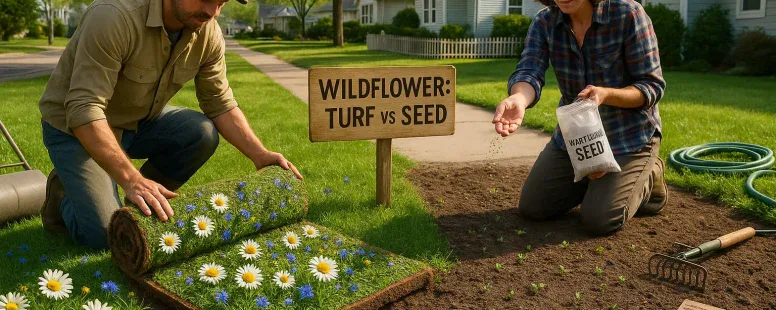
Wildflower Turf vs. Seed: Which Is Right For Your Lawn?
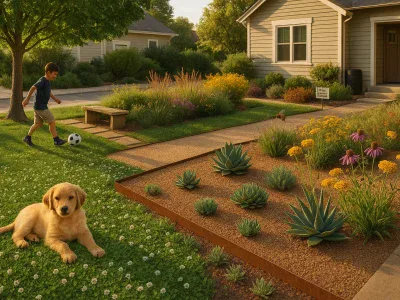
You can create a meadow quickly or grow one slowly, both work, but they ask different things of you. Wildflower turf gives instant color and structure: seed offers flexibility, cost savings, and a slower, often richer establishment of native plants. Picture a blanket of daisies and oxeye in a weekend versus a spring of tiny seedlings pushing through soil over months. Which path you choose affects timing, budget, biodiversity, and the amount of hands‑on care you’ll need. This guide cuts straight to the facts, shows real installation steps, and helps you pick the right option for your site and goals.
How Wildflower Turf And Seed Differ: Key Definitions
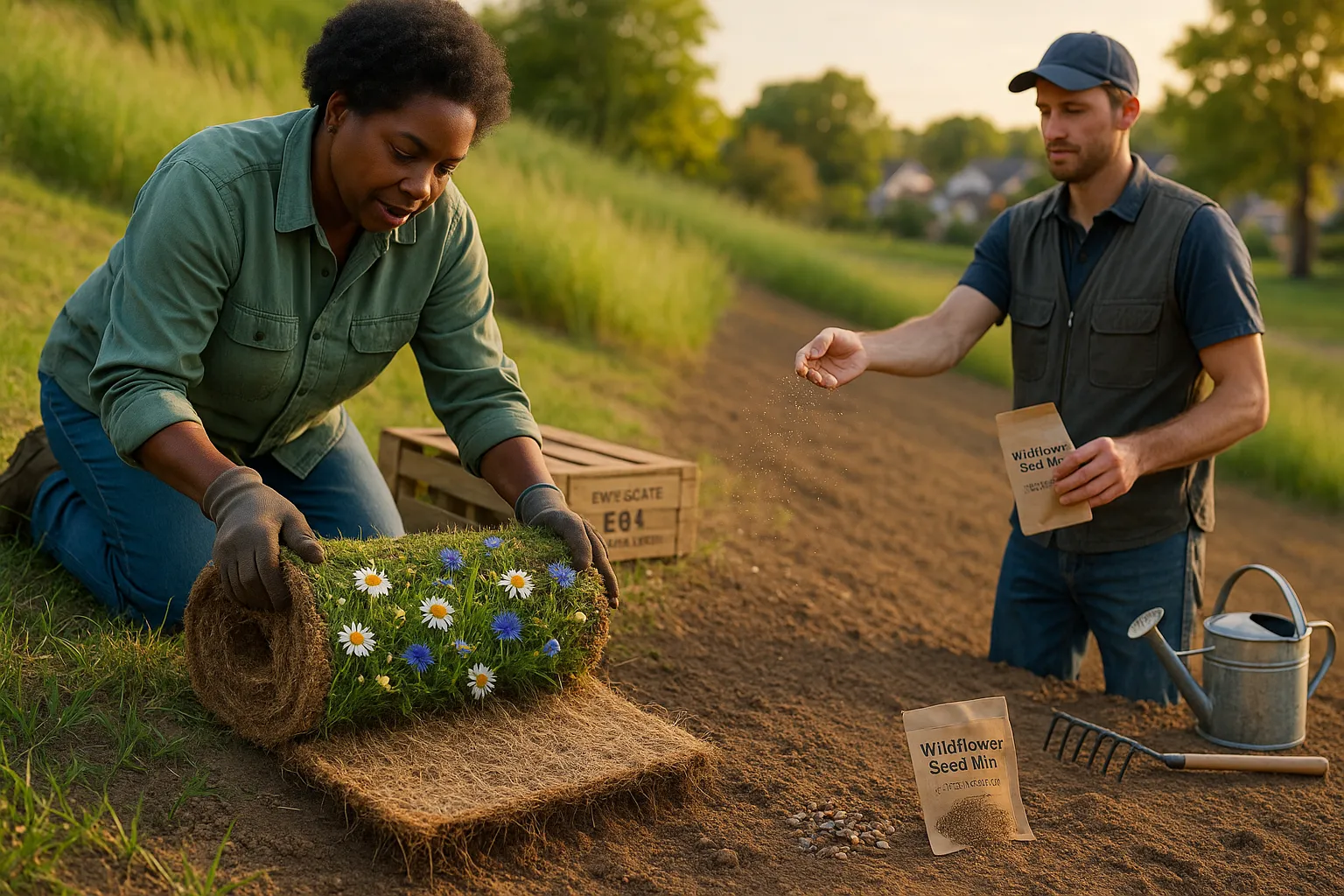
Fact: Wildflower turf is pre-grown vegetation on a biodegradable mat: seed is loose botanical material you sow directly. Wildflower turf (sold by companies like GreenMeadow or local nurseries) arrives as a ready-made carpet of grasses and flowers. Seed mixes (brands such as Emorsgate, Wildseed Farms, Botanical Interests) are blends of annuals, perennials, and grasses you broadcast or drill.
Turf gives instant cover and structure. Seed gives you control over species composition and timing. Turf contains established plants and root systems on a mesh or fleece backing: seed contains genetic potential that requires soil contact, moisture, and time to realize. Turf reduces erosion immediately. Seed allows you to tailor mixes to pollinators, soil type, or aesthetic preferences.
Key semantic entities: oxeye daisy (Leucanthemum vulgare), red campion (Silene dioica), cornflower (Centaurea cyanus), orchard grass (Dactylis glomerata), Emorsgate EG4 meadow turf. These are examples that signal species choices and the sorts of mixes you might choose.
Follow-up: If your site has steep slopes, poor soil, or an urgent need for visual impact, turf usually solves the problem faster. If you want specific native species or a lower material cost, seed is better.
Comparing Installation: Time, Skill, And Site Preparation
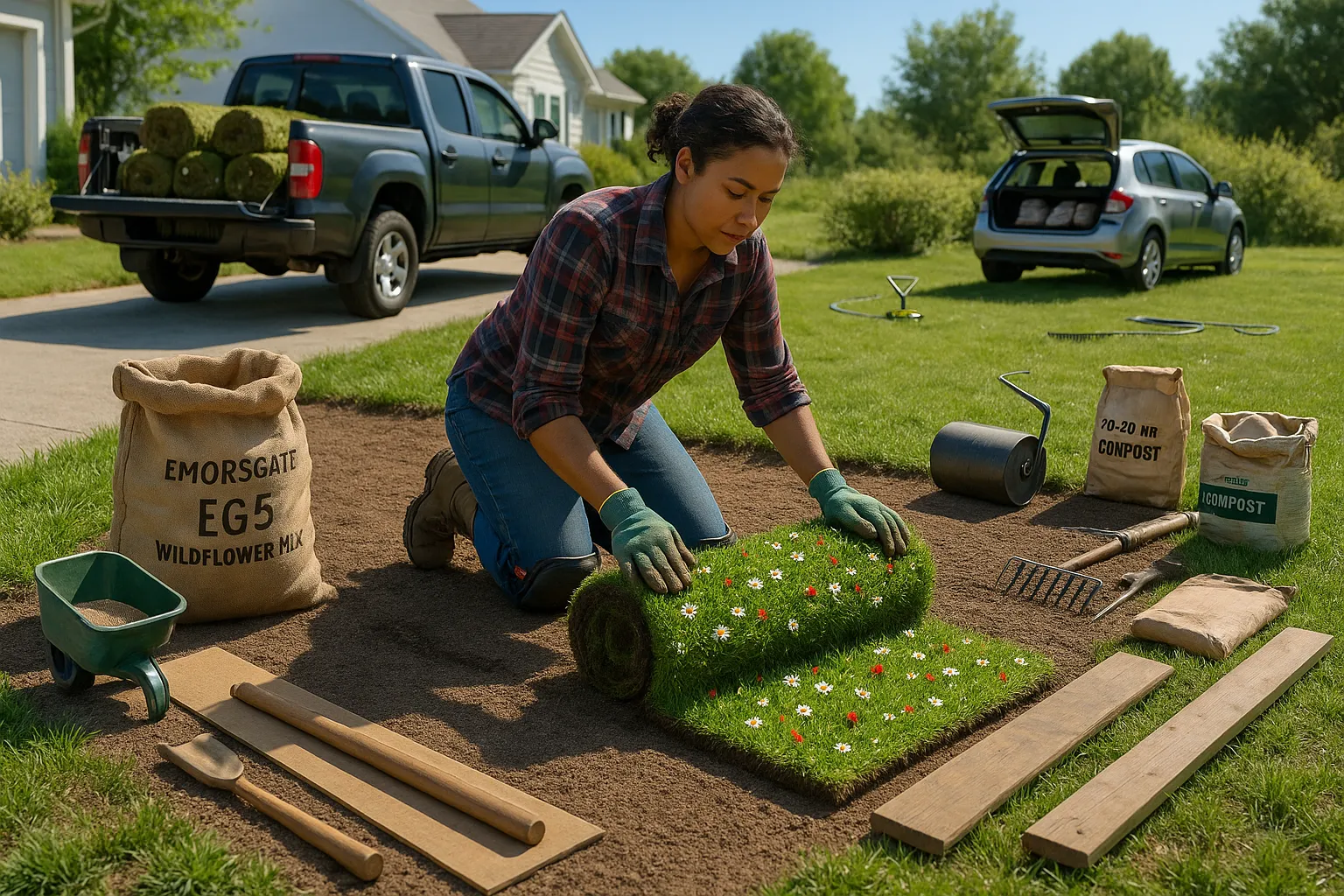
Fact: Turf installs faster and requires less ongoing planting skill: seed needs careful preparation and patience. Both depend on good soil contact and weed control.
Turf minimizes establishment time. You order rolls or mats sized to your lawn, prepare the soil, lay the turf, and water. Seed requires tilling or scarifying, precise sowing, rolling to press seed into soil, and several months of vigilant watering and weed management.
Consider site access, slope, and timing. Turf trucks need driveway access and machinery for larger areas: seed bags fit in a hatchback. Turf is best installed in calm weather to avoid mat damage: seed is often sown in early autumn or spring depending on species. If you live in a dry climate, seeding may need irrigation equipment for several weeks.
Installation Steps For Turf
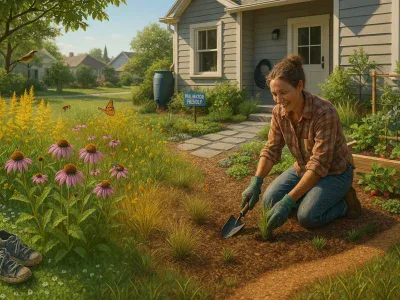
Fact: Lay turf on a smooth, weed-free seedbed and water daily until roots anchor. Steps:
- Clear the site: remove perennial weeds like bindweed (Convolvulus arvensis) and couch grass (Elymus repens).
- Grade and rake to a fine tilth: incorporate 10–20 mm of compost if soil is poor.
- Order turf quantity from suppliers such as GreenMeadow or local native turf growers, measure area in square meters.
- Unroll turf, butt edges tightly, stagger joints like brickwork to avoid seams.
- Roll the turf with a light lawn roller to ensure soil contact.
- Water deeply immediately and then daily for the first two weeks: reduce frequency as roots form.
Note: You will need a light mower for maintenance once flowering grasses set seed. Turf reduces initial weed pressure but does not eliminate future invasives.
Installation Steps For Seed
Fact: Seed needs good seed-to-soil contact and consistent moisture to germinate. Steps:
- Kill existing vegetation using a non-residual herbicide (glyphosate) or by smothering with cardboard for 6–8 weeks: remove thatch.
- Cultivate to a fine, firm seedbed, harrow or rake to a crumbly surface.
- Select a mix: choose a proven native mix (for example, Emorsgate EG5 for wildflower meadows) suited to local soil pH and moisture.
- Sow at the recommended rate (often 1–4 g/m² for wildflower mixes). Use a broadcaster or hand-sow for small areas.
- Press seeds into the soil with a light roller or by walking the area with boards.
- Keep surface moist: irrigate lightly 1–2 times daily until seedlings establish (typically 4–8 weeks, longer for some perennials).
Note: Seeded areas can look sparse for the first year. Annuals will flower first: perennials build strength in year two.
Cost Comparison: Upfront Expense And Long‑Term Value
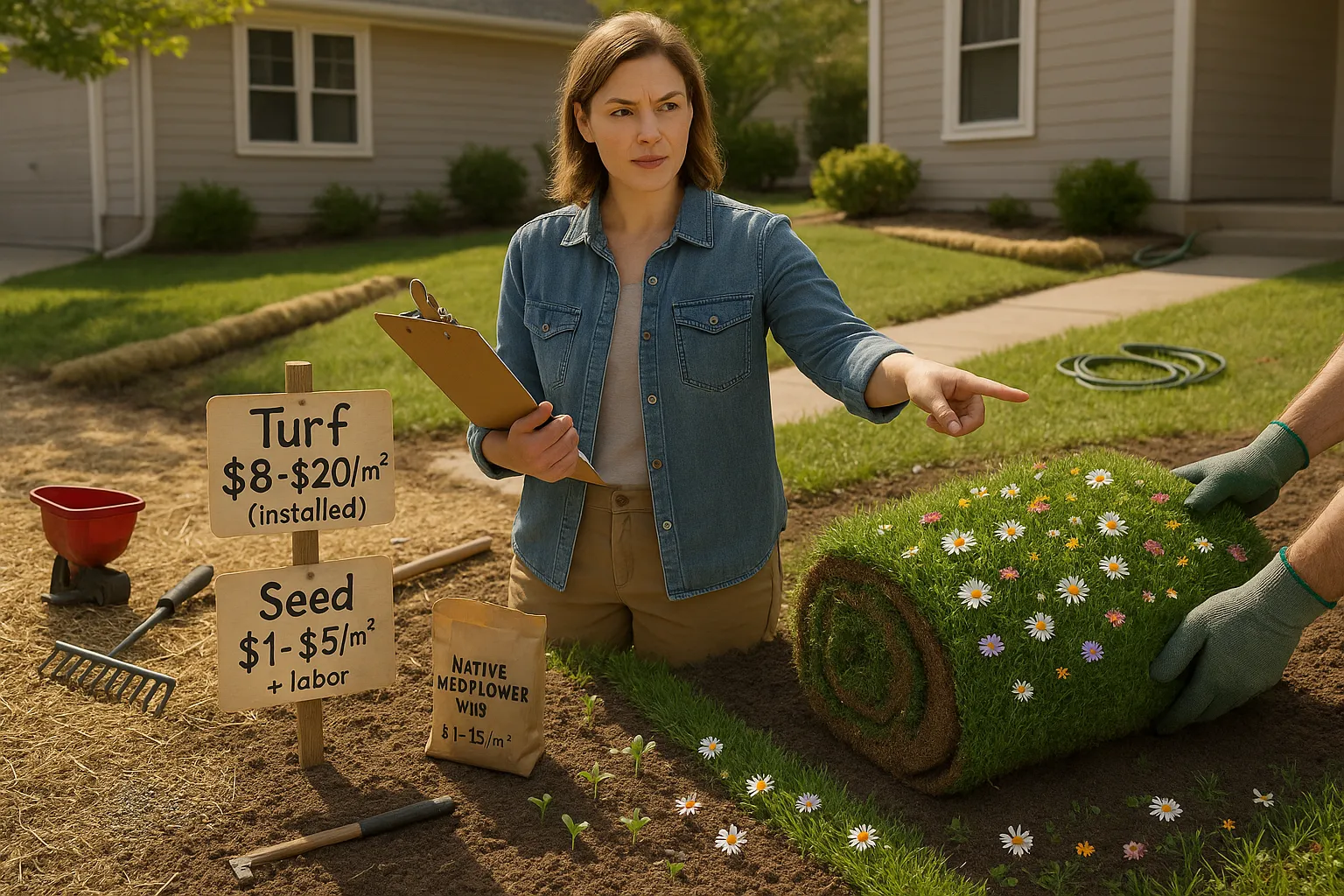
Fact: Turf costs more up front: seed is cheaper initially but may require more labor and time before value appears. Expect to pay roughly 3–6x more per square foot for turf material and installation versus seed material costs alone.
Breakdown: Retail prices vary by region and species. Wildflower turf can run $8–$20 per square meter for material, plus delivery and installation, commercial installation can push cost higher. Seed mixes often cost $1–$5 per square meter for materials: you add labor, irrigation, and weed control time.
Long-term value: Turf buys instant aesthetics and erosion control, which can be valuable on slopes or in public sites. Seed offers lower material costs, better adaptation of natives over time, and greater species diversity if you choose the right mix and manage it. If you monetize the site (events, eco-tourism) the upfront beauty of turf may pay back quickly. For ecological restoration, seed is often the more cost-effective path over 3–5 years.
Real example: A 100 m² suburban front lawn using turf might cost $1,200 installed: the same area from seed could cost $150 in seed plus $300 in labor for a total of $450. But the seeded meadow may take longer to reach visual maturity and may need repeat sowing for gaps.
Maintenance And Early Care: What To Expect After Planting
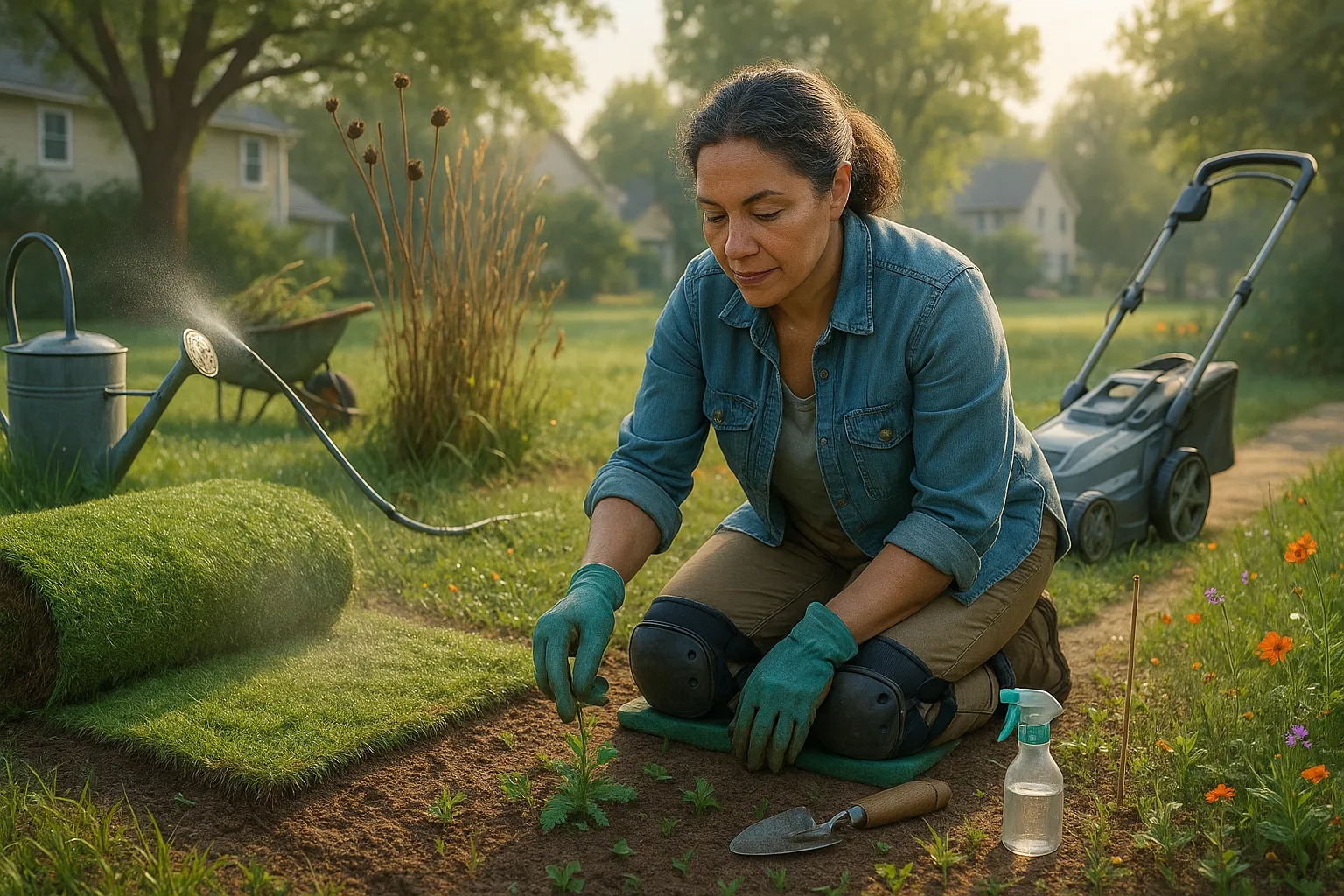
Fact: Early care determines success: both turf and seed need regular moisture and weed control in the first season. After establishment, care diverges.
Turf care first month: water daily, avoid heavy traffic, remove smothering debris. The mat will root in 10–21 days in good conditions. You should not mow until plants reach recommended height (often 8–12 cm for meadow turf) and a mower with adjustable blades helps.
Seed care first year: expect frequent check-ins for weeds and spot-treat or hand-pull invasives such as thistles (Cirsium spp.). Annual flowers will bloom in the first season: many perennials will be low the first year while they develop roots.
Long‑Term Management: Mowing, Weeding, And Rejuvenation
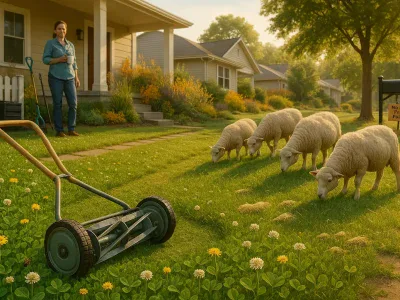
Fact: Long-term meadow care is simple but timed: mow annually or cut in rotation to support diversity. Practices:
- Annual cut: cut once late winter or early spring and remove cuttings to reduce soil fertility and favor wildflowers over vigorous grasses.
- Rotational strips: mow 20–30% of the area each year to keep continuous nectar sources for pollinators.
- Spot-weeding: remove non‑native invasives early before they set seed (e.g., ragwort, Senecio jacobaea).
For turf you may need light infill seeding in bare patches in year two. For seed mixtures you might overseed with perennials in year two if gaps persist. Both systems benefit from soil tests every 3–5 years: high nitrogen favors grasses over wildflowers, so avoid lawn fertilizers.
Practical warning: Don’t over-mow or remove all dead stalks in autumn, seed heads feed birds and support insects.
Biodiversity, Pollinators, And Ecological Impact
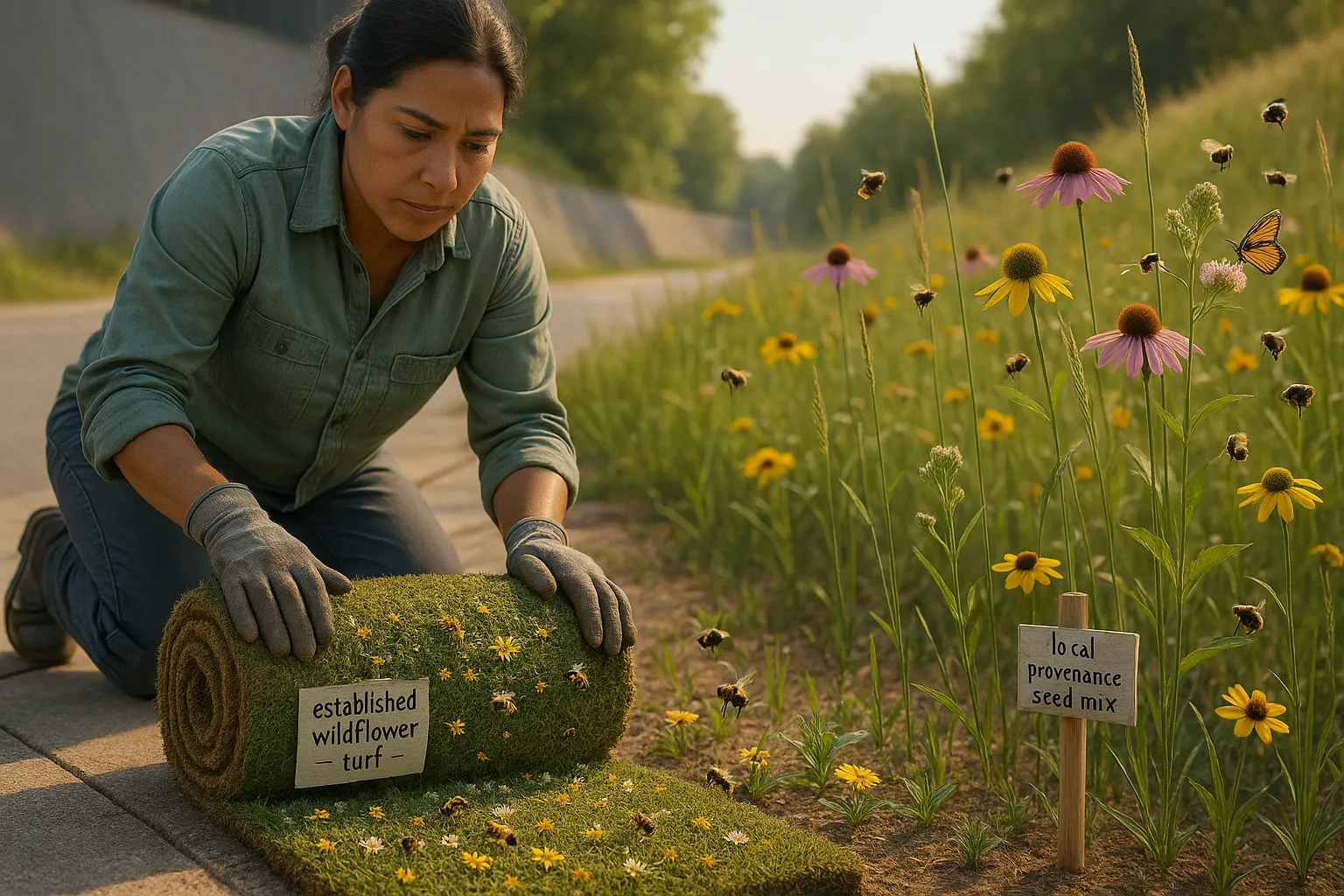
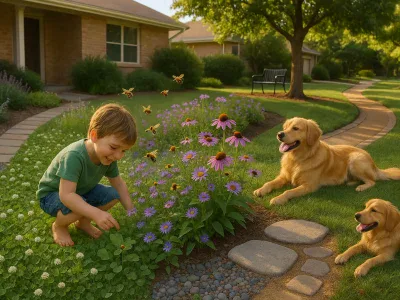
Fact: Seed mixes generally produce greater long-term plant diversity: turf gives immediate structure and can still host pollinators. Species-rich seed mixes often include 20–50 species: turf mixes depend on the grower but can contain a narrower selection established under commercial conditions.
Ecological trade-offs: Turf can be grown from non-local cultivars that may not support specialist insects. Seed allows you to prioritize local provenance species, which better support specialist bees, butterflies, and moths. But, well-chosen turf from native growers still offers valuable resources and immediate habitat.
Metrics: native flower richness correlates with higher pollinator abundance. For example, a 2017 UK pollinator survey found species-rich meadows had 2–3x more bee species than simple grass-dominated plots.
When Turf Is The Better Choice
Fact: Choose turf when you need rapid erosion control, instant aesthetics, or limited on-site labor. Good use cases:
- Steep banks beside transit corridors that require immediate cover.
- High‑visibility front lawns for events or commercial property where instant curb appeal matters.
- Sites with poor soils where turf grown off-site has a stronger initial root system.
When Seed Is The Better Choice
Fact: Choose seed when you want native diversity, lower upfront cost, or long-term ecological gain. Good use cases:
- Restoration projects where provenance and species selection matter (e.g., prairie restorations using local ecotype seed).
- Large rural parcels where budget scales matter and patience is acceptable.
- Areas where volunteer management and phased establishment fit community involvement.
Troubleshooting Common Problems And How To Avoid Them
Fact: The most common problems are poor soil contact, weeds, and drought stress: each has clear prevention steps. Troubleshooting:
- Poor germination: ensure seed meets soil, reduce mulch or leaf litter, and keep soil moist. For turf, check that the mat is tight to the soil and not lifted by wind.
- Weeds: target perennial weeds before planting. In seeded sites, mow at 5–10 cm in the first year to suppress annuals if needed, or use spot herbicide on persistent perennials.
- Erosion or washouts: use turf on slopes, or stabilize seed with erosion-control mesh and stagger seeding with temporary cover crops like annual ryegrass.
- Patchy establishment: overseed bare patches in autumn with the same mix, or fill in turf gaps with small plug plants from native suppliers.
Practical tips: Keep a photo log to track progress and interventions. If you see invasive species like Himalayan balsam (Impatiens glandulifera) or Japanese knotweed (Fallopia japonica), contact local invasive species authorities for removal protocols. Don’t assume fertilizer will help: most wildflower mixes prefer low fertility.
Simple Decision Checklist: How To Choose Based On Site And Goals
Fact: Match urgency, budget, biodiversity goals, and site constraints to choose turf or seed. Use this checklist:
- Need instant cover or erosion control? -> Turf.
- Want lower upfront cost and long-term species richness? -> Seed.
- Do you require local provenance native plants? -> Seed (source local seed suppliers).
- Is site access limited or steep? -> Seed (if you can manage water) or small turf rolls for hand-laying.
- Do you need immediate curb appeal for events or property sale? -> Turf.
- Will you manage the site annually and remove cuttings? -> Both work, but seed rewards active management.
Final action: Walk the site, take photos, test the soil (pH and nutrients), and list your top three priorities (speed, cost, biodiversity). That will point you toward turf or seed. Then contact two local suppliers, one turf grower and one seed specialist, and compare exact mixes, delivery windows, and installation support. Start small if you’re unsure: a 25–50 m² trial will tell you how your site behaves and what you prefer.

- WxWidgets Alternatives for Cross-Platform GUI Development - October 22, 2026
- Best Tpu - October 21, 2026
- Mikrotik Product Comparison - October 20, 2026
by Ellie B, Site Owner / Publisher